We are (on) an Island
This essay was commissioned by the Fundació Mies van der Rohe to METASITU as a reflection on ‘island architecture,’ drawing from three decades of nominated and awarded architectural projects on European islands from the EUmies Awards archive. It was made possible through the LINA Architecture Platform, co-financed by the European Commission through the Creative Europe programme.
As we type these lines (February 2025), the Cycladic island of Santorini in Greece is being evacuated due to seismic activity. Volcanologists fear that the volcano, upon whose crater rim the picturesque houses of Santorini perch, might erupt imminently. Its previous significant eruption in 1610 BC—when Santorini was known as Thera—is alleged to have led to Atlantis’s disappearance and triggered a megatsunami devastating the Minoan civilization.
Events such as these confront us with the humility intrinsic to insular living—a modesty and deference for nature that starkly contrasts the Cartesian logic that has dominated Western thought since the Enlightenment. This logic falsely suggests territories can be fully subdued, islands can be built from scratch, and clouds can be made to rain at will.
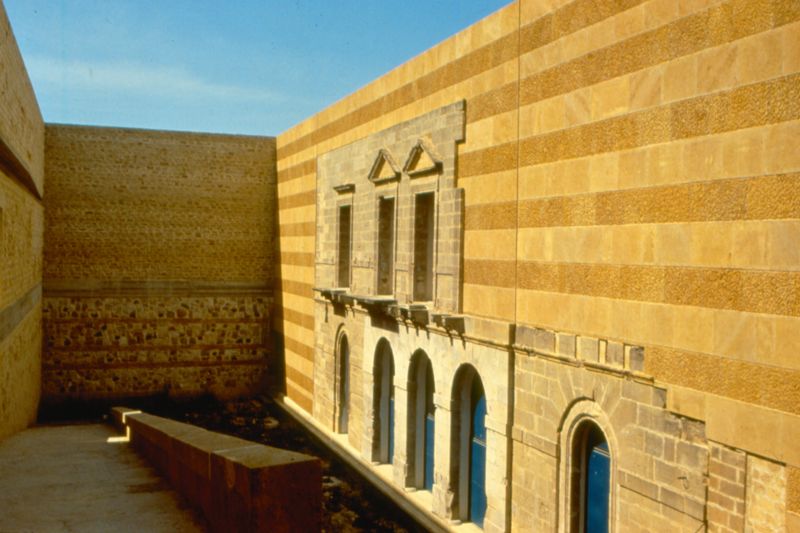
Insular conditions, surrounded by water, magnify the fragility and vulnerability of human existence. It makes sense that cataclysmic episodes are recorded in insular architecture with particular attention; such as the museum of Gibellina in Sicily by Francesco Venezia architects – built after an Earthquake that destroyed the original town, which was relocated a few kilometers away – or the Capelinhos Volcano Interpretation Center by Nuno Ribeiro Lopes, Arquitectos on Horta, in the Azores, commemorating the 50 year anniversary since the eruption on the island of Fayal.
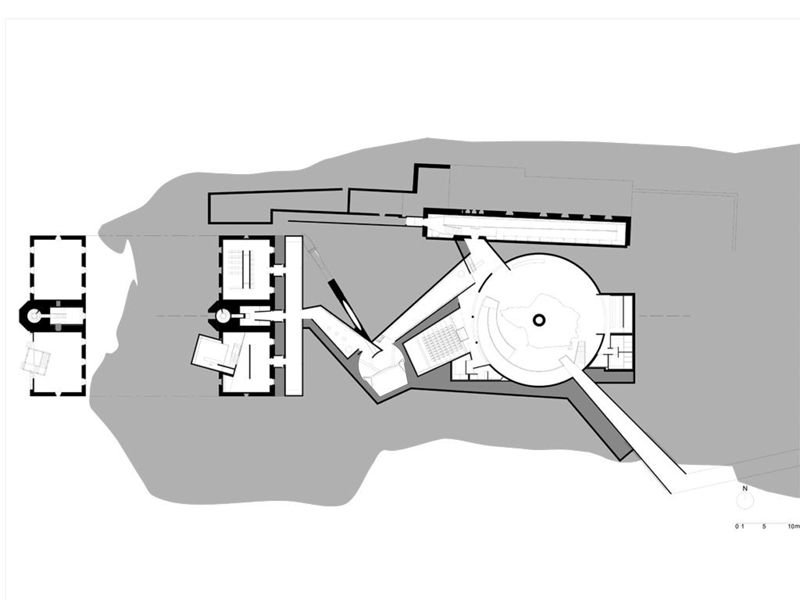
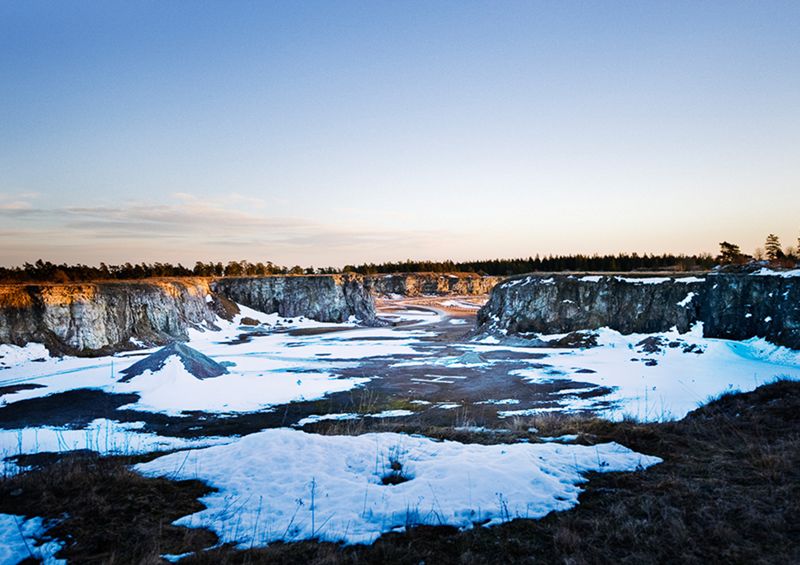
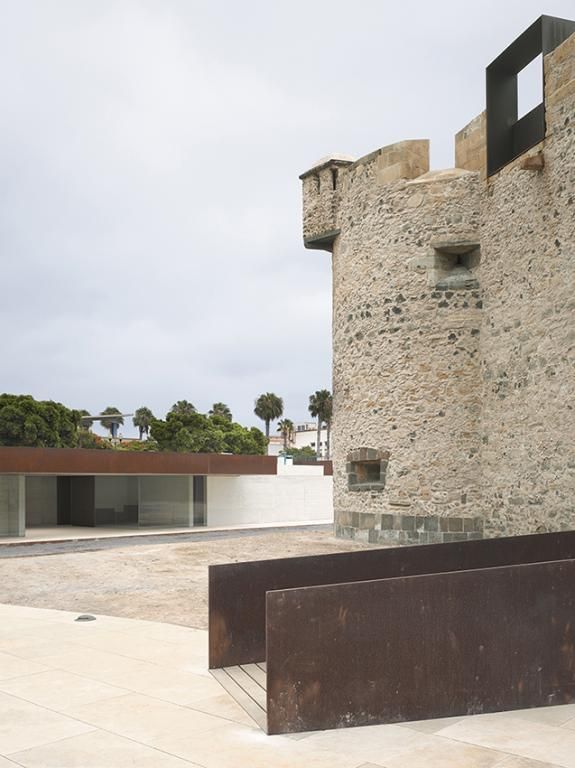
Yet, today, it is not earthquakes, megatsunamis or volcanoes that are most likely to wipe us all from our insular Earth, but rather calamities of our own design. And islands, because of their peripheral condition to a mainland core, their liminal positioning between nations, operating in the borderlands, have also been able to capture this ominous fate in the form of loci for military architectural typologies. Many of these buildings seeped through the cracks of invasions that may or may not have happened, and have now been rethought as kindergartens (like the Montlaur Nursery in Bonifacio in Corsica – a former fortress), Museums (like the Castillo de la Luz in Las Palmas de Gran Canaria – a former defensive castle), or a holiday colony (like the Bungenäs in Visby – a former military training ground as well as a limestone quarry).
Another matter that reverberates with particular strength on insular architecture is climate change. Addressing our global dependency on fossil fuels, overconsumption of water through ingenious water harvesting systems, investing in sustainable energy sources and structures ensuring natural ventilation is particularly true for many (holiday) homes that have been nominated over the past two decades in the EUmies Awards, often built in remote locations, where the views of nature can be framed and the woes of civilization ignored.
Many of these projects rapidly assert sustainability claims based off their in-built
self-reliance; a non-negotiable when building in remote pristine locations as they are off grid by default. However, one is to wonder to what extent can a building inserted in the slopes of a mountain can claim to be ‘part of the landscape’ it inevitably destroyed, a house made in cast concrete claim to be sustainable, or if sustainability is a term ever apt to the very
concept of ‘holiday home’, where the sporadic seasonal inhabitation of the space can hardly legitimize the embodied energy used in its construction.
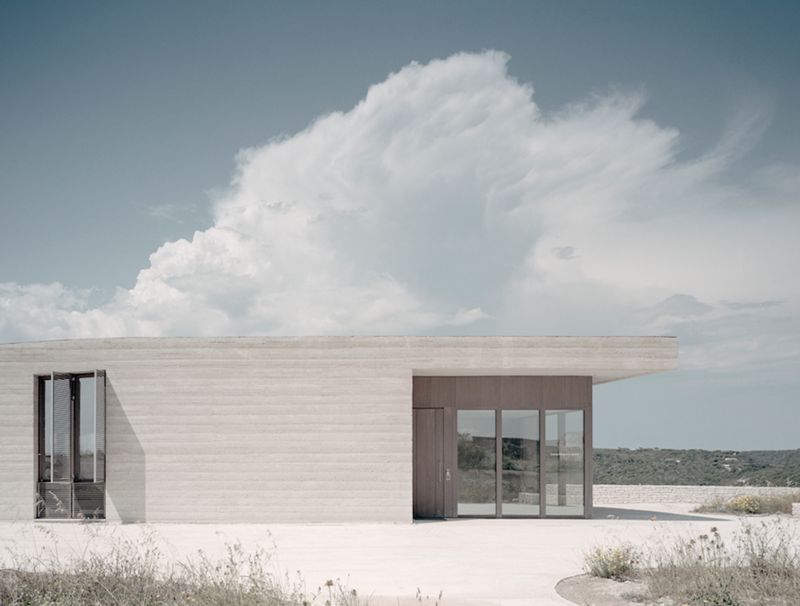
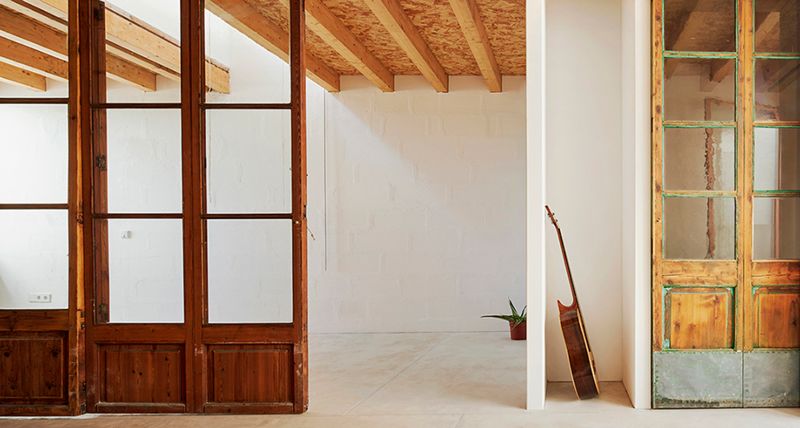
Nonetheless, exemplary projects demonstrate genuinely sustainable approaches that integrate local materials and artisanal skills. A standout case is the Life Reusing Posidonia – 14 Social Dwellings in Sant Ferran, Formentera by Institut Balear de l’Habitatge (IBAVI), which harmonizes low-carbon construction with traditional craftsmanship. Such projects illustrate not only material but also social sustainability, addressing community needs rather than seasonal tourism.
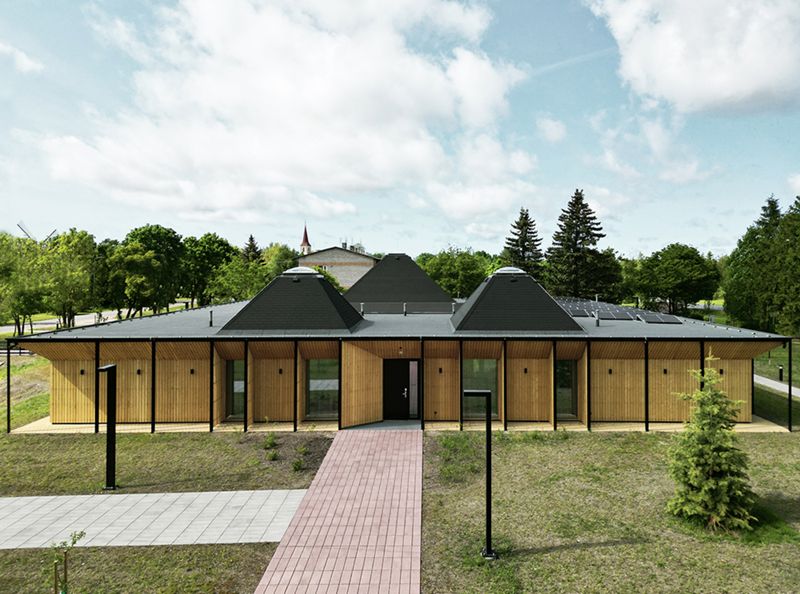
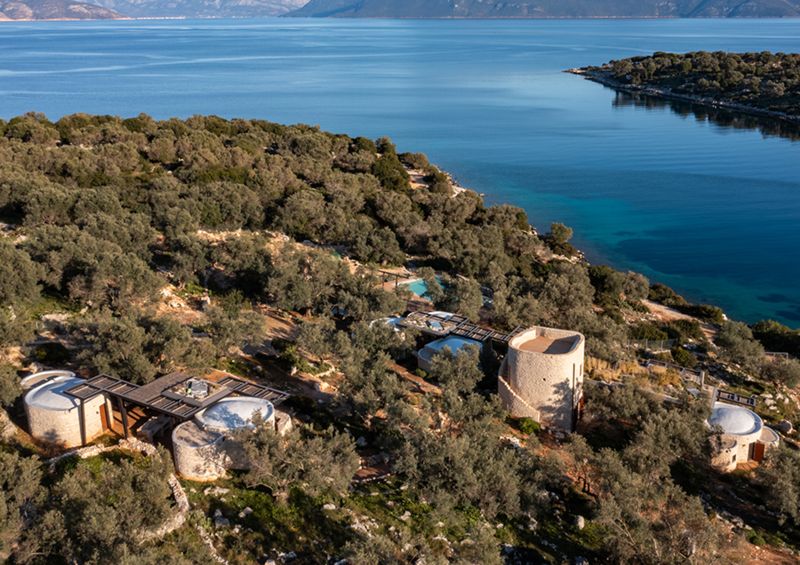
As Europe’s island populations decline and age, innovative spatial typologies that enhance social sustainability become crucial. The Mustjala Retirement home and Daycare Center on Saaremaa Island by molumba architect introduces a co-living model inspired by local architectural traditions, reinforcing social ties. Additionally, community-centric holiday homes, such as the Vacation House in an Oliveyard on Meganisi by Hiboux architecture studio, offer flexible usage throughout the year and multigenerational habitation, promoting more integrated island communities. The temporal inhabitation of the holiday home can also be used as a platform to experiment with domesticity, like the Amphitheater House in Hydra by Atelier 66 of Architecture Antonakakis architects, built on an orthogonal ruin, transforming the home into a performative space with stepped platforms.
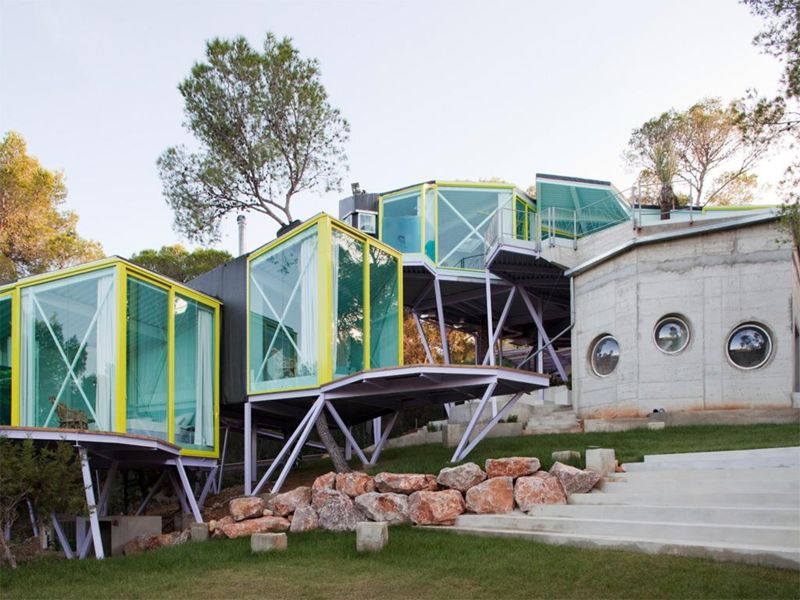
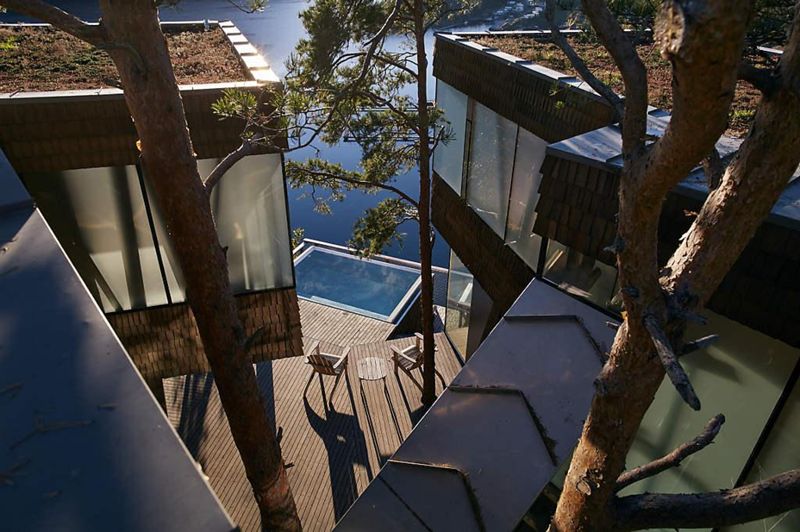
Some of the island homes also extend invitations to ‘think-with’ the more-than-human inhabitants (although this invitation is often just restricted to botanic cohabitants). This was the approach followed in the Summer House on Storfjord designed by Jensen & Skodvin Arkitektkontor, that was built around the trees that preceded the building, or in Never-Never Land on Eivissa, Ibiza by Andres Jaque / Office for Political Innovation, which took account of every bush and tree on site and did not just built around them, but with them. Such projects that think of the natural environment that preceded the building, echo the visionary work of Cesar Manrique in Lanzarote, whose architectural legacy genuinely embraced the island’s volcanic landscapes, challenging traditional boundaries between nature and construction.
Yet the romantic idealization of insular vernacular architecture has not always fostered harmony between humans and nature. The International Congresses of Modern Architecture’s 1933 Cycladic Island tour perhaps intensified a Cartesian separation between humanity and the natural world, highlighting the tension between local insularity and global influences—a dynamic still prevalent in many projects today.
The future of island architecture must confront tourism’s entrapment, described vividly through the lens of Therasia, Santorini’s overlooked neighbor. Therasia faces imminent pressures from tourism development, echoing a common dilemma across European islands: the need to balance economic opportunities against ecological and social sustainability.
Therasia offers an essential reminder of the dangers inherent in tourism monocultures urging islands toward bold reimaginings rather than incremental changes framed within existing paradigms.
Moving beyond tourism’s extractive and predatory logics requires reconceptualizing islands not merely as spaces to visit or exploit but as platforms for alternative futures rooted in ecological stewardship and social innovation where the mainlands can learn from.
Regenerative practices, such as rehabilitating quarries or integrating community-managed landscapes like micro-dams in Kythera and Paros, offer meaningful directions. Additionally, architectural experiments that prioritize community resilience and environmental integration—exemplified by Manrique’s legacy or IBAVI’s Posidonia dwellings—set powerful precedents for future development.
The precarious scenario unfolding in Santorini (so far, the volcano has not erupted) serves as a profound metaphor for island architecture: it embodies the delicate balance between aesthetic beauty, environmental vulnerability, and human intervention. Thus, insular architecture’s future depends on embracing a vision that reconciles this tension, genuinely integrating community resilience, ecological sensitivity, and a deep acknowledgment of our shared vulnerability on this island we all live on, Earth.
Culture

Museum of Gibellina
EUmies Awards 1988
Shortlisted
Francesco Venezia
Francesco Venezia
EUmies Awards Architecture & Emerging
Food & Accommodation
Capelinhos, Volcano Interpretation Center
EUmies Awards 2009
Nominees
Nuno Ribeiro Lopes, Arquitectos Lda
Nuno Ribeiro Lopes
EUmies Awards Architecture & Emerging
Education
The Montlaur nursery in Bonifacio
EUmies Awards 2024
Nominees
Buzzo Spinelli
Isabelle Buzzo · Jean-Philippe Spinelli
Nested in the heart of the millennial Bonifacian citadel, the Montlaur nursery is part of the city’s military, geological, and sedimentary heritage.
Designed for children’s early learning, spaces open up equally to the courtyard garden and to the natural landscape, in order to offer a sensory and exploratory relationship with nature and its elements.EUmies Awards Architecture & Emerging
Urban planning
Masterplan and Holiday houses, Bungenäs
EUmies Awards 2019
Nominees
Skälsö Arkitekter
Erik Gardell · Lisa Ekström · Mats Håkansson · Joel Phersson
The masterplan is developed in order to preserve both the natural landscape as well as the areas marked by heavy military usage and limestone industry. It includes restoration of listed buildings, excavation and transformation of military bunkers and where the landscape and nature allowed for it, the addition of new buildings
EUmies Awards Architecture & Emerging
Collective housing
LIFE REUSING POSIDONIA/ 14 social dwellings in Sant Ferran, Formentera
EUmies Awards 2019
Shortlisted
Institut Balear de l’Habitatge (IBAVI)
Carles Oliver Barceló · Antonio Martín Procopio · Xim Moyá Costa · Alfonso Reina Ferragut · Maria Antònia Garcías Roig
Life Reusing Posidonia is a Climate Change Adaptation Project financed by the European LIFE + program for nature conservation projects.
EUmies Awards Architecture & Emerging
Social welfare
Mustjala Retirement home and Daycare Center
EUmies Awards 2024
Nominees
molumba
Karli Luik · Johan Tali · Priit Rannik · Annika Lill
Located in the tiny village of Mustjala, the building references the local architectural culture. The cone-shaped volumes rising from the roof are reminiscent of a traditional farm complex, where multiple buildings with different functions are gathered around a courtyard, marked by the sloping roofs extending from the cubic volume of the buildings.
EUmies Awards Architecture & Emerging
Culture
Castillo de la Luz Museum
EUmies Awards 2015
Nominees
Nieto Sobejano Arquitectos
Fuensanta Nieto · Enrique Sobejano
EUmies Awards Architecture & Emerging
Single house
Amphitheater house in Hydra
EUmies Awards 2009
Nominees
Atelier 66 Atelier of Architecture Antonakakis
Aristide Antonas
EUmies Awards Architecture & Emerging
Single house
House in Never-Never Land
EUmies Awards 2011
Nominees
ANDRES JAQUE / OFFICE FOR POLITICAL INNOVATION
Andrés Jaque
EUmies Awards Architecture & Emerging
Single house
Vacation house in an oliveyard, Meganisi
EUmies Awards 2024
Nominees
Hiboux architecture
Dimitris Theodoropoulos · Maria Tsigara · Marianna Maria Xyntaraki
In an existing terraced olive grove, overlooking the sea, a new vacation house complex, woven into the landscape, reinterprets the summer living experience in a communal way. Small stone volumes for sleep and rest are scattered around and common living areas inside and outside are unified under the shade of a reed-filled canopy and olive trees’ canopies.
EUmies Awards Architecture & Emerging
Single house
Summer House, Storfjord on the West coast of Norway
EUmies Awards 2015
Nominees
Jensen & Skodvin Arkitektkontor as
Jan Olav Jensen · Børre Skodvin · Torunn Golberg · Torstein Koch
EUmies Awards Architecture & Emerging