My Barcelona and the EUmies Awards
Barcelona. There’s no other city in the world with which I have such a steady and ongoing relationship. I’ve never lived in Barcelona; I’ve only visited. However, along with Vienna, it has become my second hometown. It all started in the mid-1970s, when I was still a student at the Vienna Fine Arts Academy, and contact with the Ticino Academy of Architecture led me to connect with the activities at ETH Zurich (Zurich Federal Polytechnic School).
I was invited to ETH seminars as an unregistered student. Aldo Rossi lectured at ETH Zurich between 1972 and 1974, and he had a widespread influence on the Swiss architecture scene. The Ticino architect Mario Campi followed him, along with Rossi’s assistants Bruno Reichlin, Fabio Reinhart, Eraldo Consolascio and Marie-Claude Betrix. In turn, over the course of these years, Aldo Rossi also had a great impact on architectural debate in Barcelona. A group of young architects from Barcelona were intensely influenced by his theory on the historical analysis of city types. This was captured in the publication of the magazine 2C: Construction of the City. The “2C” in the title refers to the magazine A.C., which popularised architecture in pre-war Spain. Its contemporary combined the study of Barcelona’s history with an anti-fascist and declared socialist outlook.
In 1976 the 2C Group, led by Salvador Tarragó Cid and Carlos Martí Arís, organised a study trip of ETH Zurich to Barcelona. I was invited by Professor Mario Campi. A basic, yet comprehensive, course on the history of Barcelona was taught, centred on the era of architectural revolution until Franco took power. In 1976, one year after Franco’s death, Barcelona was beset by an altered and unstable political situation. The Civil Guard, with its rubber bullets, was omnipresent, and used these weapons to put an end to any gatherings in public spaces. Given that at that time Salvador Tarragó was also secretary of the ‘Friends of Gaudí Society’, he had access to all of Gaudí’s constructions, including privately-owned ones. However, this same access could not be offered to the large group of ETH students. Even so, he found the way so a small group of us could visit these sites. We started out early in the morning and Salvador rushed us along, walking through the historic city centre. The less interested students wandered off, and we in the remaining group visited Gaudí’s private constructions, filling three or four taxis…
This was a unique and grandiose introduction to Barcelona’s history and architecture. However, I’ve never heard mention again of the “2C group” and its members who were committed to social revolution. In any case, my second encounter with Barcelona took place a few years later. Josep Lluís Mateo and Marta Cervelló were put in charge of editing Quaderns, the official journal of the Barcelona Architects Association. It was no longer about ensuring local traditions in the modern era, as Aldo Rossi had been forgotten. In the 80s, Catalonia’s new architecture joined the international debate, where the Quaderns group were at the forefront of the avant-garde of this era. Manuel Gausa and Vicente Guallart also met at that time. During this era, Barcelona started to become the centre of international architectural debate. I remember a committed and lively conference, organised by Quaderns, at which Jacques Herzog and Jacques Lucan held an intense debate on their views of architecture. Miroslav Sik vehemently propagated his “analogue architecture” as the only alternative for the future, and Wolf D. Prix, in the purest pop-star style, promoted radical individualism in his presentation, shaking up a bottle of cava and drinking from it.
This glorious epoch of Quaderns in the 80s ended, but in 1996 a transformation took place in Barcelona in the architectural arena, which has always been underestimated. This was the UIA (International Union of Architects) World Congress. Until then it had been a simple and tedious meeting of functionaries from different professional architects associations around the world. But Barcelona wanted more. For the very first time, there would not only be conferences by civil servants involved in architecture. Instead, all the period’s famous architects gave lectures to attendees. Distributed over all the theatres and conference centres in the city. I went to participate in round tables on architecture and the media. In the taxi going to the hotel, the road was blocked by noisy demonstrations. What was happening? Well, after the registration period ended for the UIA Congress of civil servants, in light of the stellar line-up of architects, some 10,000 architecture students from South America had turned up on chartered flights and had turned the programme upside down. The organisers reacted with amazing flexibility. Peter Eisenman made his presentation from MACBA’s platform, wearing FC Barcelona’s jersey. The other conferences were held at Arata Isozaki’s Olympic Palau Sant Jordi to an audience of 6000. Zaha Hadid made her way toward the stage signing autographs, while Wiel Arets shouted: “It’s impossible to give a lecture, let’s play basketball”. Architecture and the presence of star architects became a never-before-seen event for the first time, typical of pop culture. The private invitation from Marta Cervelló to the closing ceremony was unforgettable, during which all the architects commented on this new side of her presence, which dazzled them. 042
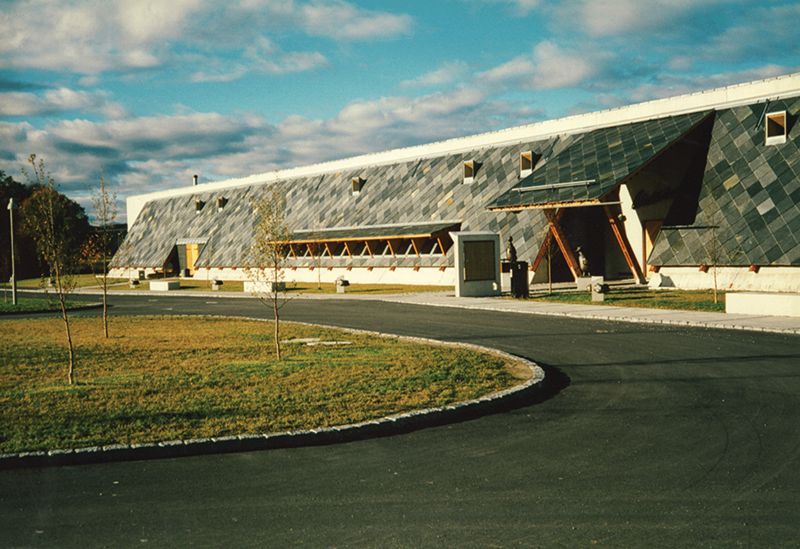
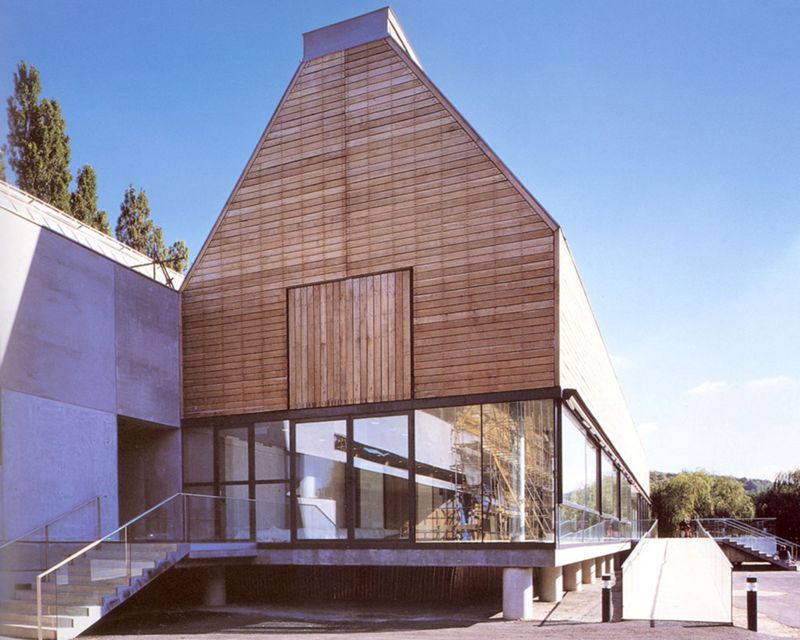
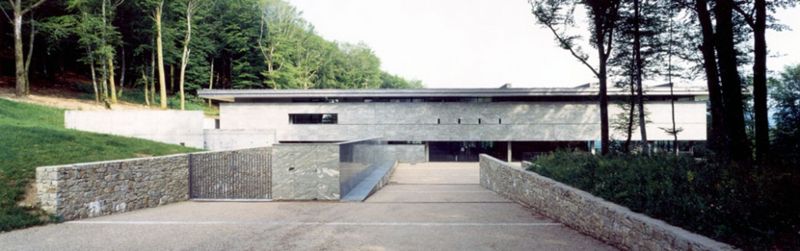
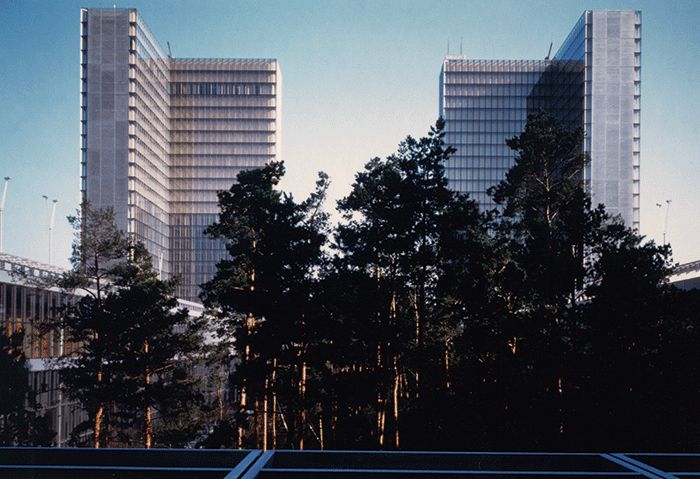
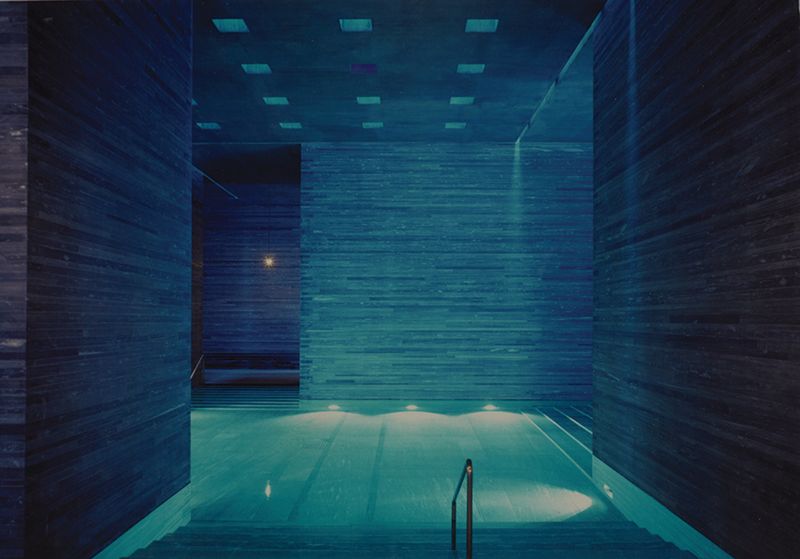
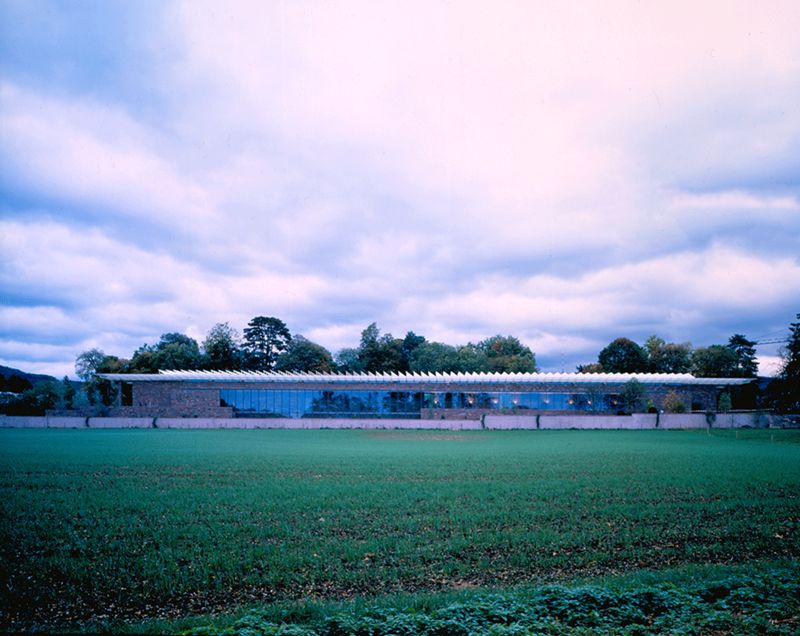
The Fundació Mies van der Rohe discovered me during this period, inviting me to be part of the jury for the 1996 Award. It was also the first jury that, after selecting the finalists, planned a visit specifically to see the works. A truly surreal journey, which Diane Gray, via gargantuan efforts, organised by booking return flights for everyone. We met in Trondheim, in Norway. Then we took a minibus to the middle of nowhere, hours of travelling through a no-man’s-land covered in snow to Sverre Fehn’s Aukrust Centre. And from Trondheim we headed back toward London. We travelled by coach to a romantic rural hotel and, the next day, we left for David Chipperfield’s Rowing Centre. It was striking, although the inside construction had not been started yet. Then from London, we flew to Lyon. And from there, we jumped on a coach to the European Archaeological Centre by Faloci, and then carried on toward Paris. There we had a detailed guided tour of Dominique Perrault’s National Library of France. Flight from Paris to Zurich. And by coach to see the Vals Thermal Baths by Zumthor. After returning to Zurich, a flight to Athens. The next day, we caught a flight to Thessaloniki, the cultural capital of 1997, where the jury had to meet for the final session. The award went to Dominique Perrault, because the National Library was the work that most clearly highlighted the development of European cities.
Title of group
Culture

Aukrust Center
EUmies Awards 1996
Architecture finalists
Sverre Fehn Architect
Sverre Fehn
EUmies Awards Architecture & Emerging
Culture
River and Rowing Museum
EUmies Awards 1998
Shortlisted
David Chipperfield Architects
David Chipperfield
EUmies Awards Architecture & Emerging
Culture
European Archaeological Center
EUmies Awards 1994
Nominees
Pierre-Louis Faloci
Pierre-Louis Faloci
EUmies Awards Architecture & Emerging
Education
French National Library
EUmies Awards 1996
Architecture winners
Dominique Perrault Architecte, Paris.
Dominique Perrault
EUmies Awards Architecture & Emerging
Food & Accommodation
Thermal Bath
EUmies Awards 1996
Architecture finalists
Büro Peter Zumthor
Peter Zumthor
EUmies Awards Architecture & Emerging
Meanwhile, the Fundació Mies van der Rohe extended the award institution, establishing an advisory committee with several European architectural organisations. These included Vienna’s Architekturzentrum. In upcoming years, this led to increasingly more gatherings outside of jury sessions, in which there were extremely open and unified talk of how the structure of the award would evolve, the task of publicising the award among the general public, the composition of the jury and many other organisational matters. The structure was upheld by which there was always an initial meeting of the jury in January, which selected five to seven finalists, and then nominated some 30 projects for exhibition. Some months later the jury travelled to visit the finalists. The philosophy for selecting jury members was that half of the members would be new each time, in order to ensure continuity through the experience of the remaining jurists.
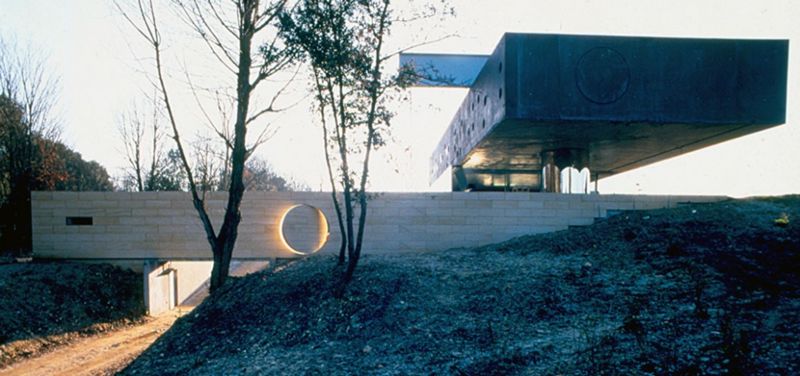
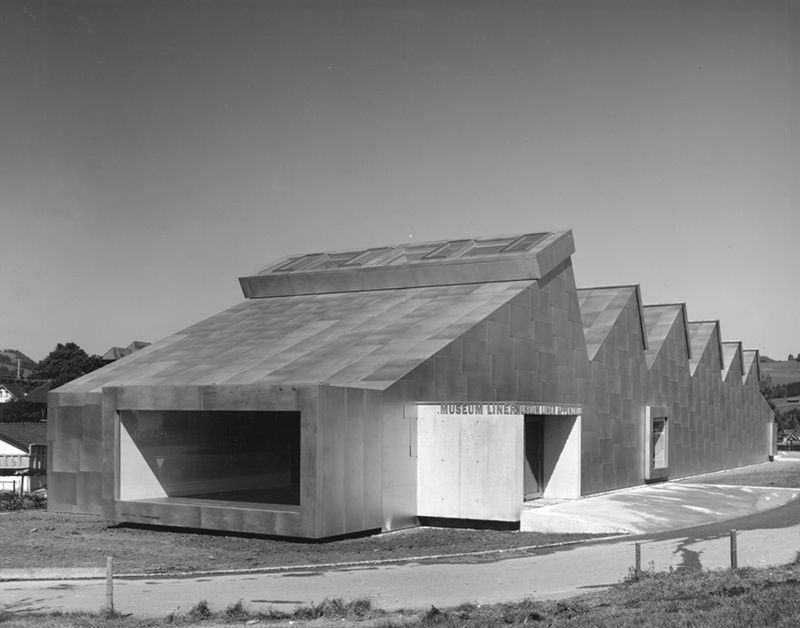
For this reason, in 1998 I was also on the jury, which was marked by a dramatic decision, which is now legendary. We visited the Maison Bordeaux by OMA, the Beyeler Foundation by Renzo Piano, the Appenzell Museum by Gigon and Guyer, the Bregenz Art Museum by Zumthor and the Jewish Museum by Libeskind. Before the visit, after the first jury meeting, the absolute favourite was the Jewish Museum. But the actual construction was disappointing. Discussions favoured the Maison Bordeaux and the Bregenz Art Museum. After several votes, the outcome was always the same: 4:4. The chairman, Vittorio Magnago Lampugnani, abstained from voting. Advocates of Zumthor loathed by Maison by OMA. Conversely, those who championed OMA acknowledged Zumthor’s work. Eventually exhaustion left its mark, and OMA defenders resigned, casting their vote for the Bregenz Art Museum.
Single house
Villa in Bordeaux
EUmies Awards 1998
Architecture finalists
Office for Metropolitan Architecture
Rem Koolhaas
EUmies Awards Architecture & Emerging
Culture
Beyeler Foundation
EUmies Awards 1998
Architecture finalists
Renzo Piano Building Workshop
Renzo Piano
EUmies Awards Architecture & Emerging
Culture
Museum Liner Appenzell (renamed: Kunstmuseum Appenzell)
EUmies Awards 1998
Architecture finalists
Annette Gigon / Mike Guyer Architekten
Annette Gigon · Mike Guyer
The museum’s quiet spaces are designed to accommodate works of art in changing presentations. Gabled roofs of different heights provide the illumination for the exhibition spaces while also defining the zig-zag shape of the building. The façade and roofs are clad with large sandblasted sheets of stainless steel, interpreting the traditional wood-shingled Appenzell architecture.
EUmies Awards Architecture & Emerging
Culture
Art Museum of Bregenz
EUmies Awards 1998
Architecture winners
Büro Peter Zumthor
Peter Zumthor
A fine haze floating over the water, a radiance hanging in the air: the light of Lake Constance. Our dream was to capture this light in the spaces of the new art museum. So we worked out, how the daylight would enter the exhibition spaces laterally and developed the building as a daylight museum.
EUmies Awards Architecture & Emerging
Culture
The Danish Jewish Museum
EUmies Awards 2005
Nominees
Studio Daniel Libeskind
Daniel Libeskind · Susanne Milne · Jogen Hempel
EUmies Awards Architecture & Emerging
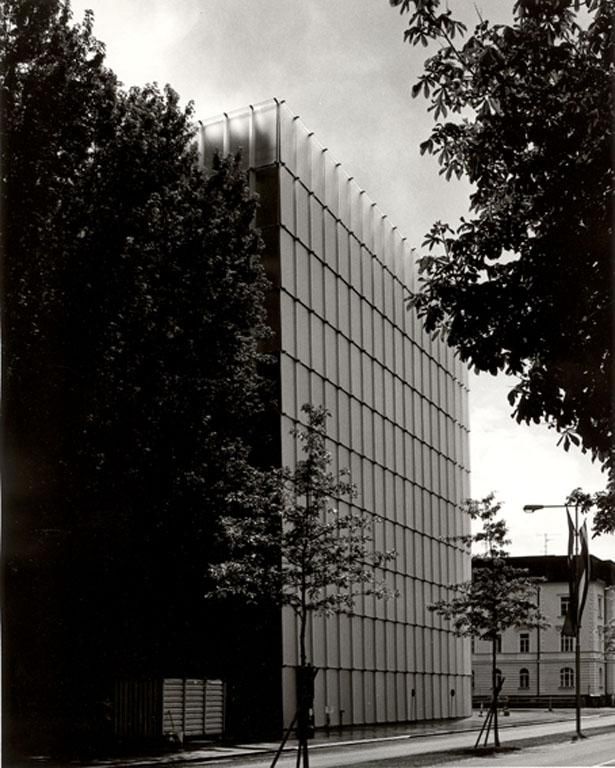
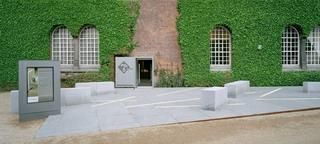
Starting in 2000, the EU became part of the process to announce the call for the award, and its organisation once again made the call at a European level. This translated, firstly, into a critical situation for the Fundació Mies van der Rohe. Any other institution in Europe could have opted for organising the award. Suddenly, the experience of the Foundation and its archives had lost all value. In my opinion, there was only one solution: all institutions that were on the advisory committee should have to be presented jointly with the Foundation. In this way, no other relevant European competitor could compete to organise the award. Furthermore, the bureaucracy in the EU wanted to put an end to the traditional process for determining the best European project and now wanted to award the first project by a young European architect that had not been executed in their own country. With a multitude of phone calls and interventions, we managed to convince EU bureaucracy that this idea was impossible, both with regard to content and to logistics. It all ended with the introduction of an additional award for emerging architects, with no further or more precise definition.
Given the new dominance of the EU in organising the award, an unexpected problem soon arose for the 2001 jury. Only countries that were not EU member states but that had cultural agreements with the EU could participate in the award. However, Switzerland had refused to ratify a cultural agreement with the EU. For this reason, through today’s date all projects by Swiss architects in Europe and all projects by European architects in Switzerland have been excluded
from the EU Mies Award. This cultural absurdity is the exclusive responsibility of Swiss cultural bureaucracy.
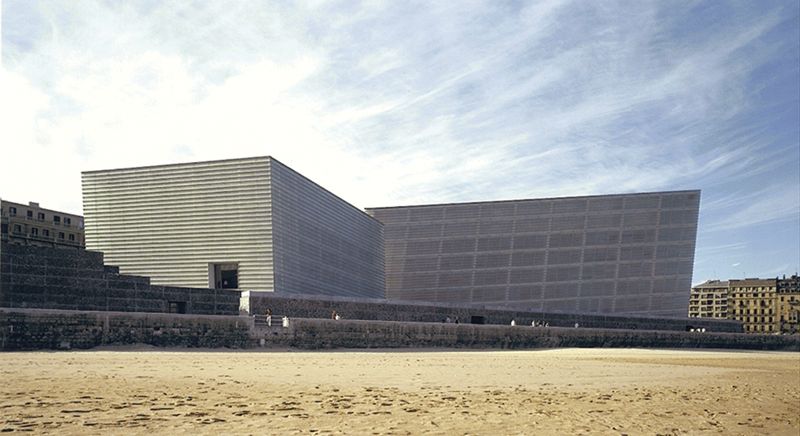
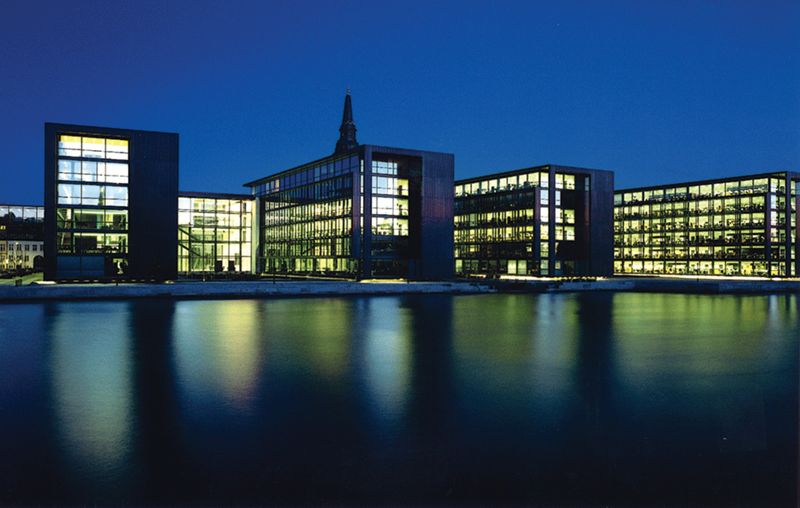
Once again, the visit to the finalists turned into an impressive journey throughout Europe. In Nantes, visit to the Courthouse by Jean Nouvel. The next day to Altamira. Juan Navarro Baldeweg had built a museum with replicas of cave paintings, incredibly faithful to the originals. We carried on to San Sebastian to visit the new Kursaal Congress Centre by Rafael Moneo. Then Copenhagen to see the Unibank building by Henning Larsen. For some jury members, it was a compelling solution to corporate architecture. An office building with great features and qualities in both inside and outside spaces. It would have been a symbol for an office building to have won the award. However, its advocates were a minority. And Moneo just won the award, with four votes for and three against. From a purely architectural viewpoint, the best choice for 2001 would have undoubtedly been Tate Modern by Herzog & de Meuron, or the Lucerne Cultural Centre by Jean Nouvel. But Switzerland prevented this.
Government & Civic
Courthouse
EUmies Awards 2001
Architecture finalists
Ateliers Jean Nouvel
Jean Nouvel
EUmies Awards Architecture & Emerging
Culture
Altamira Museum and Research Centre
EUmies Awards 2001
Architecture finalists
Navarro Baldeweg Asociados SL
Juan Navarro Baldeweg
For many years, conservation problems at the Altamira cave imposed restrictions on the number of visitors. Consequently, the need arose to create a replica as well as a new museum and research centre in which to preserve and display archaeological finds.
EUmies Awards Architecture & Emerging
Culture
Kursaal Centre
EUmies Awards 2001
Architecture winners
Rafael Moneo
Rafael Moneo
In spring 1990, San Sebastian’s City Hall organized an invitational competition to build an auditorium and congress center on the plot where the Gran Kursaal casino had stood.
EUmies Awards Architecture & Emerging
Office
Unibank Headquarters
EUmies Awards 2001
Architecture finalists
Henning Larsen Architects
Henning Larsen
EUmies Awards Architecture & Emerging
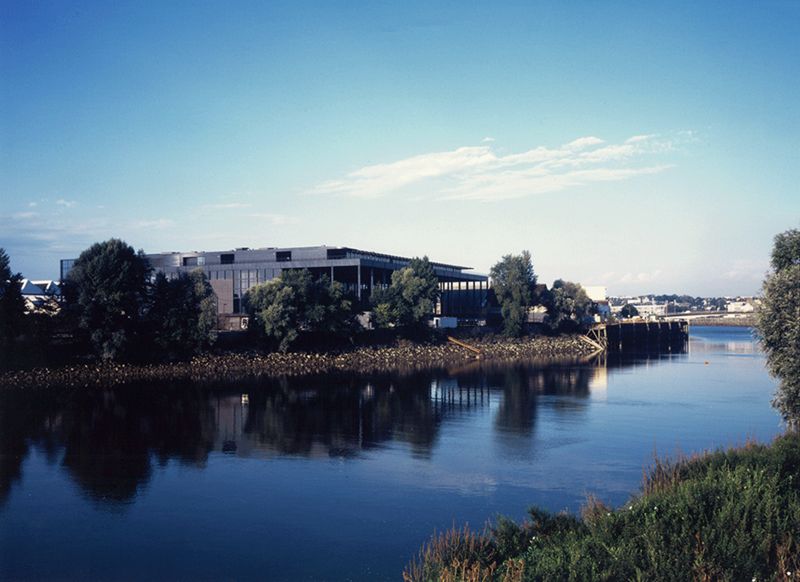
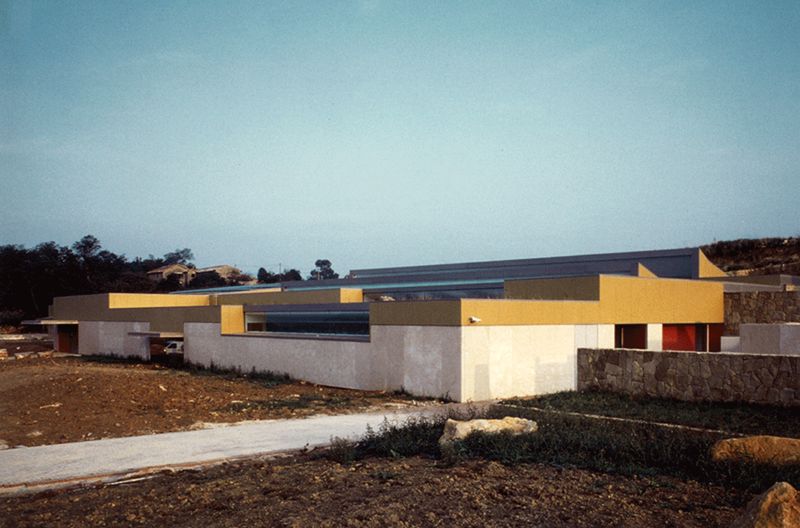
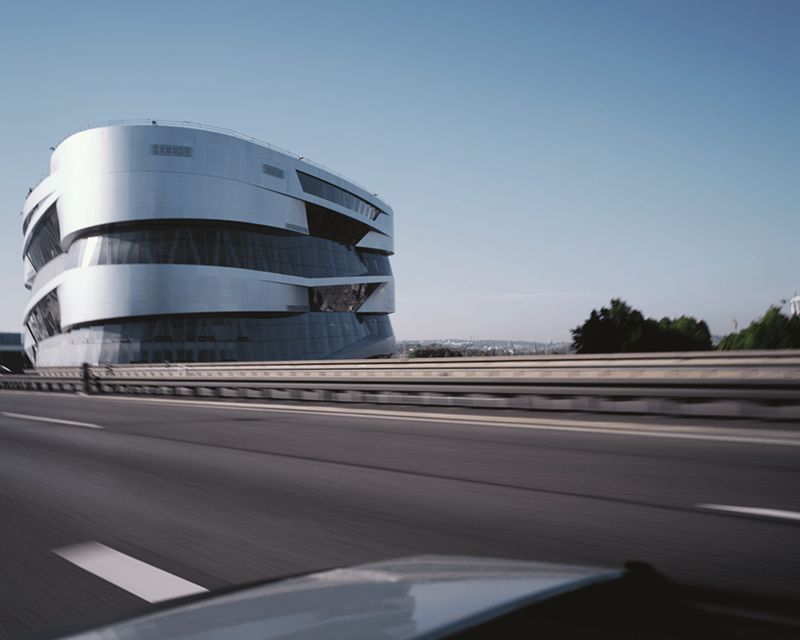
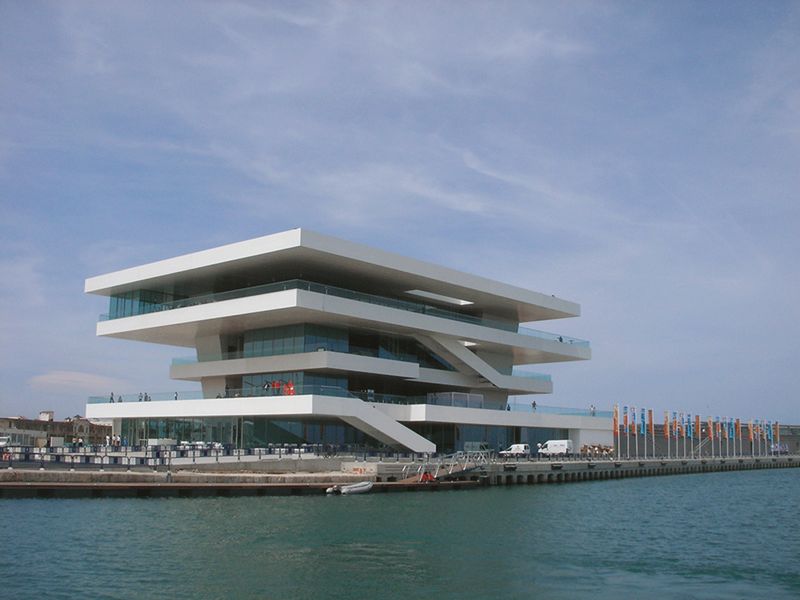
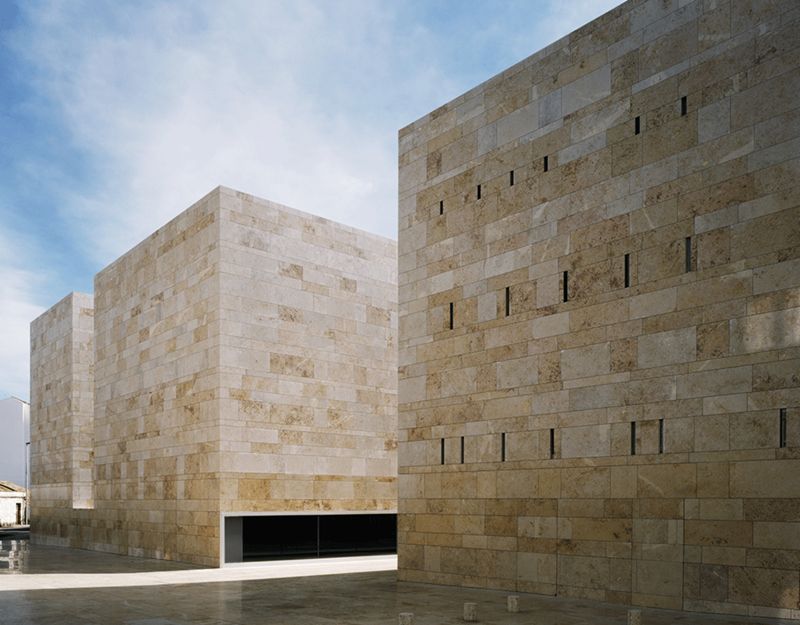
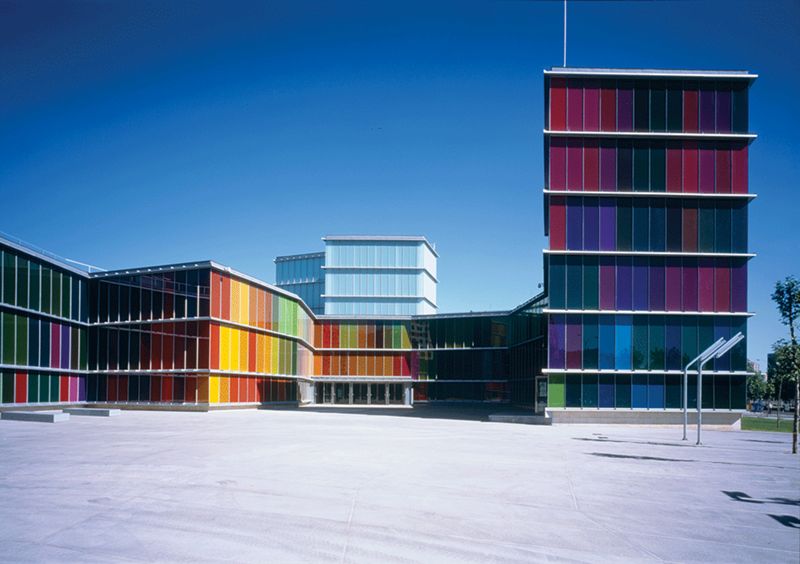
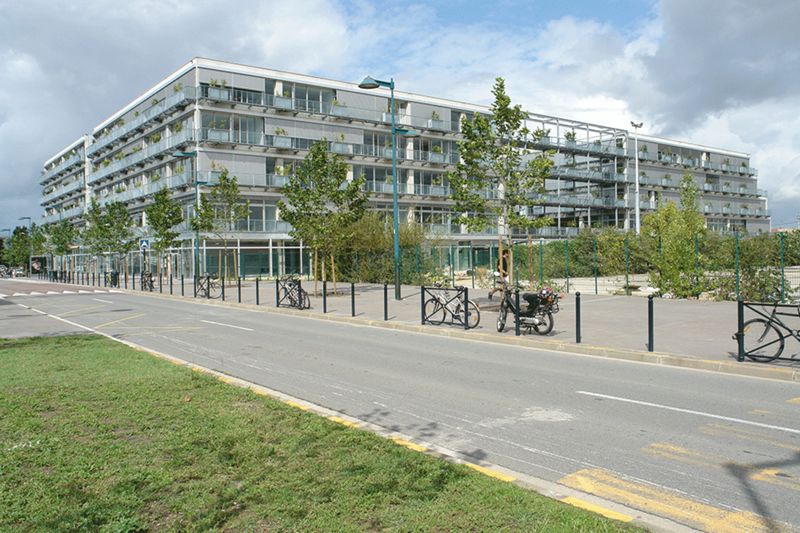
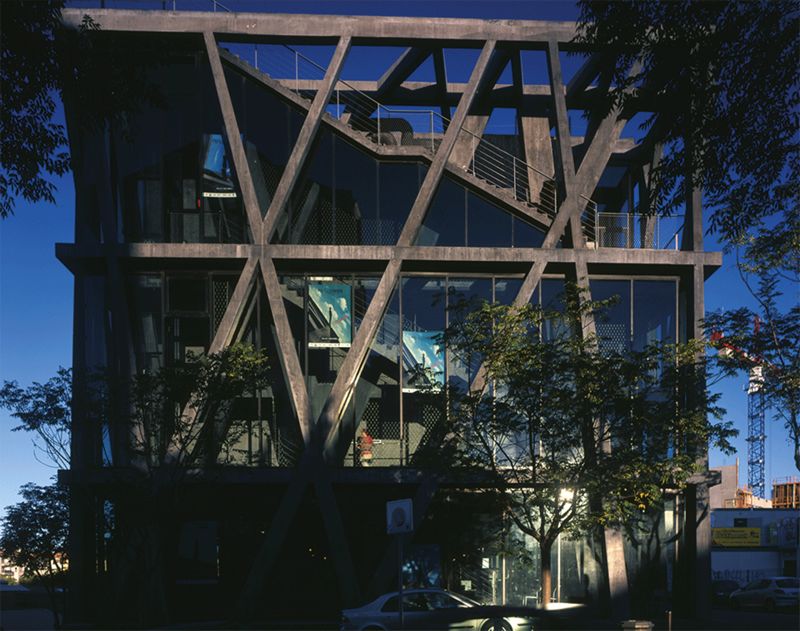
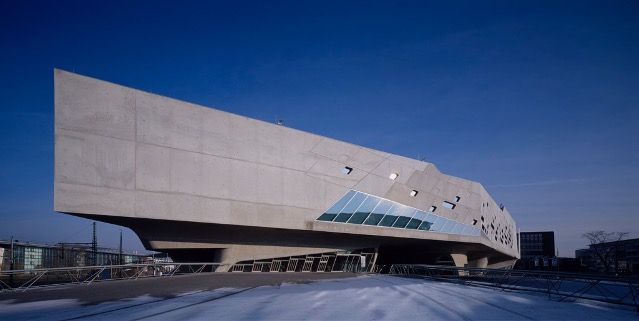
The last time I participated on the jury was in 2007. After selecting the finalists that we were going to visit, it was clear that the Mercedes- Benz Museum should be the winner. Jury members met up in Valencia to visit the America’s Cup Building by David Chipperfield, striking in its conceptual clarity. The organisation of the EU Mies Award would have taken an enormous leap forward in its professionalism. Then we continued on a small charter flight, because we otherwise would have been unable to traverse the lengthy European distances. Next stop in Lisbon, and then by coach to Sines. A Cultural Centre by Aires Mateus Architects. The images and plans were better than the construction reality. We carried on to León. The MUSAC by Mansilla and Tuñón was not particularly impressive in photographs and plans. But seeing the spaces and multifunctional uses was convincing. The same day we headed for Bordeaux. The Management Sciences University by Lacaton & Vassal. Very conceptual, with spaces and relationships to the outside of stunning beauty. Albeit executed crudely and austerely. Then Marseille. The Choreography Centre by Rudi Ricciotti in Aix-en- Provence is, despite its sculptural audacity, a conceptually well-designed building. We landed in Stuttgart on the same day, with a luxury escort to visit the Mercedes-Benz Museum. In reality, it was a massive physical effort. The next day, in Wolfsburg, we visited the Phaeno Science Centre by Zaha Hadid. Autistic, with weak spaces, it just didn’t work in the city. Meeting: A voting ritual that was somewhat more formal this time and, in the end, the MUSAC just barely won, partly due to its contribution to recovering the surroundings and, with that, a European city. We were all satisfied, and Ben van Berkel harassed me within a couple days with questions and text messages, not understanding why he had not won with his Mercedes-Benz Museum.
Culture
Mercedes-Benz Museum
EUmies Awards 2007
Architecture finalists
UNStudio
Ben van Berkel
EUmies Awards Architecture & Emerging
Sport & Leisure
America’s Cup Building
EUmies Awards 2007
Architecture finalists
David Chipperfield Architects · b720 Fermín Vázquez Arquitectos
David Chipperfield · Fermín Vázquez Huarte-Mendicoa
EUmies Awards Architecture & Emerging
Culture
Sines Arts Centre
EUmies Awards 2007
Architecture finalists
Aires Mateus e Associados
Francisco Aires Mateus · Manuel Aires Mateus
EUmies Awards Architecture & Emerging
Culture
MUSAC – Contemporary Art Museum of Castilla y León
EUmies Awards 2007
Architecture winners
Mansilla + Tuñón Arquitectos
Emilio Tuñón Álvarez · Luis Moreno Mansilla
EUmies Awards Architecture & Emerging
Education
School for Management
EUmies Awards 2007
Architecture finalists
Lacaton & Vassal architectes
Anne Lacaton · Jean Philippe Vassal
EUmies Awards Architecture & Emerging
These have been some personal and unofficial anecdotes of the juries and evolution of the EU Mies Award. I’ve been able to participate on the jury four times. Twice I was in the minority when voting, and the other two times I was happy with the result. But all the juries aroused fascinating debates about the recent quality of architecture. Visits are extremely important and essential. In the current tsunami of awards related to architecture, the unique quality, alone in its class, of the EU Mies Award rests with these in situ visits of the finalists’ creations. Time and again the jury—after making selections based on viewing only plans in the first jury session—when visiting the actual constructed result, ended up changing their decisions. Architecture can only be judged if one can experience the reality of the building.
Culture
National Choreographic Centre
EUmies Awards 2007
Architecture finalists
Rudy Ricciotti
Rudy Ricciotti
EUmies Awards Architecture & Emerging
Culture
Phæno Science Centre
EUmies Awards 2007
Architecture finalists
Zaha Hadid Architects
Zaha Hadid
EUmies Awards Architecture & Emerging
For this reason, it’s not so important to me who won the award in past years. This often depends on the jury composition. The global archives of the EU Mies Award is of fundamental importance, including all the nominations and all those selected for exhibition and all the finalists, which provide a representative panorama of European architecture.
Twenty years have gone by since my first contact with the Fundació Mies van der Rohe. Beyond the juries, they have been intense years of teamwork, always marked by the desire to improve the logistics and popularity of the award. With the aim of fostering the quality of the contents of architecture and contributing to the development of a contemporary European identity. ‘My Barcelona’ has become established as an ideal meeting point in the world of architecture.