-

Exterior photo
-
Exterior photo
-
Exterior photo
-
Exterior photo
-
Exterior photo
-
Interior photo
-
Axonometry
-
Site Plan
-
First Floor Plan
-
Second Floor Plan
-
Underground floor Plan
-
Section
Winery S Strekov
What architects. Strekov, Slovakia
-
Name of work in English
Winery S Strekov
-
Name of work in original language
Vinárstvo S Strekov
Prize year
EUmies Awards 2026
-
Work Location
Strekov, Slovakia
-
Studio
What architects
EUmies Awards 2026 Nominees

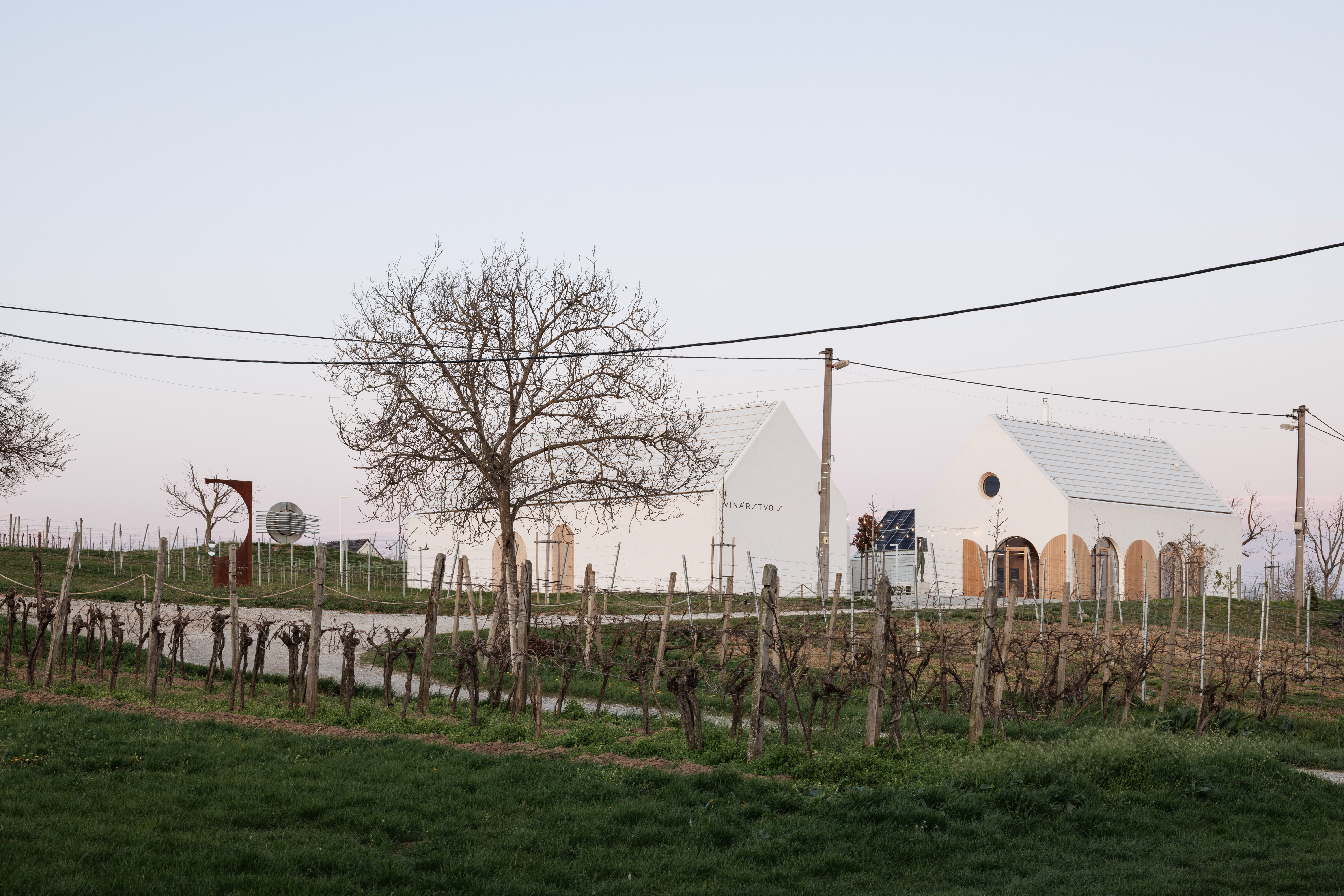




S Winery is the result of a competition initiated by a private investor, located in a key Slovak wine region. The project, which comprises six compact volumes that reflect local tradition, was awarded by the Slovak Architecture Award CE ZA AR in the Public Buildings category.
Collaborators
Landscape: Lenka Gulačová - GULAČOVÁ + ŠEREŠ architekti; Collaborator (office): Ján Majerník - Miestor s.r.o.
Program
Industrial
-
Labels
Winery
Site area
7423 m²
-
Client
Ston, a.s.
Total gross floor
441 m²
The winery is situated in Strekov, a region with a long and established tradition of winemaking. The building's design is a reflection of its context, adopting the dimensions and architectural style of traditional vineyard houses, which are constructed from brick and feature gabled roofs. The structure is subdivided into six white single-storey volumes. The functions are arranged around a courtyard, the perimeter of which is defined by an array of trees. The use of white-painted brick serves to blend the complex into the local landscape, thereby establishing a distinct identity.
The primary challenge confronting the project team was the integration of a new winery into a traditional rural environment, with the objective of preserving the integrity of the local character. The design strategy focused on fragmentation, creating smaller units that align with the local scale. The project also involved the preservation of the original vineyard layout, complemented by the introduction of native vegetation, thereby establishing a continuity between the new architecture and the historical landscape. An extant historic wine cellar was restored and repurposed to connect the showroom with the production area. The project is not only aligned with the client's functional requirements, but also contributes to the enhancement of regional cultural identity and the promotion of tourism potential, thereby offering long-term value to the local community.
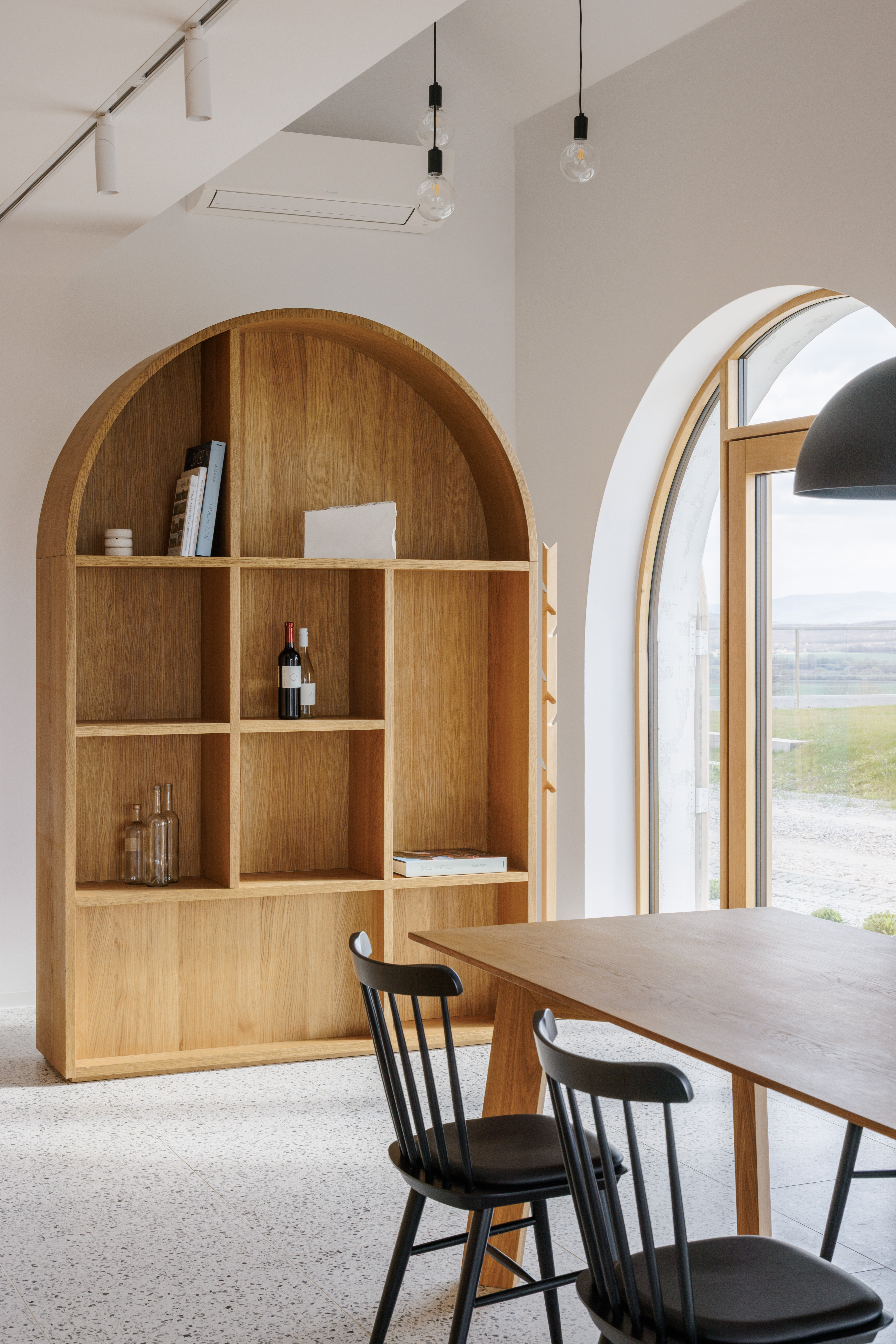
All buildings are constructed using traditional brick masonry, offering both structural strength and a timeless aesthetic that ties the winery to local architectural heritage. Roofs are covered with white ceramic tiles, selected for their clean appearance and practical role in reducing heat absorption. This helps maintain a stable, natural climate in the cellar spaces below ground, essential for proper wine storage and aging. Skylights were deliberately avoided to prevent overheating. Instead, natural light enters through small, carefully placed round windows in gable walls and arched openings on facades. These arches provide soft, diffused daylight and reference traditional vaulted wine cellar architecture and historic gates found in local artisan and vineyard buildings. From an environmental and sustainability perspective, the project emphasizes passive cooling methods, increasing energy efficiency and reducing reliance on mechanical climate systems.