-

Ansicht vom Portikus der Karlskirche
-
Ansicht vom Karlsplatz
-
Terrasse Wienraum mit Blick zur Kalskirche
-
Zentrale Halle
-
Schwebegschoss, Raum für Sonderausstellungen - Hängekonstruktion
-
Fugengeschoss - Wienraum
-
Längsschnitt
-
Querschnitt
-
Westansicht
-
Grundrisse
-
Schnitte
Wien Museum
Čertov / Winkler+Ruck. Vienna, Austria
-
Name of work in English
Wien Museum
Prize year
EUmies Awards 2026
-
Work Location
Vienna, Austria
-
Studio
Čertov / Winkler+Ruck
EUmies Awards 2026 Nominees
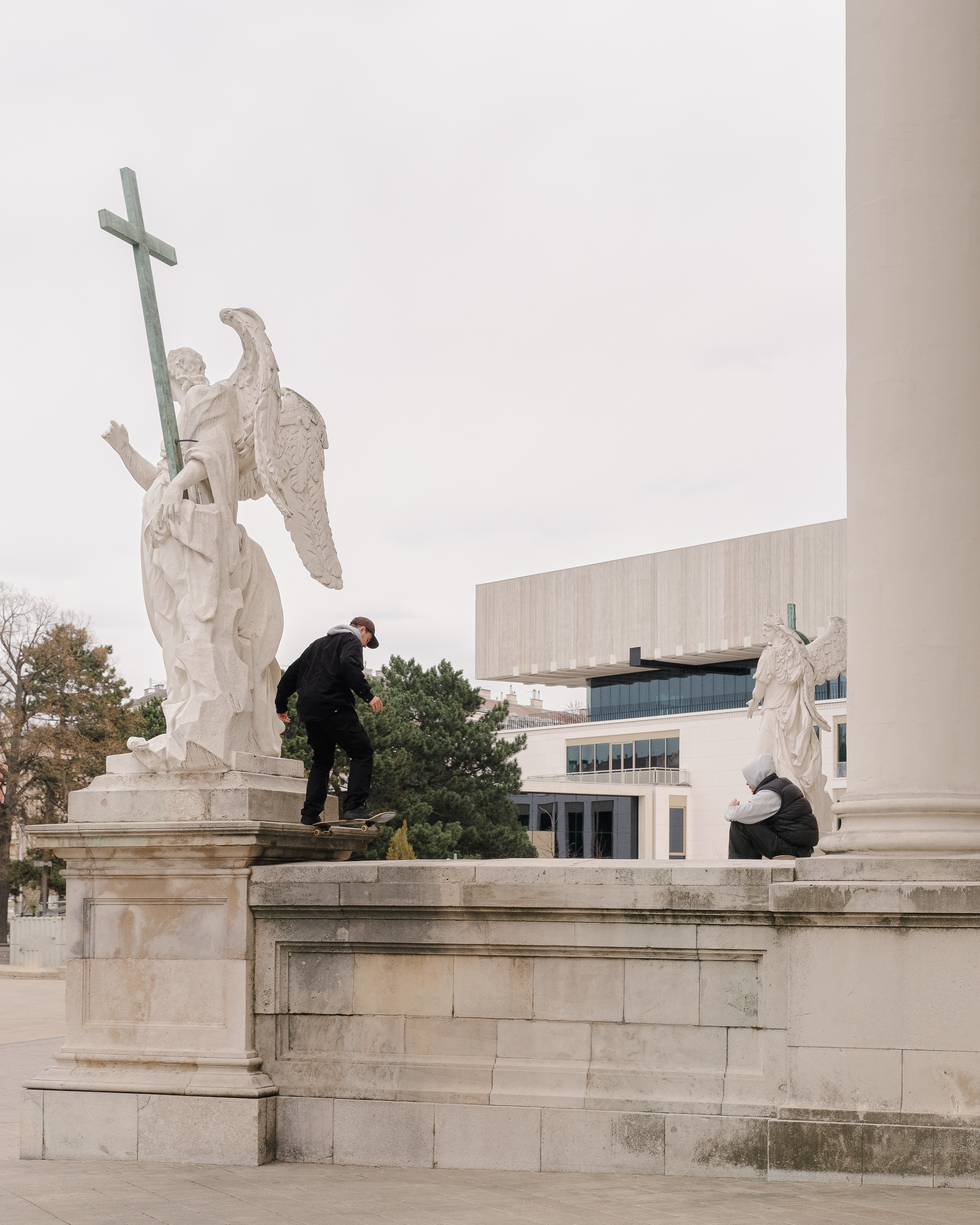


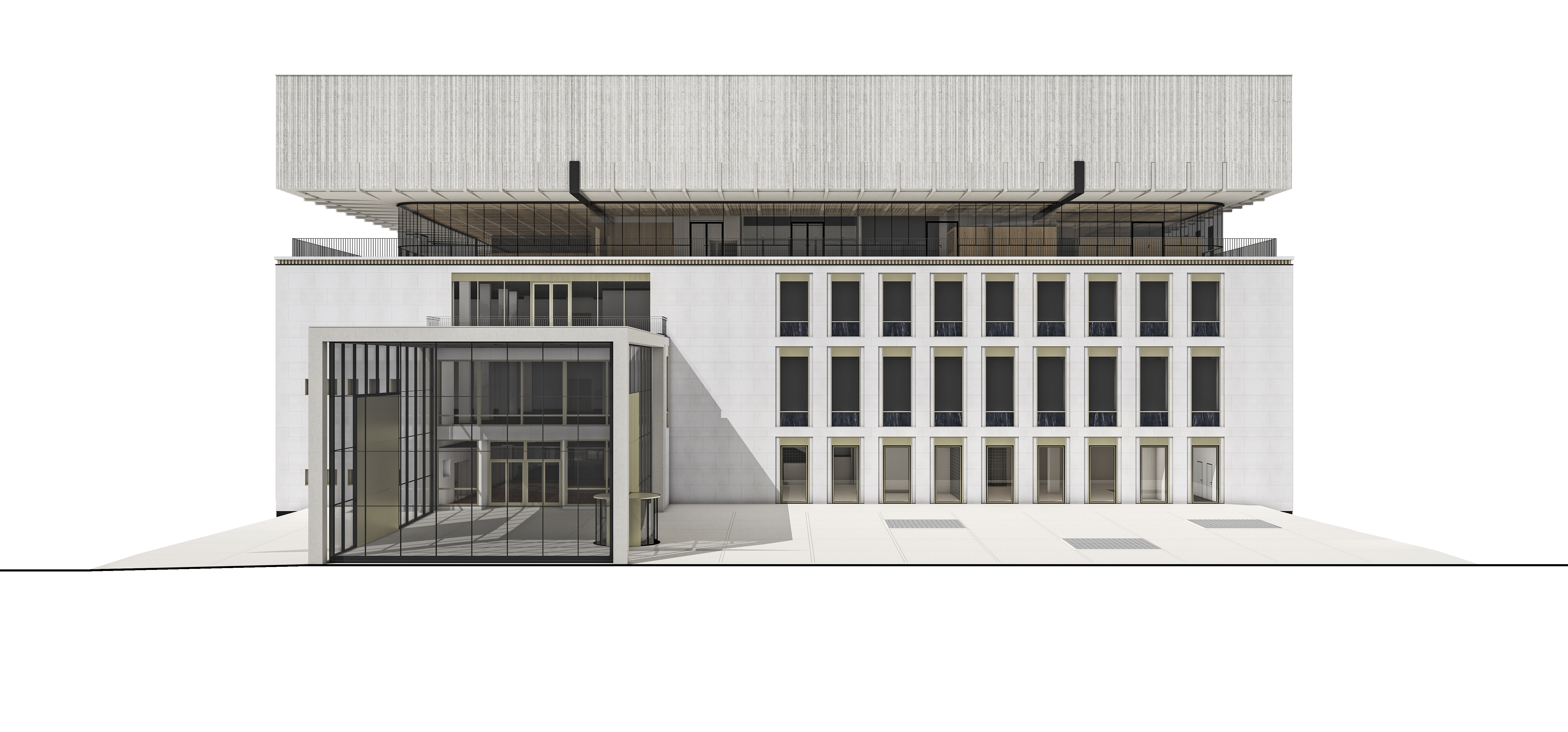


The first museum of the post-war period in Austria (1959, Haerdtl) was expanded and renovated. The new building components emerge from the large openings of the existing structure, creating a new sense of urbanity and an appropriate presence at Karlsplatz. In relation to the city space, it becomes an everyday place for everyone.
Collaborators
Collaborator (office): Dietmar Hribernig - Čertov / Winkler+Ruck; Collaborator (office): Christoph Gradauer - Čertov / Winkler+Ruck; Project management: bitzan Beratung & Management; Structure: Bollinger + Grohmann ZT GmbH; Building physics: Pilz und Partner ZT GmbH; Fire Safety and Accessibility: Norbert Rabl ZT GmbH; Installations: Lakata GmbH, EPG-Elektroplanung GmbH; Lighting: Pokorny Lichtarchitektur; Collaborator (office): Claudia Wiehn - Čertov / Winkler+Ruck; Collaborator (office): Hannes Jelitsch - Čertov / Winkler+Ruck; Collaborator (office): Roland Kaltenegger - Čertov / Winkler+Ruck; Collaborator (office): Felix Müller-Hartbug - Čertov / Winkler+Ruck; Collaborator (office): Max Keil - Čertov / Winkler+Ruck; Collaborator (office): Tina Hude - Čertov / Winkler+Ruck; Collaborator (office): Antonia König - Čertov / Winkler+Ruck; BIM: Harald Grantner - TB Grantner
Program
Culture
-
Labels
Museum · Exhibition · Art Gallery · Memorial
Site area
12100 m²
-
Client
Museen der Stadt Wien
Total gross floor
3510 m²
The listed Vienna Museum at Karlsplatz, located in the immediate vicinity of Fischer von Erlach’s Karlskirche, had gradually drifted into urban insignificance over time. The intervention brings the building back onto the square as an active, strong, urban, and new meeting point for Vienna. During the renovation, the annexes of the neighboring building were removed, allowing the museum to stand once again as a freestanding structure on the square. The technical equipment was updated to meet the requirements of a contemporary museum, and the usable area was nearly doubled.
Heritage protection – a dialogue with the existing structure. Old and new were designed with earthquake safety in mind so that both building structures can move independently. The added new building in the former museum atrium was statically anchored without touching the existing structure. The added component rises one story above the original building, creating a gap that serves as a publicly accessible terrace level—with a unique view of the Karlskirche and Vienna. This space between old and new provides room for social activities, events, and museum education. The blending of old and new as one moves through the building is experienced as a journey through time—a harmony that a purely new building could never achieve. At the heart of the museum is the central hall for large-scale objects, which is traversed multiple times on different levels along the exhibition route. The space impresses with its monumental, sculptural qualities, enhanced by specially designed lighting.
(Cultural) Architectural Sustainability The existing structure was professionally restored, and the façade was thermally upgraded. In response to the multi-part character of the original building, the massive volume of the suspended floor was cast in finely detailed concrete and transferred to the ground through the former courtyard. Cantilevering is supported by four steel tension rods, allowing the entire intermediary floor to remain column-free. Concrete, cast against rough boards, forms a visible sculptural element that serves as the keystone of the extension—a new, unified whole together with the existing structure. A stable museum climate is ensured through building component activation, breathable clay plaster, and electrochromic glazing, while thirty deep geothermal probes provide the necessary energy. Electricity is supplied by the photovoltaic system installed on the roof. The dramatic spatial experience, combined with complex structural engineering and intelligent (geothermal) energy systems, represents a confident contribution to urban, cultural, and ecological sustainability.