-

Night scene to the front facade
-
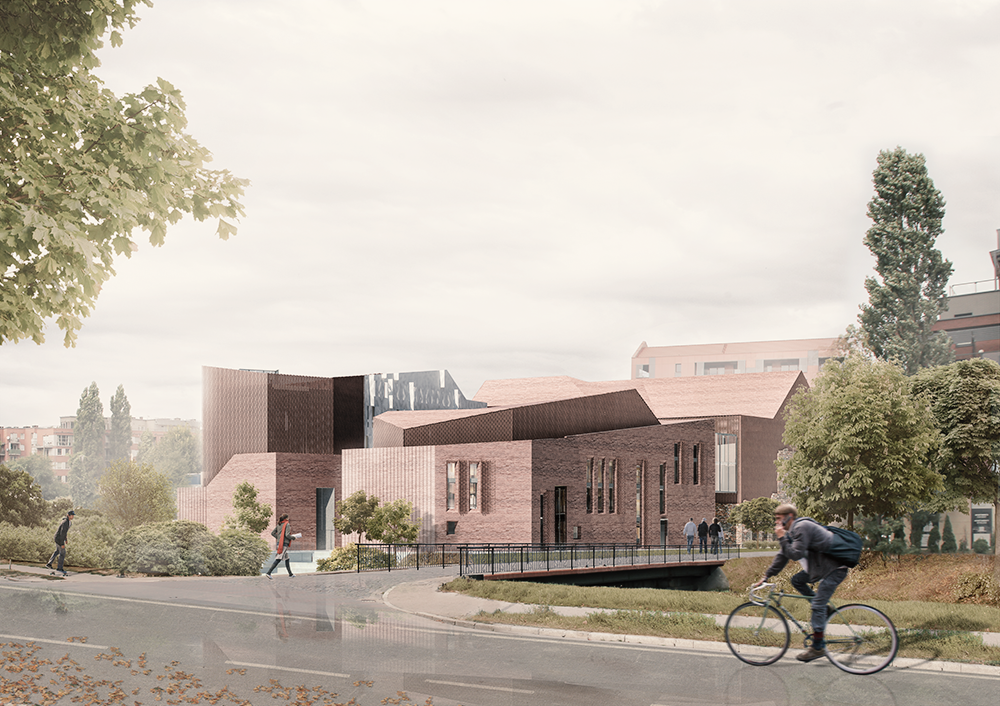
Arrangement of objects on the street side
-
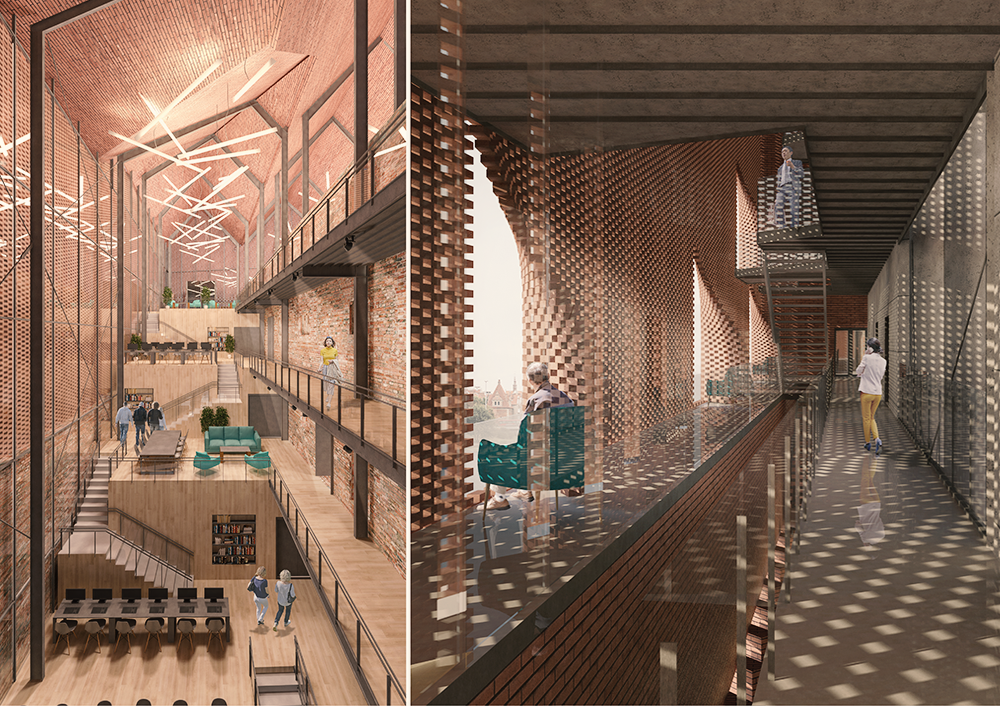
Visualization of the interior of the adapted ruins and the corridor of the object by the river
-
View of the courtyard entrance, and view from the inside of the courtyard.
-
Land development, together with the development scheme
-
Cross-sections, facades and view of the foyer.
-
Axonometry of the building layout
-
Vertical panel
-
Water as a connector of urban space.
Robert Nakielski. Gdansk, Poland
-
Name of work in English
Water as a connector of urban space.
-
Name of work in original language
Revitalization of a water space, adaptation of the granaries "Czerwony Lew" and "Bia?y Ko?"
Prize year
Young Talent 2020
-
Work Location
Gdansk, Poland
-
Author/s
Robert Nakielski
-
School
Faculty of Architecture - Gdańsk University of Technology.
Gdansk, Poland
Young Talent 2020 YT Nominees



Water as a connector of urban space.
Revitalization of a water space, adaptation of the granaries "Czerwony Lew" and "Bia?y Ko?"
Program
Culture
-
Labels
Culture Centre · Art Gallery
The subject of the thesis is a set of service buildings resulting from the adaptation of the ruins of the “Czerwony Lew” and “Bia?y Ko?” granaries as well as the design of accompanying buildings. The main goal of the thesis is to stimulate the socio-economically of the chosen zone of Gda?sk, along with the integration of the local community.
The starting point of the architectural concept was to solve the problem of pedestrian access to the southern part of Gda?sk. For this purpose, it was proposed to lead a pedestrian route in the form of a footbridge, stretching along the entire length of “Old Motlawa”. The purpose of newly designed cultural center is to act as both an attractor for potential users of the new space, as well as a stimulator of local community activity. To encourage the local community to use the building and thus build relations between residents, a series of functions were offered, such as: a -1 level art exhibition hall, a multi-story gastronomy, a media library in adapted granary ruins, conference rooms, workshop rooms, and a space to relax. Local artists received support in the form of work space and a art gallery where they can exhibit their projects. Then it was important to pay attention to the night scenery of the areas around the river. You can see a clear difference in the night illumination between the city center and the designed area with its accompanying buildings. Therefore, an important element was the implementation of the accent in the form of a strongly illuminated front facade to the night scenery of these areas. Basic assumption for the newly designed buildings, was to not disturb the surrounding space. In order to adapt the design buildings to the surrounding, as well as to the nature of the buildings in all of Gda?sk, it was decided to choose a brick as the main facade material. In order to not overwhelm the entire project by this material, it was decided to use different forms of brick walls, as well as accents in the form of metal plates. Then, roof shapes were proposed as a smooth transition between the steep roofs of buildings from the Mot?awa side and the flat roofs of buildings located on the other side of the street.