-

A concrete-rubble ravine, walls inoculated with moss spores.
-
Base of the Mound embedded with fragments of pre-war buildings.
-
The treetop walkway was built among mature trees that were successfully preserved.
-
Lapidarium: A labyrinthine ‘ruin’ housing a historical exhibit.
-
Monumental steps leading to the top of the Mound along the display of rubble.
-
Bricks discovered on the Mound are showcased on the main pathway.
-
Warsaw Uprising Mound siteplan
-
Northeast elevation of The Warsaw Uprising Mound
-
Rubble management
-
Treetop pedestrian footbridge schemes
-
Rubble-concrete ravine
-
Lapidarium-a labyrinth of gabions filled with rubble-a background for a historical exhibition.
Warsaw Uprising Mound
TopoScape, Archigrest. Warsaw, Poland
-
Name of work in English
Warsaw Uprising Mound
-
Name of work in original language
Kopiec Powstania Warszawskiego
-
Work Location
Warsaw, Poland
-
Studio
TopoScape, Archigrest
Nominees

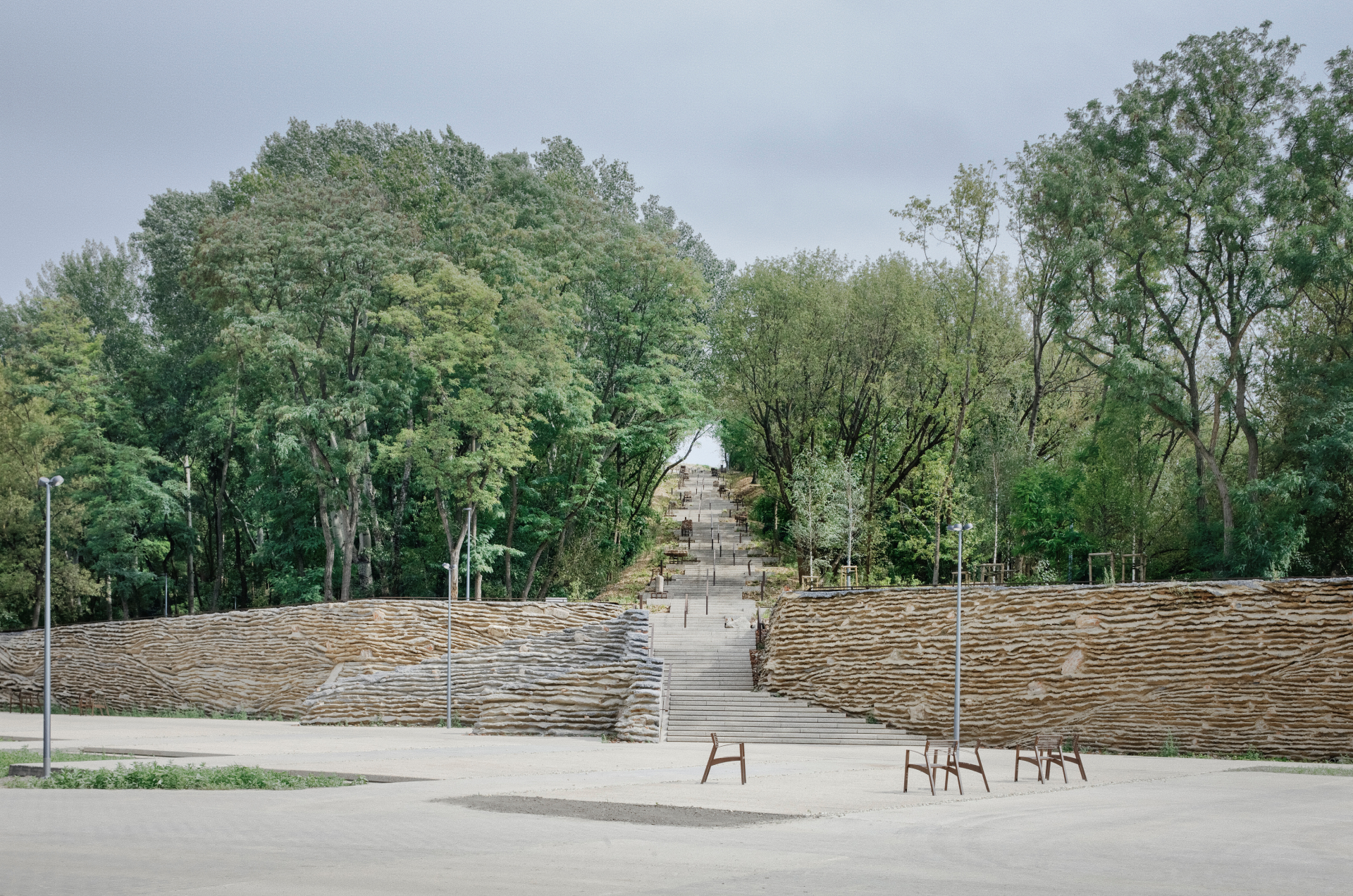


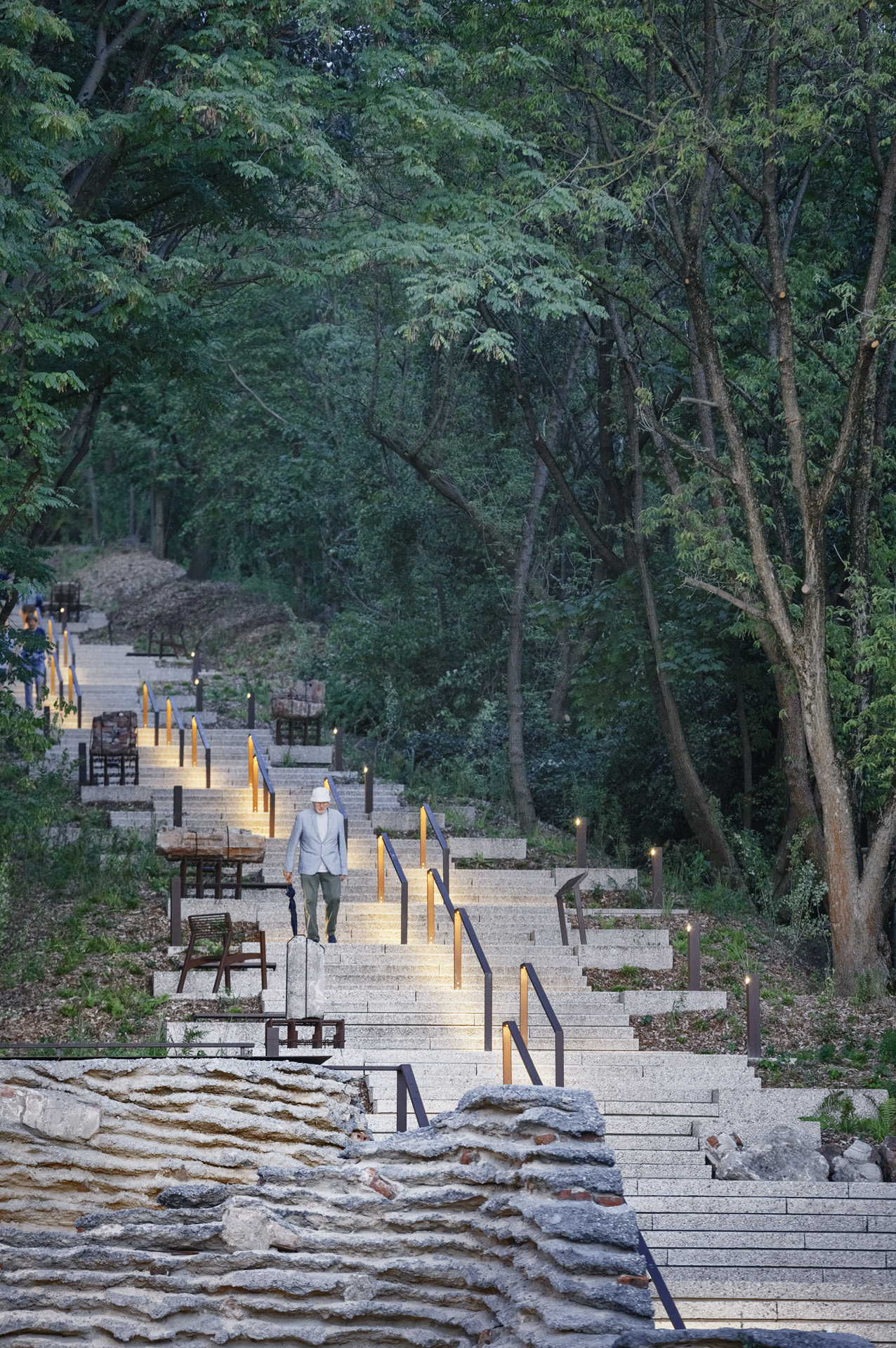


The Warsaw Uprising Mound is a park built atop a post-war landfill. It intertwines commemoration with everyday life, and a reclaimed brownfield with biodiversity. Reflecting on reconstruction, reuse, and nature’s resilience, it envisions a hopeful scenario for landscapes after catastrophe.
Collaborators
Collaborator (office): Karolina Potębska - Archigrest; Collaborator (office): Agata Holdenmajer - Archigrest; Collaborator (office): Natalia Janek - Archigrest; Collaborator (office): Jerzy Przychodni - Archigrest; Collaborator (office): Rafał Murawski - Archigrest; Collaborator (office): Joanna Chylak - TopoScape; Collaborator (office): Anna Sternytska - TopoScape; Collaborator (office): Agnieszka Tama - TopoScape; Structure: Krzysztof Guraj - Konbud; Structure: Paweł Komorek - Konbud; Concrete technology: Krzysztof Kuniczuk; Phytosociological consulting: Piotr Sikorski; Heritage trail consulting: Adam Przywara; Nature trail consulting: Kasper Jakubowski; Visual identity: Kaja Kusztra; Construction management: Sorted
Program
Landscape
-
Labels
Gardens & Parks · Regeneration
Site area
83000 m²
-
Client
Warsaw Greenery Authority / Capital City of Warsaw
Cost
64 €/m²
The Warsaw Uprising Mound is a fully anthropogenic landscape overgrown with spontaneous vegetation. The hilltop is also a commemorative site for the 1944 uprising. Once on the city’s periphery, the area is now rapidly urbanising, with a growing population. The project connects locals by creating a space for everyday recreation while preserving the dramatic memory of the past. The mound’s anthropogenic geology and ecology became the basis for a narrative of the Anthropocene, promoting appreciation for the aesthetics of recycling. The site is reclaimed symbolically, ecologically, and materially.
The site was perceived as inaccessible and generally unsafe. Its ecology was determined by impoverished soils and ruderal vegetation. The project therefore aimed to transform it into a multifunctional, and accessible public space—low-maintenance and resilient—using local resources (vegetation, rubble). Designing began with observations of how people and nature gradually reclaimed the area, followed by the continuation and moderation of these processes. It was informed by multidisciplinary research in phytosociology (ecological succession), architectural history and material technology (rubble concrete). The park’s layout gives sense of security by evoking landscape ‘patterns’, while leaving areas of wilderness inaccessible to people. The community was engaged in consultations, research (BioBlitz), and pocket forest planting. The resulting site-specific design offers a coherent narrative rooted in its materiality, cultivating acceptance for the aesthetics of recycling and imperfection.
The park’s construction was guided by circular principles and low-impact methods. During implementation, various strategies for recovering rubble from earthworks were applied. All the excavated material remained on-site. Rubble was sorted and reused: large fragments were displayed, smaller ones filled gabions, and loose material was processed into modern rubble-concrete for retaining walls. From a distance, their composition reveals the site’s anthropogenic geology; up close, one can discern fragments of the former city—bricks, tiles, etc. This local rock—Warsaw’s “urbanite”—will gradually be overgrown with moss transplanted by a moss–yoghurt mixture. Ruderal vegetation was preserved and complemented with native species adapted to alkaline soils. The plant community is drought-resistant and requires no irrigation. Fascine fences stabilize slopes and support soil formation, while no-dig principles minimize disturbance. Maintenance is limited to selective mowing once or twice a year.