-

South Facade
-
Facade to the sea- protection of wooden slat sliding gates
-
Wool screens that insulate Studio Lomakka
-
The cool bedroom and the warm study
-
Developed outdoor spaces
-
The central social space
-
Siteplan
-
Ground floor
-
Upper floor
-
Sections
-
Facades
-
Facades
Villa Meltem - Salthamn, Gotland
m.arkitektur (Martina Eriksson). Visby, Sweden
-
Name of work in English
Villa Meltem - Salthamn, Gotland
-
Name of work in original language
Villa Meltem, Salthamn, Gotland
Prize year
EUmies Awards 2026
-
Work Location
Visby, Sweden
-
Studio
m.arkitektur (Martina Eriksson)
EUmies Awards 2026 Nominees




The building is situated on the westcoast on Gotland close to the sea, located with a good microclimate and with preserved vegetation around the house to protect against cold winds and give shadow. Energy-smart building starts with placing the house correctly in nature and designing it properly.
Collaborators
Structure: Peter Kristensson - Algeba Byggkonsulter AB
Program
Single house
-
Labels
Isolated · Family
Site area
200 m²
-
Client
Meltem Duzakin
Total gross floor
152 m²
Cost
3500 €/m²
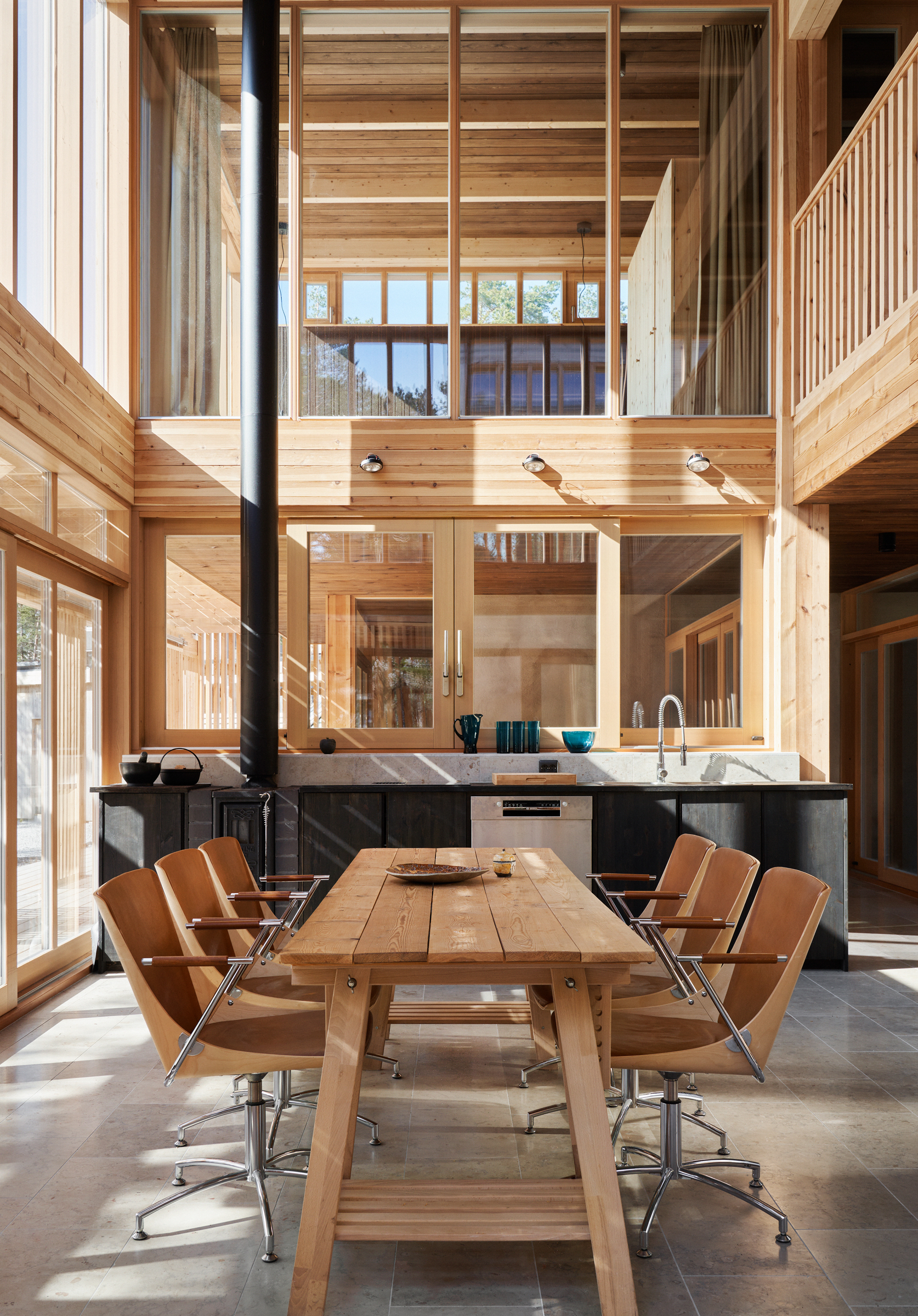
The building consists of various layers, with an outer screen of wood/glass roof and sliding wooden gates that splits the cold wind in the winter, retains heat, and provides coolness in summer. Inside the glass, there are sliding wool screens, that insulate against cold and heat. The concept is also based on farmers' residential houses in Sweden with the possibility to heat the house in different ways to save energy and have a more contrast-rich life. Villa Meltem also has well-developed outdoorspaces to extend the indoor rooms and the season. It is also more economical to build outdoorspaces.
Villa Meltem has a temperature of 16 degrees. When the fireroom to the north, which has a ceiling height of 2.5 meters, is used and the insulating sliding door made of wool is closed, the room heats up quickly. The central social room with the kitchen has double ceiling height. Heat is generated by cooking, the iron stove, and many people gathering. The heat rises to the place where one works, sits for long periods in stillness, and needs the most warmth. To the south, spa area with water and heat, also with a 2.5-meter ceiling height, warms up quickly when the sauna is on or when bathing. The heat is retained by an insulating wool door. When finished, you can open the door and let the heat transfer to the central social room. The yoga house on the top to the south, is heated when needed.
All the wood is heartwood pine, the inside floor is limestone- all from Gotland. The exterior wood is of high quality, untreated, and naturally turns gray. The construction is mainly visible on the inside and consists of laminated timber columns and beams. The building has materials that can endure daily life, gaining patina over time. It is important to build economical houses, not cheap houses, which tend to become expensive after many years. The building has well-developed outdoor rooms with a microclimate. The home can expand outward during the warm season, extend it, and at the same time provide a more contrasting life between the life more outside during the bright, warm season and the more introverted life during the cold, dark winter.