-

West garden view toward terrace and living area beyond
-
West garden view toward terrace and south garden
-
Detail view of the hand-crafted brick façade with window framing and shadow patterns
-
Aerial view of the building and the two adjoining garden areas
-
View of the living area illuminated by evening light and subtle shadows
-
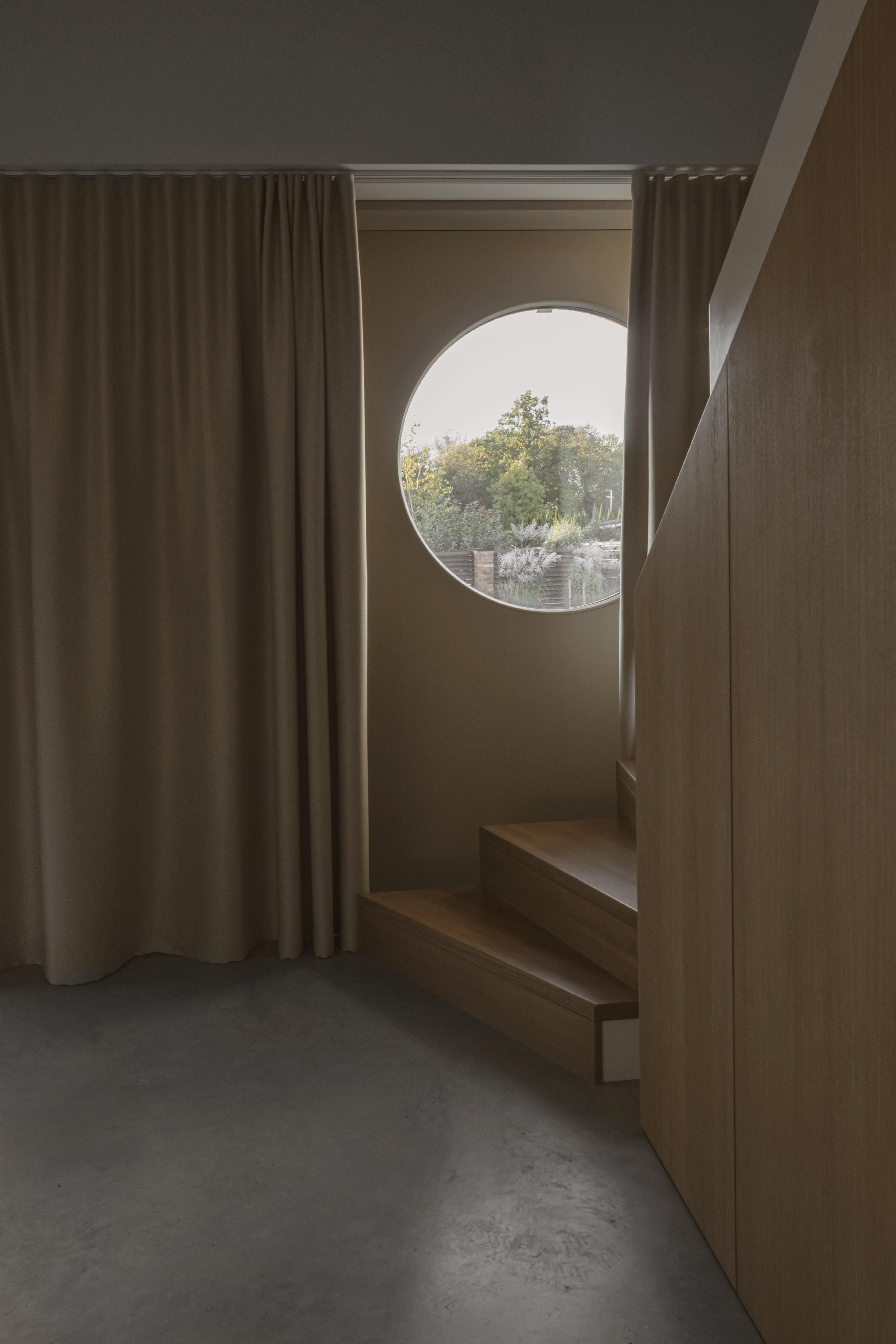
Subtle window detail with curtain, emphasizing the tranquil interior ambiance
-
Ground floor plan - Scale 1:100
-
First floor plan - Scale 1:100
-
East & West elevations - Krutejavas Studio for Architecture
-
Sections - Scale 1:100
-
Axonometric View from north-west
-
Axonometric View from south-east
Vila Audra
KSFA. Raudondvaris, Lithuania
-
Name of work in English
Vila Audra
Prize year
EUmies Awards 2026
-
Work Location
Raudondvaris, Lithuania
-
Studio
KSFA
EUmies Awards 2026 Nominees




Audra House harmoniously blends sustainable architecture with local craftsmanship. Built from renewable, regionally sourced materials, it minimizes carbon impact, supports social enterprises, and integrates modern living with the natural landscape of Raudondvaris.
Program
Single house
-
Labels
Isolated · Family · Holiday
Site area
1400 m²
-
Client
Annonymous
Total gross floor
154 m²
Cost
2850 €/m²
Situated on the western edge of Raudondvaris in the Kaunas district, Audra House is thoughtfully embedded in a pine forest landscape near the Nemunas River. The project combines living, working, and leisure functions in a fluid spatial composition that opens toward terraces and the garden, creating a seamless dialogue with the surroundings. Built exclusively from renewable materials sourced around the Baltic Sea and handmade bricks from Dzūkija region in southern Lithuania, the house embodies sustainability, supports local craftsmanship, and integrates harmoniously into its natural and cultural context.
The Audra House project addressed the client’s need for a flexible, comfortable home while minimizing environmental impact and fitting sensitively into its natural context. Located on a sloping site near the Nemunas River pine forest, the design required a balance between functionality, ecology, and integration with the existing neighborhood. Our strategy followed three main directions: 1.Ecological Integrity: Use of renewable, low-carbon materials from the Baltic region reduced the project’s carbon footprint and supported local production. 2.Spatial Flexibility: Spaces were designed to adapt to changing domestic, social, and leisure needs over time. 3.Contextual Harmony: Orientation, natural light, and handmade Dzūkija bricks create continuity between architecture, landscape, and local tradition. The result is a sustainable and regionally grounded home—an equilibrium between human comfort, ecological balance, and cultural identity.
Audra project represents a step toward sustainability and a broader societal shift in design thinking — one in which every material choice, construction method, and spatial decision carries a deeper ecological and social significance. The project demonstrates how architecture can actively respond to environmental challenges while supporting community and local traditions. Main Materials Materials: Recycled glass, mineral block walls, sustainable timber roof system, wind-powered steel for cladding provide durability, thermal efficiency, and low environmental impact. Energy: Highly efficient heat pump system optimize operational sustainability. Social Aspect: Handcrafted bricks from Dzūkija reflect regional craftsmanship and support a social enterprise that aids families raising children with disabilities. The house not only provides shelter for its inhabitants but also: - Reduces carbon emissions during construction and operation, - Strengthens local production networks and preserves traditional craftsmanship, - Integrates social responsibility into material sourcing and construction practices. Project embodies a manifesto of sustainable design, asserting that architecture can be simultaneously aesthetic, functional, and socially and environmentally responsible, creating lasting value for both people and place.