-

1-cover.png
-
2-design-with-values.png
-
3-acoustic-comfort.png
-
4-better-together.png
-
5-antivitruvian.png
-
7-what-are-values.png
-
6-influence-of-values.png
-
8-scale_chart.png
-
9-value-analysis.png
-
IMG_6740.jpg
-
IMG_6795.jpg
-
IMG_6782.jpg
-
introduction.png
-
value-analysis.png
-
lexicon.png
-
designing-with-values.png
-
antivitruvian.png
-
antivitruvian-views.png
-
better-together.png
-
office-comfort.png
Values in architecture
Lana Arih. non specified, Spain
-
Name of work in English
Values in architecture
-
Name of work in original language
Vrednote v arhitekturi — vpliv vrednot na zasnovo arhitekturnega projekta
Prize year
Young Talent 2025
-
Work Location
non specified, Spain
-
Author/s
Lana Arih
-
School
Faculty of Architecture - University of Ljubljana.
Ljubljana, Slovenia
Young Talent 2025 YT Nominees








Values in architecture
Influence of values on architectural design
Program
Social welfare
-
Labels
Community
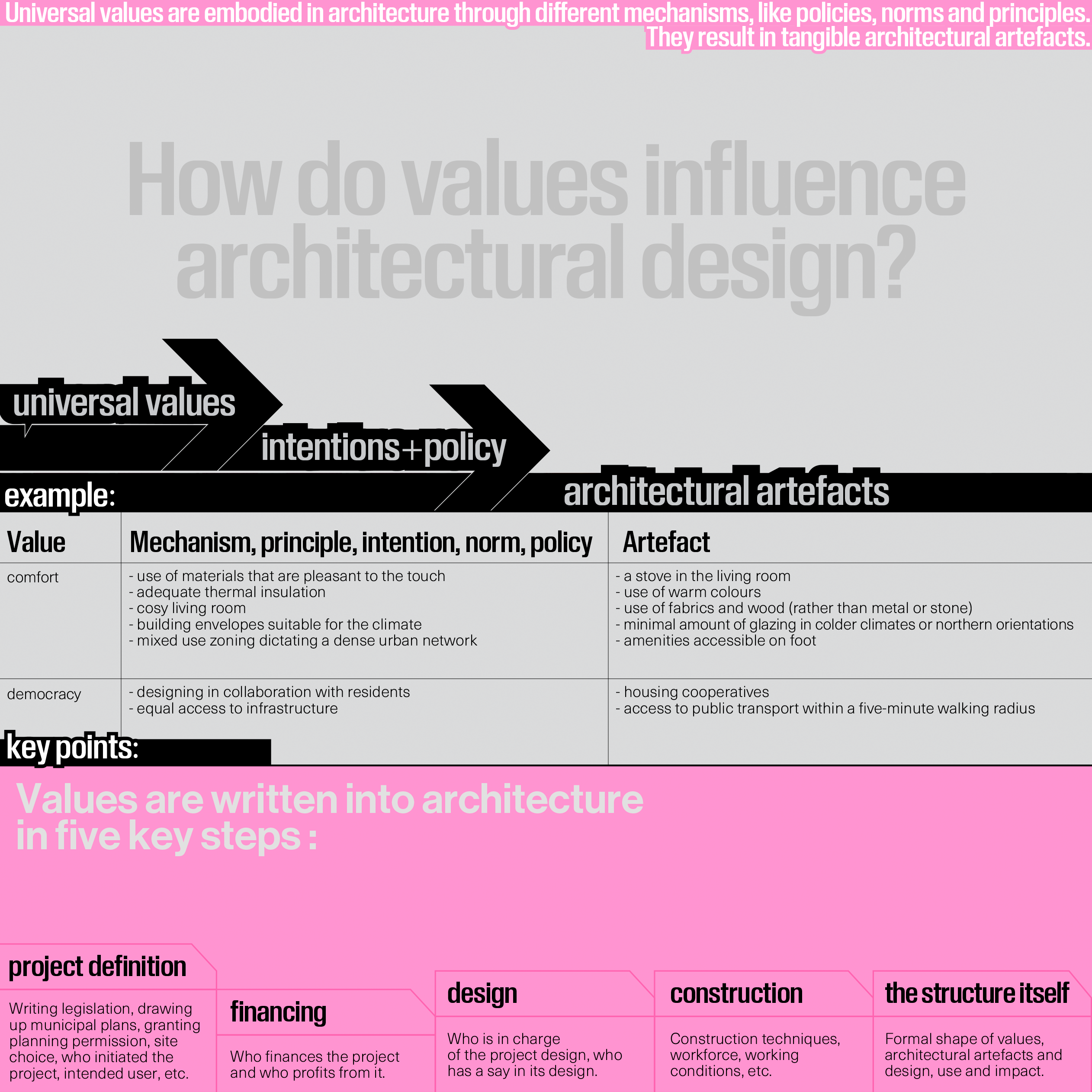
Urban space and architecture are experiencing a crisis of values. Increasingly shaped by exclusionary policies disguised as efforts to improve the built environment, they do so at the expense of residents, users, workers, and nature. Values act as a subconscious compass, silently shaping our decisions. Since the time of Vitruvius, the guiding values in Western architecture have been strength, utility and beauty, but an architectural project can meet all three of these requirements and still be problematic. We're building bigger, brighter and finer, but why, at what cost and for whose benefit?
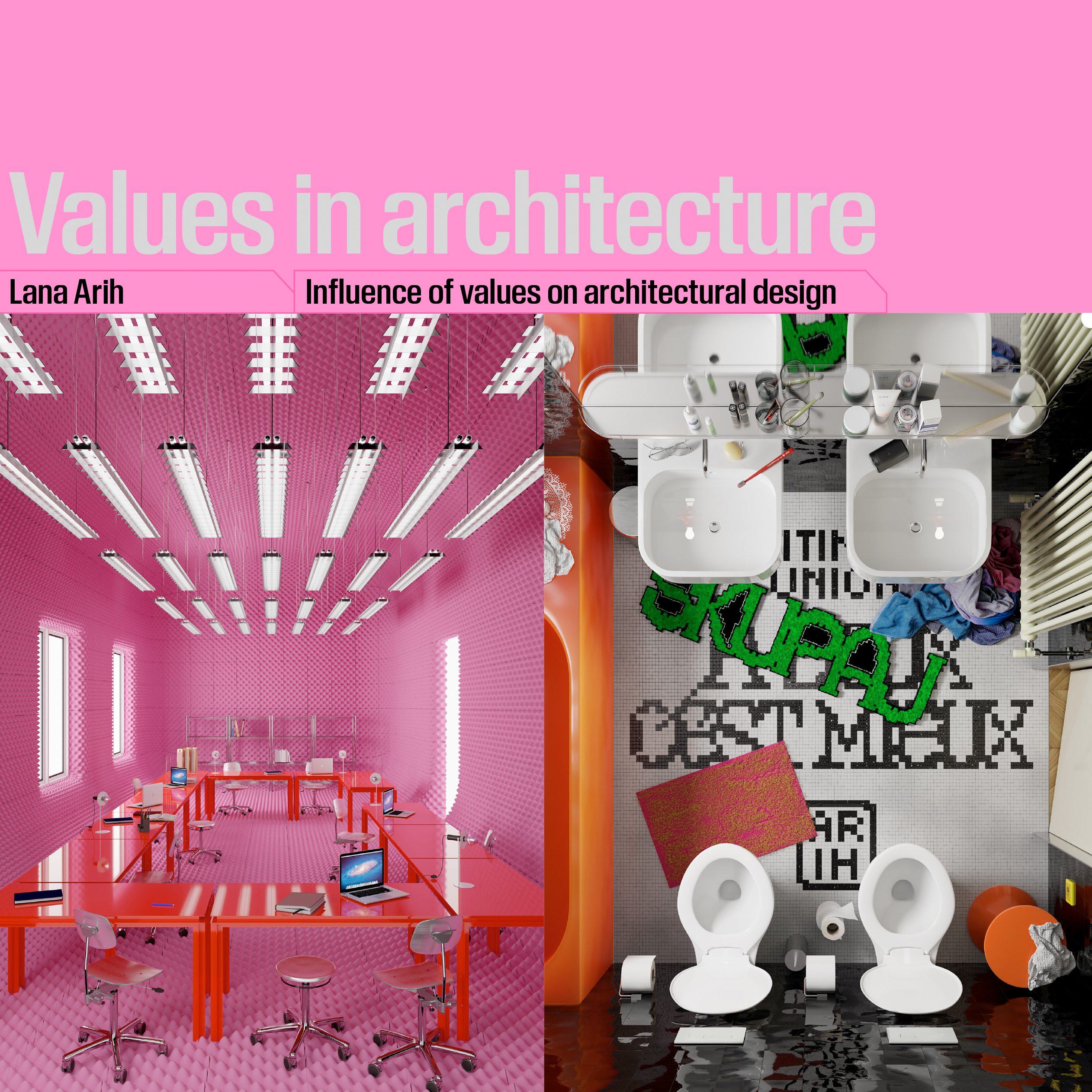
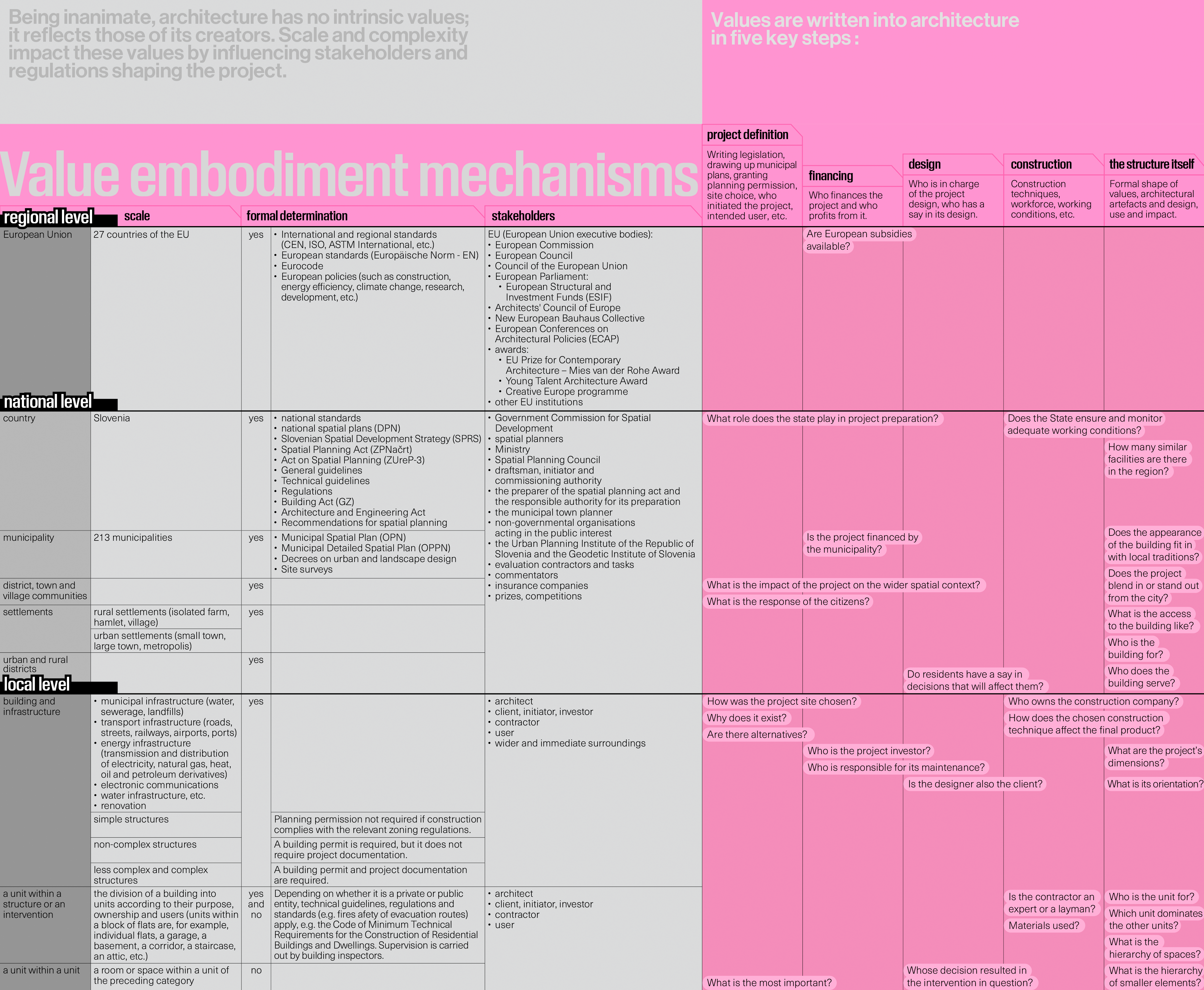
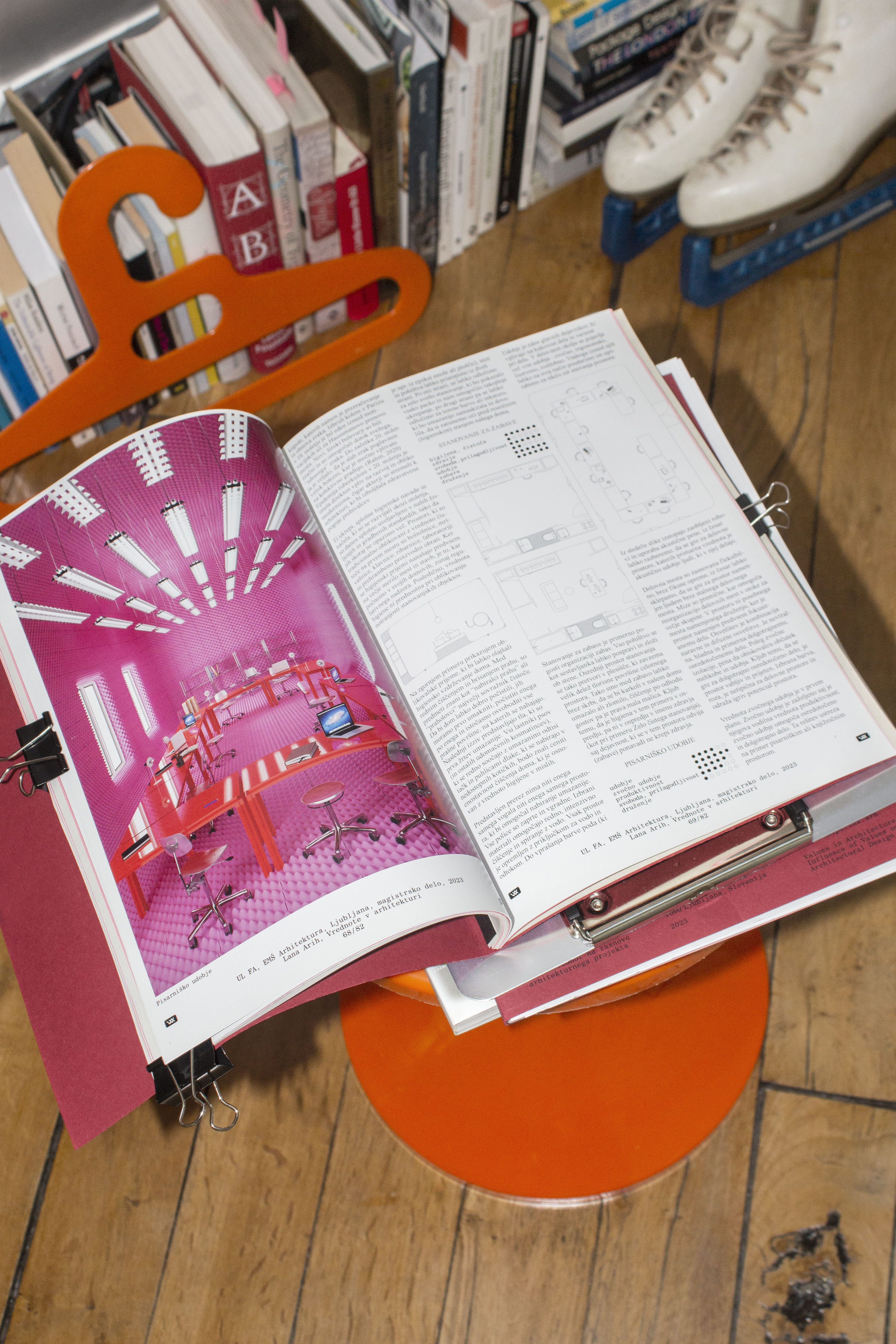
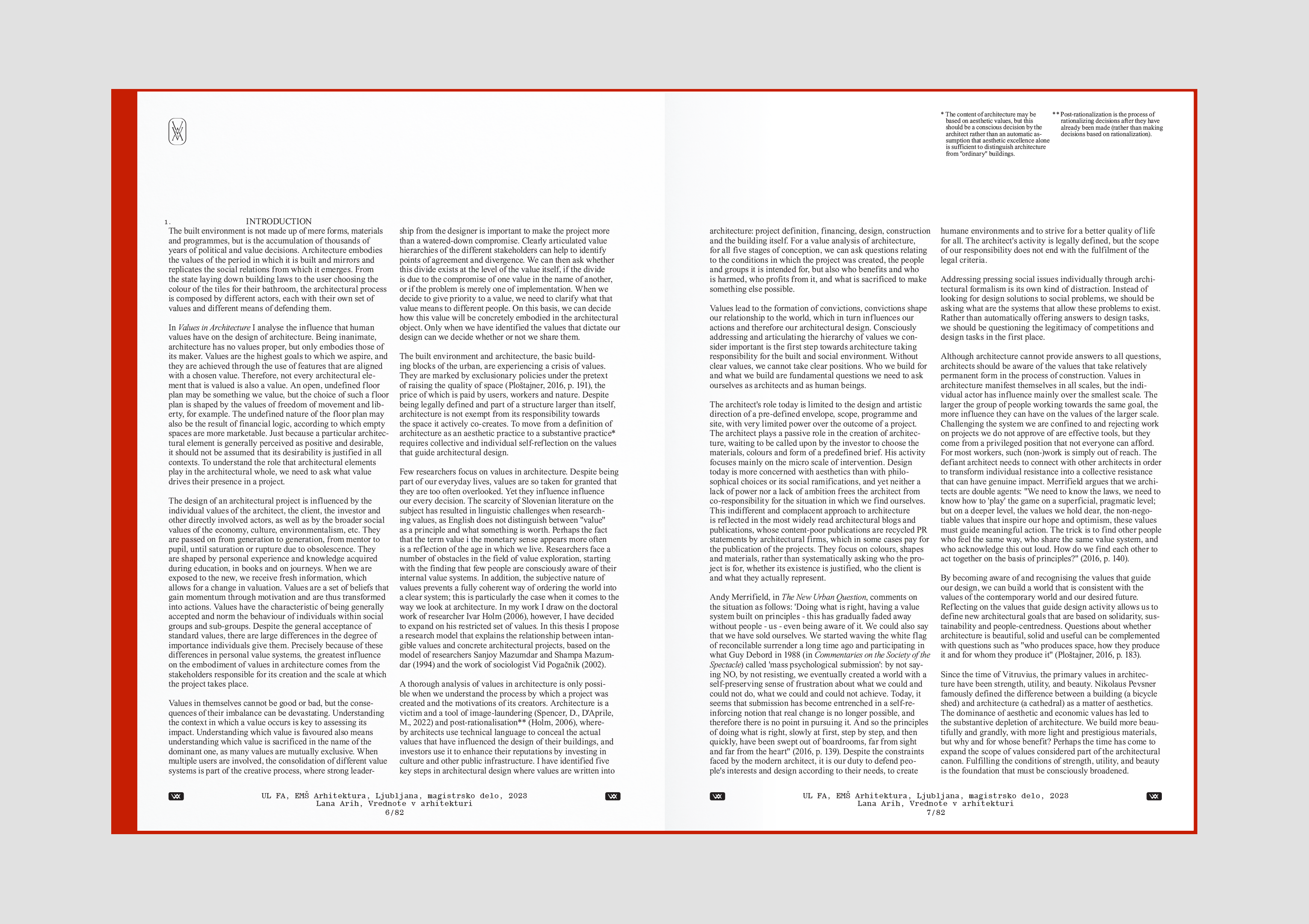
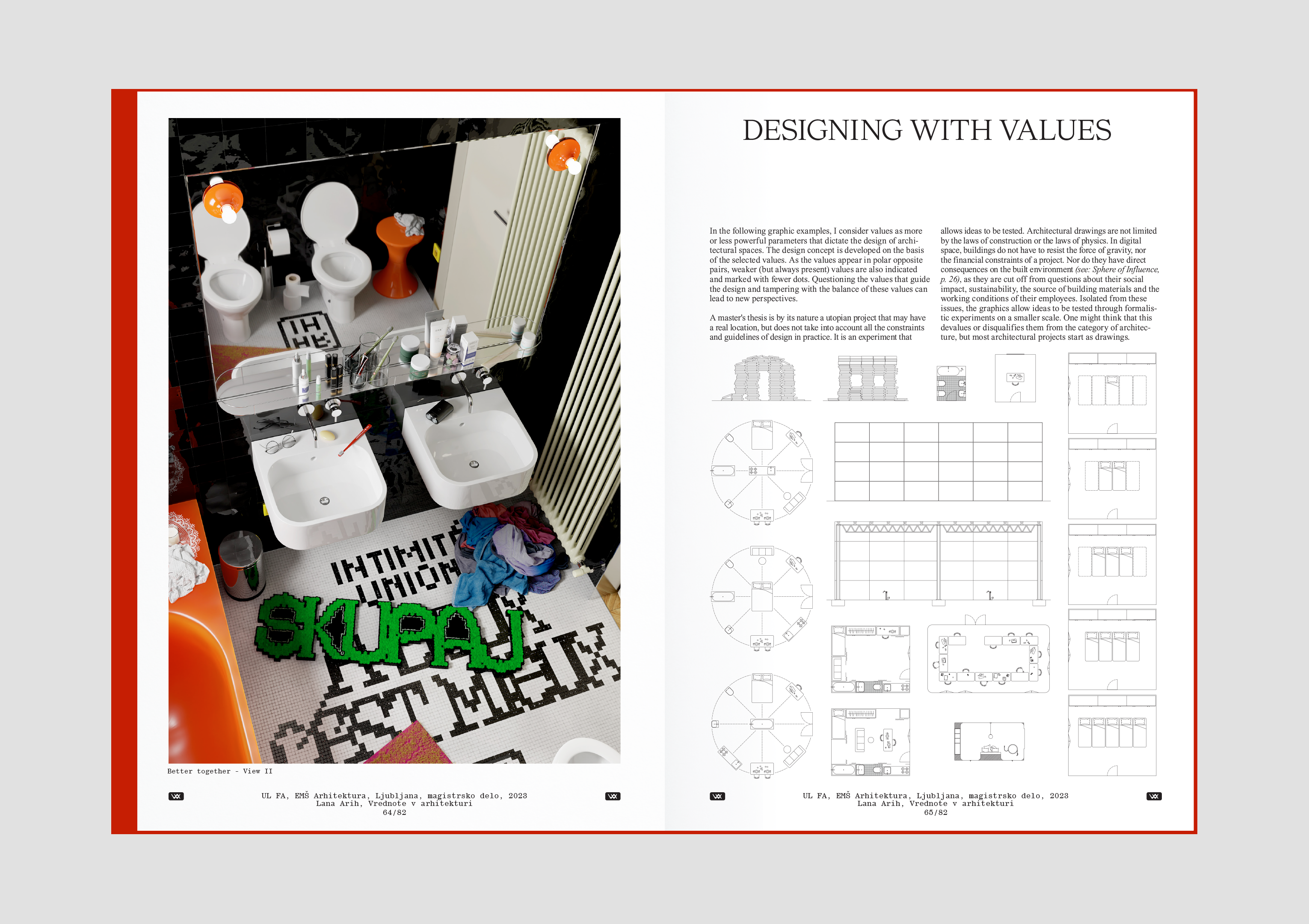
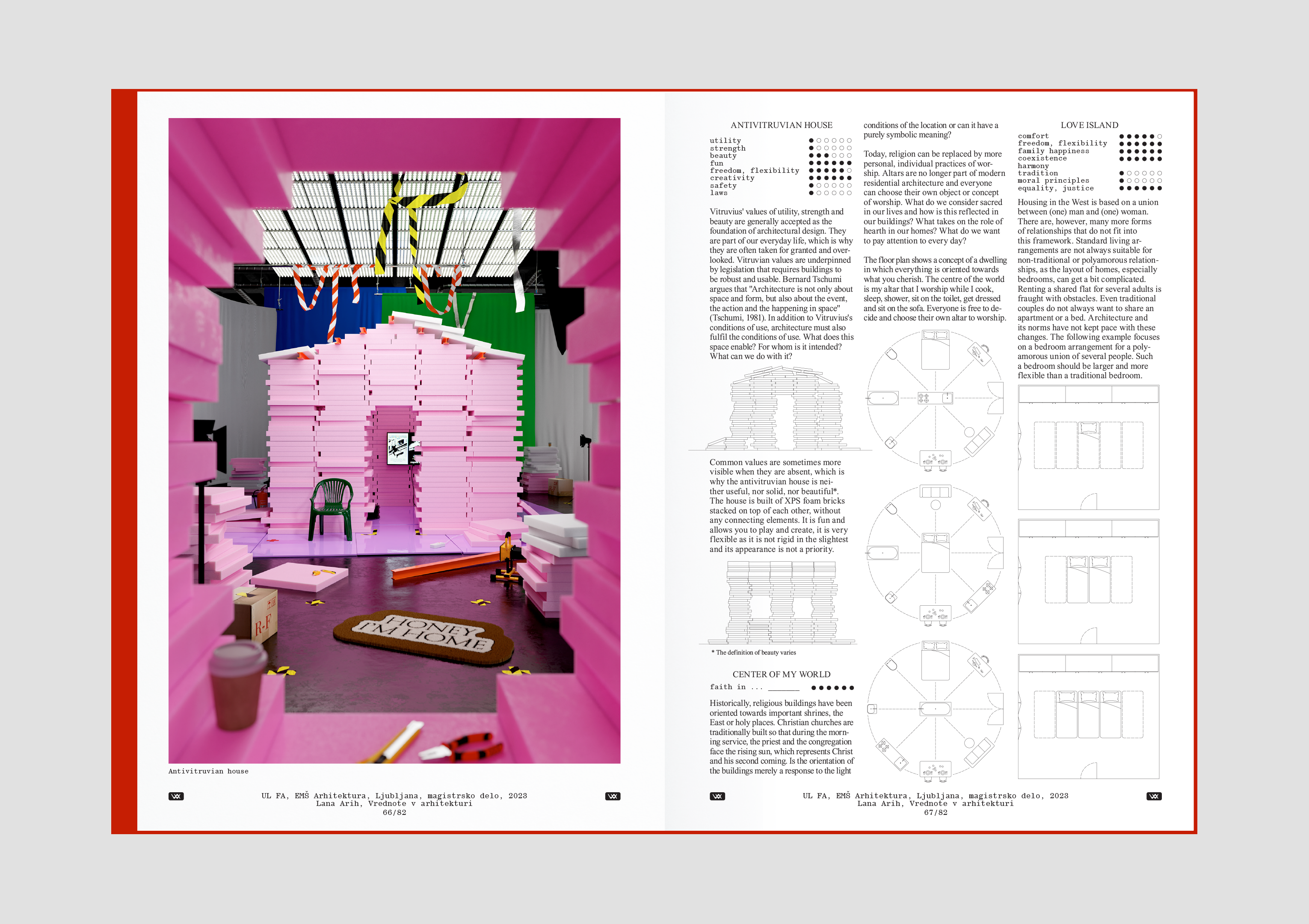
Nikolaus Pevsner notably distinguished between a building (a bike shed) and architecture (a cathedral) as a matter of aesthetics. It is time to broaden the scope of values considered fundamental to architecture and take greater responsibility for the built and social environment. Revealing the values that guide design choices—from investor selection to toilet placement—and consciously shaping their hierarchy urges us to question entrenched practices and propose alternatives. The project does so by offering updated language, visual charts and illustrations to identify and articulate the values shaping architecture. By drawing from sociology and examining relevant literature and architectural projects, I identified how values present in architecture and developed a lexicon of 37 terms with examples to aid recognition. Being inanimate, architecture has no intrinsic values; it embodies those of the people shaping it, such as clients, architects, law makers, and developers. Since stakeholders and regulations vary depending on a project's scale and complexity, I analyse how these factors influence the embodiment of values and propose a framework for classifying stakeholders and their respective values accordingly. The theoretical research is illustrated with 3D graphics, focusing on individual values used as parameters that dictate the design of a project. This experiment focuses on smaller-scale variables, such as building techniques, materials, and layout choices, as they are more readily visualised through graphics than early-stage factors like funding or site selection. Through humor, they challenge standardized approaches to design, such as rethinking a bathroom for two people, while also prompting reflection on broader themes like the concept of privacy in the home.