-

Project external view
-
View from Favrel & Lincy Avenue
-
Interior view of the modular hall
-
Interior view of the modular hall and patio
-
View patio
-
View of the winter garden
-
Location plan
-
Fundamental principles
-
General axonometry and programs
-
Floor plans (B1, G, 1)
-
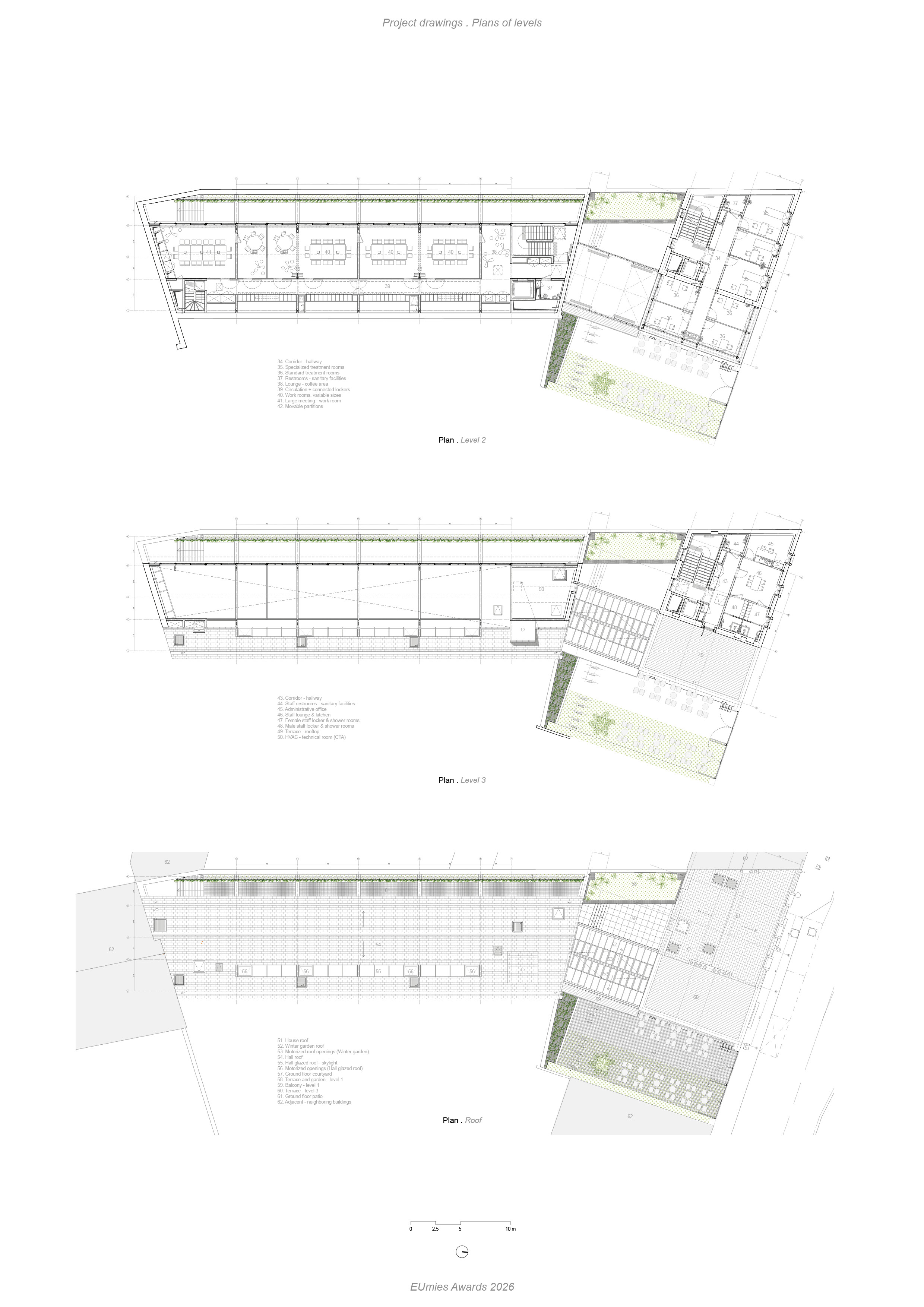
Floor plans (2, 3, roof)
-
Sections
Third Place Flow
Office Zola architectes. Vannes, France
-
Name of work in English
Third Place Flow
-
Name of work in original language
Tiers Lieu "Flow"
-
Work Location
Vannes, France
-
Studio
Office Zola architectes
Nominees


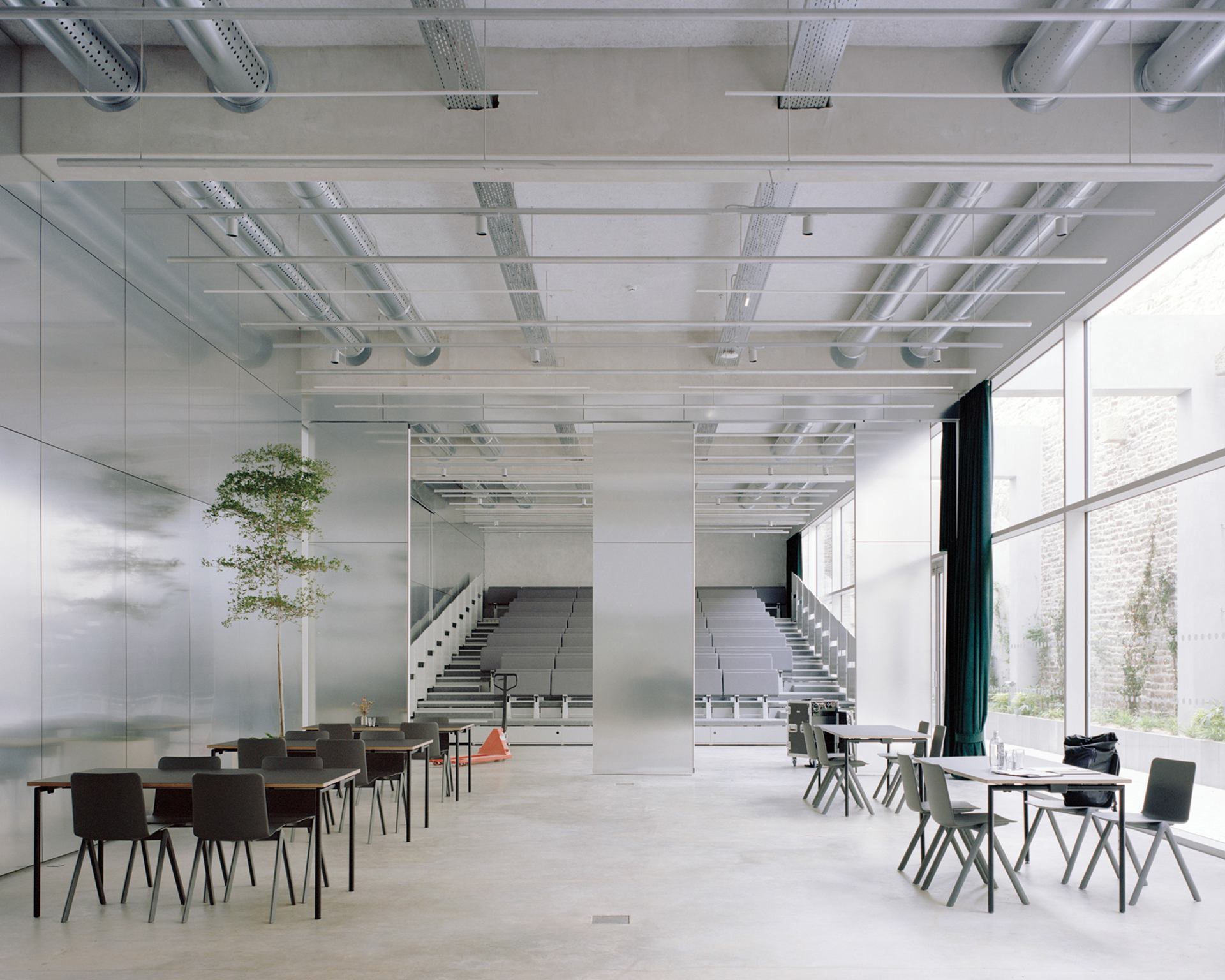


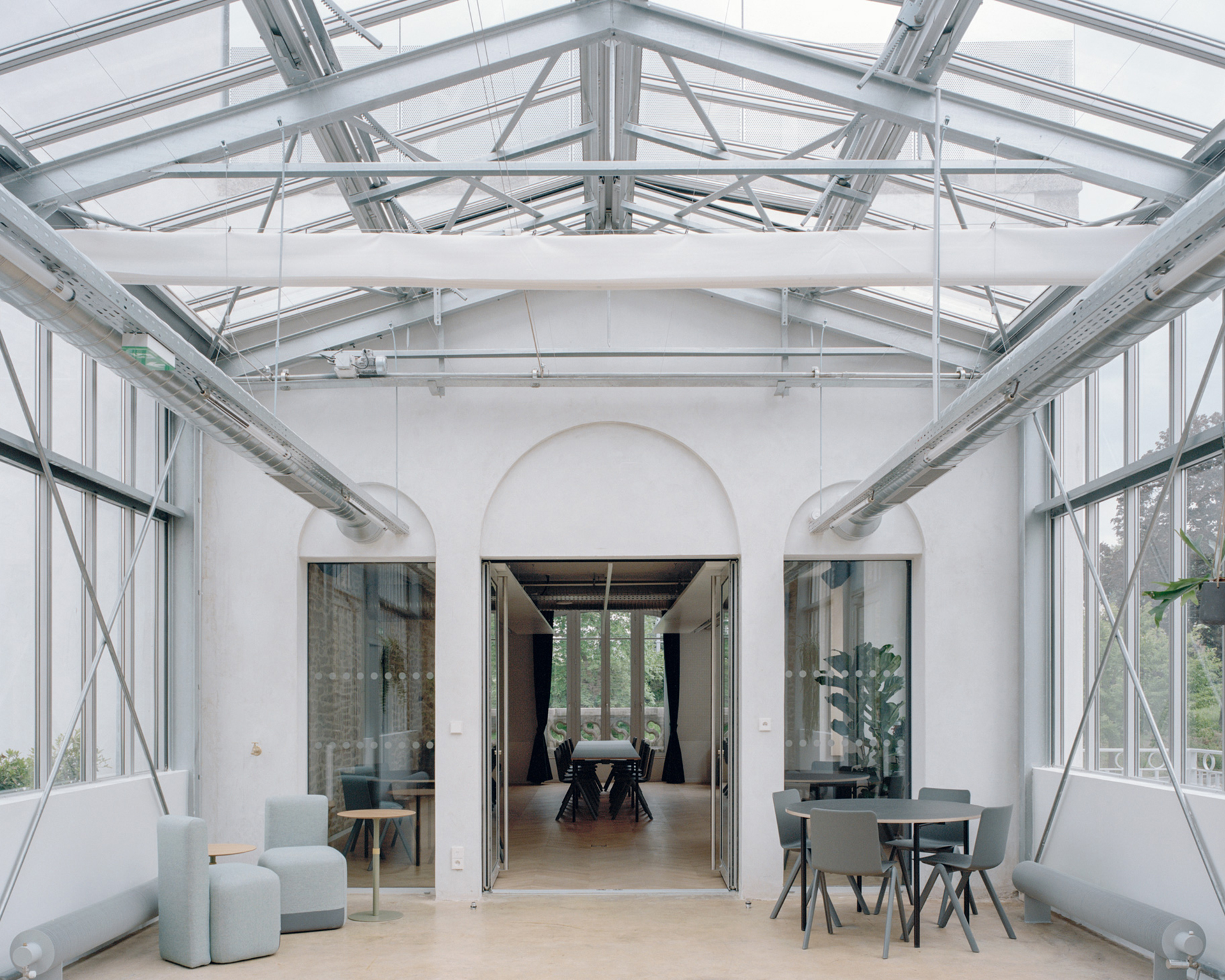



Facing Vannes railway station, the transformation of a former industrial complex reinvents a neglected site into a luminous, flexible third place devoted to wellbeing, work, and social exchange. The project reconciles heritage and contemporaneity through a restrained and sensitive architecture.
Collaborators
Construction Economics: Jérôme Guillerm - BMF conseil; Structure: Pascal Pineau - Arest; Environmental: Steve Fonteneau - Kypseli; Acoustics: Clément Baumann - Alhyange; Signage: Joran Briand - Briand&Bertherau
Program
Mixed use - Commercial & Offices
-
Labels
Café · Facilities · Food · Office · Heritage
Site area
2200 m²
-
Client
SCI Pasithéa
Total gross floor
1800 m²
Cost
2500 €/m²
At the heart of Vannes station district, the project reclaims a 19th century industrial site to host a mixed programme centred on “well-being – being well.” Composed of a house, a halle and a winter garden, the ensemble opens to the city while revealing its historic layers. The design merges restored stone, timber structures and glass envelopes to create transparency and dialogue between interior and exterior. Light, porosity and material sincerity generate a flexible environment, connecting daily life, collective use and the evolving urban fabric.
A central focus of our approach was the in-depth transformation of the halle, while addressing the decay of its structure, which had become unstable over time. We chose to remove an entire portion of the roof along its full length. This act of subtraction made it possible to create new spaces, doubling occupancy capacity, strengthening the structure and bringing natural light into the heart of the building, without openings on the adjoining walls, which were prohibited. The removal generated a planted patio and introduced an evolving “capable space” that became the project’s core. The architecture promotes compactness, modularity and flexibility. The timber-framed workspaces, the suspended room and the event hall embody this approach. The latter is equipped with a retractable 140 seat tier and a motorized movable wall, enabling rapid reconfiguration. These discreet engineering features enhance the project’s adaptability and reversibility, fostering both physical and visual modularity.
The rehabilitation is conceived as a sustainable act, prioritizing preservation over replacement. Historic masonry was restored, dismantled elements reused and floors and extensions built in locally sourced timber, while a reinforced concrete frame stabilizes and liberates the volumes. Lime-based plasters, bio-sourced insulation and visible technical networks reflect constructive honesty and cost efficiency. Glass and aluminum filter, reflect and connect spaces, optimizing natural light and visual continuity. Hybrid structural solutions respond pragmatically to the specific constraints of each space while ensuring ease of maintenance and long-term durability. Natural ventilation, rainwater recovery and passive solar control enhance comfort. The reduction of superfluous finishes and the reuse of heritage elements embody material frugality and expressive restraint contributing to a sustainable and economically responsible architectural narrative.