-

Six gardens from various parts of the world make up The Opera Park
-
The park is located in the heart of Copenhagen
-
The park features a central greenhouse
-
A cafe sits inside the park's greenhouse
-
A subtropical garden is located inside the greenhouse, descending to the underground car park
-
More than 600 trees, 80,000 perennials, and 40,000 bulbs - in total 223 species - are planted
-
Site plan
-
Greenhouse groundfloor plan
-
Greenhouse ceiling plan
-
Greenhouse and underground car parking section
The Opera Park
Cobe. Copenhagen, Denmark
-
Name of work in English
The Opera Park
-
Name of work in original language
Operaparken
Prize year
EUmies Awards 2026
-
Work Location
Copenhagen, Denmark
-
Studio
Cobe
EUmies Awards 2026 Nominees


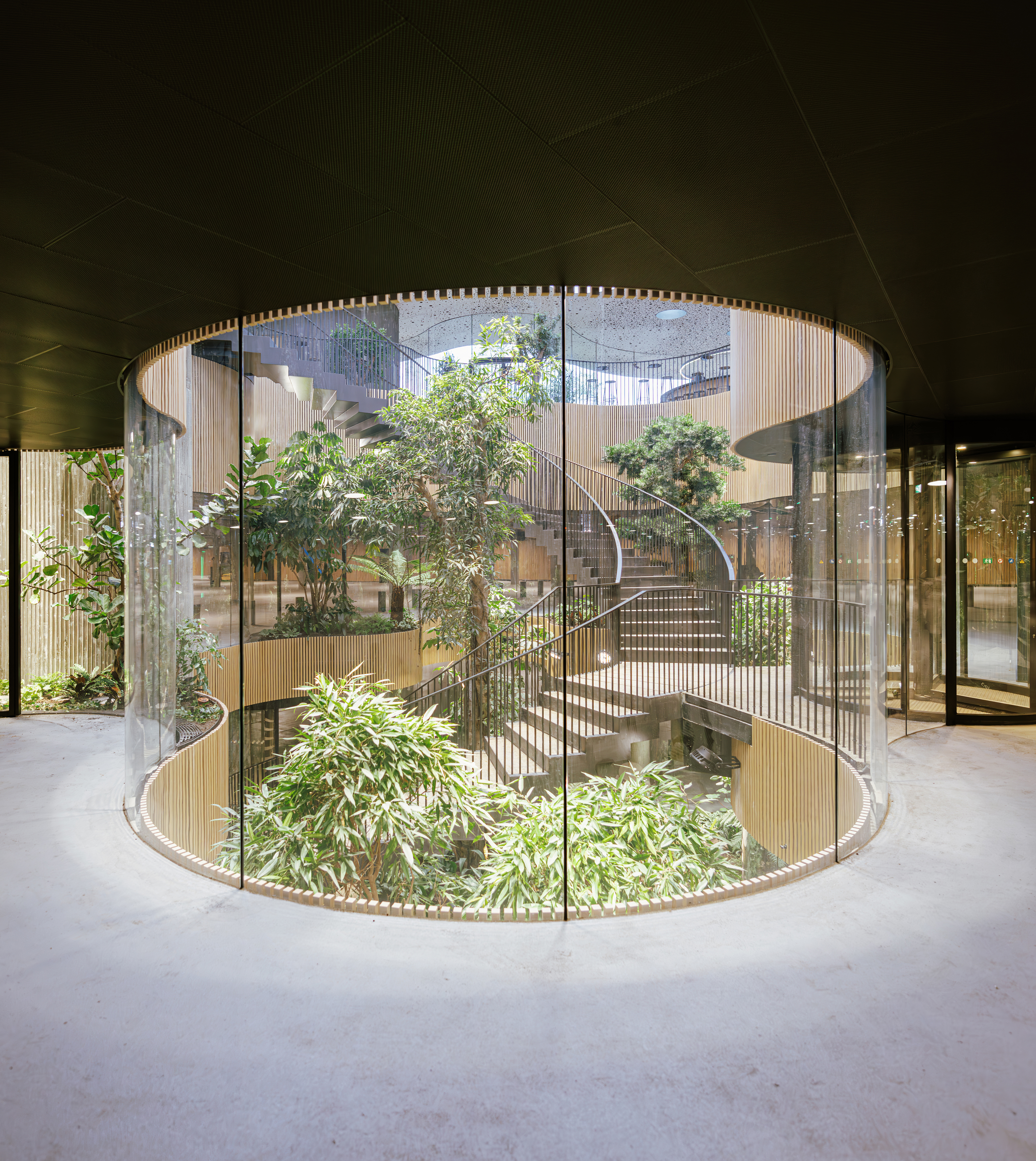


The Opera Park is a public park island in Copenhagen’s inner harbor situated atop an underground car park. Designed for recreation, relaxation and contemplation, the park features six gardens, and a central greenhouse with a café, offering a recreational escape from the bustling life of the city.
Collaborators
Structure: Vita; Structure: Lüchninger Meyer Hermansen; Traffic: Via Trafik; Fire Safety and Accessibility: DBI
Program
Landscape
-
Labels
Gardens & Parks
Site area
21500 m²
-
Client
The A.P. Moller Foundation
Total gross floor
680 m²
The site is a former industrial island from 1788. Previously a modest lawn located next to the Royal Opera House, it now boasts a diverse landscape. Contrasting the dense inner city, this harbor-front park features six gardens from various parts of the world: the North American Forest, the Danish Oak Forest, the Nordic Forest, the Oriental Garden, the English Garden, and a Subtropical Garden housed within a greenhouse, giving access to the underground car park. The gardens provide an ever-changing appearance, color, and density, varying with the seasons, knitted together by meandering paths.
Initially planned for new housing, the project relinquishes the site's building rights to create a public park, enhancing the area’s recreational potential. Key challenges included managing water tightness, buoyancy, storm floods, and rising sea levels. The final design ensures resilience against future climatic challenges while enhancing the city’s recreational network. Designed to be an inviting, all year-round public attraction, the park sets the stage for experiencing nature in the heart of the city. The Opera Park is a place where nature comes first. Like the neighboring opera stage, it’s a composed landscape with foreground, middle ground, and background. As you stroll through the park, you get the feeling of having left the city and being immersed in nature, almost forgetting you are in the middle of the dense city center.
Prioritizing landscape over development, The Opera Park's six gardens, winding paths, and curated viewpoints recall historic romantic gardens while addressing decline in biodiversity and water management. The park includes more than 600 trees, 80,000 perennials, and 40,000 bulbs - in total 223 diverse species offering recreational value as well as food and shelter for birds and insects. Channeled from the roof of the neighboring Royal Opera House into underground water reservoirs, rainwater is used for irrigation. Permeable paths and rain beds manage runoff. Green roofs capture and delay the release rainwater while serving as a food source, and solar panels on the Opera’s roof power the greenhouse and underground car park. Robust, recyclable materials ensure longevity. The park’s elevated topography mitigates flooding risks, and the dense planting reduces harbor winds, creating comfort and climatic resilience year-round.