-

A temporary ‘big-box’ museum contains and protects the Hill House whilst a conservation programme takes place
-
The Box is a time capsule: physically, philosophically and programmatically
-
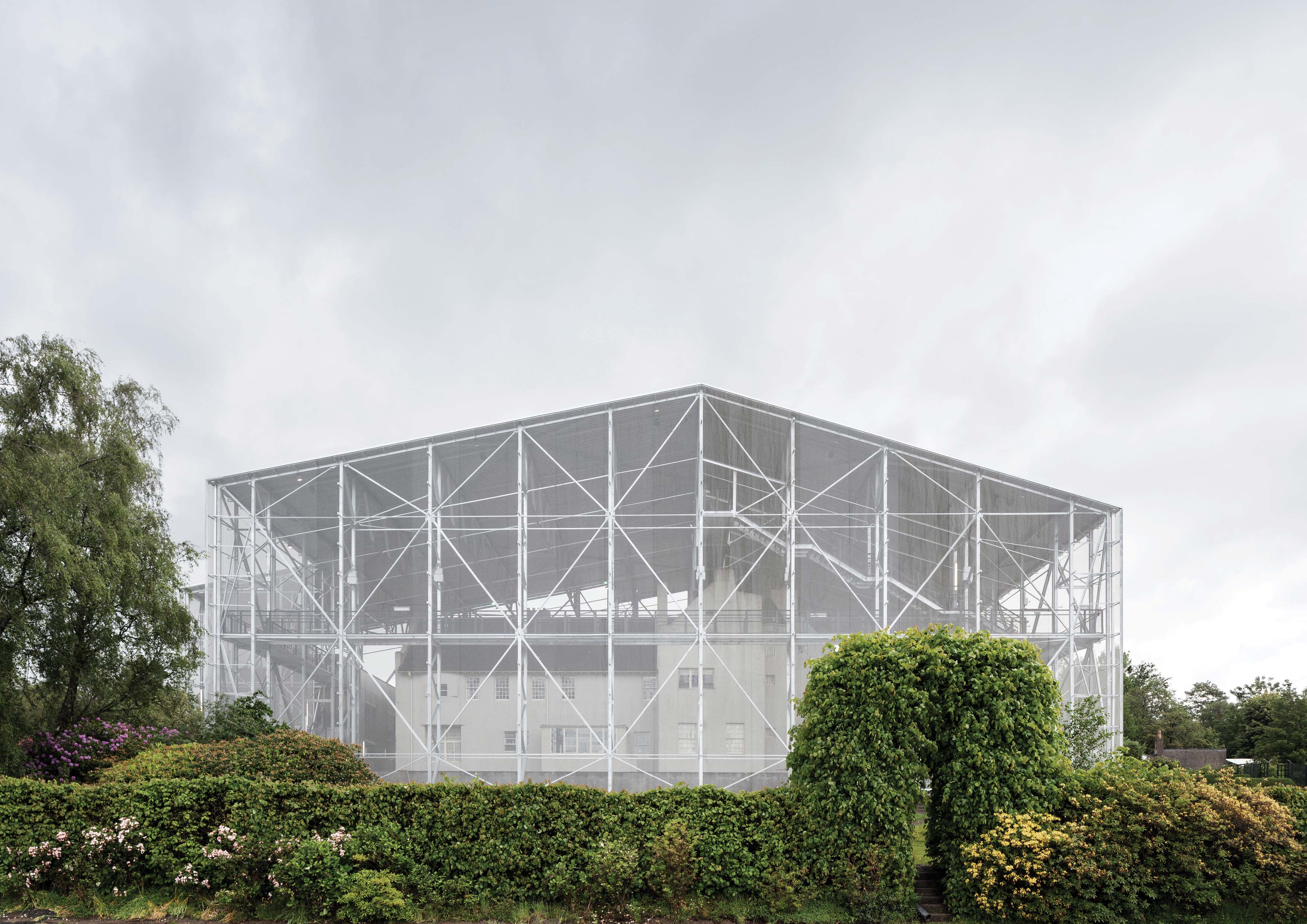
View from the east of the completed Hill House Box
-
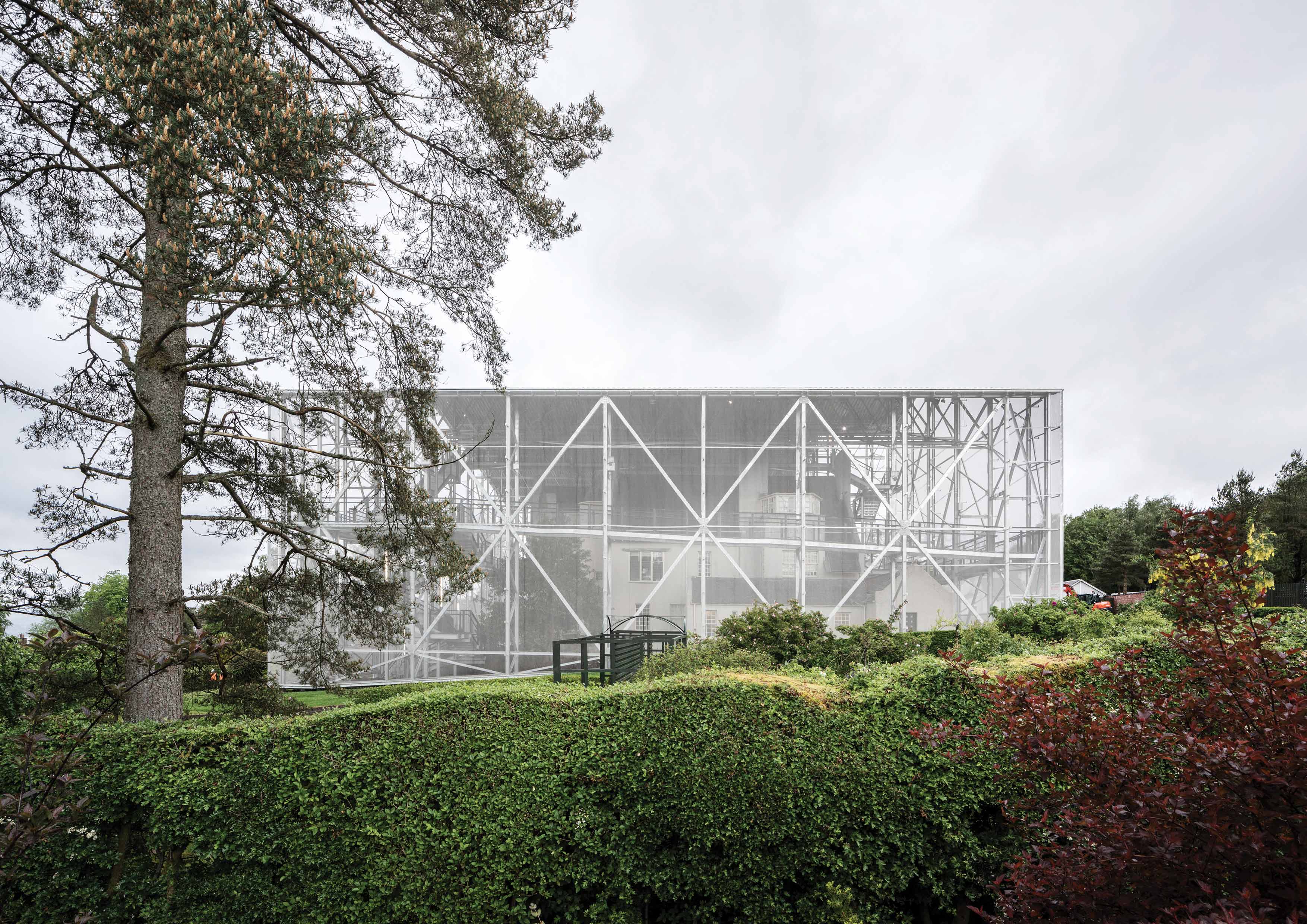
Chain mail screen stretched over the galvanised steel skeleton guides the rain down while keeping the house visible from the outside
-
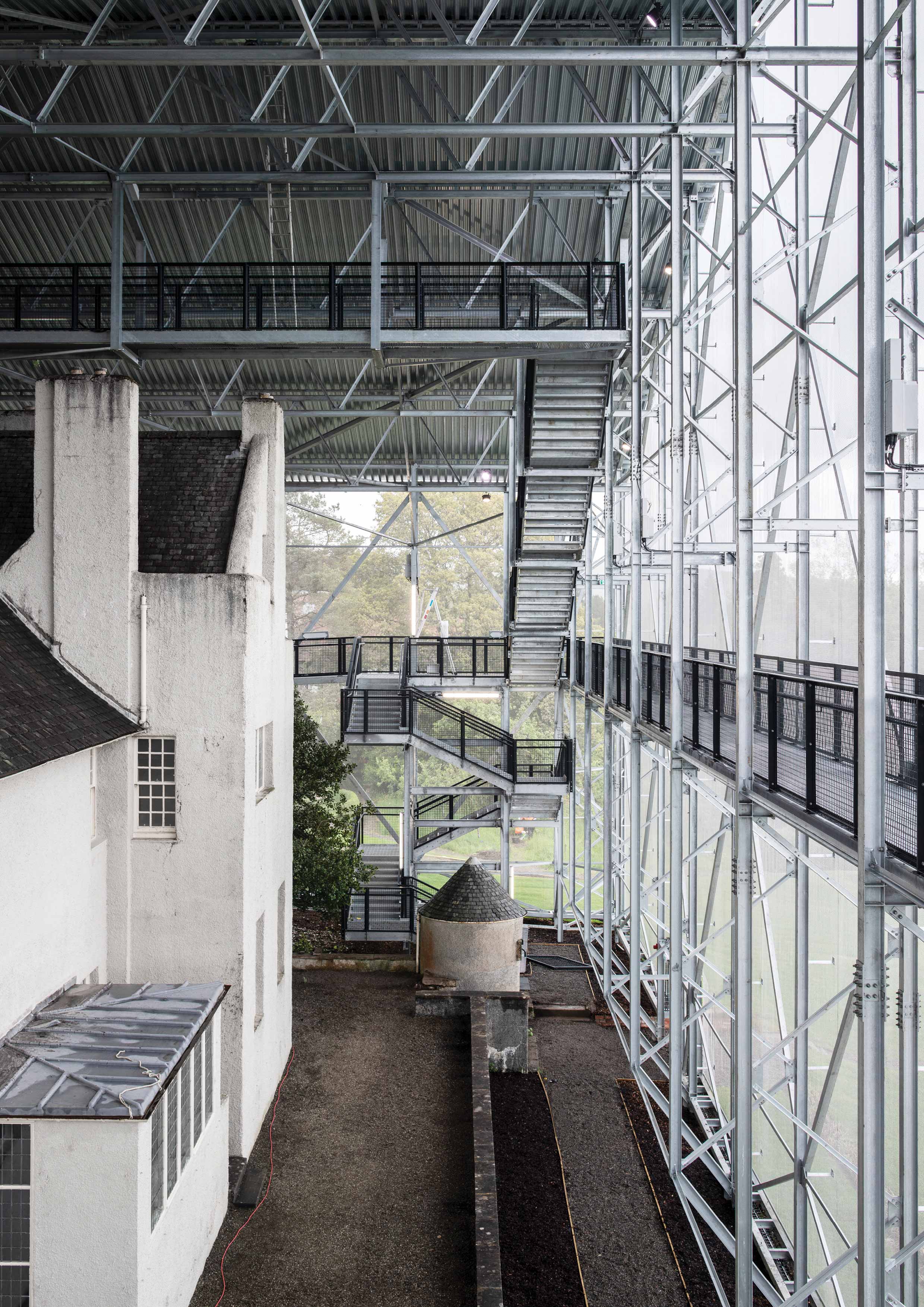
Change of scale between the existing and temporary structure allows the visitor to re-examine the original and its future
-
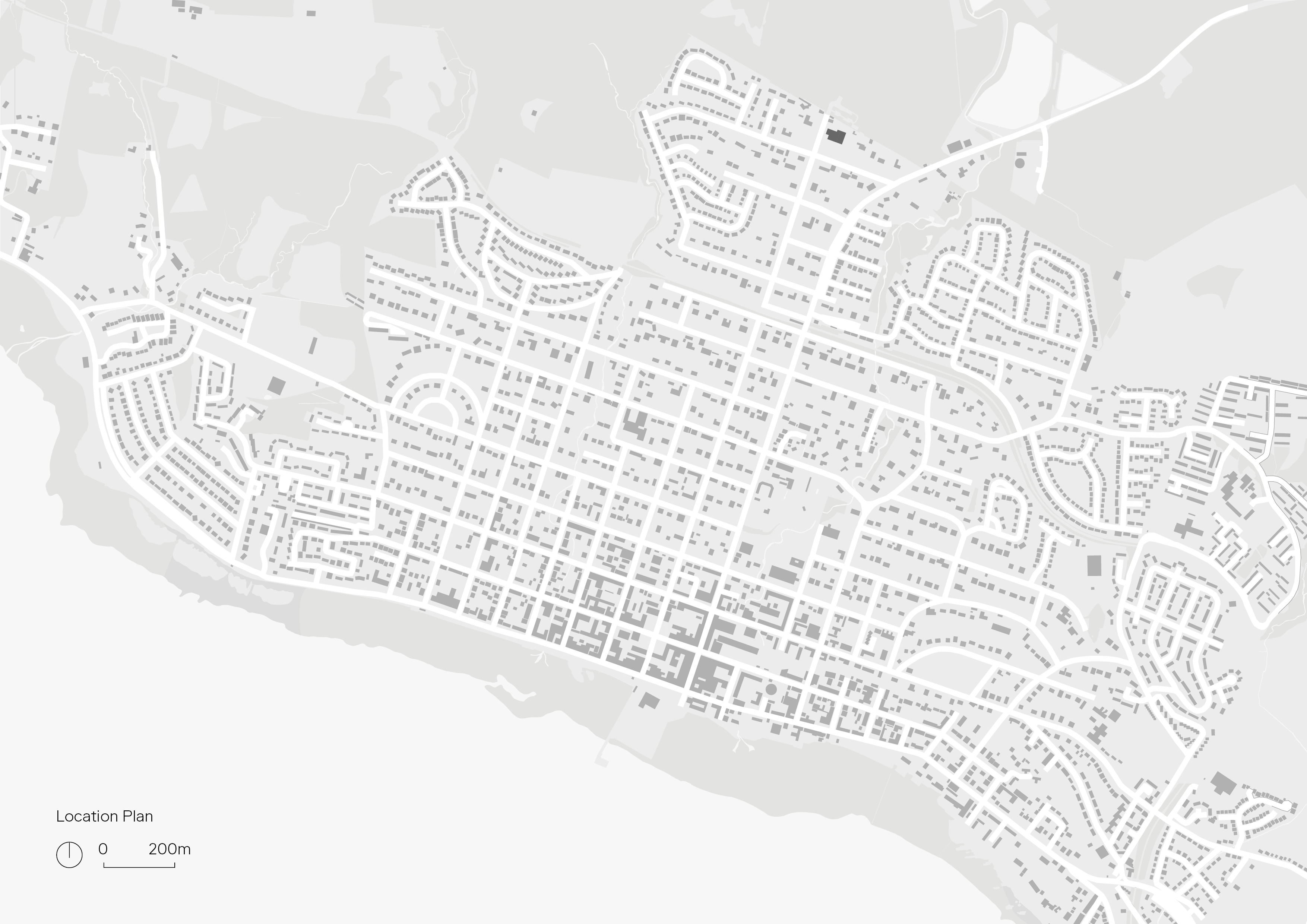
Location plan with the Hill House sat at the top of ‘grid iron’ planned Helensburgh
-
Ground floor plan showing the new visitor centre entrance, facilities and shop as well as Mackintosh’s unique plan
-
First floor plan showing the visitor centre cafe and the walkway around the Hill House
-
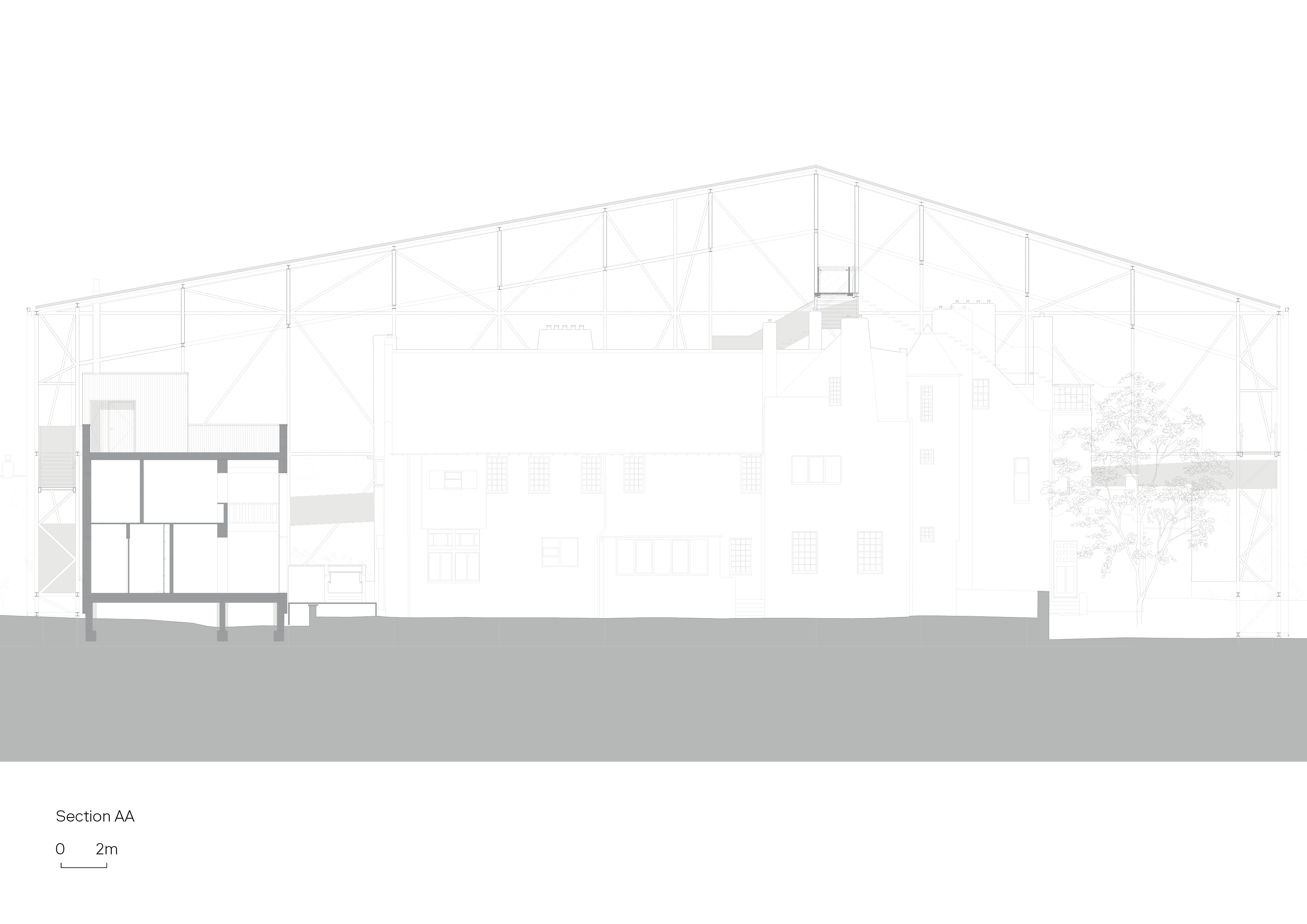
Section AA through the visitor centre to the southern side of the Hill House
-
Section BB through the visitor centre to the western side of the Hill House
-
Development diagram showing detail sections at the anchoring of the box, the walkway and the roof
-
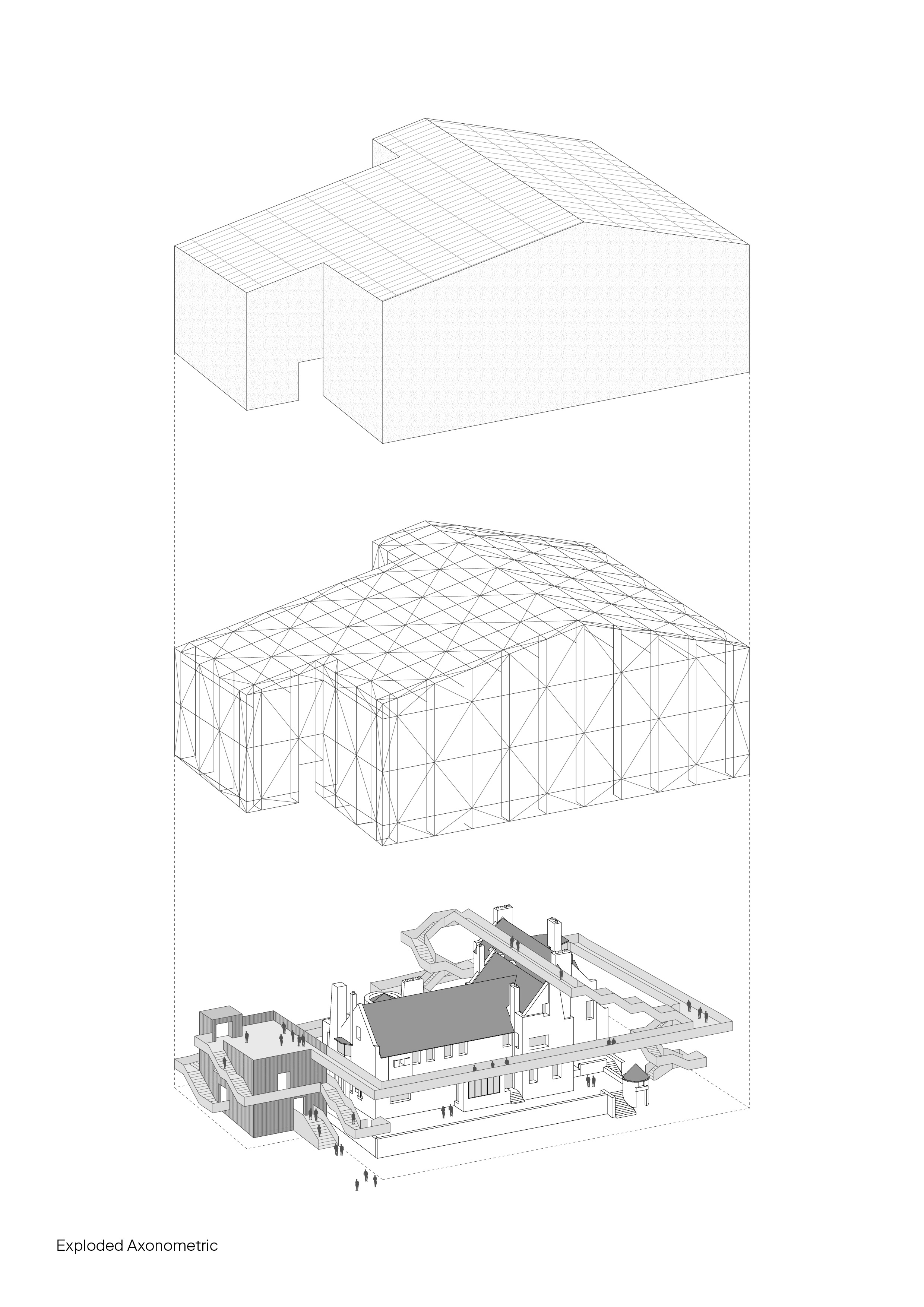
Exploded axonometric with the house, the visitor centre, the walkways covered by the superstructure of the box
-
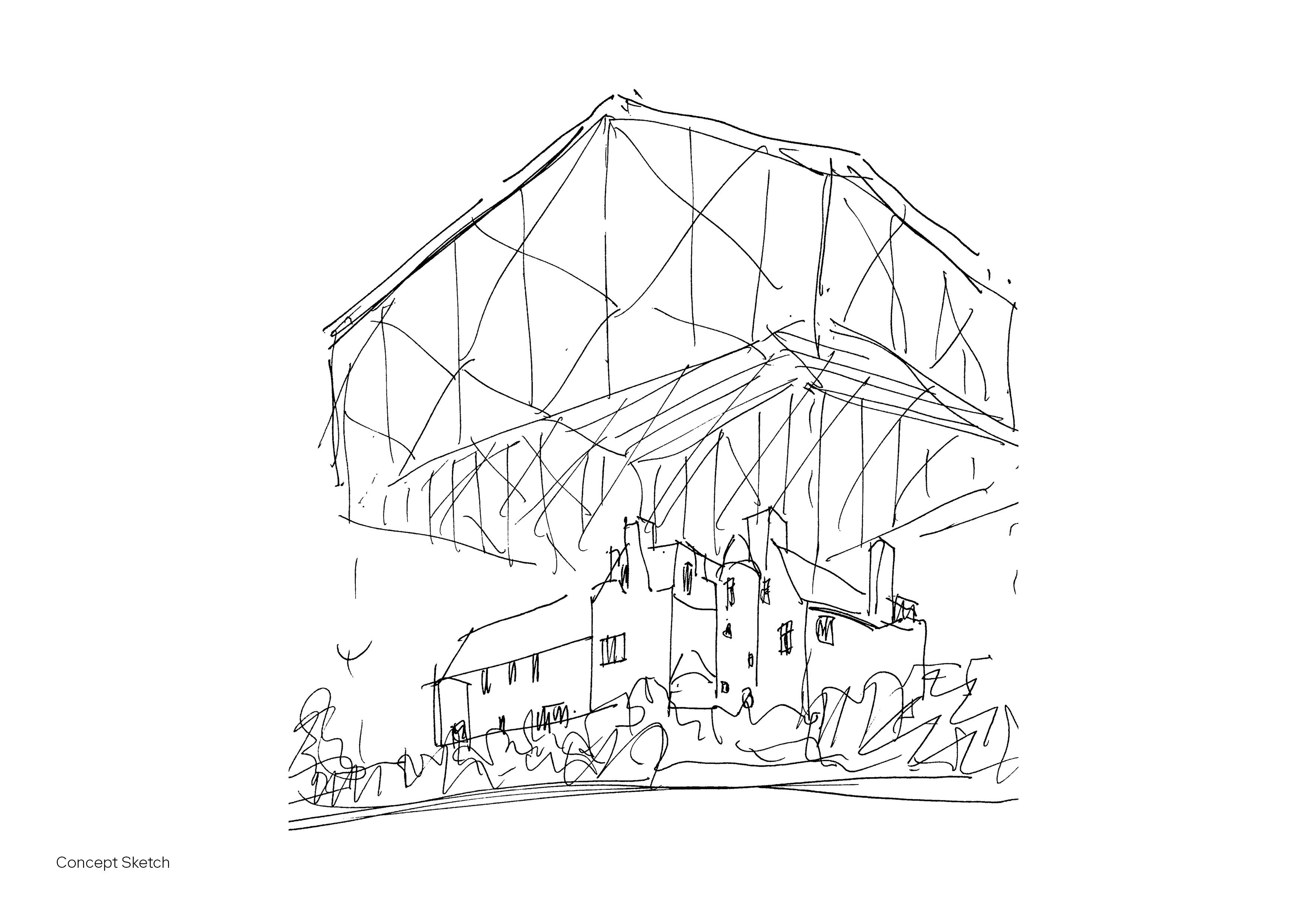
Concept sketch of the the Box temporarily shrouding the Hill House as a protective enclosure
-
-
A2 Panel
The Hill House Box
Carmody Groarke. Helensburgh, United Kingdom
-
Name of work in English
The Hill House Box
-
Name of work in original language
The Hill House Box
Prize year
EUmies Awards 2022
-
Work Location
Helensburgh, United Kingdom
-
Studio
Carmody Groarke
EUmies Awards 2022 Shortlisted






Collaborators
Program
Culture
-
Labels
Heritage · Museum
Site area
9879 m²
-
Client
National Trust for Scotland
Total gross floor
3000 m²
Completion
2019
Built on an exposed site 30km west of Glasgow, the Hill House is a seminal part of early 20th century European architecture. Mackintosh’s inventive formal composition of architectural styles was made possible externally with cement render and daring detailing, which eventually has succumbed to prolonged and irreversible rain-damage. The ‘big-box’ is now an instrumental part of the vital conservation project to save the Hill House; it halts further decay and buys time to repair the house. Its vast, solid roof keeps any further rain from reaching the house, whilst the stainless-steel chain mail perimeter creates a unique drying-room enclosure containing the restoration activities. Also contained within the ‘box’ are visitor facilities for this temporary museum, including a timber entrance building and walkways for visitors to explore the structure up-and-over the house.
The restoration of the Hill House will take up to 15 years. Rather than incarcerate the house away from public view over this prolonged time, the ‘bigbox’s’ form balances the need for muchneeded weather shelter to enable conservation to take place, with access provided for visitors to the house throughout. This approach taken by the National Trust for Scotland was unique in that it saw conservation work as an opportunity rather than a threat to public engagement and during this time, wanted to attract new types of visitors to have an architectural experience of the Hill House. The architectural identity of the ‘bigbox’ is a vast, translucent, garden pavilion simultaneously providing the ‘dryingroom’ conditions, whilst preserving views to and from the house and its gardens, inviting visitors to explore within. Inside, the Hill House becomes temporarily abstracted from its context, giving it an uncanny appearance like an architectural model or exhibit in a museum. Access to the historic interiors is maintained during the restoration, whilst highlevel walkways threaded through the box’s structure allow new, unseen perspectives that are fully accessible for all.
The ‘big-box’ is made from a lightweight, galvanised-steel frame clad with stainless-steel chainmail. The appearance is driven by its very special type of shelter, uninterrupted views to-and-from the house day and night and a deliberate architectural counterpoint to the loadbearing mass of the Hill House inside. The steel frame is bolted on-site rather than welded, to eliminate fire-risk to the heritage asset and for reuse at the end of the project. The structure touches the ground as little as possible, keeping intact Mackintosh’s terraced landscape on both sides of the enclosure. This frame supports a corrugated-steel roof which protects the house from 95% of rainfall, whilst the chainmail façade provides sufficient airflow for the building to dry-out, as well as enough sunlight (and bees) to pass through its surface and allow the garden plants to continue to flourish. The visitor centre is prefabricated entirely from Scottish FSC timber, giving the project a total embodied carbon rate of 470.1 kgCO2e/m2, nearly a third of a typical cultural project. Following completion of the conservation works, the ‘box’ and visitor centre will be removed and reused elsewhere.