-

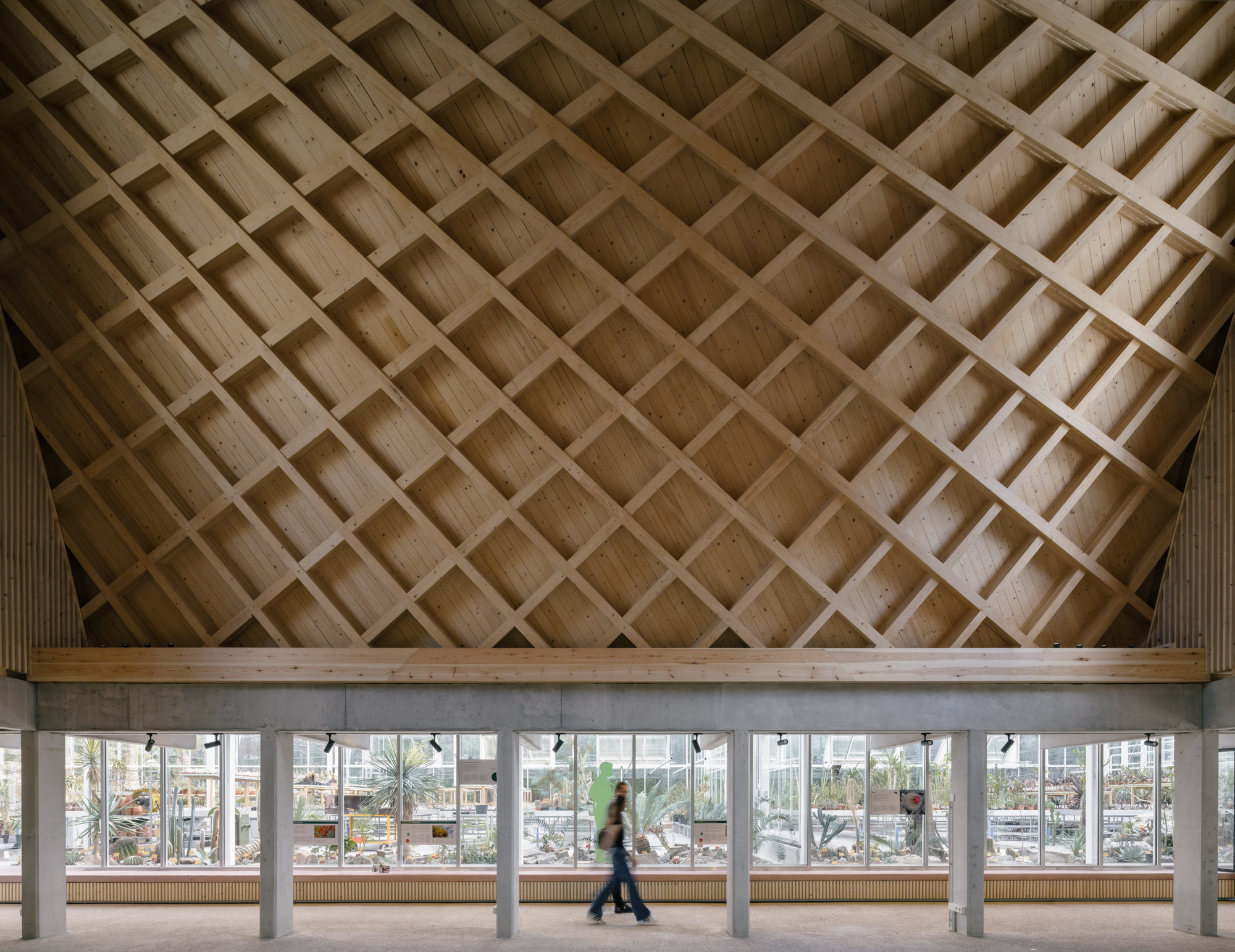
The iconic pavilion, with its 12-metre-high woodenstructure, evokes an almost sacred experience.
-
The structure offers the needed shade to provide a clear view into the surrounding greenhouses.
-
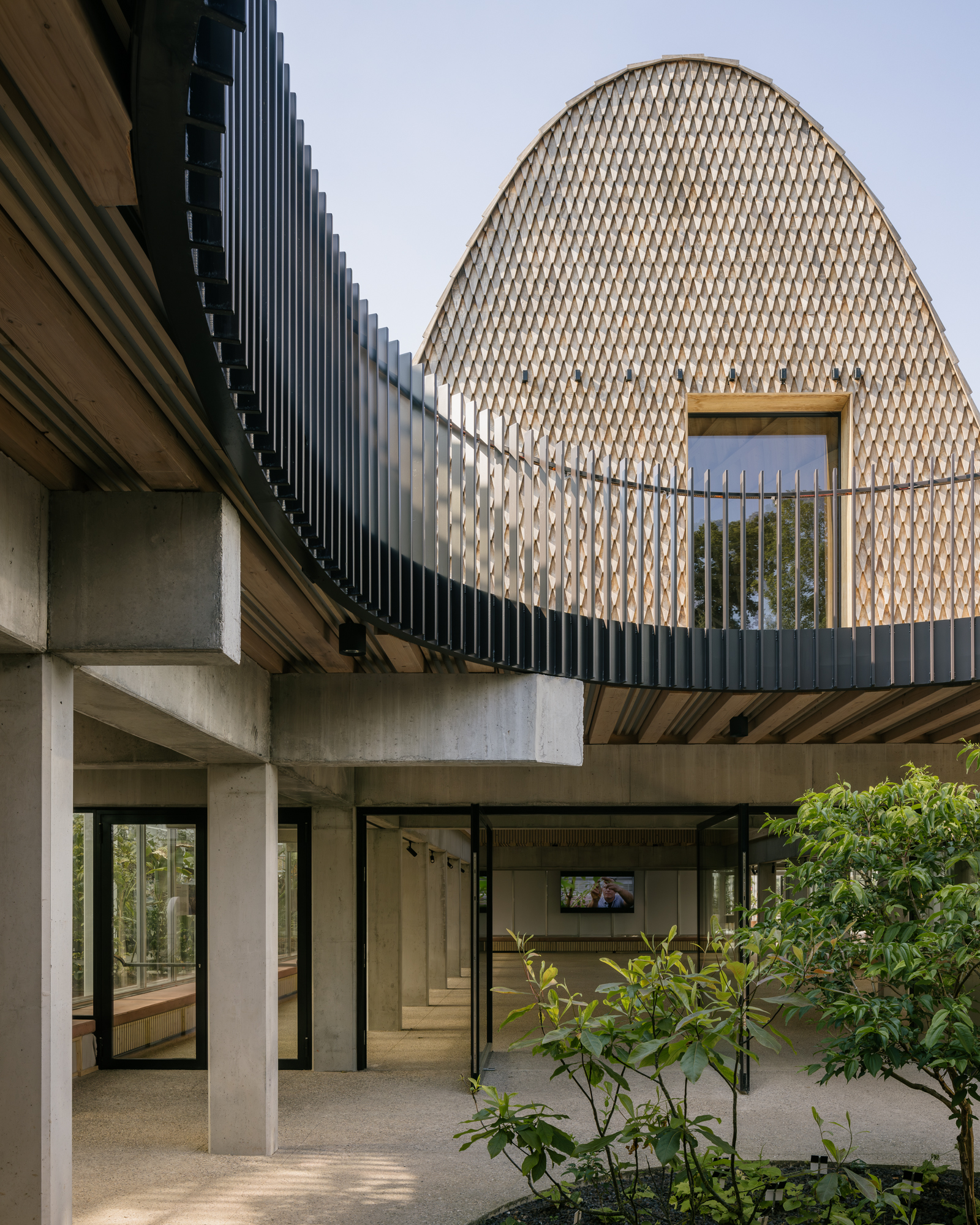
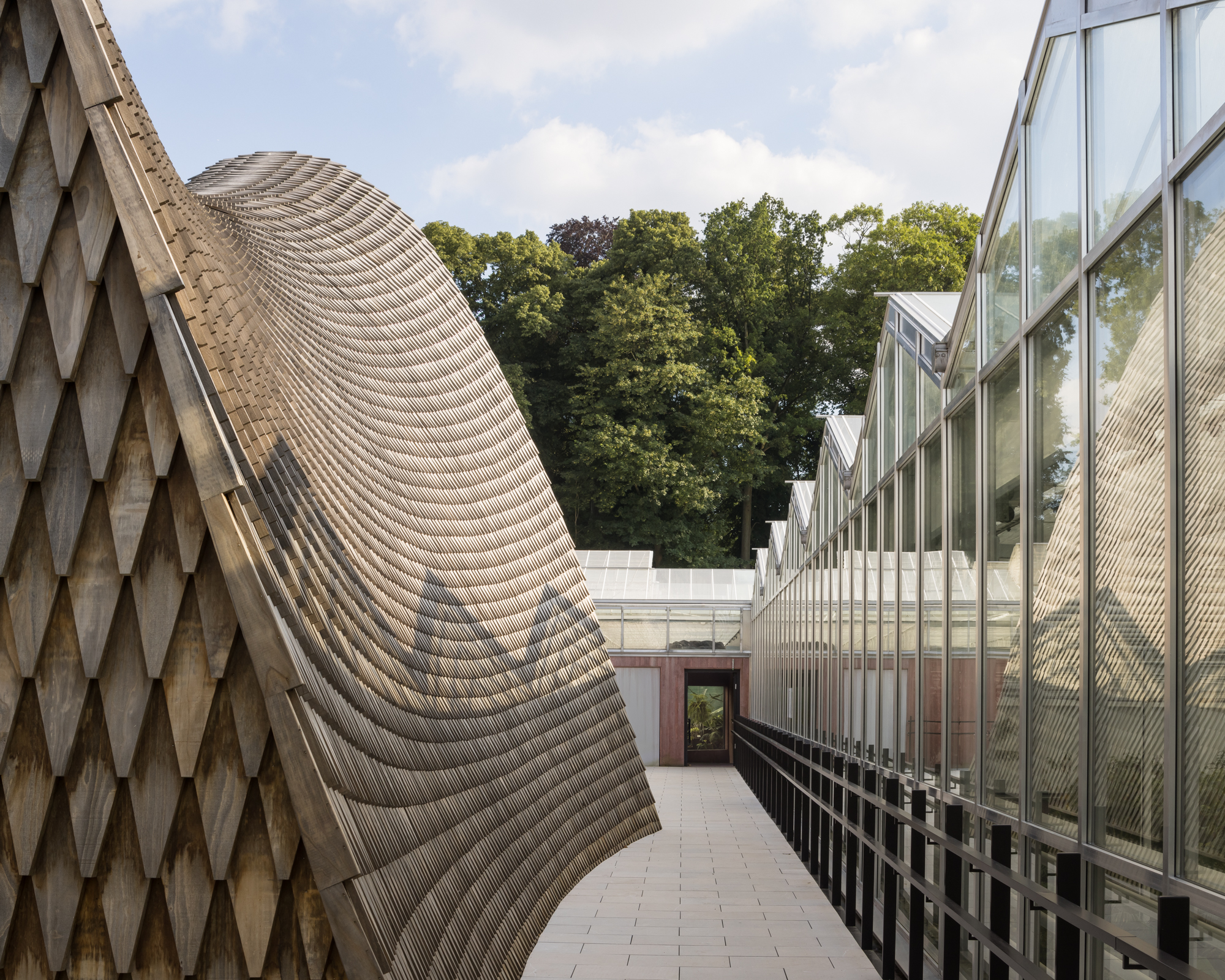
The pavilion appears to float as a dark, elevated volume in a sea of glass.
-
From the rooftop terrace, visitors gain a second glimpse into the greenhouses.
-
The pavilion has two floors: on the ground floor, you get an inside view, on the second an overview.
-
Roofterrace: the wooden roof contrasts beautifully with the glass/steel of the greenhouse
-
plan ground floor
-
plan niveau 1
-
plan roof
-
cross-section
-
longitudinal section
-
Location of the pavilion within the Botanical Garden
The Green Ark in the Botanical Garden of Meise
Nu Architectuuratelier, Archipelago. Meise, Belgium
-
Name of work in English
The Green Ark in the Botanical Garden of Meise
-
Name of work in original language
De Groene Ark in de Plantentuin van Meise
Prize year
EUmies Awards 2026
-
Work Location
Meise, Belgium
-
Studio
Nu Architectuuratelier, Archipelago
EUmies Awards 2026 Nominees
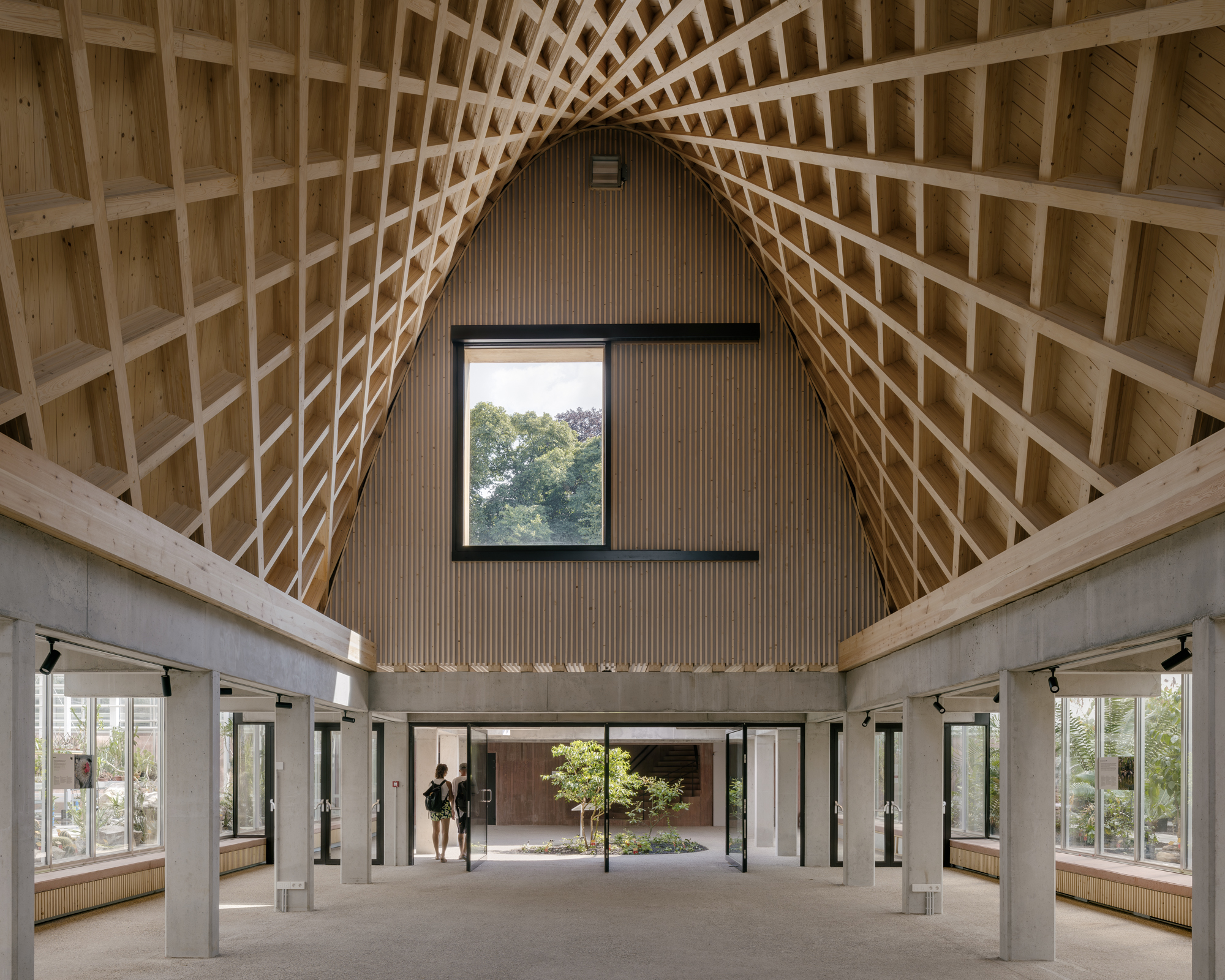




Design and realisation of large conservatories to preserve and research a living plant collection of endangered species, made public by a visitor’s pavilion in the heart of the greenhouses with an impressive hyperbolic wooden structure, an iconic roof and public roof terrace overviewing the whole.
Collaborators
Structure: Mouton Guy - Studieburo Mouton; Consulting: Zwinkels Frans - Zwinkels; Installations: Weckhuysen Davy - Sweco (previously Boydens); main contractor: Van Poppel Bob - Van Poppel; contractor wooden structure: De Keyzer Rudy - De Keyzer Woodindustries; contractor greenhouses: Deforche Steven - Deforche construct
Program
Culture
-
Labels
Nature
Site area
14380 m²
-
Client
Agentschap Plantentuin Meise
Total gross floor
10321 m²
Cost
1425 €/m²
The new conservatory at the heart of Meise Botanical Garden has doubled in size and houses a living collection of plant species from climates around the world. An innovative addition the Green Ark opens this otherwise closed collection to the public, offering visitors a rare glimpse behind the scenes, unique worldwide. Inspired by the formal logic of a cactus skeleton, the design translates botanical principles into architecture. We explored how the form and natural properties of wood could merge into a striking spatial structure topped with a roof terrace that serves as an elevated viewpoint.
Guided by the Botanical Garden’s ambition to be climate-neutral by 2045, an energy-efficient design was essential. The new greenhouses feature 4 temperature zones and provide optimal spatial and technical conditions for maintaining a living collection. The warmest zones are placed at the heart, while the surrounding cooler areas are fitted with insulating polycarbonate panels or double glazing. Combined with shading and thermal screens, this results in an energy-efficient complex with 50% less energy-use than before. Rainwater is collected in underground reservoirs, allowing them to bridge several weeks of drought. Because the collection is so fragile, it is normally closed to visitors. A carefully designed route guides the public deep into the greenhouse complex to the visitor pavilion, offering unique insight into the work of the researchers and the collections. The route continues into the service building and seed bank, connecting visitors closely to the Garden’s mission and work.
In its material expression, the wooden pavilion contrasts with the steel-and-glass greenhouse structure. Exploring the boundaries of timber construction and inspired by the skeleton of a cactus, the design features a spatial wooden roof based on the principles of a hyperbolic paraboloid; a ruled surface where straight planks are layered in two directions to form a graceful double curvature. At the gable ends, the roof follows a parabolic line, creating a distinctive double-curved form that remains fully visible from within. The roof is clad with wooden shingles made from leftover material of a fast-growing, renewable resource, treated to achieve class A1 performance. Resting on a concrete base that continues the architectural language of the entrance buildings, the pavilion includes a public roof terrace offering a new vantage point into the greenhouses. The public space accommodates exhibitions, lectures, and other events, engaging visitors in the mission of the Botanical Garden.