-

Gathering around the table
-
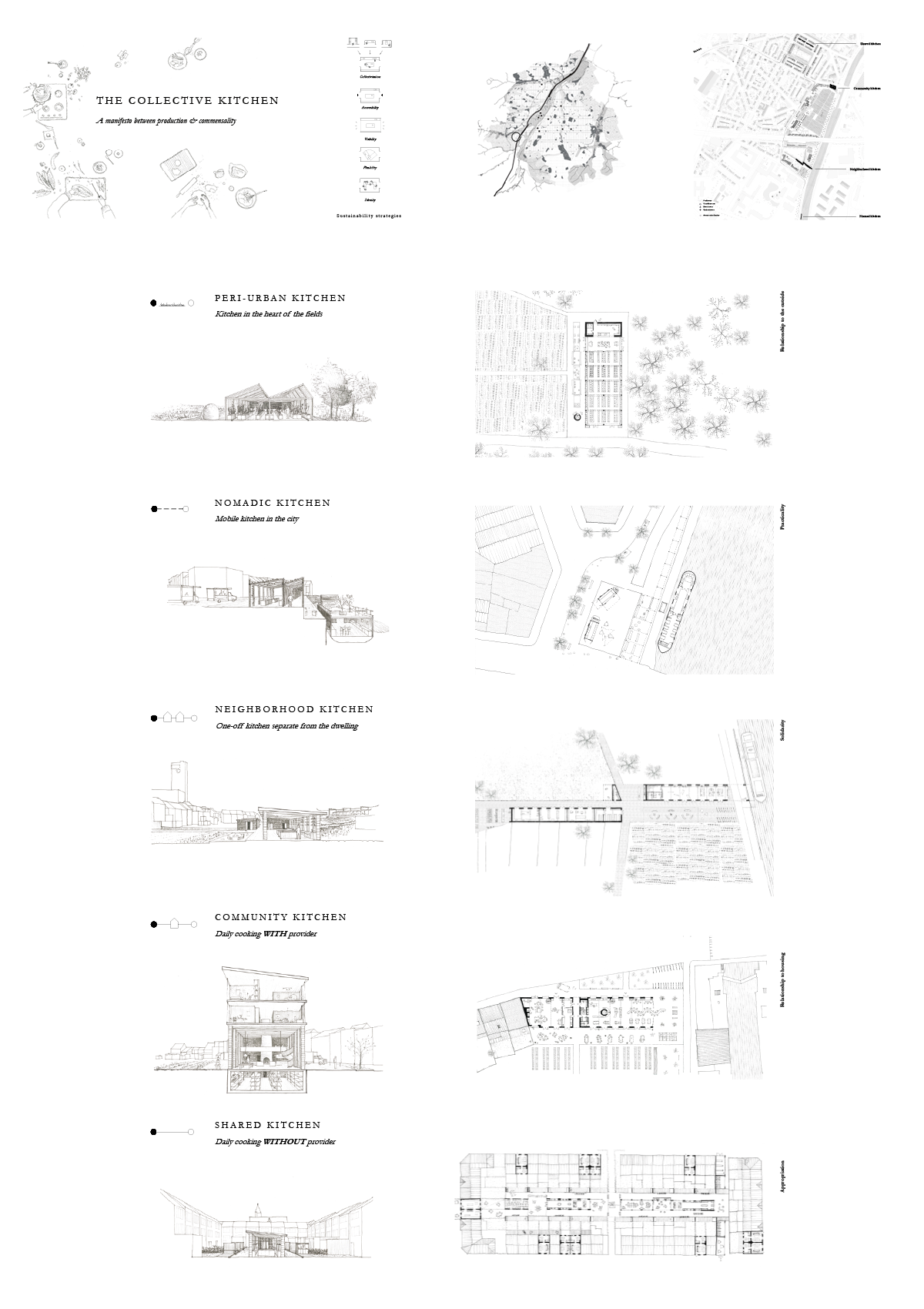
Zone of intervention - The garden city of La Roue
-
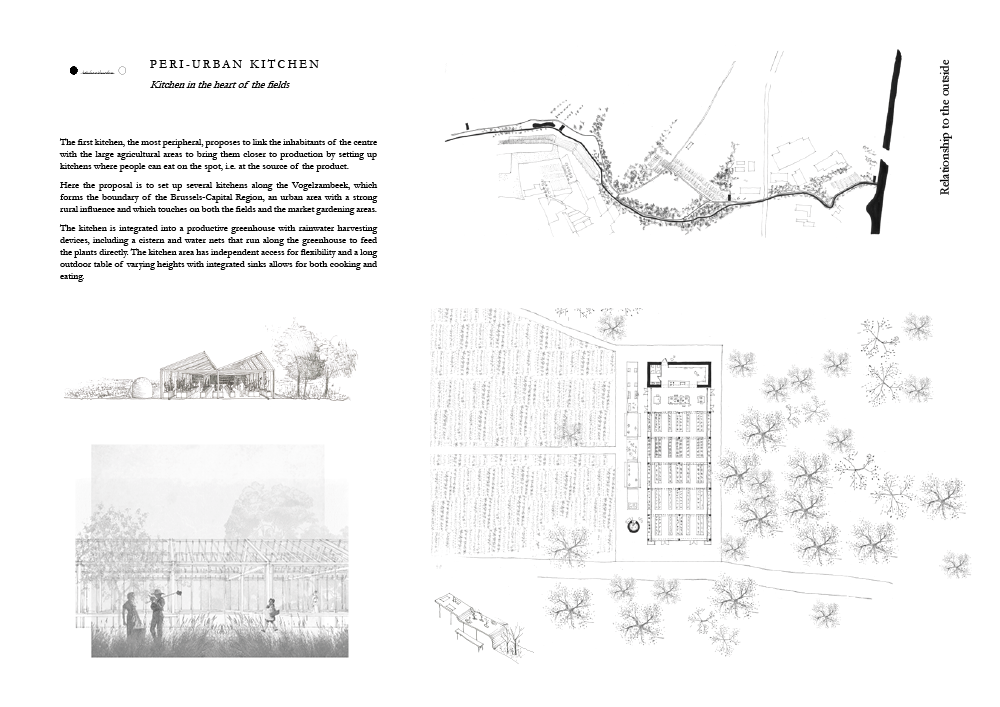
The peri-urban kitchen
-
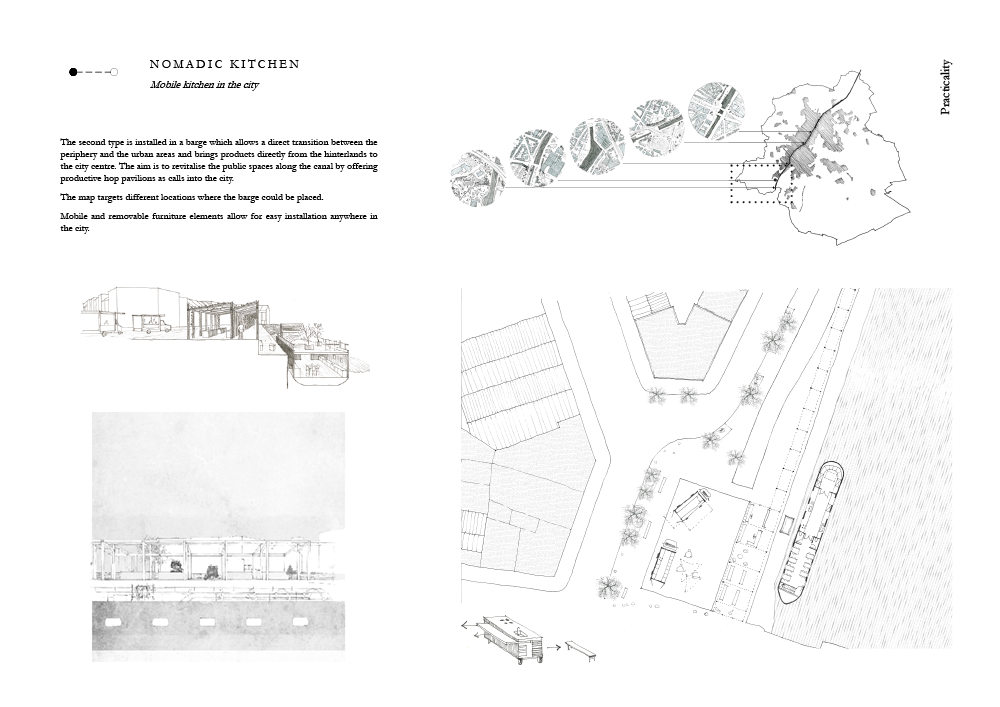
The nomadic kitchen
-
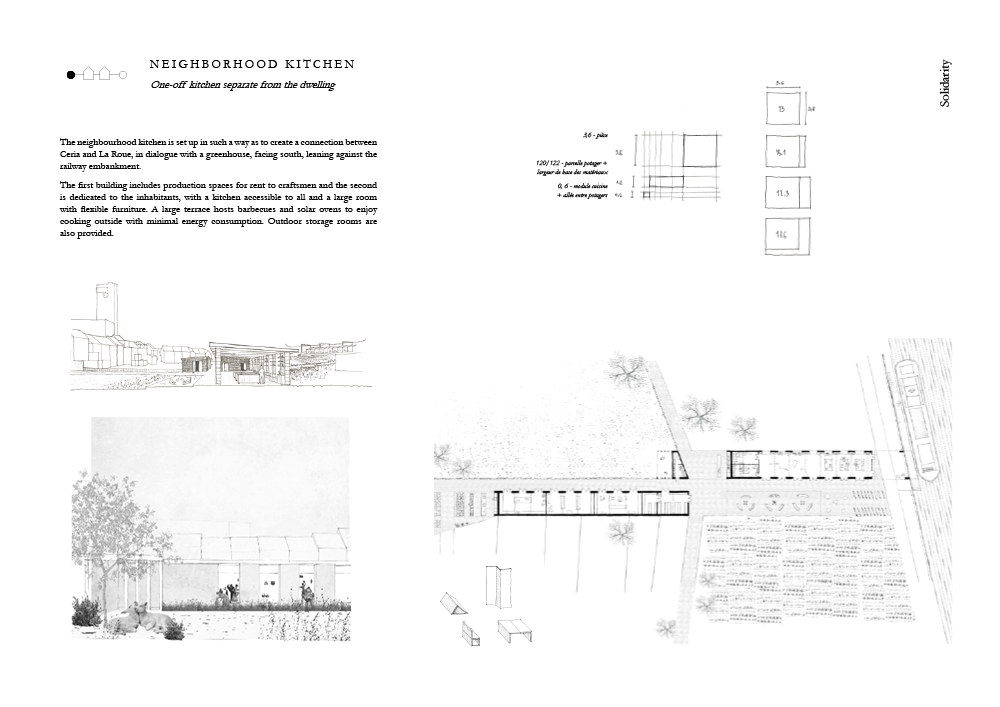
The neighborhood kitchen
-
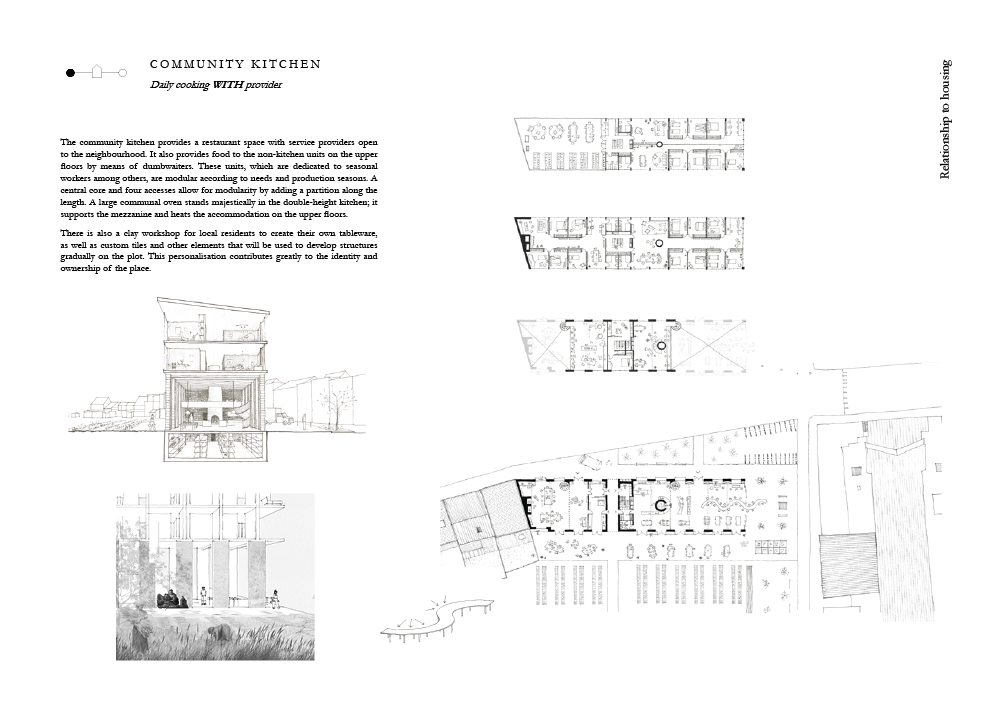
The community kitchen
-
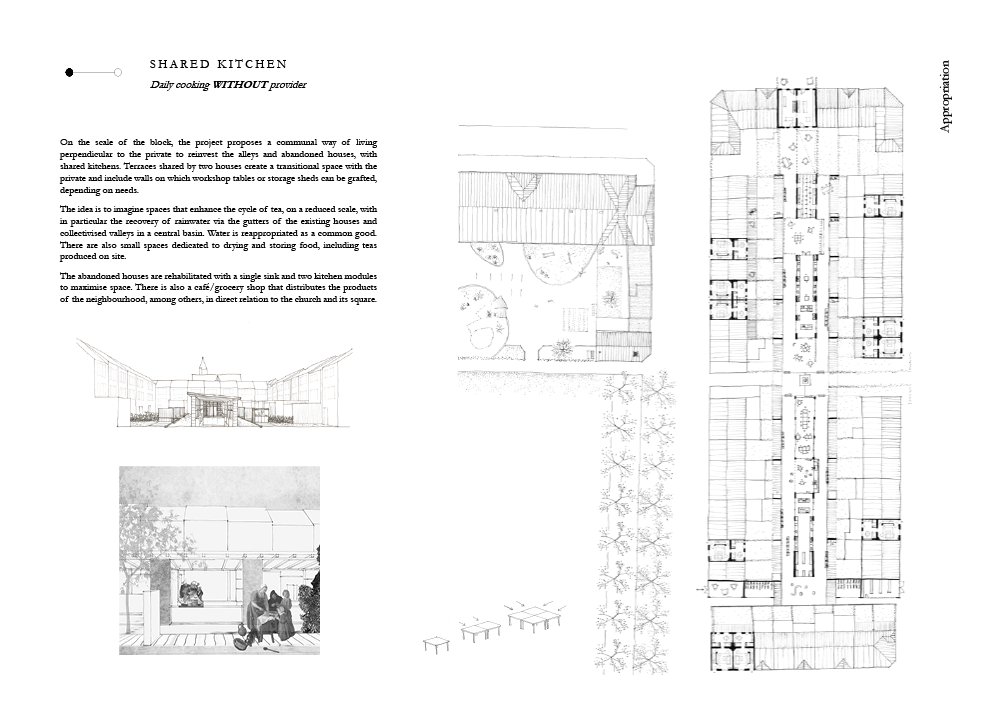
The shared kitchen
-
The typology of collective kitchens in Brussels
-
The Collective Kitchen
Clémentine Dekimpe. Brussels, Belgium
-
Name of work in English
The Collective Kitchen
-
Name of work in original language
A Manifesto between production and commensality
Prize year
Young Talent 2023
-
Work Location
Brussels, Belgium
-
Author/s
Clémentine Dekimpe
-
School
Faculty of Architecture, Architectural Engineering and Urban Planning - Catholic University of Louvain-la-Neuve.
Louvain-la-Neuve, Belgium
Young Talent 2023 YT Nominees

The Collective Kitchen
A Manifesto between production and commensality
Program
Food & Accommodation
-
Labels
Nature · Food
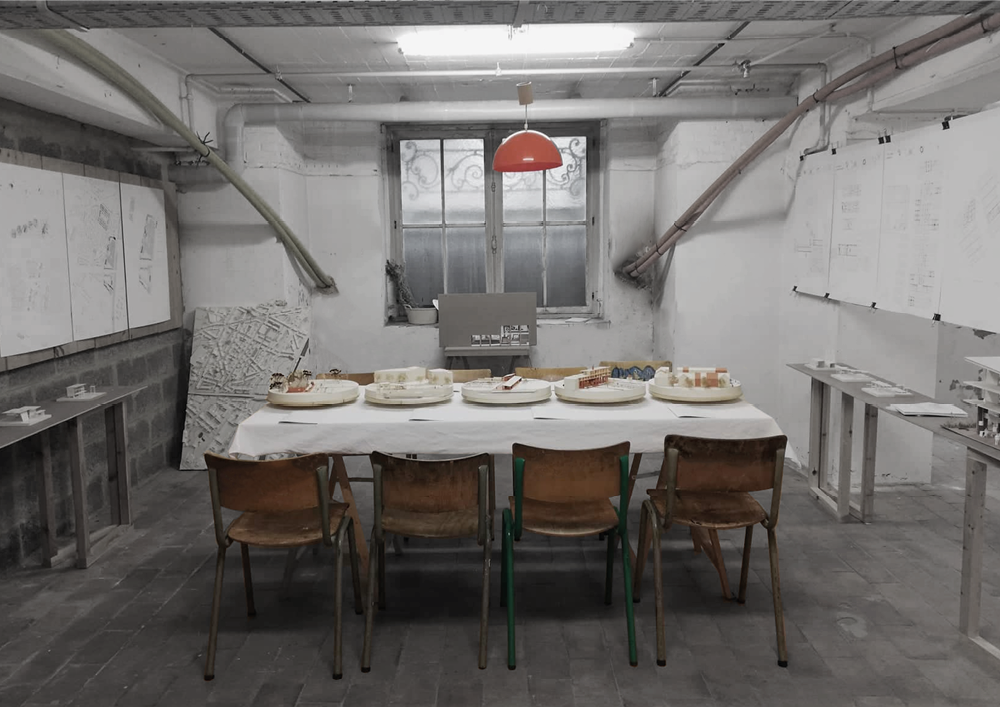
Based on an inventory of collective kitchens in history, the project questions the food cycles of cities. Set in a disadvantaged neighbourhood of Brussels, it proposes a set of culinary typologies on a local scale in order to arouse the desire to "do things together". A kitchen architecture seasoned with urban production and sprinkled with sharing.
The collective kitchen has been simmering in the architecture of our cities since the Roman kitchens, through the feminist dwellings of the nineteenth century and the buildings without kitchens described by Anna Puigjaner, and it has taken on different forms depending on the period. By defining a typology, this research draws on various ingredients to study the relationship between production and consumption through space in Brussels, and to see how bringing back a sustainable food cycle can participate in the social dynamisation of a neighbourhood. From the largest to the smallest scale, we distinguish between peri-urban kitchen, nomadic kitchen, neighbourhood kitchen, community kitchen and shared kitchen. In addition to the impact on the city, the analysis also focused on the impact of their layout and furniture on the space. The master thesis served as a basis for the project, which aims to develop the network of Brussels kitchens by offering a kitchen of each type. The project focuses on the canal zone, a booming productive area, and more particularly on the garden city of La Roue, with the aim of reactivating the district, which is now essentially monofunctional and partly abandoned. The study of the revitalisation of the district by setting up collective kitchens on different scales was then transposed to the « Brussels house » to see its impact on the urban fabric. The plans were made by hand with the idea that the project is not fixed and is co-constructed with the inhabitant. It proposes spaces where everyone can bring their own ideas and put their own spin on life together: kitchen architecture spiced up by urban production, seasoned with appropriation and sprinkled with sharing. Collective kitchens can be experienced as spaces of food production, resilience and community empowerment, but also as precursors of new types that challenge social and cultural conditions. The reflection is rooted in the kitchen but questions the Living, right down to the functioning of the city itself.