-

1. THE CITY AND THE NATURAL ENVIRONMENT.jpg
-
2. MASTERPLAN - ALCÂNTARA VALLEY.jpg
-
3. RESIDENTIAL AREA.jpg
-
4. RETENTION POND - A NEW URBAN STRUCTURE.jpg
-
5. RETENTION POND.jpg
-
6. PUBLIC SPACE.jpg
-
7. HOUSING UNIT - DEWLLING IN THE VALLEY.jpg
-
7. HOUSING UNIT.jpg
-
9. THE CITY AND THE NATURAL ENVIRONMENT.jpg
The City and the Natural Environment
Rui Miguel de Jesus e Castro. Lisbon, Portugal
-
Name of work in English
The City and the Natural Environment
-
Name of work in original language
A Cidade e o Meio Natural
Prize year
Young Talent 2025
-
Work Location
Lisbon, Portugal
-
Author/s
Rui Miguel de Jesus e Castro
-
School
Lisbon School of Architecture - University of Lisbon.
Lisboa, Portugal
Young Talent 2025 YT Nominees



The City and the Natural Environment
An Infrastructure and Housing Proposal for the Alcântara Valley
Program
Mixed use - Infrastructure & Urban
-
Labels
Compact · Master plan · Public Space · Regeneration · Land art · Collective housing
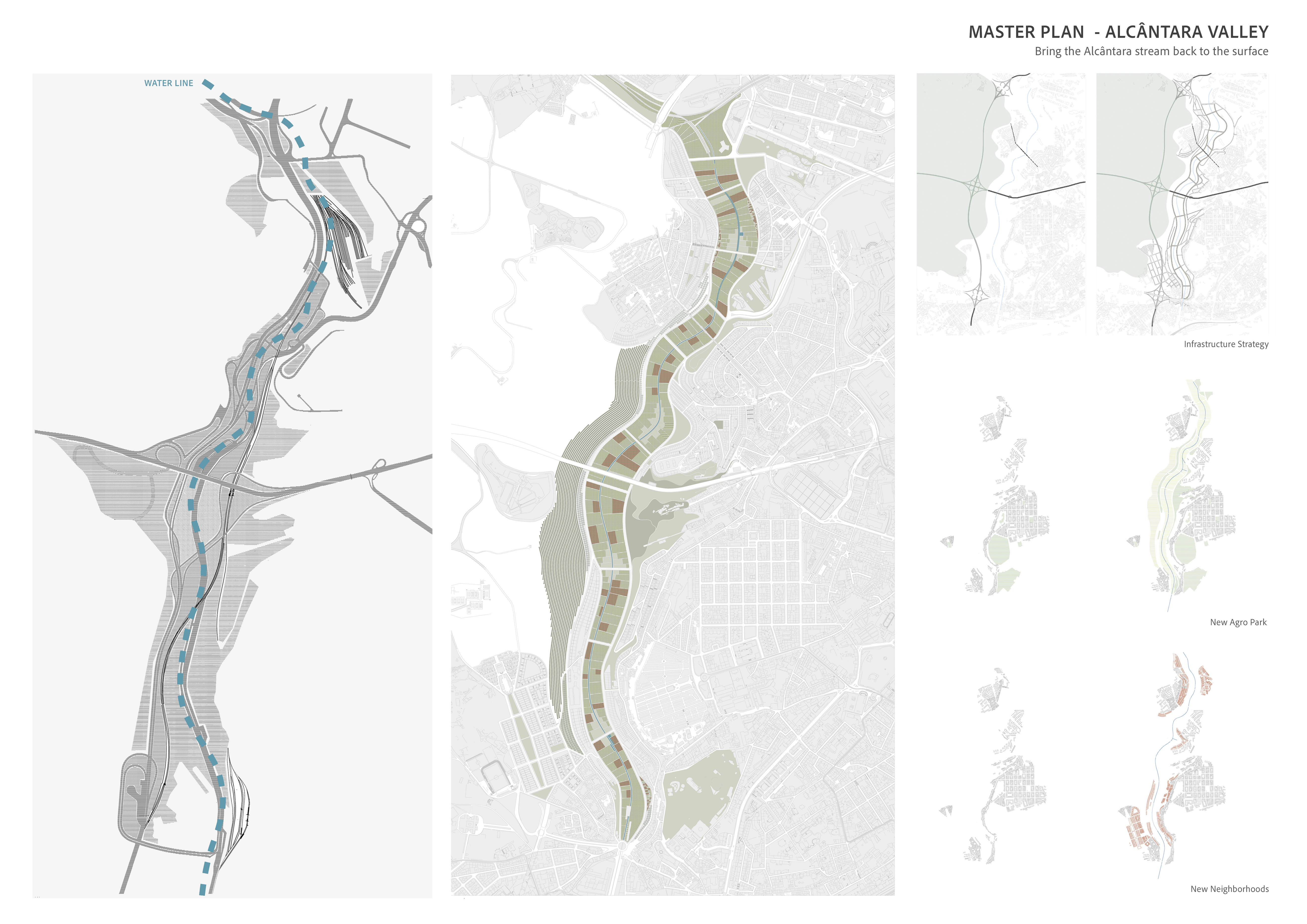
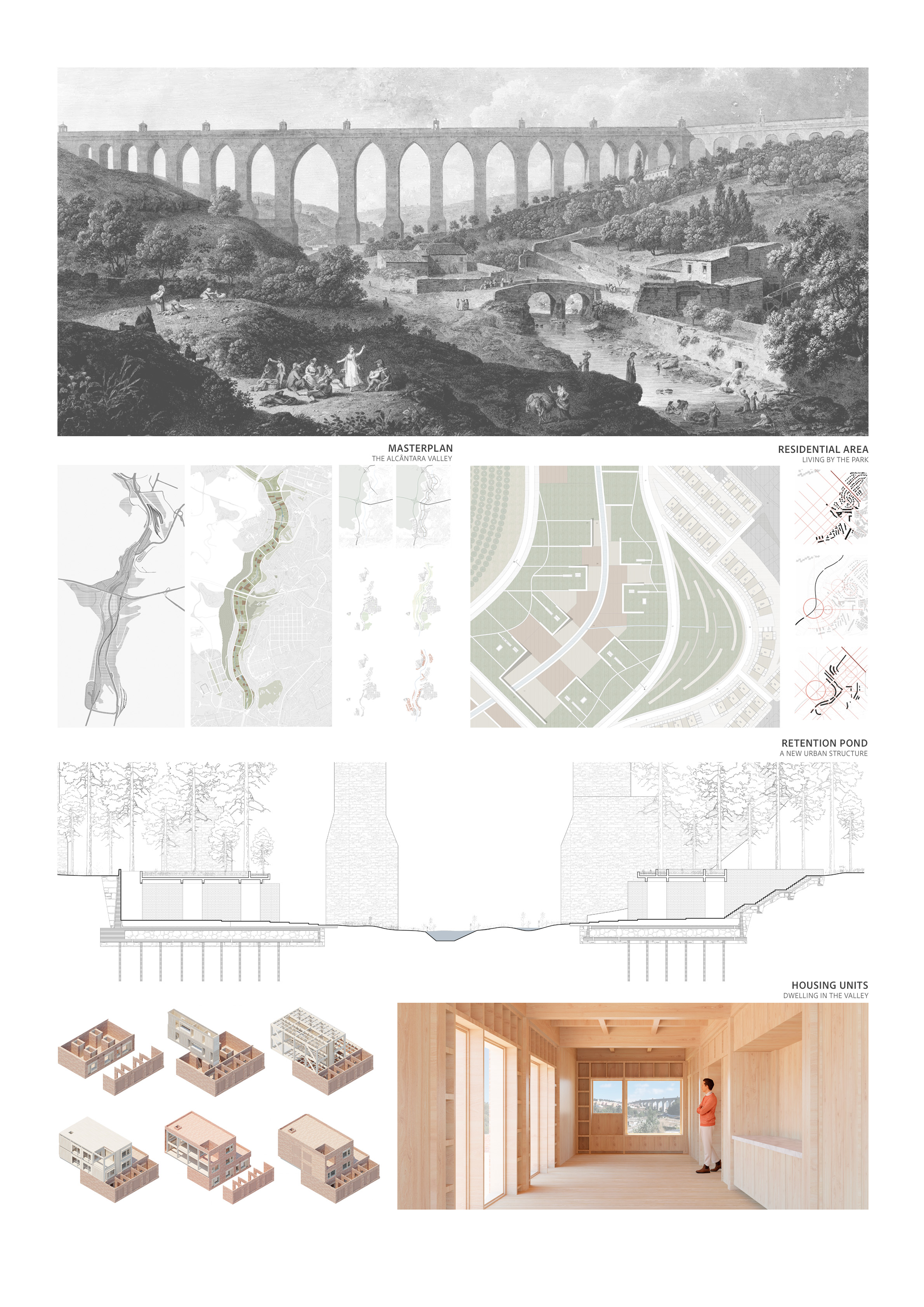
The Alcântara Valley, once fertile and productive, was transformed by infrastructure that channeled the stream, severing the connection between the city and the natural landscape. Despite its capacity to drain 40% of Lisbon’s rainwater, its potential remains underutilized. In 1967, catastrophic floods caused 500 fatalities, exposing the fragility of these structures. Inefficient water management and excessive soil impermeabilization, coupled with extreme climate events, further increase the city’s vulnerability to natural disasters.
The project integrates multiple scales, combining the master plan, public space, and housing to regenerate the Alcântara Valley. The urban strategy restores the stream, bringing it back to the surface and revitalizing riparian ecosystems while redefining the territory with agricultural areas, parks, and orchards. This intervention also involves redesigning road infrastructures, currently occupying 1.5 km² of the valley, as well as selecting buildings for demolition or rehabilitation. At the heart of this new central park in Lisbon is the retention pond, designed as an excavated plaza, creating a unique place at the bottom of the valley and within the landscape. More than just regulating rainwater, this infrastructure becomes a public gathering space, structuring pathways and social areas that strengthen the relationship between city and nature. In addition to its ecological function, the pond serves a scenic role, offering new visual perspectives that interact with the Águas Livres Aqueduct and define the surrounding territory. The transition between the valley floor and the residential areas on the slopes is achieved through terraced platforms paved with brick, arranged in a flexible grid that enhances soil permeability. Housing follows this regenerative logic, forming a flexible urban system. The structures use a 3x3-meter modular grid in Glulam, with a central CLT core housing essential infrastructure. This system accommodates different typologies and adaptive uses. Externally, buildings are clad in brick, protecting the timber and ensuring thermal comfort, considering Lisbon’s high sun exposure. In a time of climate challenges, it is crucial to rethink Lisbon through its natural systems, transforming the Alcântara Valley into a regenerated and sustainable territory.