-

Representative graphic brownfields
-
Representative graphic brownfields 01
-
Representative graphic brownfields 02
-
Representative graphic brownfields 03
-
Representative graphic brownfields 04
-
Representative graphic brownfields 05
-
Representative graphic brownfields 06
-
Painel graphic brownfields
-
THE BROWNFIELDS OF THE TAMANDUATEÍ AXIS AND THE POTENTIAL FOR URBAN RECONVERSION
Dayane Regina Barbosa dos Santos. São Paulo, Brazil
-
Name of work in English
THE BROWNFIELDS OF THE TAMANDUATEÍ AXIS AND THE POTENTIAL FOR URBAN RECONVERSION
-
Name of work in original language
from fragmentation to the articulation of the territory
Prize year
Young Talent 2020
-
Work Location
São Paulo, Brazil
-
Author/s
Dayane Regina Barbosa dos Santos
-
School
Architecture and Urbanism School - Mackenzie Presbiterian University.
São Paulo, Brazil
Young Talent 2020 YT Open Nominees




THE BROWNFIELDS OF THE TAMANDUATEÍ AXIS AND THE POTENTIAL FOR URBAN RECONVERSION
from fragmentation to the articulation of the territory
Program
Urban planning
-
Labels
Redevelopment · Master plan
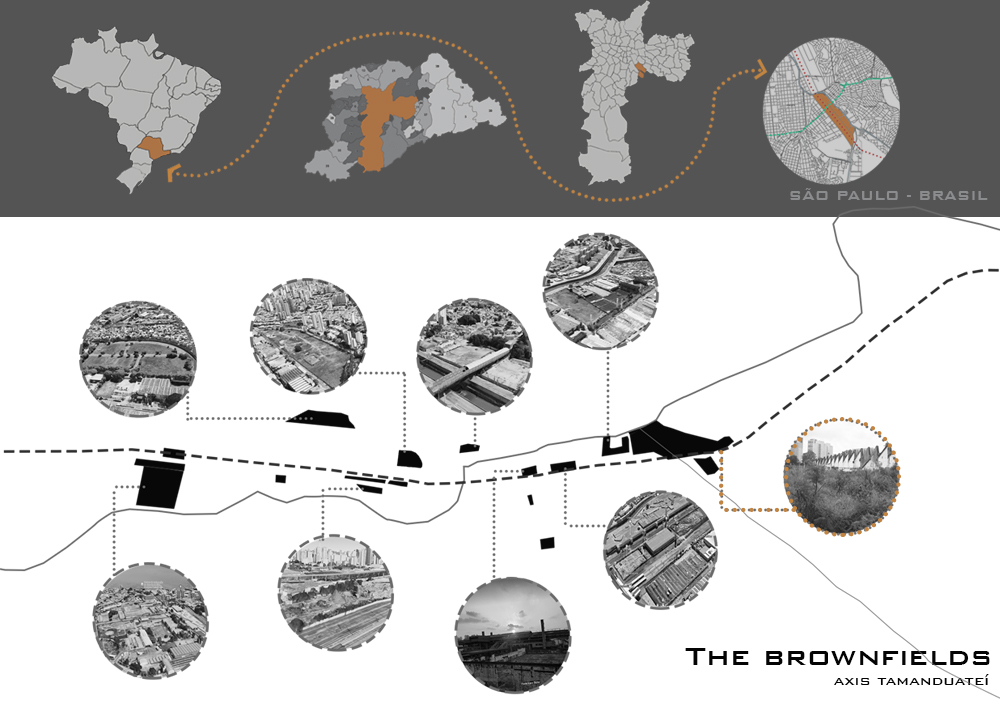
The present study aims at a reflexive analysis about the post-industrial context of the Tamanduateí-SP axis and the transformations that this territory has undergone in the last decades. The dispersion of industrial activities caused a process of emptying the territory, creating uninhabited and unsecure areas that can be identified as brownfields.
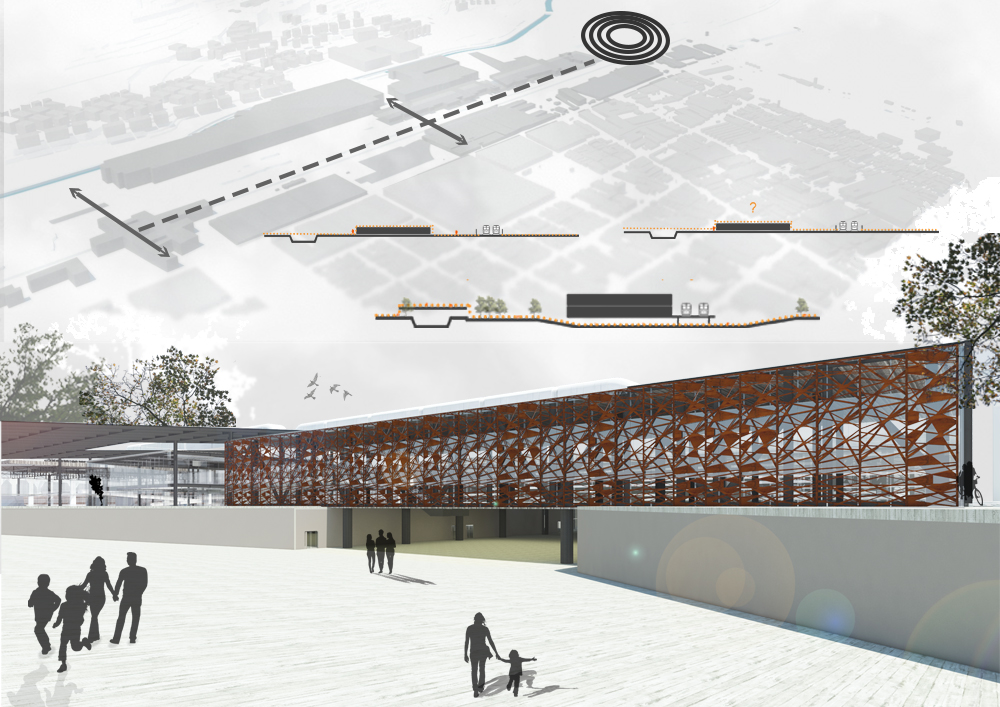
This proposal seeks to recover the value of the voids available in brownfields, assessing the potential for conversion. These voids are ruptures in the fabric creating fragmented, disjointed areas that are difficult to insert into the urban fabric. The city is considered a palimpsest, given the need for sustainable development. The challenge of this work is to design possibilities for interventions supported by the existing urban infrastructure. It is necessary to plan for sustainable urban development, so that the city can grow back inland and no longer expand on the peripheries. Recovering the territory is a more insightful action than its absolute replacement. Restructuring it, promoting housing and leisure are the premises that articulate the interventions of this project, starting from the recovery of part of the São Paulo railway border as the structuring element. The masterplan is structured from two points, the Tamanduateí station and the land of the old Matarazzo industry as focal points of the project. Along this stretch, public facilities, housing, leisure are proposed, in addition to enhancing the public transport node, promoting mobility not only local. It seeks to requalify this stretch by promoting public enjoyment, creating new urban dynamics, providing spaces provided with urbanity. We want to make the place alive and fluid, while preserving its historical sense. The land of the old Matarazzo industry is one of the limits of the intervention, becoming a large urban park, including a sports and cultural center. The project proposes three moments of action: circular (park), connect (lowered square) and coexist (center sports culture). From the point of view of soil contamination, a large elevated deck and the revitalization of the Ribeirão dos Meninos and Tamanduateí River are proposed. The city is understood as a living organism, where the fabric creates connections that guarantee vitality, and when fragmented, put urban life at risk. In this way, it is necessary to recreate the connection lines, like arteries irrigating the territory so that urban life begins to pulse again.