-

Access
-
Wooden structure
-
West facade
-
East facade
-
Interior
-
Future public space
-
Location
-
2023-2030
-
Section
-
East elevation
-
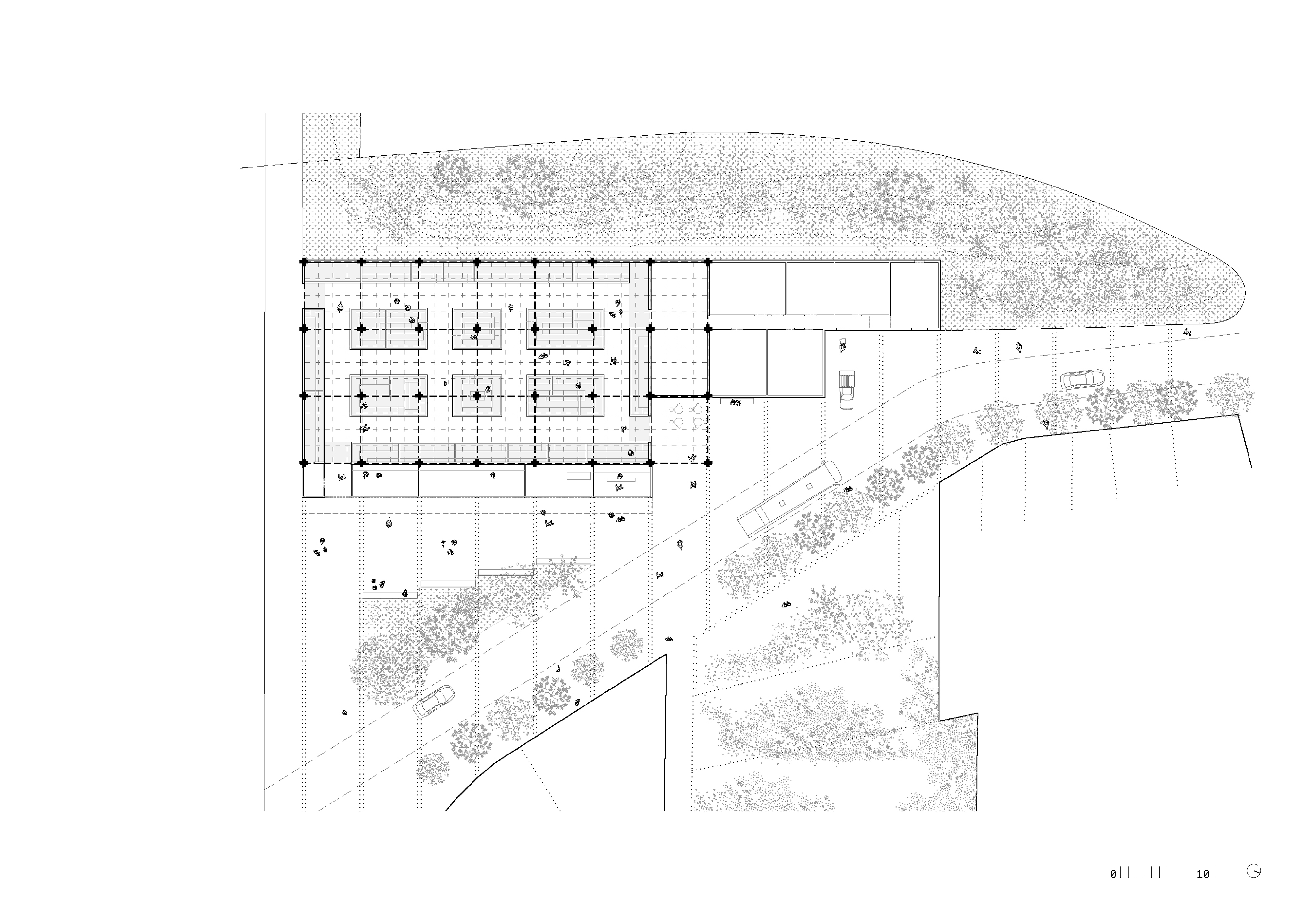
Ground floor
-
Axonometry
Temporary Market in Horta
Ravetllat Arquitectura, Carles Enrich Studio. Barcelona, Spain
-
Name of work in English
Temporary Market in Horta
-
Name of work in original language
Mercat provisional d'Horta
Prize year
EUmies Awards 2026
-
Work Location
Barcelona, Spain
-
Studio
Ravetllat Arquitectura, Carles Enrich Studio
EUmies Awards 2026 Nominees
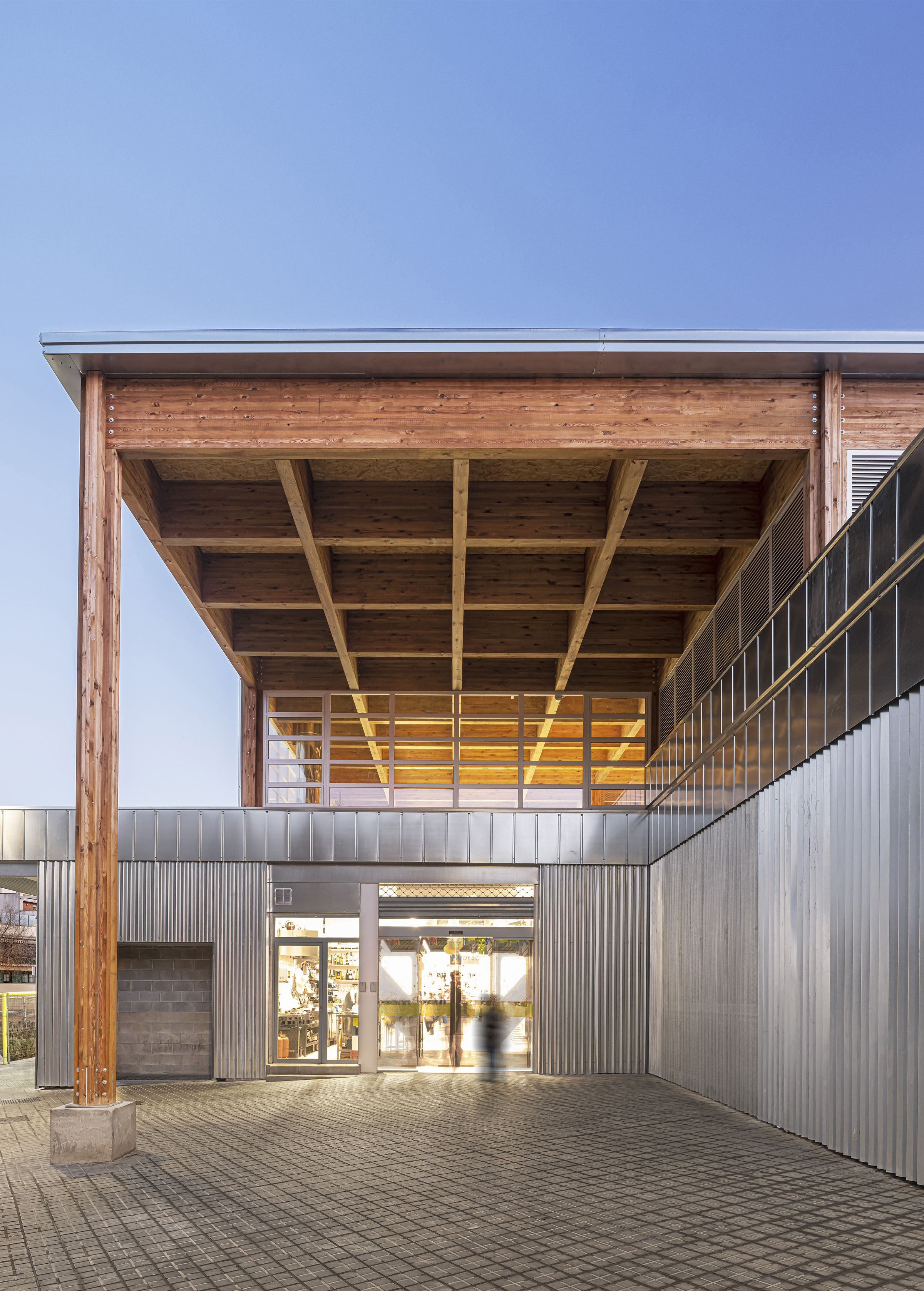
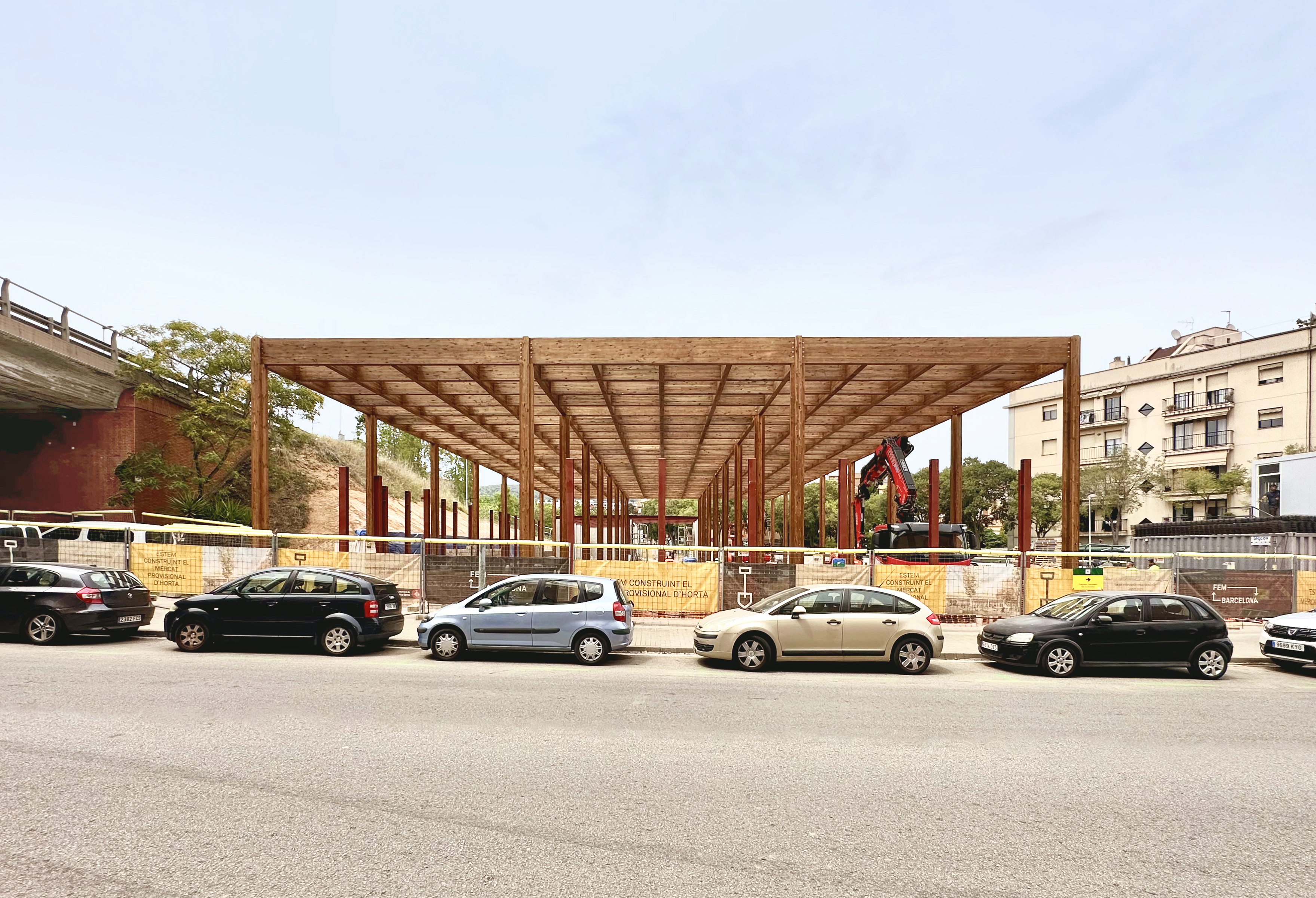

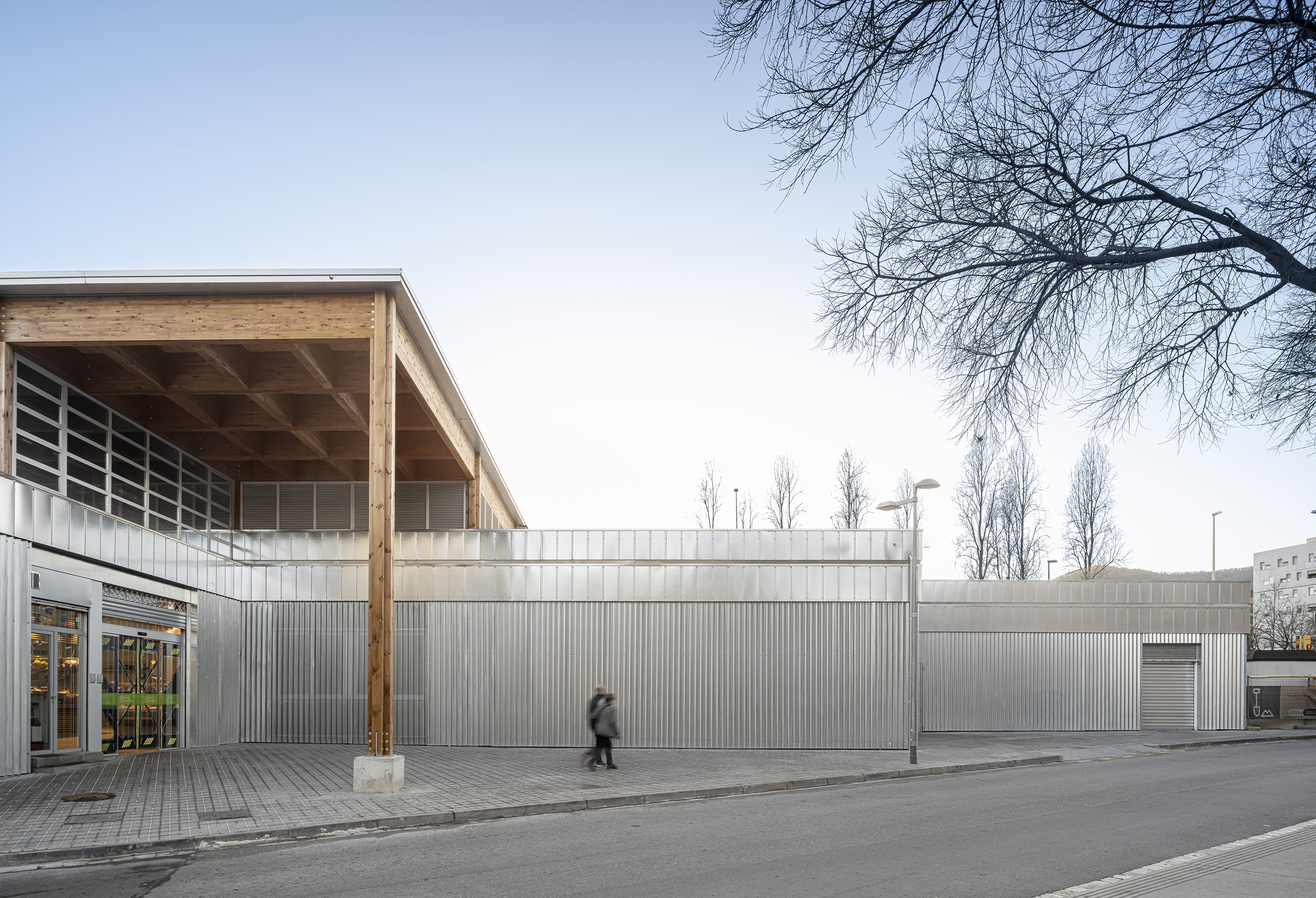





The project involves the construction of a temporary market to reallocate the stores of Horta’s historic market during its refurbishment works. The building is designed to last over time, as its wooden structure will remain after the dismantling, creating a new public space for the neighbourhood.
Collaborators
Construction management: ANIMA Arquitectura Construcción; Construction management: BAM7 Tècnics; Structure: Bernuz-Fernández Arquitectes; Installations: AIA
Program
Commerce
-
Labels
Market
Site area
2920 m²
-
Client
Institute of Municipal Markets of Barcelona, IMMB
Total gross floor
1410 m²
Cost
3800 €/m²
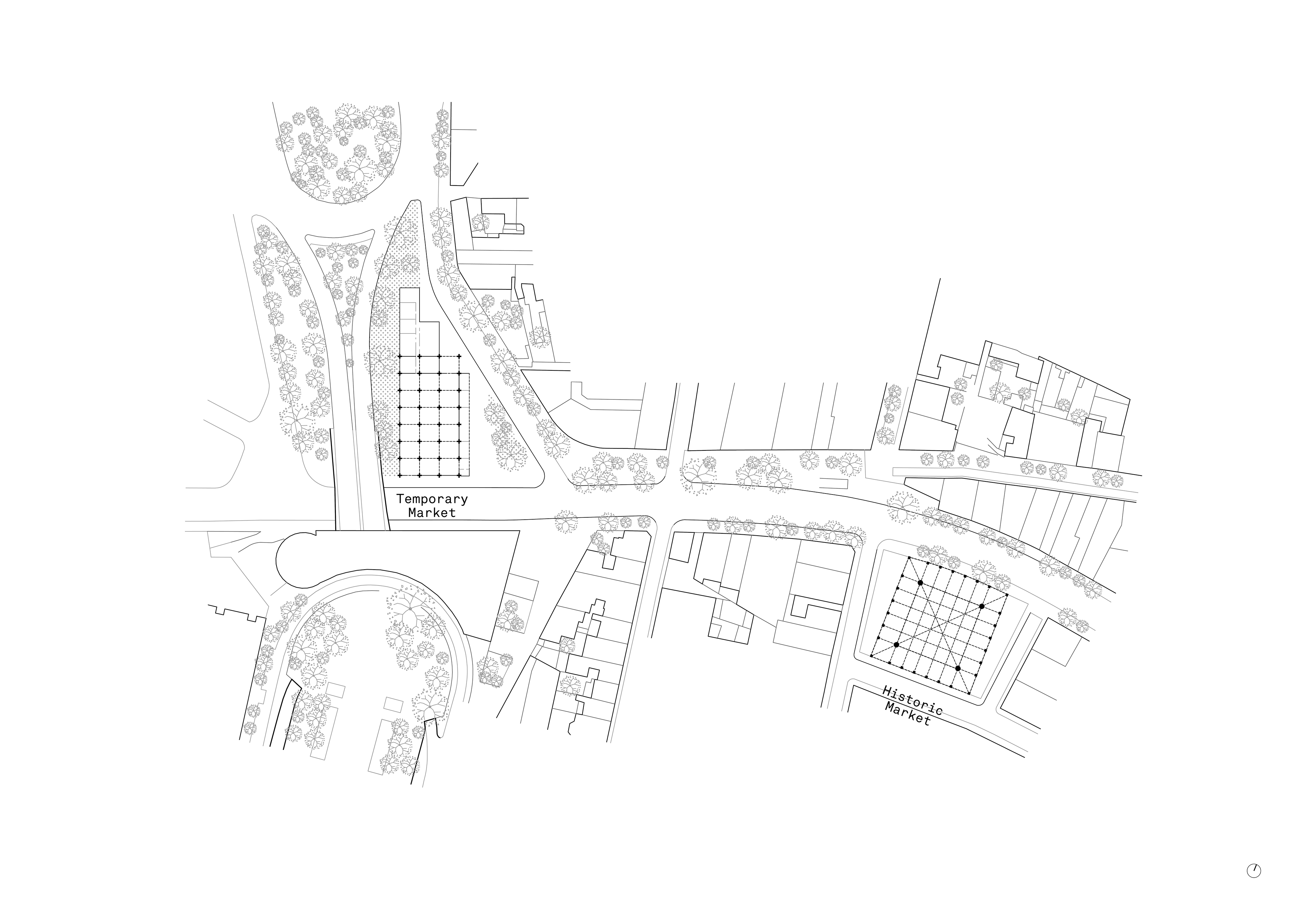
Located at an intermediate point of confluence between the neighbourhoods of Horta, Carmel and La Clota, right on the slope of the northern mouth of the Rovira Tunnel, the new market coincides with a point of particular tension in terms of infrastructures, being the end point of the Parc de les Rieras and where two important arteries of urban and ecosystemic growth converge. The project anticipates the transformation of this non-place as a future public space through a strategy in two times: present and future.
The project is conceived as a combination of a permanent infrastructure and a temporary programme. The main structure acts as a space-generating element and support for the current roof of the provisional market, based on a grid of wooden pillars and beams that allow the market programme to be well adapted and to be reused in the future as an urban element of once the refurbishment of the old market is completed. The stalls and logistics are planned as provisional elements to meet the functional requirements of the commercial activity. The heights of the different roofs of the market respond to the desire for topographical integration in relation to the slope of Avinguda de l'Estatut. The commercial area is formalised as a 5 m height volume while the logistics area is solved by setting a lower piece to reduce the impact on the landscape. The interior stops are grouped together to form a perimeter ring and 6 islands that generate a grid of streets linked to the three main entrances.
The market prioritises natural environmental conditions to improve the comfort of traders and shoppers. Natural lighting is enhanced thanks to the glazed perimeter envelope which, at the same time, allows for cross ventilation and natural air renewal thanks to the CO2 sensors that trigger the opening of the perimeter windows. The geometry and materiality of the roof considerably reduces reverberation and substantially improves the acoustics of the sales room. On the other hand, the future reuse of the structure, as well as the possible reuse of the enclosures and interior fittings, means a great economic saving in the dismantling and, at the same time, an appropriation of the space by the neighbours, who will see how the structure that has been used to house the temporary market means an improvement in the future urban environment.