-

Rapresentative graphic document
-
Where-What-Why
-
Construction technologies
-
Technological flexibility
-
Partitions and technical compartment flexibility
-
Timeline, functional flexibility
-
Timeline, cladding flexibility
-
Project panel
-
Technological variations and functional flexibility in the reconstruction of a mixed use building
Pier Tommaso Zechini. Campotosto, Italy
-
Name of work in English
Technological variations and functional flexibility in the reconstruction of a mixed use building
-
Name of work in original language
An open building system for the reconstruction of residential-touristic architectures in Campotosto, Italy
Prize year
Young Talent 2020
-
Work Location
Campotosto, Italy
-
Author/s
Pier Tommaso Zechini
-
School
Architecture Department - University of Studies G. d'Annunzio.
Pescara, Italy
Young Talent 2020 YT Nominees





Technological variations and functional flexibility in the reconstruction of a mixed use building
An open building system for the reconstruction of residential-touristic architectures in Campotosto, Italy
Program
Single house
-
Labels
Prototype
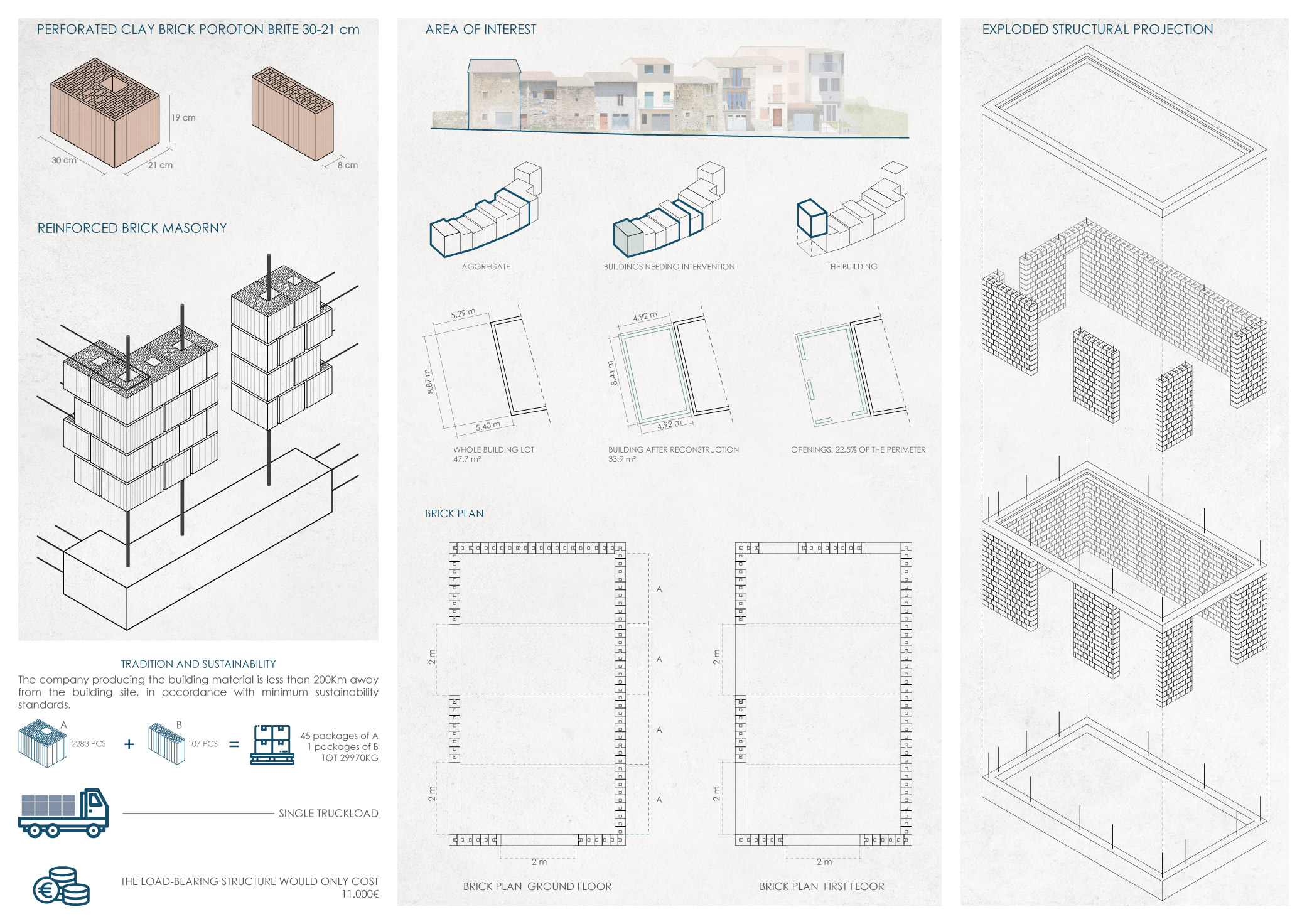
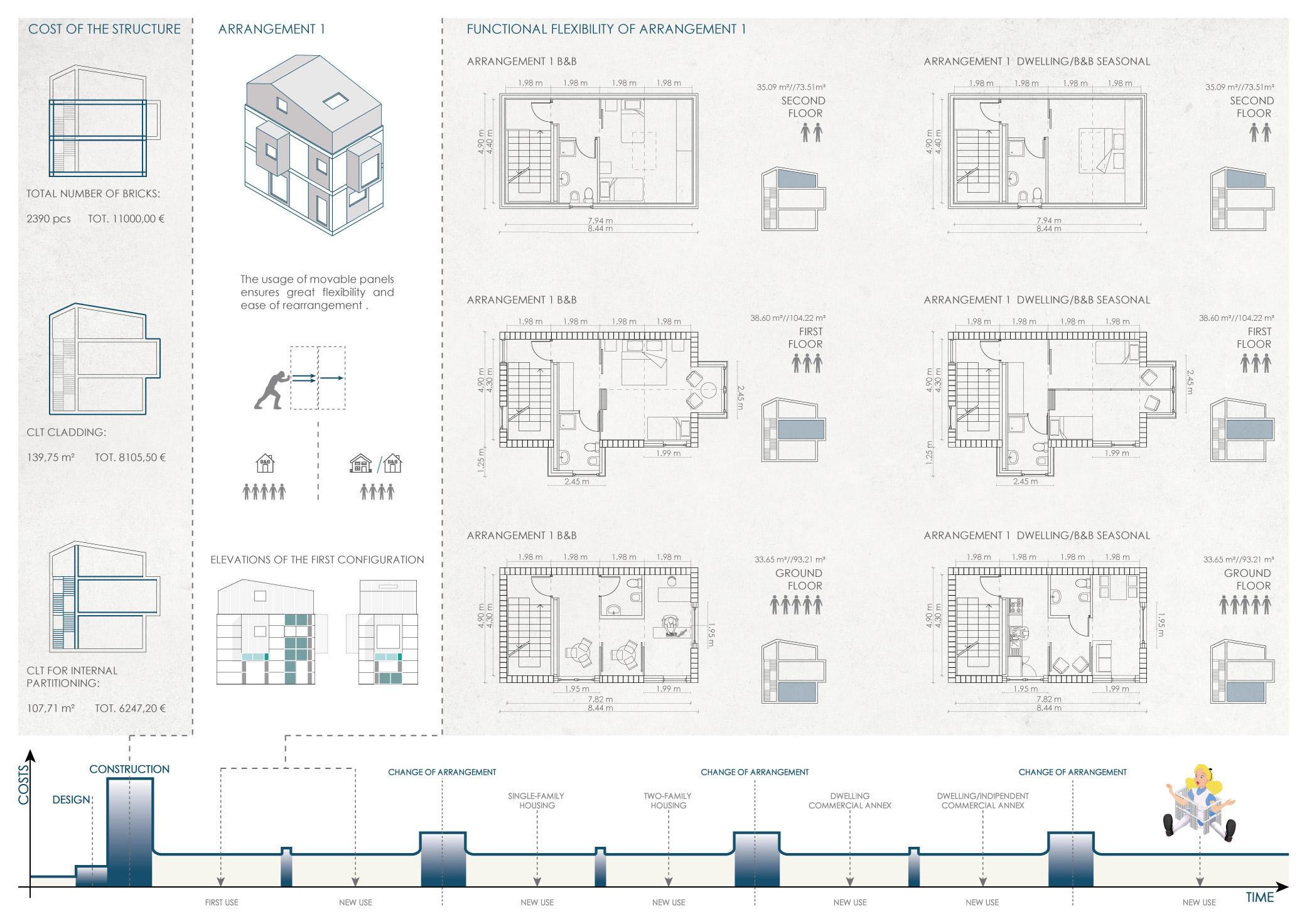
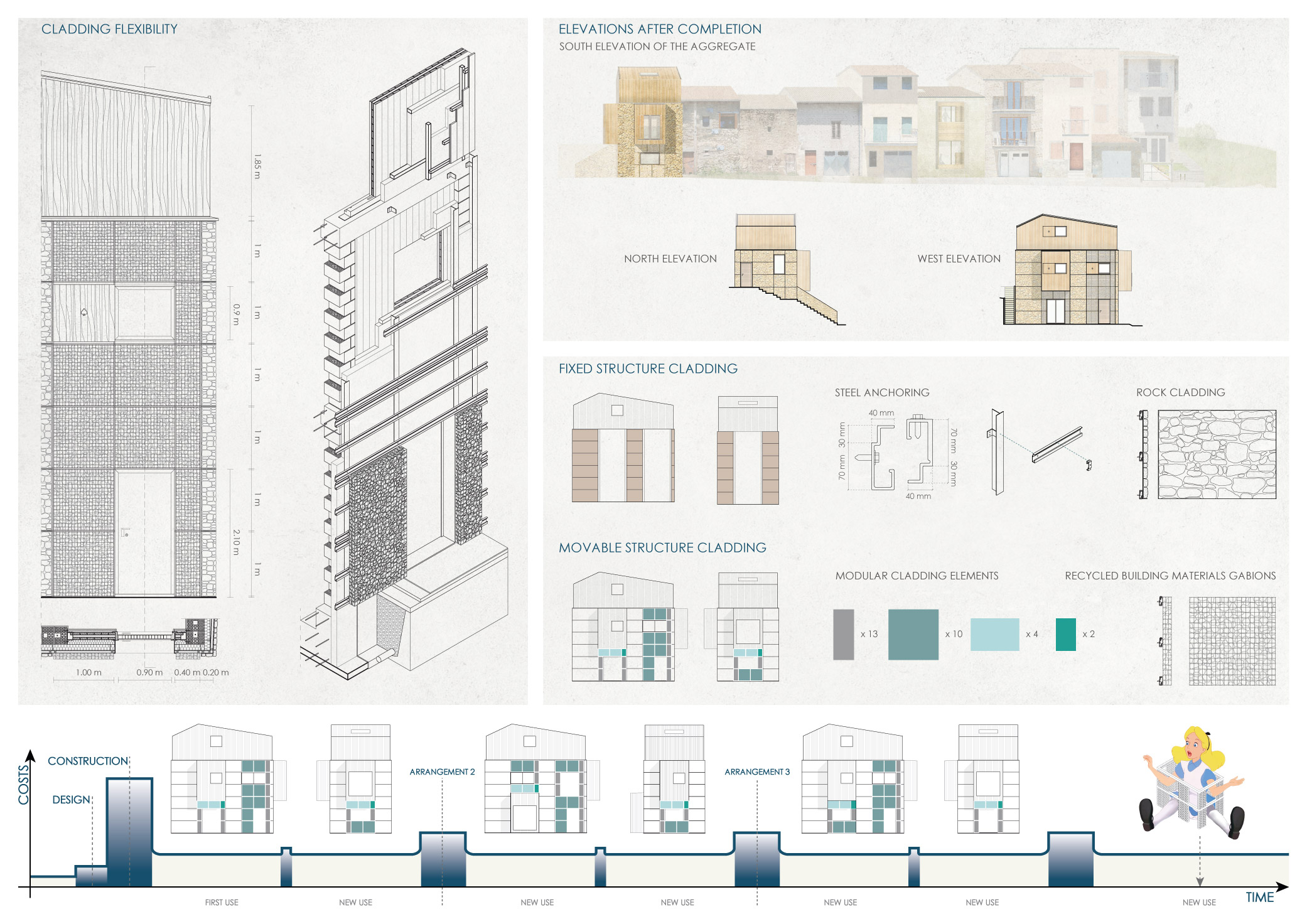
Born from an internship with Di Muzio Laterizi and developed in the degree thesis in Architecture, this project defines a model for the reconstruction of mixed use, residentialtourist buildings in the historic cities affected by seismic events using open, flexible and sustainable solutions.
WHAT. This project examines the reconstruction of a building which had been condemned due to structural damage following a violent earthquake. WHERE. This building is part of the historic town of Campotosto (Italy) whose unique context is characterized by the eponymous artificial lake and by the remarkable position inside the Gran Sasso National Park which ensures its naturalistic, sport and culinary touristic vocation even after the catastrophe. WHY.The reasons for the reconstruction of a modestly sized and obsolete building are rooted in the likelihood of an economic return in the full respect of the local socio-cultural identity through a flexible design strategy with an eye on the dynamics of the territory. WHEN. In a context where uncertainty about the future may render new buildings rapidly obsolete, the design strategy has been to develop the construction timeline along a hypothetical cost-action graph. This program alternates among three use classifications (house, b&b, small business) which emerged from a preliminary analysis of the socio-economic and normative context. HOW. The project revolves around functional flexibility guaranteed by the many possible technological permutations of the load bearing structure, the various building elements and the openings. An immutable reinforced bricks masonry structure (the innovative construction system which constitutes the highlight of my internship) has been designed with perimetral discontinuities laid out to favor quick rearrangement of modular cross laminated timber building elements to and from any point of the building. Technical compartments and stratified envelope systems have been designed with ease of accessibility and maintainability in mind. It has been finally demonstrated that this system, even though it has slightly higher than usual design costs, promises a more controllable construction cost, offering a profitable investment opportunity and long-term savings on the product's life cycle thanks to its rapid reconfigurability. This design can also easily accomodate unforeseen reconfigurations…