-

A traditional jetty of stone and timber.
-
Pathway through the forest towards the lake of Sundshopen.
-
The tip of the jetty is visible as a motif at the end of the perspective as you approach the beach.
-
From the land all the way over the shallow waters and out to where the deep waters begin.
-
From the pathway towards the toilet building.
-
Sloping jetties have historically been part of the coastal landscape in the coast of Norway.
-
Site plan.
-
Plan entrance to area, parking and toilet building.
-
Toilet building and entrance to area.
-
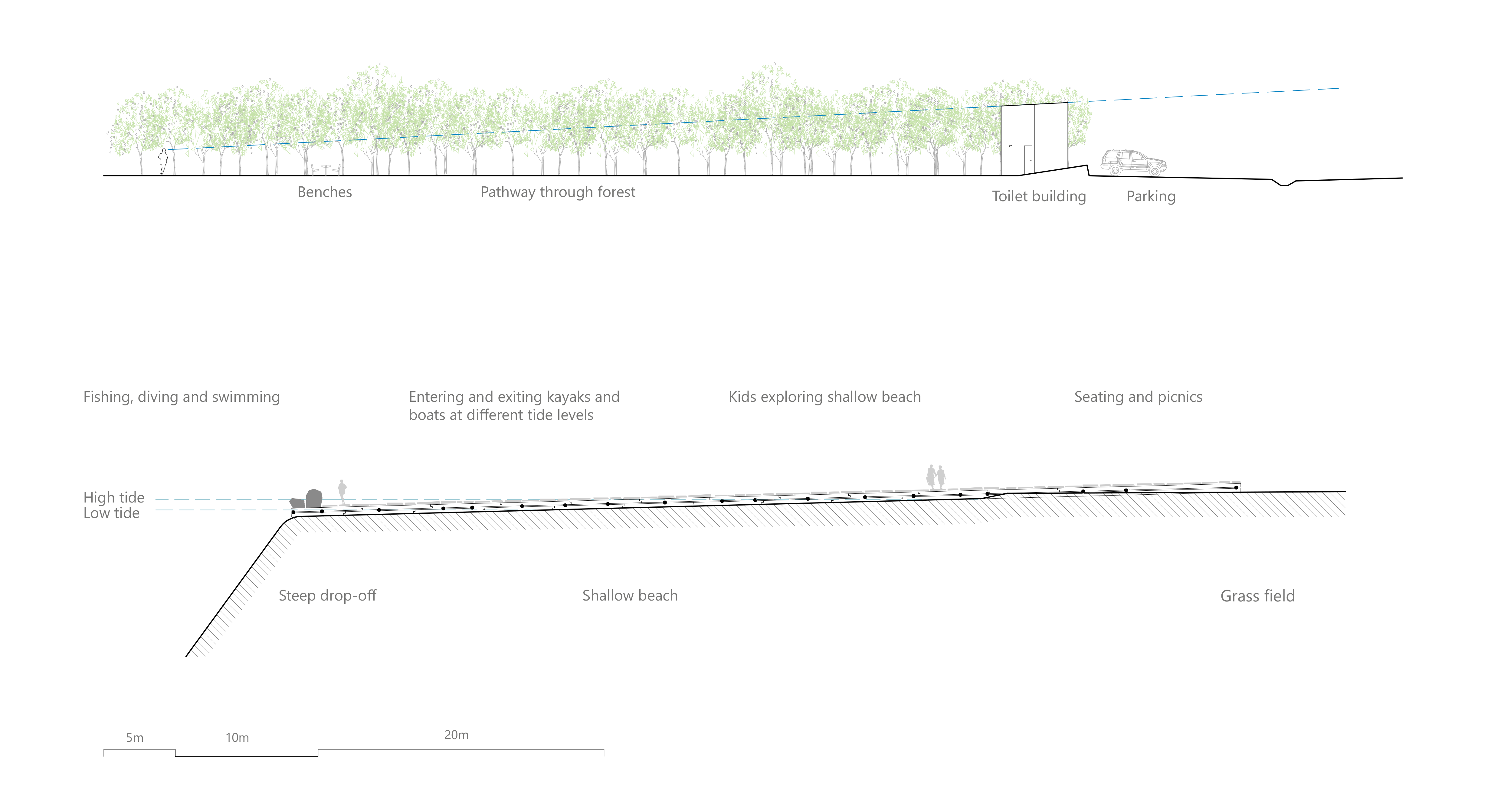
Section forest and jetty.
-
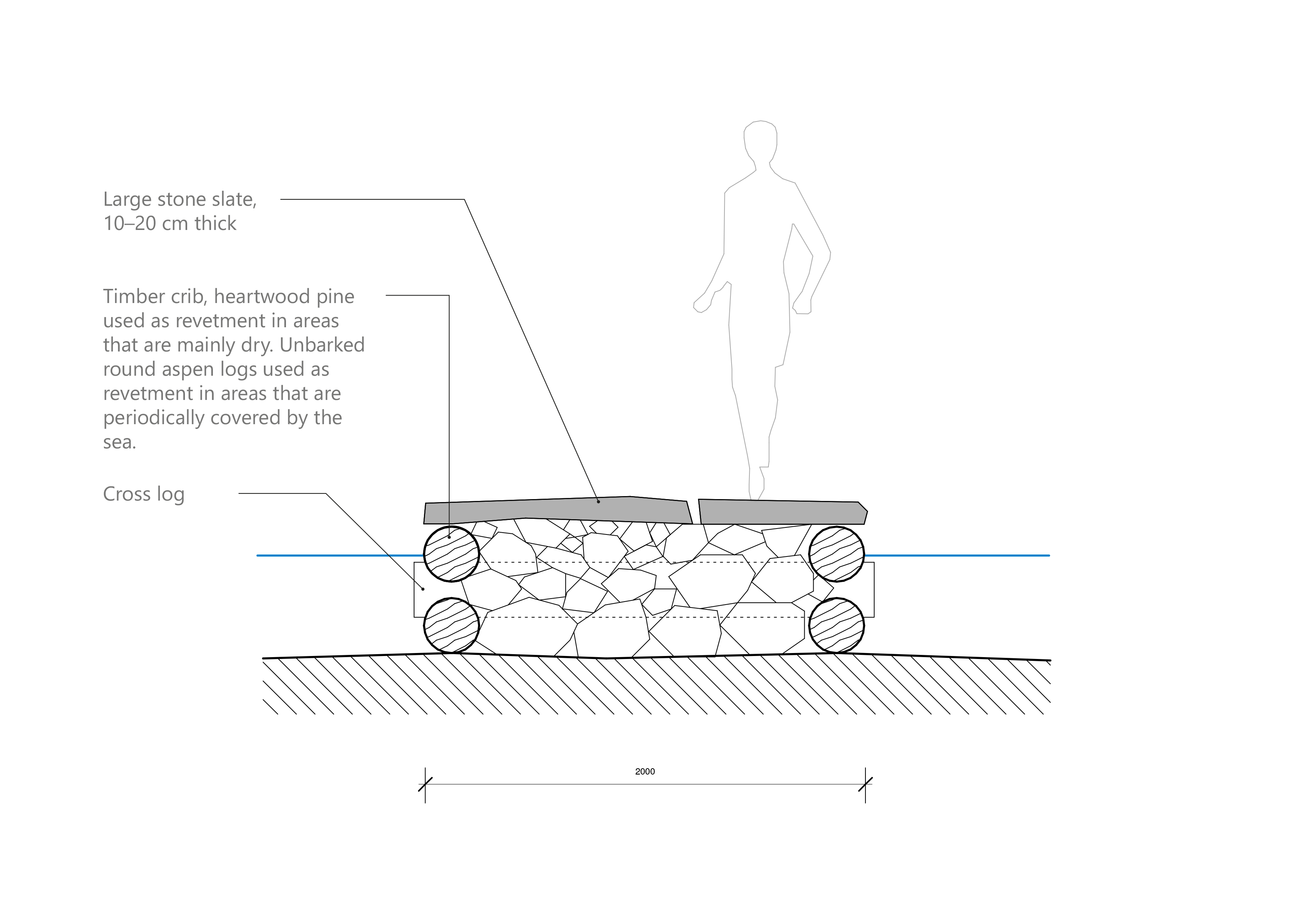
Detail cross section jetty
-
Tip of pier and alignment of rocks.
Sundshopen - Norwegian Scenic Routes
Rever & Drage Architects. Sømna, Norway
-
Name of work in English
Sundshopen - Norwegian Scenic Routes
-
Name of work in original language
Sundshopen - Nasjonale Turistveger
-
Work Location
Sømna, Norway
-
Studio
Rever & Drage Architects
Nominees



Restoration of a long-used community bathing site at Sundshopen, where a new stone and timber jetty, dense forest with a path, and a small service building reconnect local residents and visitors with the landscape’s social, cultural, and ecological heritage.
Collaborators
Landscape: Eirik Dalland - Grindaker AS
Program
Landscape
-
Labels
Gardens & Parks
Site area
9200 m²
-
Client
The Norwegian Public Roads Administration
Total gross floor
9 m²
At the heart of the site stands a new yet traditional jetty of stone and timber, extending from the land into deeper water. It anchors the place both visually and functionally, framing the beach, marking shifting water levels, and evoking the area’s maritime heritage. A small aluminum building marks the entrance to a path that leads from the parking area through dense forest to the shore, where the jetty’s tip becomes a focal point guiding visitors toward the lake.
The design follows the lines of the landscape, allowing the geometry of the path, the jetty, and the surrounding agricultural terrain to converge in subtle alignment. The path and the jetty are set on the same axis. The orientation of these elements echoes the lines of the access road and the cultivated fields, reinforcing the sense that the intervention is part of the existing order rather than imposed upon it. As one moves through the site, the changing proportions of the path subtly modulate perception. Along the route, benches are placed both in accessible, practical locations and in more unexpected spots — tucked into the edge of the forest, set on small rises or near the shoreline. This creates a rhythm of familiarity and surprise, offering both convenience and discovery. The jetty itself is conceived as a multifunctional element: a pier for boats, a place for swimming, fishing, gathering, or simply being by the water. Its generous, sloping form invites year-round use.
The materials used in the project reflect both continuity and contrast. The jetty follows traditional construction with timber cribs filled with local stones and a surface of natural slate. Timber was chosen for durability: aspen logs with bark remain submerged, while dense pine is used for parts alternately exposed to air and water. The service building contrasts this with bead-blasted aluminum, fabricated by a local workshop. Both are low-maintenance and long-lasting, expressing distinct temporalities, craft and contemporary precision. A scan of site boulders enabled accurate digital modelling of the jetty’s terminal crib, reducing effort and supporting traditional craftsmanship through technology.