Study of structural elements of an urban regeneration in historic districts
Lenith Bibiana Hernandez Murcia. Shanghai, China
-
Name of work in English
Study of structural elements of an urban regeneration in historic districts
-
Name of work in original language
- The case of the Ward Road Goal -
Prize year
Young Talent 2020
-
Work Location
Shanghai, China
-
Author/s
Lenith Bibiana Hernandez Murcia
-
School
Architecture and Planning - Vienna University of Technology.
Vienna, Austria
Young Talent 2020 YT Nominees
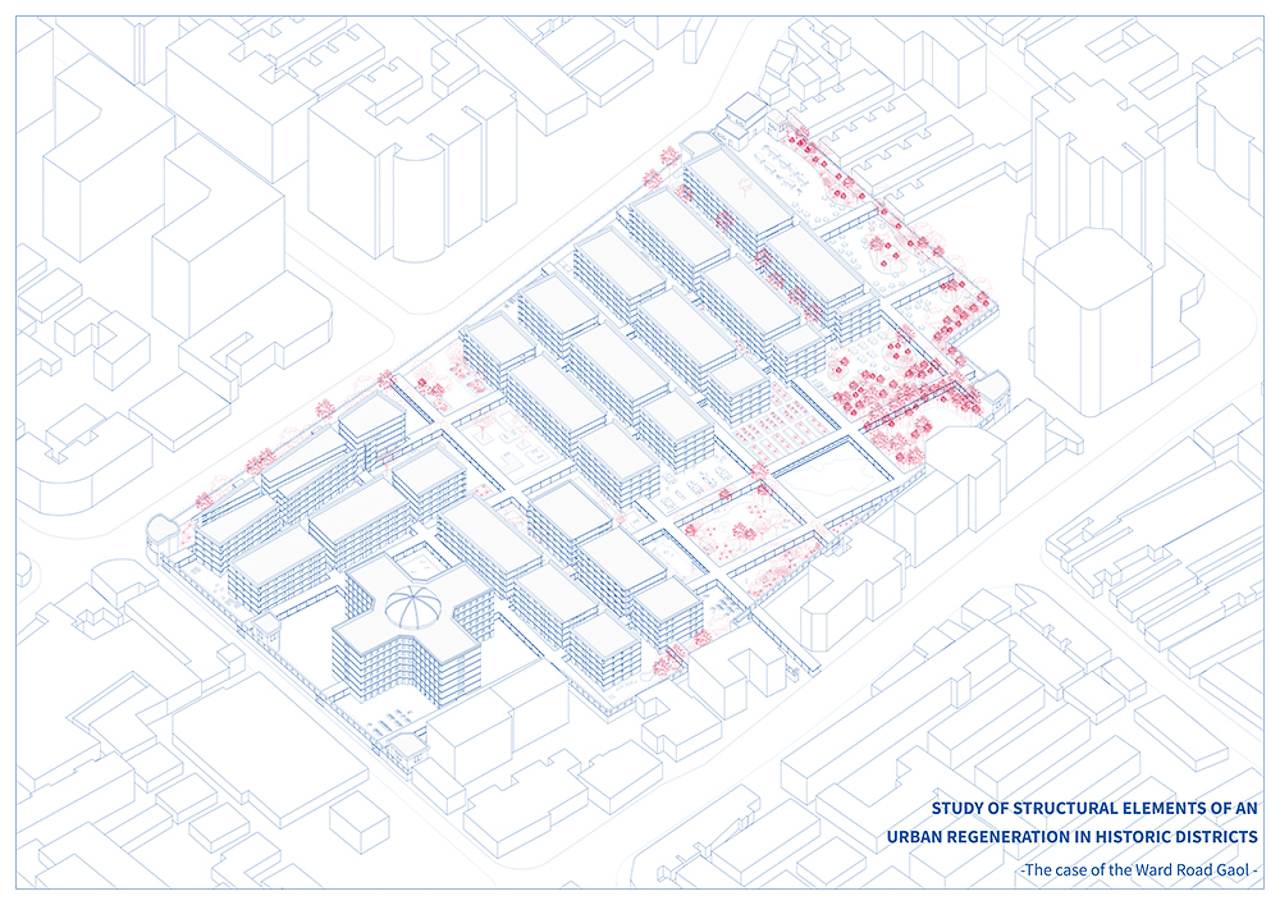


Study of structural elements of an urban regeneration in historic districts
- The case of the Ward Road Goal -
Program
Mixed use - Cultural & Social
-
Labels
Aggregation · Facilities · Heritage · Prison · Community
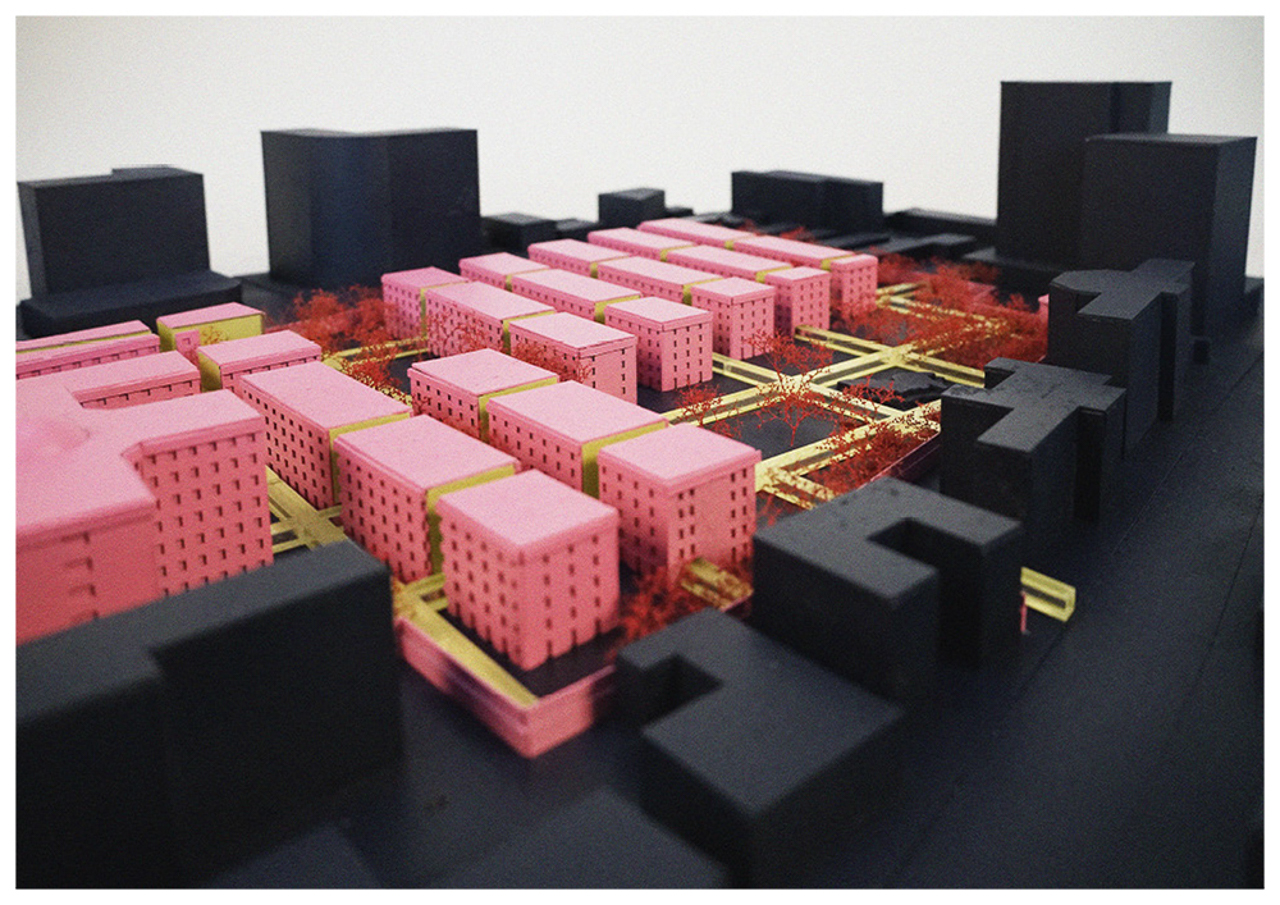
Historic preservation had failed to connect a concern for places with a commitment to people. Analysing The Ward Road Jail, in Shanghai, this work aims to understand how heritage can be reintegrated as active elements of the urban social fabric. Holding spatial and cultural characteristics to remember the past, live the present and improve the future.
To shape a space where interaction and integration are motivated, the reuse of the Ward Road Jail breaks with the mono-function and conceives a mixed-use system which ensures that the complex will be the meeting point of a colourful group of users reacting also to the existing surroundings. \nThe distribution of the floor plans is respecting the existing structure while unchained himself from the restrictive arrangement of the prison cells. Four main new typologies are created, they experiment with different levels of privacy responding to the new functions.\nAxes are defined and conceived as a regulating grid, they zone the area and physically cut and open elements of the coercive structures that dominate the site. They are materialised by four different actions: sitting, framing, connecting and interacting. Combined together they offer various spatial and visual sequences, building at the same time a shelter for the visitors, serving the courtyards and the buildings.\nThe surrounding wall as a primordial point of contact between the Jail and its surroundings will not be demolished since it may imply forgetfulness. This is motivated by the discourse of release that such an action means. The openings are defined by the rhythm of the grid, in the exact moment where they meet each other. The improvements in the permeability of the complex and the integration of it with the surroundings are an act of reconciliation and negotiation between historic and contemporary needs. At street level, a new circulation system emerges, creating a public zone that transforms the hermetically enclosed spaces into an open structure that serves a variety of mixed uses.\nThe reuse of the Ward Road Jail is a liberating act for a society that has been trapped between the past and the present with the conception that it was their past which condemned them, blinding the idea that is there, in their history where their potential and value relies. A scenario where remembrance and development can coexist and complement each other, remembering the community not only who they were, but enduring who they are and improving who they are going to be.