-

Pilares en circo
-
Nave principal
-
Acceso a nave
-
Arcos parabólicos
-
Acceso a circo
-
Nave principal
-
Estado actual del lugar
-
Replanteo general previo a la fase de obra
-
Planta general de la intervención
-
Detalle de la construcción de los pilares
-
Detalle de la construcción del muro de arcos parabólicos
Stabilisation of Anthropogenic Urban Cave System
Aguado + Vellés + Aperte | Jose Antonio Aguado Benito, Javier Vellés Montoya y Juan Alonso Aperte. Tomelloso, Spain
-
Name of work in English
Stabilisation of Anthropogenic Urban Cave System
-
Name of work in original language
Estabilización de sistema de cuevas antrópicas urbanas en Tomelloso
Prize year
EUmies Awards 2026
-
Work Location
Tomelloso, Spain
-
Studio
Aguado + Vellés + Aperte | Jose Antonio Aguado Benito, Javier Vellés Montoya y Juan Alonso Aperte
EUmies Awards 2026 Nominees


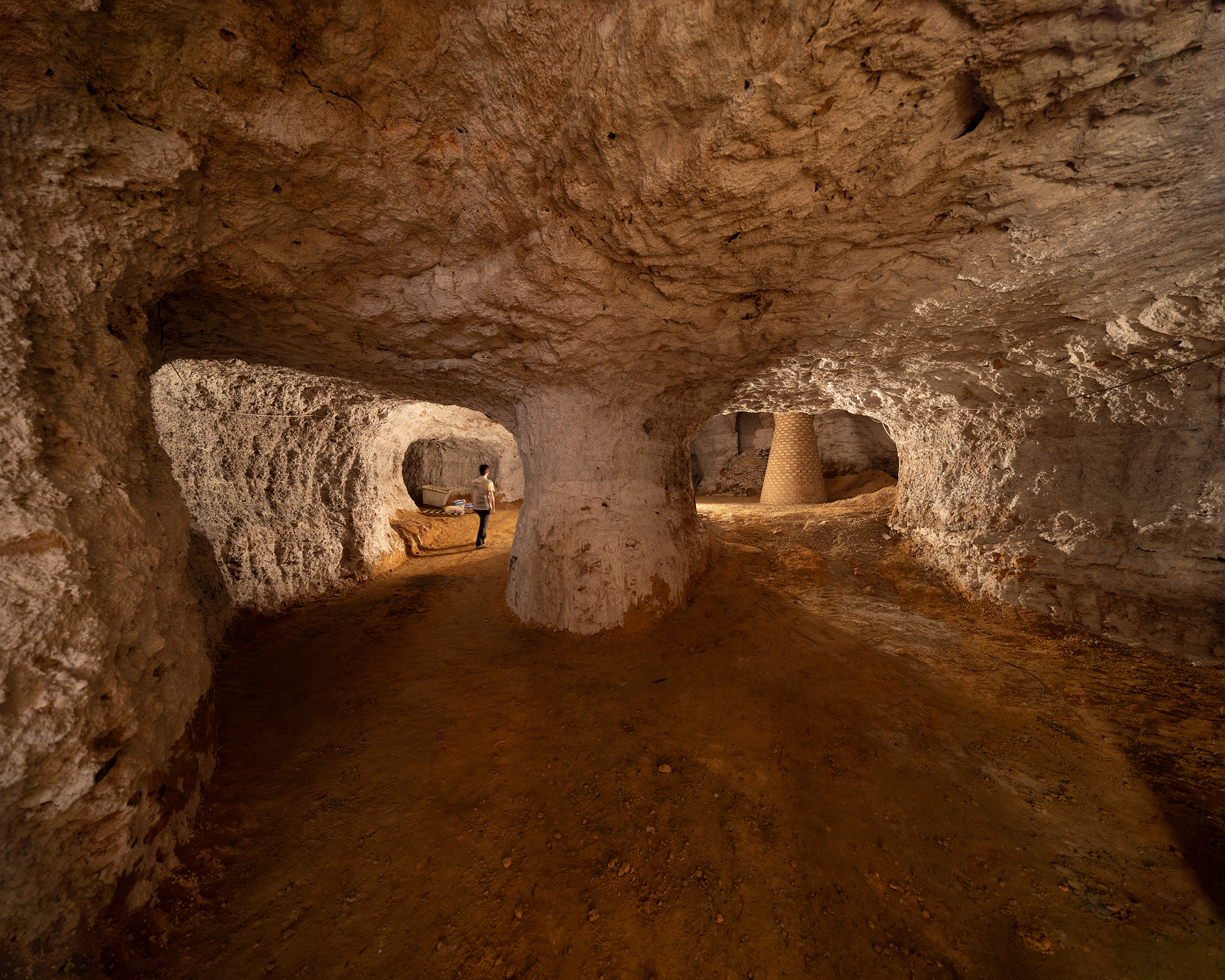

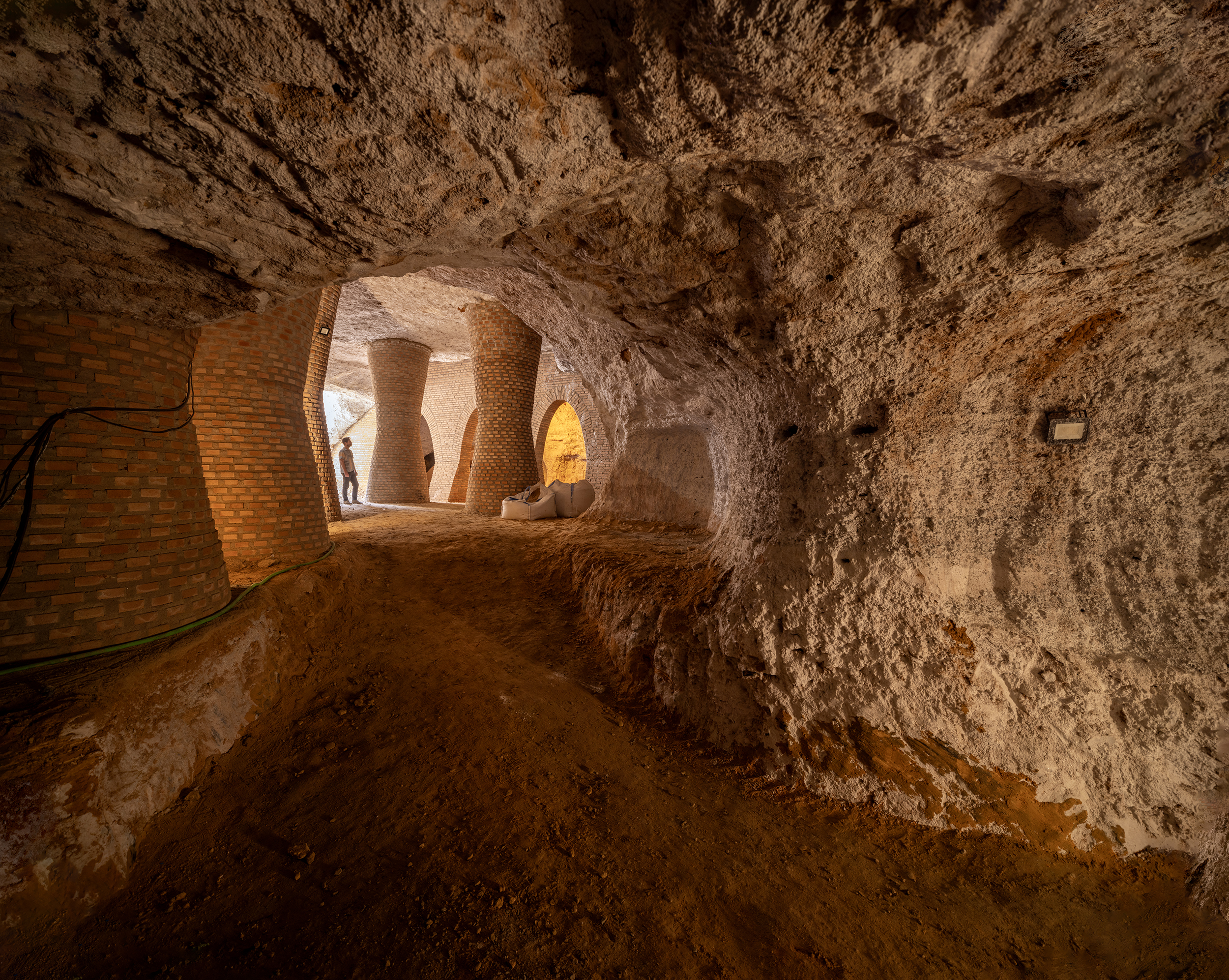


Emergency work to prevent the imminent collapse of a 40-meter-long cave. The proposal uses structurally efficient structures reinterpreting traditional techniques, solving a serious problem of insecurity caused by cave collapses, which had led to the abandonment of an already degraded neighborhood.
Collaborators
Collaborator (office): Juan Ramón Alfaro Alfaro - Universidad de Castilla-La Mancha; Collaborator (office): Araceli Tárraga Guillén - Universidad de Castilla-La Mancha; Collaborator (office): Jesús González Arteaga - Universidad de Castilla-La Mancha; Collaborator (office): Alejandro Jimenez Romeral; Collaborator (office): Joaquín Vargas Jareño - Universidad de Castilla-La Mancha; Collaborator (office): Vicente Mezcua Arribas - Tomelloso Town Council; Consulting: Emilia María Benito Roldán - Universidad de Castilla-La Mancha; Consulting: José Ramón González de la Cal - Universidad de Castilla-La Mancha; Consulting: Adelaida García del Puerto - Universidad de Castilla-La Mancha; Consulting: Jose María García Crespo - Universidad de Castilla-La Mancha; Consulting: Francisco Javier Bernalte Patón - Universidad de Castilla-La Mancha
Program
Culture
-
Labels
Heritage
Site area
708 m²
-
Client
Tomelloso Town Council
Total gross floor
708 m²
Cost
360 €/m²
Located in the Esperanza neighborhood, in the city of Tomelloso. The stabilization project arose as an emergency measure to prevent the imminent collapse of a cave system more than 40 m long, with spans often greater than 12 meters and in an advanced state of deterioration. Sustainable urban regeneration using economical techniques that can be replicated by local master builders, using locally sourced materials such as lime and aggregates from the cave itself that reduce the carbon footprint and preserve the water balance of the ground, which is essential for the stability of the caves.
A history of three collapses in two years in similar caves, with an amorphous layout, caused by old mining operations resulting from a subsistence economy in a very poor neighborhood, with a vulnerable population lacking resources. The cave, originally on two superimposed levels, had suffered successive internal collapses and rock falls, with the vaulted ceiling badly damaged and reduced in size, and even cracked by the urban sewer system. The location is very unfavorable, as it runs under several buildings and Avenida del Príncipe Alfonso, a busy road connecting the highway and the industrial park. An economical solution was adopted for which existing spaces can be reinhabited, thermal and ventilation conditions are restored, with minimal energy expenditure, based on the recovery and reinterpretation of traditional techniques and the use of materials that respect the water balance of the environment: buried architecture as bioclimatic architecture.
The stabilization proposal consists of spraying the walls with lime wash, constructing masonry pillars to shorten the span, and building a wall lightened by parabolic arches that prevent the appearance of traction as linear support for the cracked vault. The pillars and wall have an outer layer of solid brick and a concrete filling made from recycled rubble from the fallen rock blocks and lime mortar. The hyperboloid-shaped pillars open at the ends to prevent punching and sinking, respectively. The diabolo shape directs pressure inward, preventing the bulging that is common in multi-layer load-bearing walls. The use of lime instead of cement allows for a more natural water balance and CO2 fixation. Structural forms have been sought that are as efficient as possible and can be built using traditional techniques.