-

Exterior view
-
Exterior view
-
Gallery
-
Tennis court
-
Greenhouse
-
Site plan
-
Plan
-
Plan
-
Section
-
Section
-
Detail
-
Detail
-
-
A2
Simonne-Mathieu Tennis Court at Roland Garros
Marc Mimram architecte. Paris, France
-
Name of work in English
Simonne-Mathieu Tennis Court at Roland Garros
-
Name of work in original language
Court Simonne-Mathieu à Roland Garros
Prize year
EUmies Awards 2022
-
Work Location
Paris, France
-
Studio
Marc Mimram architecte
EUmies Awards 2022 Nominees
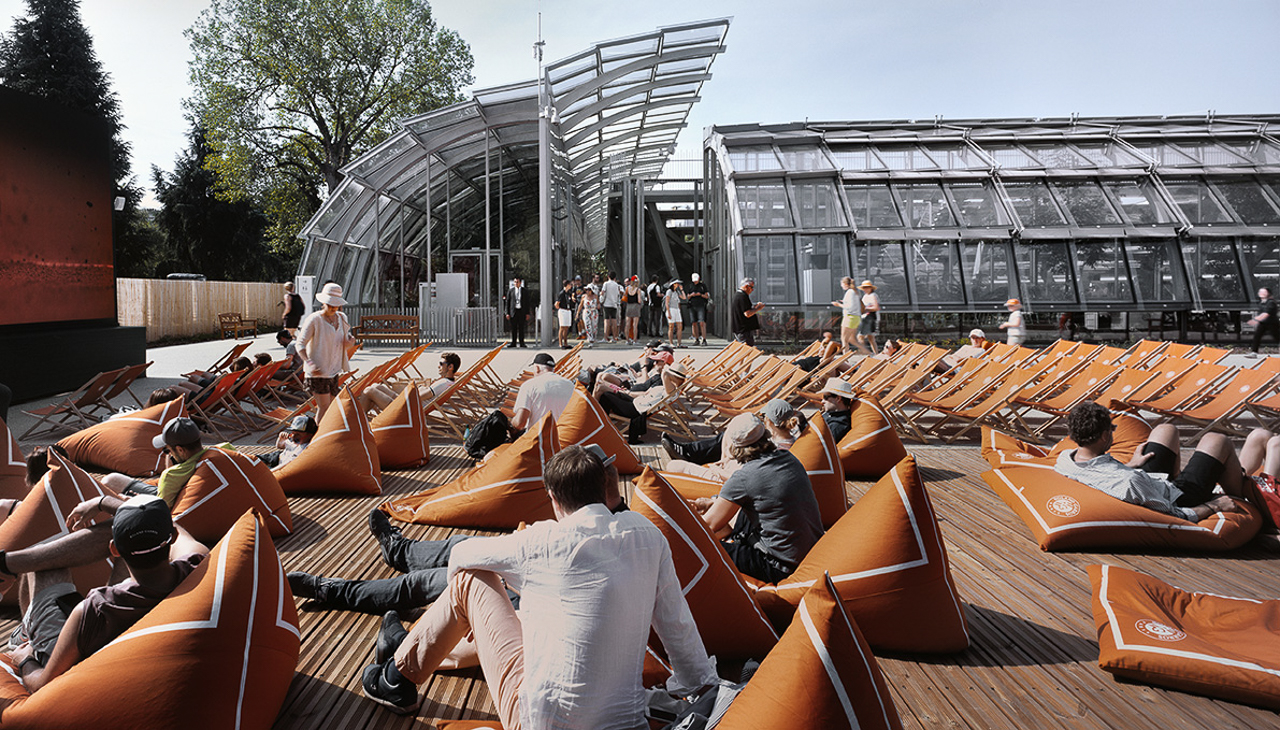
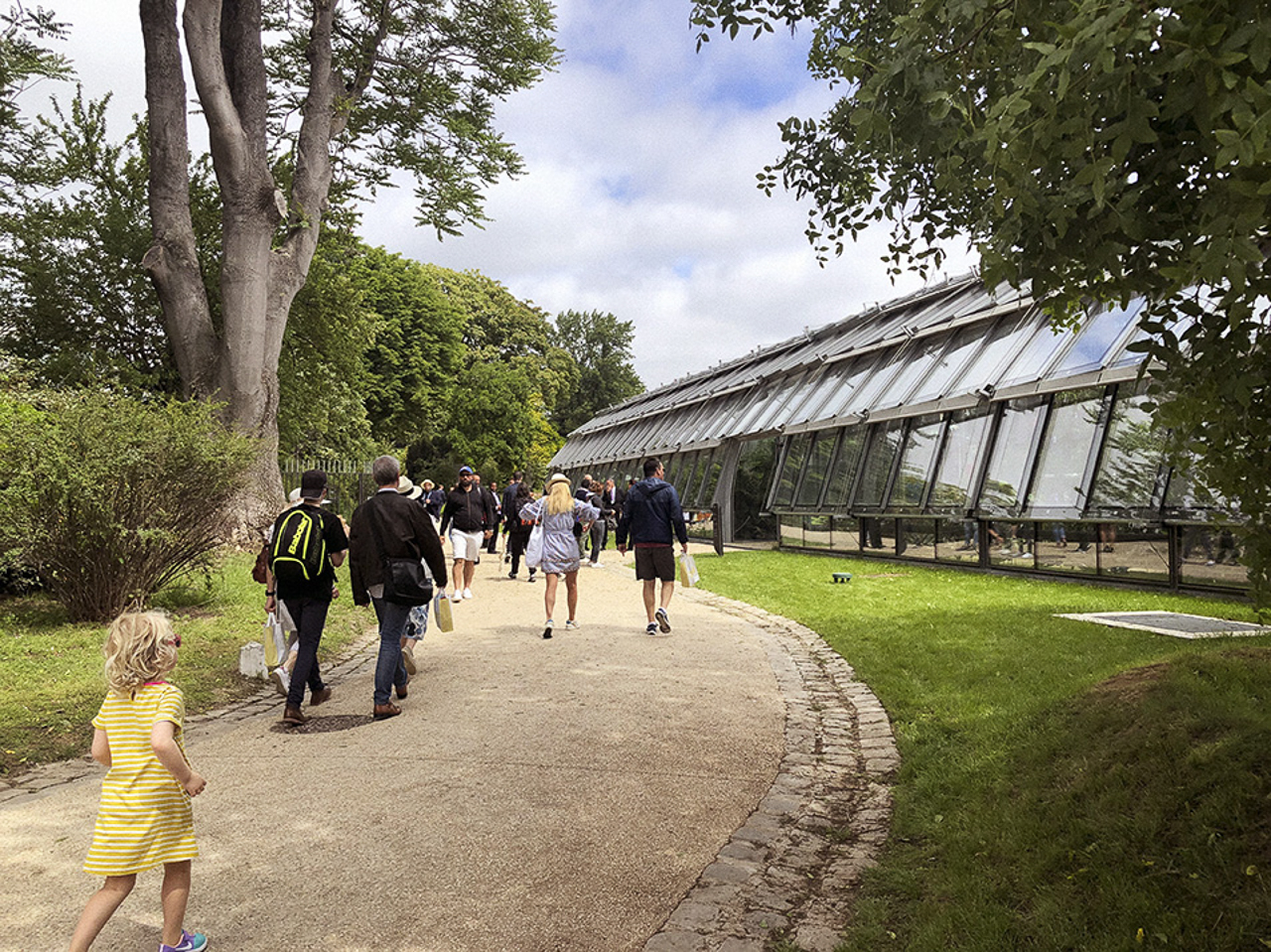

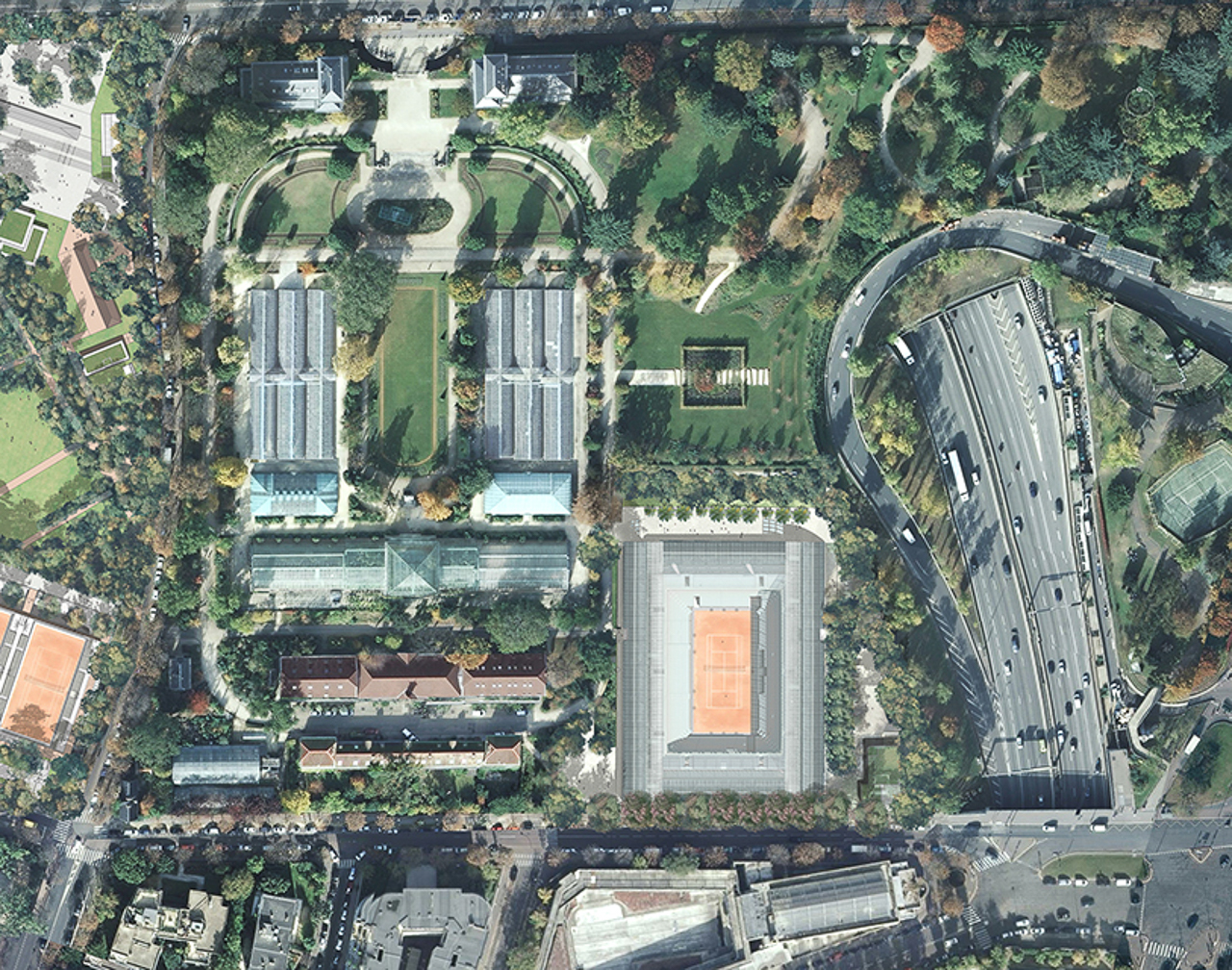
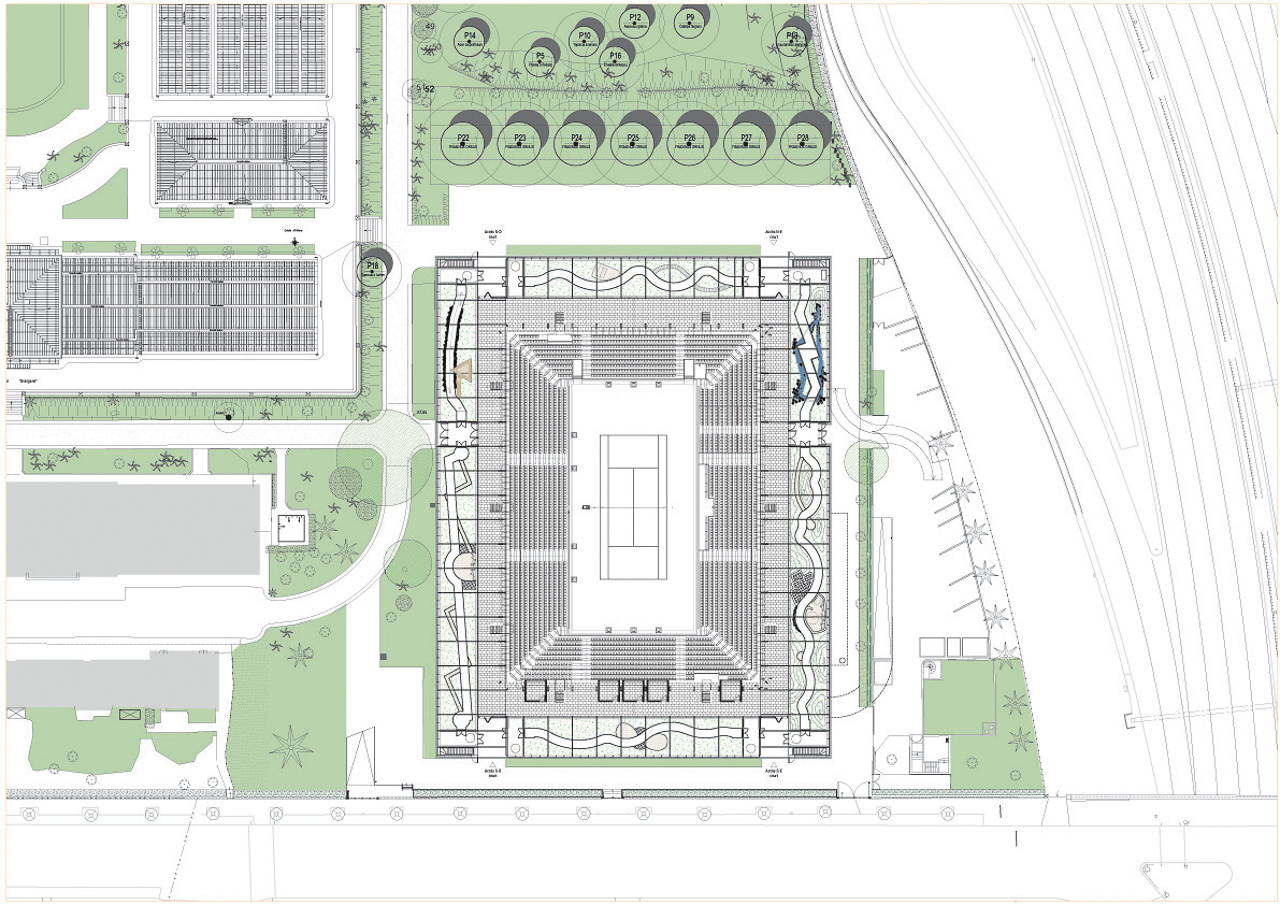
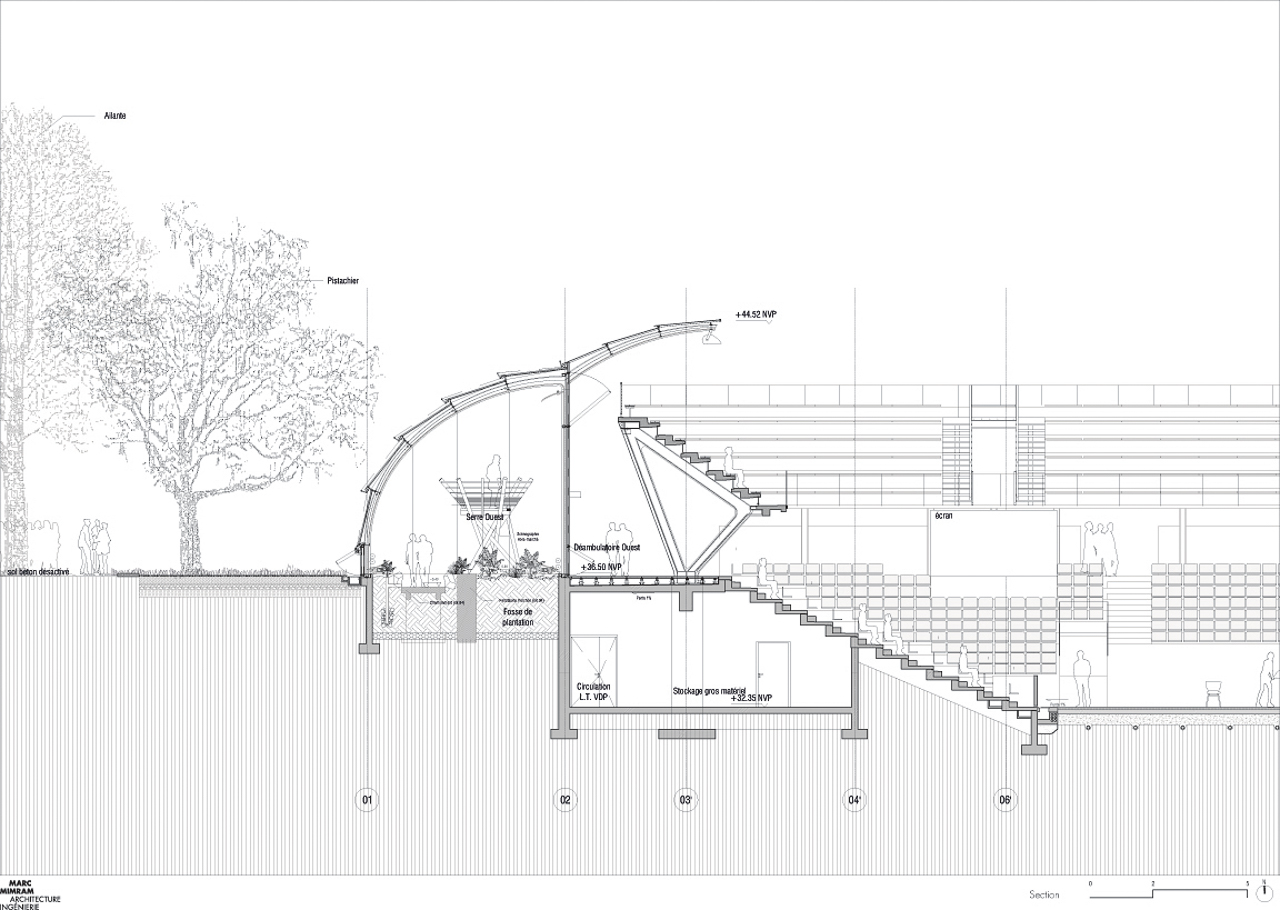


The stadium is a high-performance sports facility in relationship with nature, that of the site, that of the garden but also that of the biotopes in the greenhouses.
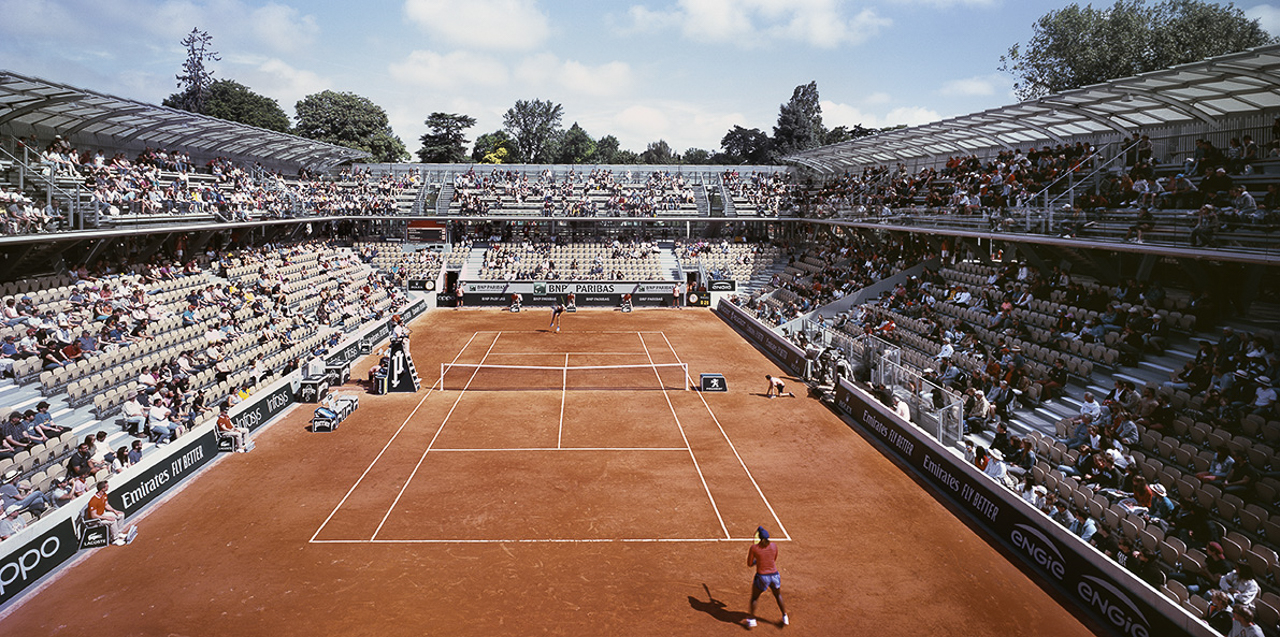
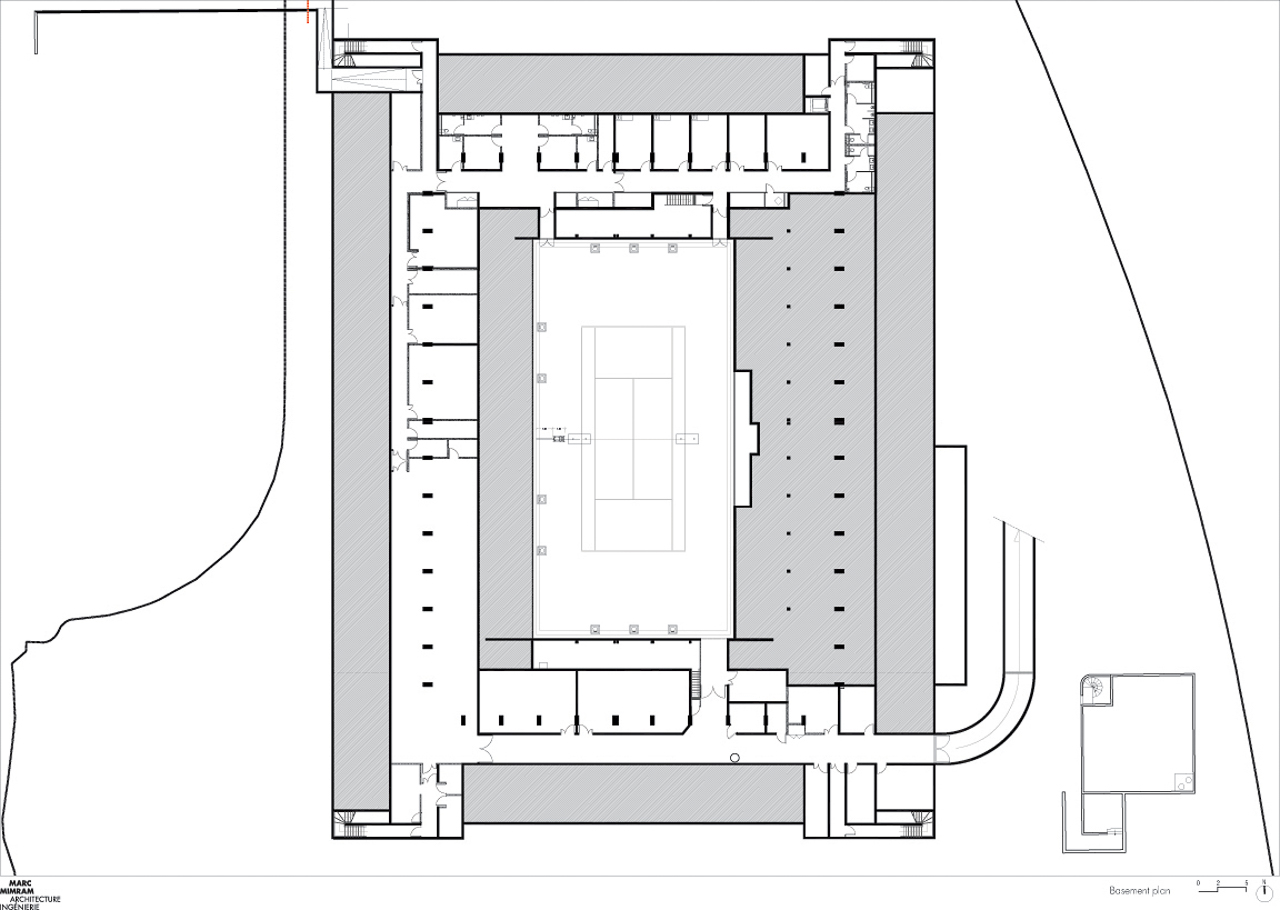
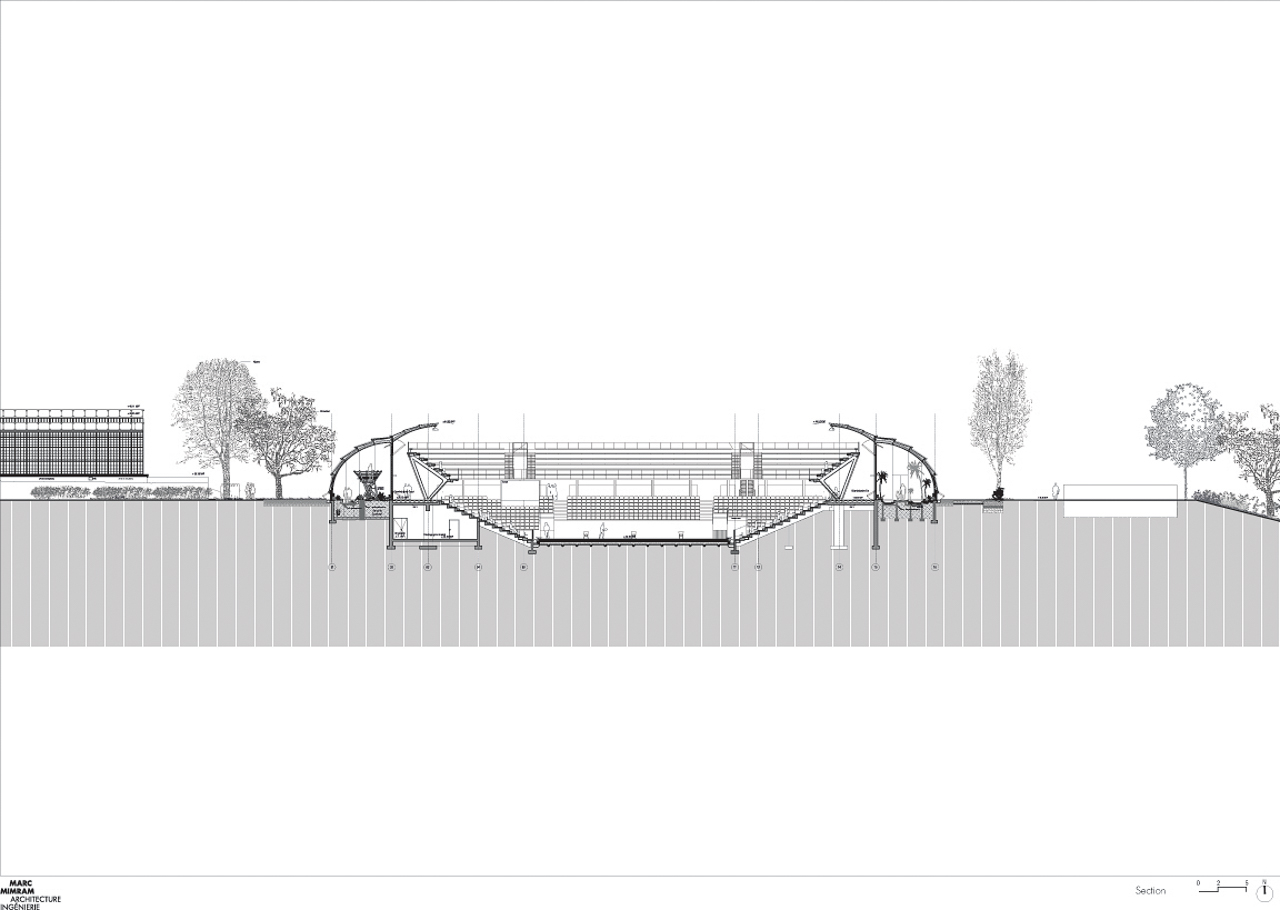
It is a unique project that will evolve here, it belongs to the earth by the part of the tennis court which is sunken 4.5 m deep, it belongs to the sky by the glass roof that protects the upper tribunes
Collaborators
Construction: Viry Fayat, Vinci; Structural engineering: Marc Mimram Ingénierie; Engineering: INEX; Lighting: AARTILL; Acoustical: AAB; Façades: VS-A; Construction: Foret, Richel, Etablissement Jean Lefebvre
Program
Sport & Leisure
-
Labels
Stadium · Tennis
Site area
20600 m²
-
Client
Fédération Française de Tennis
Total gross floor
5300 m²
Completion
2018
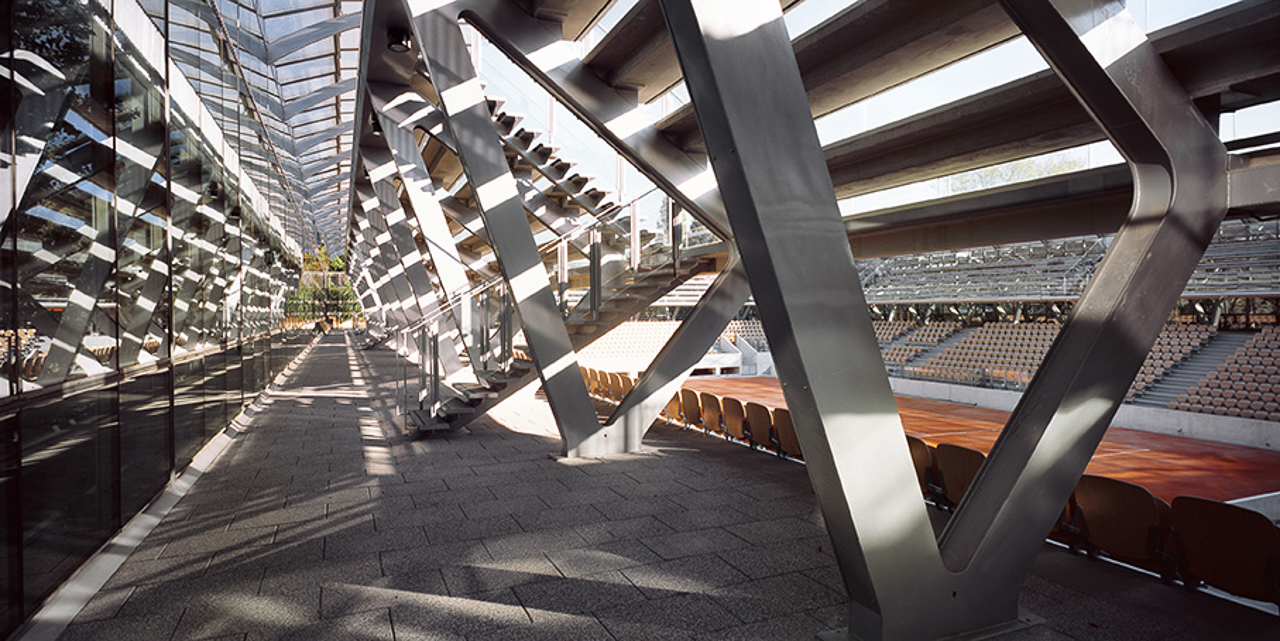
When the landscape designer Michel Corajoud put forward his plan for improvements to the Roland Garros site for the international tennis tournament, his intention was to open it up, creating a link with the city. This necessitated opening up an extensive public space and the construction of a new court accommodating 5,000 visitors in the adjacent garden where not long before some poorly constructed greenhouses had been added. The garden is notable not for these greenhouses, but rather for its fine botanical hothouses designed in 1898 by Jean-Camille Formigé, and which were naturally never under threat. Taking its inspiration from these hothouses made of glass and cast iron so characteristic of the nineteenth century, the new tennis court will be partly below ground level, surrounded by a terraced concrete platform, surmounted by a steel structure, and wrapped around with botanical greenhouses designed to meet the highest technical specifications. These new greenhouses form a glass backdrop, a case within which plants from four continents can flourish. They refer to the design of the nearby hothouses and are inspired by, without imitating, architecture in metal that, since the construction of the Crystal Palace in London in 1851, still stands, with its delicate relationship between light and structure, as the perfect model of airiness and economy. It was necessary to provide double-glazing and much more effective insulation than that of the historical greenhouses. Rather than creating a simple surface of smooth glass the design makes use of fragmented scales of glass, their edges arranged in two different directions. In this way the skin of the construction changes as the light alters as a result of diffraction, and vibrations are set up by the reflections on the irregular, broken up surfaces. The steel of the glasshouses gives rhythm to the whole, echoing the balanced structure of the terraces that rise up to the gallery running around the top of the building. The play of light, shadows, and transparency on the structure continues the characteristic effects of nineteenth-century architecture while at the same time integrating contemporary techniques in oxy-fuel cutting and welding. Just as Michel Corajoud wished, a dialogue between gardens and sport, botany and tennis, technical and physical performance has emerged from a shared space. The presence of structures from the past in no way inhibits this confident contemporary architecture—quite the contrary. The different activities intersect in time; the tennis tournament is an integral part of the development of the botanical garden. The Simonne-Mathieu Court is a good illustration, if one were needed, of the need for the pleasures of urban life to adapt to an ever-increasing combination of different uses.
The Simonne Mathieu Court has a double specification: it has two demanding clients it is placed in an historical garden, next to an historical monument The double function of the project was led by two demanding clients, each one of them was extremely precise in the needs they had, each one of them is a highlevel professional in its domain; Roland Garros for organizing the French Open, the botanical gardens of Paris for growing exotic plants and presenting them to the public. The needs of these two clients had to be confronted to the preservation of the historical garden. This project is demonstrating that by paying attention to architecture, to the ground where the project is situated, you develop a strong bound between people who did not have the habit to speak to each other, a bound between past and present, a bound between activities that everything was separating.
If the architecture of the 19th century was marked by the development of steel and glass, the project proposes today to translate this concern into a contemporary vocabulary as an elegant variable inertia steel structure supporting scaled glass elements which is possible to build today while expressing contemporary know-how. Depending on the orientation, the glass is fritted to protect spectators without throwing shadows on the court. The project pays particular attention to environmental characteristics by the bioclimatic nature of the facilities for plants, but also by the economy of means, the economy of materials and the attention paid to the construction of this exceptional building. The transparency and lightness of this structure and its cover specifically address the nature of the plants they host but also the reception of the public and athletes. The construction works themselves had to be exemplary while located on an extremely sensitive site, as much for the presence of vegetation as for its exiguity. It was a clean building site that allowed to replant the displaced trees to the north of the plot and to insert the project in a more global landscaping plan.