-

Trapeza. Students-builders around an invisible table
-
Imbomon. Interior courtyard seen from the entrance
-
The Horsemen House in its first winter
-
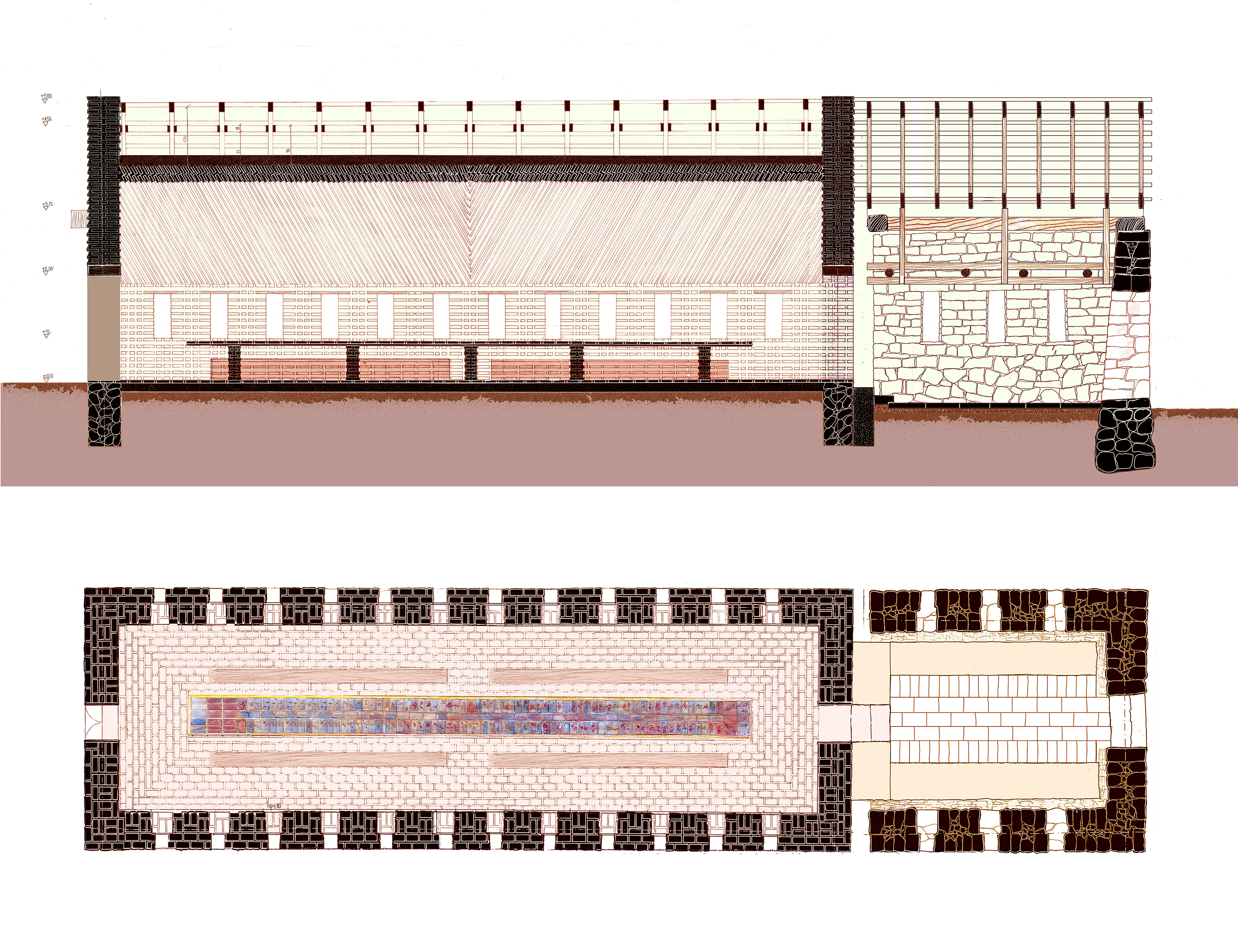
Trapeza. Ground floor and longitudinal section
-
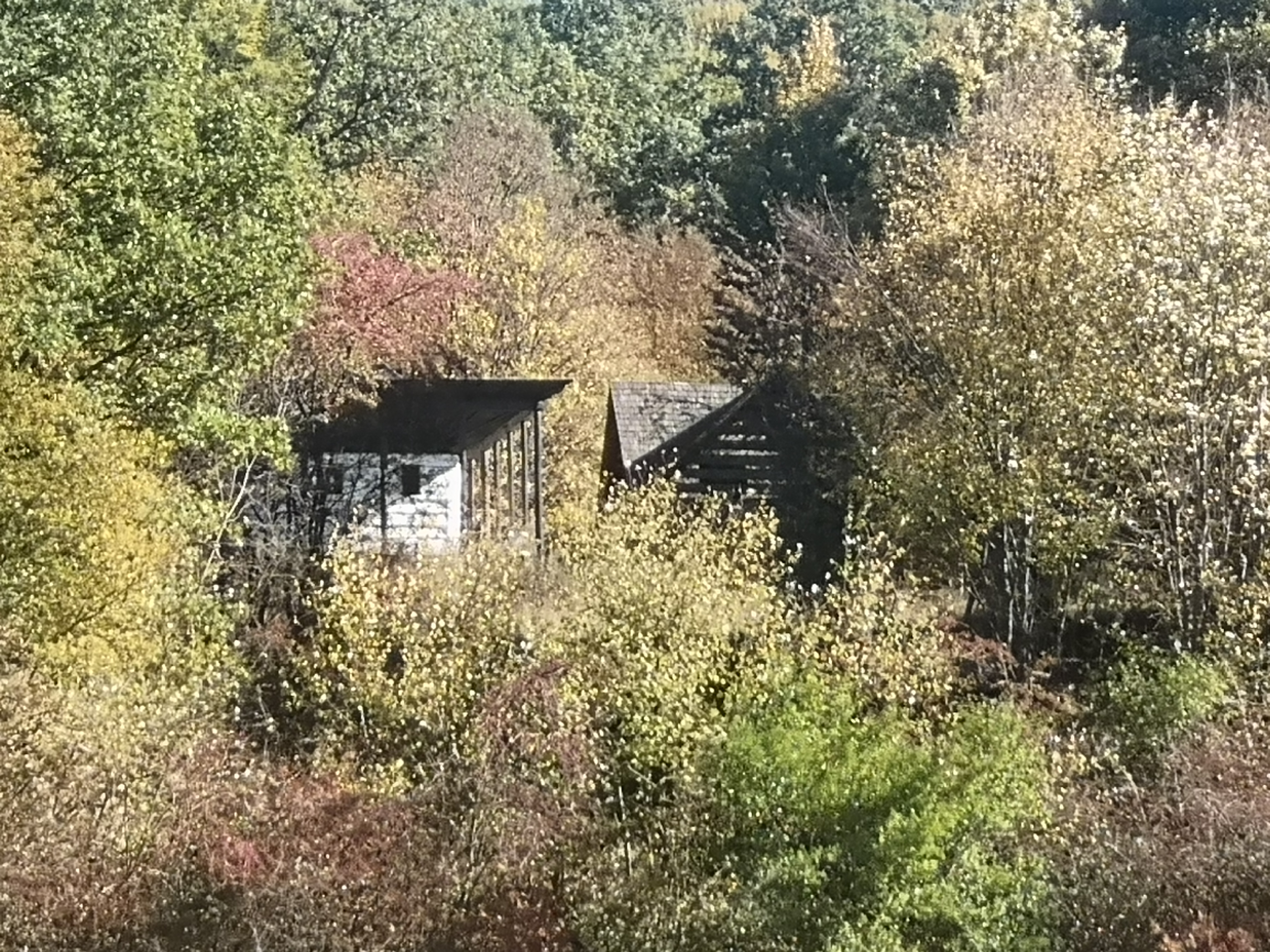
Tectonic Structures. Tempietto (Mentor House) & Horsemen House seen from the river meadow
-
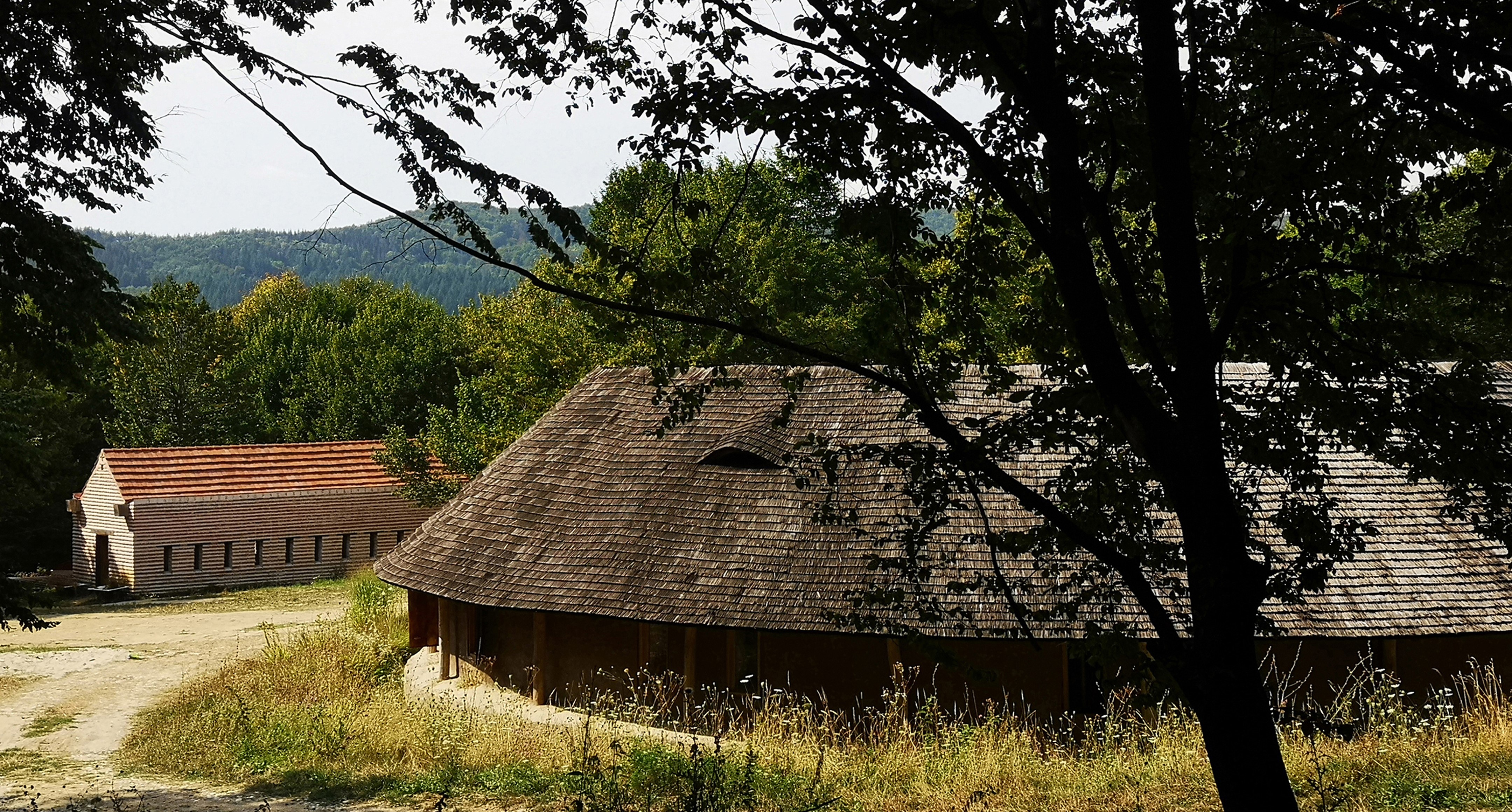
Stereotomous Structures. Imbomon (Students Dormitory) & Trapeza (Refectory)
-
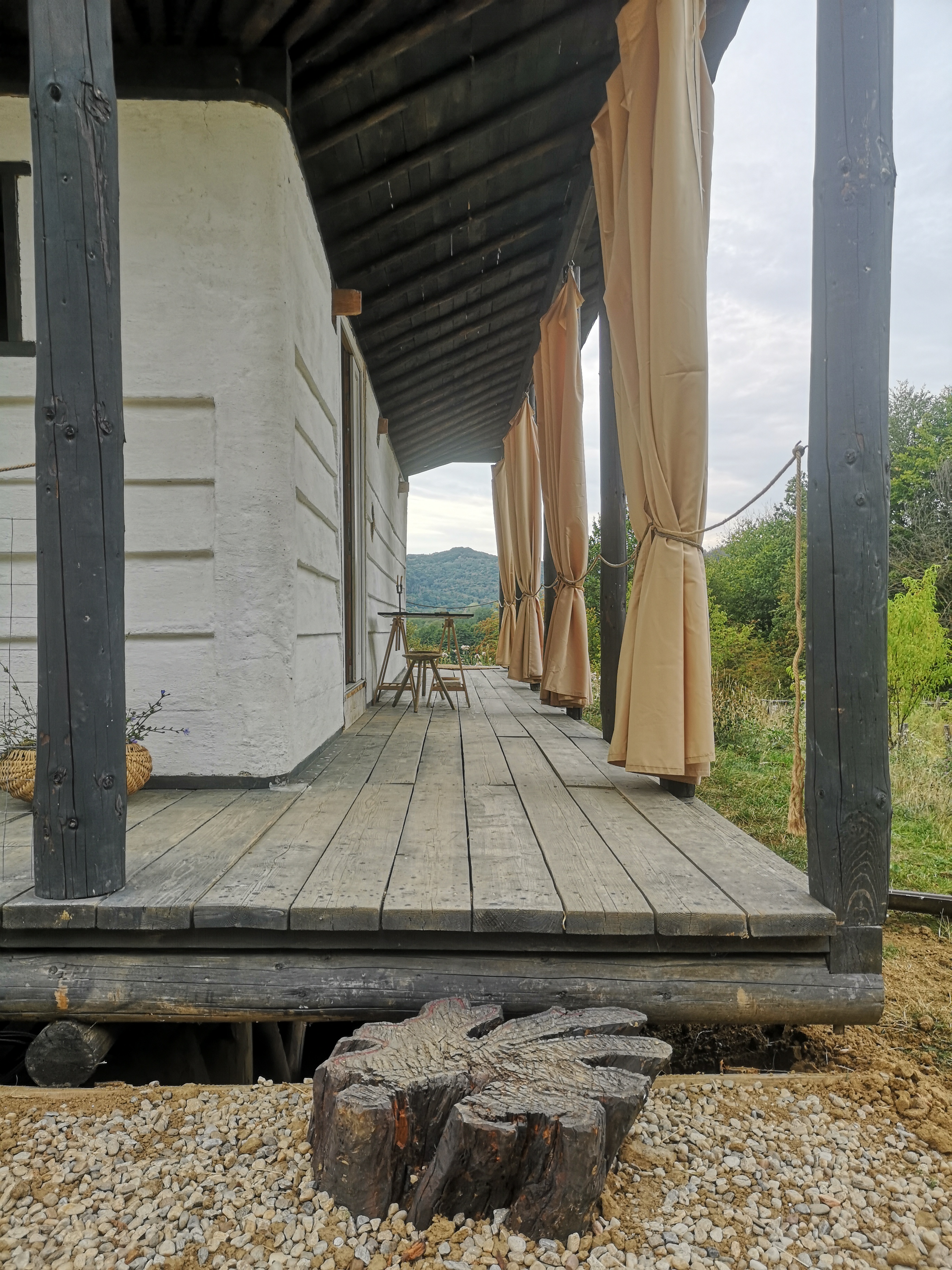
Tempietto. Cantilevered outdoor living room and access
-
Imbomon. Ground floor plan with mosaics and longitudinal section
-
Tempietto. Piano nobile and longitudinal section
-
Horsemen House. Elevations, first floor plan and roof-bottom view
School of Bunesti
f i l o t o p i a. Curtea de Argeș, Romania
-
Name of work in English
School of Bunesti
-
Name of work in original language
Școala de la Bunești
Prize year
EUmies Awards 2026
-
Work Location
Curtea de Argeș, Romania
-
Studio
f i l o t o p i a
EUmies Awards 2026 Nominees




Since 2008, the School of Bunești has been generating a new academic community founded upon classical values, in the heart of a forest, through the effort of building with local materials.
It now has nine pavilions and has seen 1,360 students, 50 professors and 30 craftsmen pass through its doors.
Collaborators
Collaborator (office): Mihai Dobre - f i l o t o p i a; Collaborator (office): Gabriel Palamariu - f i l o t o p i a; Structure: Mihaela Arsene - Historical Village Museum Dimitrie Gusti; Installations: Horea Dan - Technical University, Cluj; coordinator building workshops: Alexandra Dorobanțu - Association Prietenii Școlii de la Bunești, Ion Mincu University; coordinator building workshops: Bogdan Brăescu - Association Prietenii Școlii de la Bunești, Ion Mincu University; coordinator building workshops: Ioana Brăescu - Association Prietenii Școlii de la Bunești, Ion Mincu University; coordinator building workshops: Daria Chioibaș - Association Prietenii Școlii de la Bunești, Ion Mincu University; coordinator building workshops: Alin Voitescu - Ion Mincu University; coordinator hempcrete workshop: Alexandru Postu - Hempcrete Romania; Structure: Andrei Pripasu - ZO Kraft; Structure: Ciprian Manda; Structure: Ștefan Nechita - VAST; Building physics: Vasile Tătaru - Historical Village Museum; Project management: Costin Gheorghe - Association Prietenii Școlii de la Bunești; Project management: Milena Pătru - Association Prietenii Școlii de la Bunești; Project management: Tudor Elian - Association Prietenii Școlii de la Bunești; Project management: Laura Cristea; local craftsman: Ionuț Onoiu - Association Prietenii Școlii de la Bunești; carpenter: Constantin Zinca; carpenter: Dănilă Lobonț; carpenter: Gligor Craiu; carpenter: Vasile Rotariu; shingle master: Gheorghe Adam; brickmaker: Alin Achim; stone mason: Ștefan Bucioacă; brick mason: Florian Mândăianu; brick mason: Mihai Duricu; earthbag mason: Cato Arce; blacksmith: Cătălin Oancea; blacksmith: Gabriel Padioleau
Program
Education
-
Labels
Architecture · Art · Children & Youth · Library · Music · Nature · Research · University
Site area
50000 m²
-
Client
The Community of the School of Bunești
Total gross floor
696 m²
Cost
900 €/m²
The project capitalizes local resources to invent contemporary architecture, while researching and promoting the archetypal qualities of architecture, through natural materials and specific techniques: Mesopotamian catenary vaults and ductile masonry, drystone walls, stereotomous brick prototypes, Vitruvian burnt oak foundations, Oriental tectonic carpentry or opus lapilli floors. As architects, students and craftsmen work together to build their campus in the form of a training site, the project involves local labor and tries to revitalize the traditional crafts of the Vâlsan River Valley.
The School of Bunești is an on-going project which emphasizes the building process as a purpose in itself in order to create a new generation of architects, designers, builders and craftsmen in relation to the vernacular tradition. Our small academic community sitting in the forest will, as much as possible, obtain what is necessary for living locally and from sources that nature offers through itself. The years during which we have tested building without using materials produced by polluting industries and exclusively though the intelligent application of human power illustrate how the dialogue between the past and the present can function, without the fetishization of the past and the denial of the cultural difference of the present. This is a possible alternative to the cultural, economical and social abolishment of the rural areas through pseudo-urbanization or depopulation. We try to convince people that ”sustainable” means preserve and maintain, rather than demolish and replace.
In term of nine mock-up models - each pavilion structure dedicated to a specific natural material and technique - we embarked on a imaginary Grand Tour. The so-called Horsemen House is a Blockbau translation of a 13th century stone masonry church in Armenia; the Students Dormitory is an open-plan in which we experimented with adobe brick walls, wattle and daub ceilings, Greco-Roman opus lapilli flooring and wooden shingle roof; the refectory proposes a Mesopotamian catenary vault on a Byzantine ductile wall, for which we used exclusively handmade bricks and hydraulic lime mortar; we also invented a cantilevered timber frame & hempcrete tempietto. The ancillary pavilions - summer kitchen and showers - explore Vitruvian burnt oak foundations and tectonic carpentry, both European and Oriental. Eventually we converted the scratches we put together - material remains, literary sources and oral testimonies - into built reality, grounded on Renaissance proportions and Classical spatiality.