-

-
-
-
-
-
-
-
-
-
-
-
-
-
IE01_URBAN AGENCY_A2 sheet
Rust-ic House
URBAN AGENCY. Lough Caragh, Ireland
-
Name of work in English
Rust-ic House
-
Name of work in original language
Rust-ic House
Prize year
EUmies Awards 2019
-
Work Location
Lough Caragh, Ireland
-
Studio
URBAN AGENCY
EUmies Awards 2019 Nominees




“The best preventive remedy to aging is architecture”- Maxime Laroussi, Urban Agency.
In this project, aging and weathering serve as a critical design tool for thinking about how architecture might intercept the changing state of weathering on site.
Collaborators
Engineering: John Casey
Program
Single house
-
Labels
Isolated · Holiday
Site area
117000 m²
Total gross floor
58 m²
Completion
2018
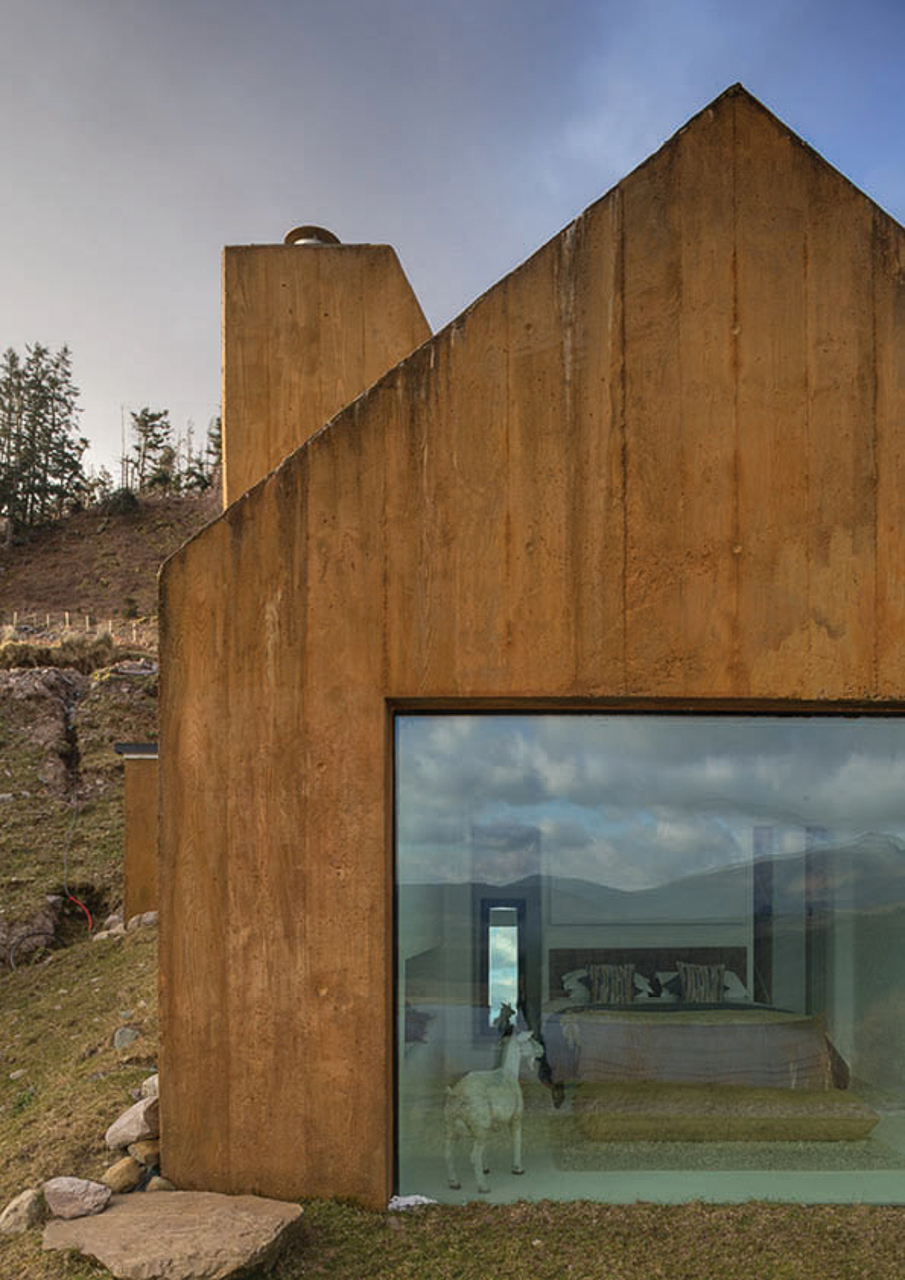
This concrete extension to a traditional cottage in Ireland's County Kerry was treated with iron oxide to give it a russet hue that complements colours found in the surrounding landscape. URBAN AGENCY was asked more than a decade ago to develop a proposal for extending an existing cottage on a hillside overlooking Carragh Lake. The client wanted to work on the project gradually whenever he had money available, with the aim of completing it in time for his retirement.
The client wanted to work on the project gradually whenever he had money available, with the aim of completing it in time for his retirement. The owner had been steadily renovating and decorating the cottage, which contains an openplan living, kitchen and dining room, and wanted the extension to accommodate a bedroom and a bathroom. The first phase of the extension project involved completing a pitchedroof structure containing the bedroom, which emerges from the sloping site. A corridor that is largely submerged in the hillside and illuminated by skylights will eventually connect this building with a bathroom structure. The gabled form of the bedroom extension mirrors that of the old cottage, but is constructed entirely from concrete to lend it a monolithic feel reminiscent of Ireland's vernacular stone buildings. The extension size requirement was quite large in relation to the existing cottage, so we decided to break the volume into two small hutlike structures as a reference to traditional Irish cottages and barns.
The old cottage features a traditional white lime-washed exterior. The barn buildings found alongside stone farm cottages in Ireland are typically made from rusted corrugated steel which influenced us as well as the work of Brazilian artist, Jose Bechara, who uses oxidation as a medium in his paintings. The remote site is very exposed to the wind and rain, which informed the choice of concrete for the outer shell. Instead of a traditional method for pigmenting the concrete, we used an iron-oxide powder than can be purchased from garden centres and is typically used to boost iron levels in soil. When mixed with water and applied to the concrete surfaces, the powder produces a vibrant rust colour that will last longer than standard pigments. The concrete was cast in situ using sand blasted wooden boards. The boards run vertically, so when rain falls on the building the pattern of the wood is emphasized. The interior of the new extension features white cement mixed with lime to create a sense of consistency with the existing cottage. The material creates a slightly textured surface with softened edges that evokes the appearance of traditional lime-based render.