-

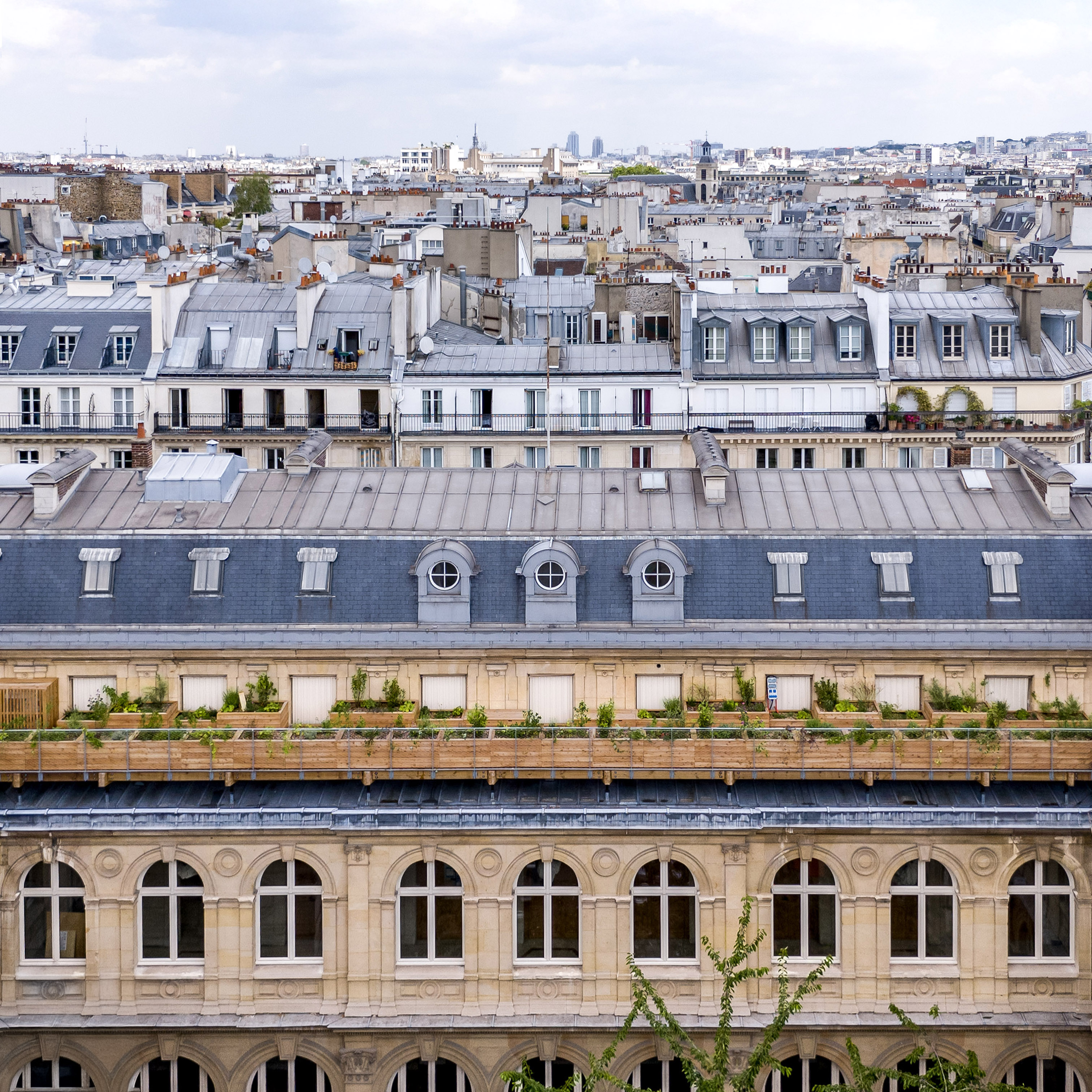
Front Facade, Académie du Climat, Paris
-
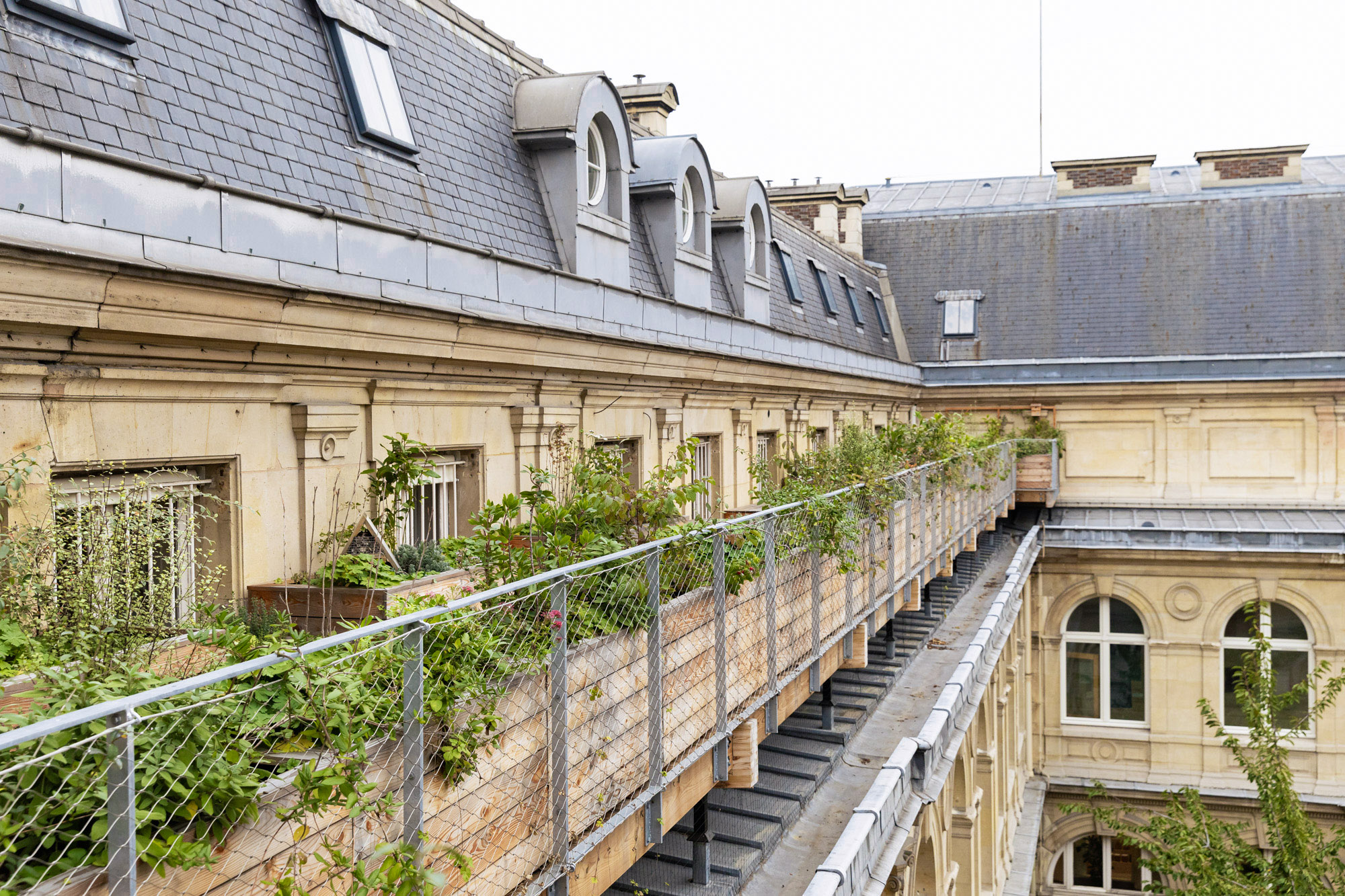
View from the access point, Académie du Climat, Paris
-
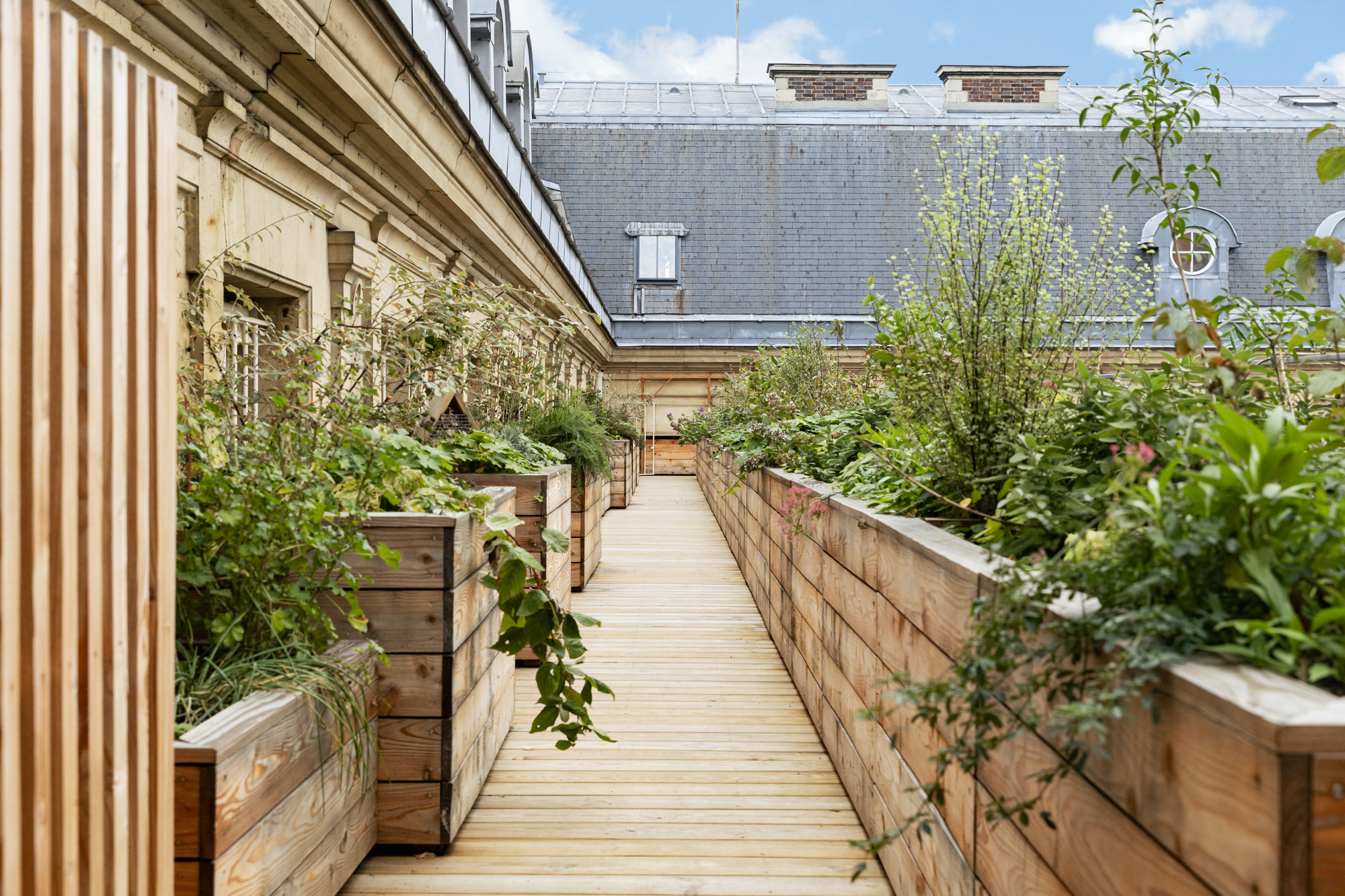
View towards the East end, Académie du Climat, Paris
-
Superposition of the old and new, Académie du Climat, Paris
-
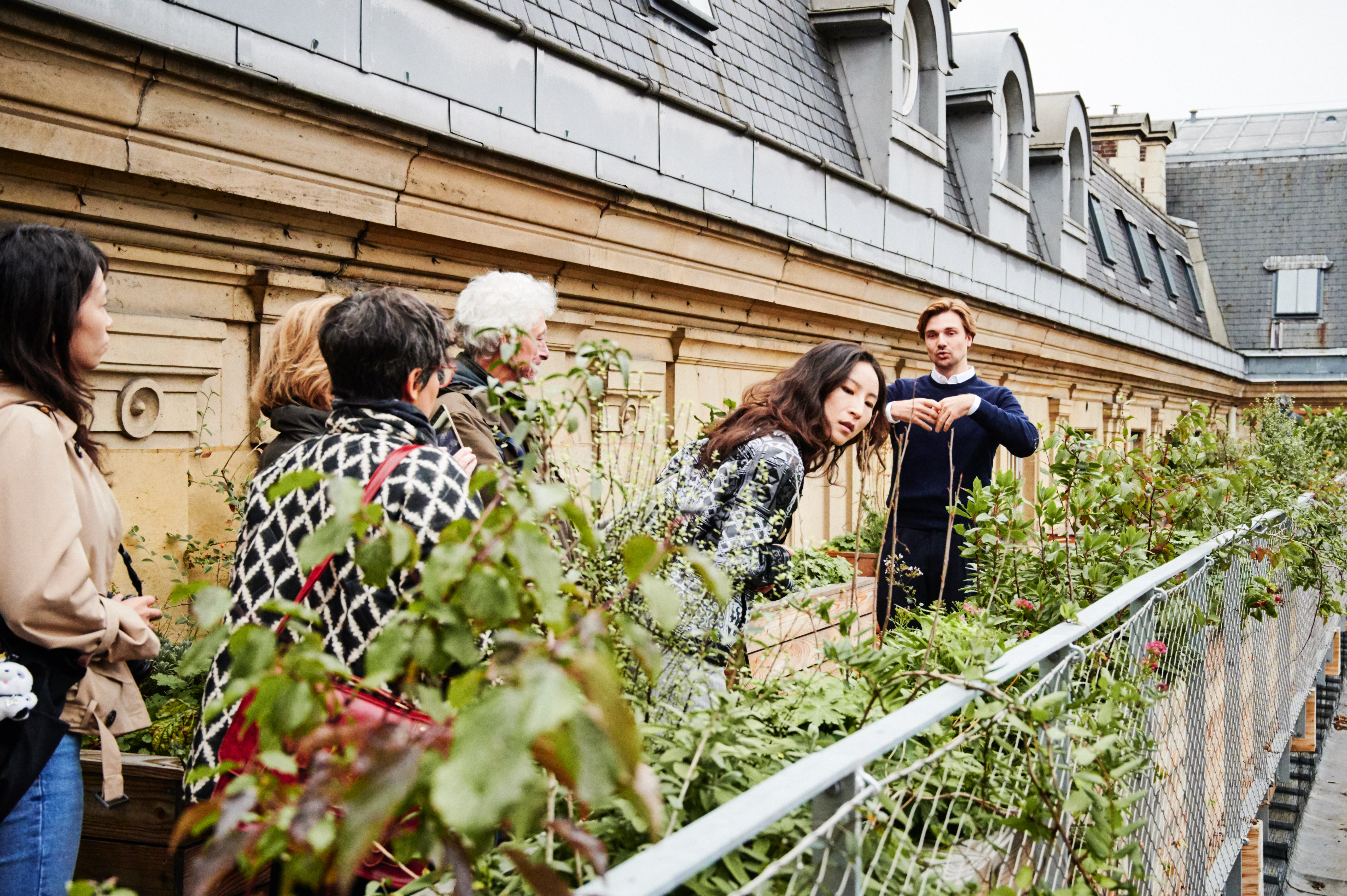
A group of visitor, Académie du Climat, Paris
-
Thermal image of the solar protection provided by the platform, Académie du Climat, Paris
-
Site Plan, Académie du Climat, Paris
-
Floor Plan, Académie du Climat, Paris
-
Project Elevation, Académie du Climat, Paris
-
Transversal Section, Académie du Climat, Paris
Roofscapes Initiative
Roofscapes Studio. Paris, France
-
Name of work in English
Roofscapes Initiative
-
Name of work in original language
L'initiative Roofscapes
Prize year
EUmies Awards 2026
-
Work Location
Paris, France
-
Studio
Roofscapes Studio
EUmies Awards 2026 Nominees



This reversible wooden platform transforms the heritage zinc roof Paris into living, accessible landscapes. Developed with the City of Paris, this replicable architectural intervention reduces rooftop temperatures by up to 32°C, enhances biodiversity, retains rainwater and welcomes the public.
Collaborators
Landscape: Bel Nicolas - Topager; Landscape: Madre Frédéric - Topager; Landscape: Robard Anthony - Topager; Landscape: Delobel Julie - Topager; Landscape: Irigoy Samantha - Topager; Landscape: Begi Basir - Topager; Landscape: Combettes Sylvain - Topager; Landscape: Defontaine Charles - Topager; Landscape: Derma Louis - Topager; Landscape: Genta Mélissa - Topager; Landscape: Halström Dan - Topager; Landscape: Kouole Marlon - Topager; Landscape: Le Palud Quentin - Topager; Landscape: Masson Sylvain - Topager; Landscape: Mohammed Yahya - Topager; Landscape: Veer Matthias - Topager; Landscape: Avat Molly - Topager; Landscape: Etard Célia - Topager; Construction management: Meha Julien - Meha Construction Bois; Construction management: Meha Sébastien - Meha Construction Bois; Construction management: Alves Valérie - Meha Construction Bois; Construction management: Bardy Victor - Meha Construction Bois; Construction management: Dos Santos Roger - Meha Construction Bois; Construction management: Doncev Grégory - Meha Construction Bois; Construction management: Razlog Ivan - Meha Construction Bois; Construction management: Sirbu Nicolai - Meha Construction Bois; Construction management: Spataru Tudor - Meha Construction Bois; Construction management: Charbonneau Maiwen - Meha Construction Bois; Construction management: Barreto Arthur - Meha Construction Bois; Construction management: Oger Adrien - Meha Construction Bois; Construction management: Constantis Jean-Pierre - Meha Construction Bois; Construction management: Senouci Karim - Meha Construction Bois; Construction management: Senouci Said - Meha Construction Bois; Construction management: Depinois Meha Construction Bois - Gaëtan; Construction management: Moustaine Meha Construction Bois - Achraf; Construction management: Colta Ghenadie - Meha Construction Bois
Program
Landscape
-
Labels
Gardens & Parks · Structure · Regeneration
Site area
100 m²
-
Client
Ville de Paris
Total gross floor
100 m²
Cost
2210 €/m²
Completed in 2024 in a former town hall now hosting the Académie du Climat, this 100 m² modular timber platform adapts the overheating and inaccessible roofs of Paris to climate change. Conceived and built in partnership with the City of Paris, this renovation shades and protects existing roofs while welcoming vegetation, storing rainwater and hosting public activities. This reversible, low-tech intervention opened a path for the climate realignment of historic roofs to warmer summers, for which the city was never conceived.
Four out of five Parisian roofs are pitched and made out of zinc —their materiality amplifies urban heat while their geometry resist conventional greening strategies. Roofscapes’ Climate Realignment approach arose from research at MIT to address overlooked heating city surfaces. The architect have developed a replicable and modular wooden platform installed above existing roofs, transferring loads to structural walls without altering the existing heritage envelope. At the Académie du Climat, Roofscapes collaborated with the city to test this passive and low-tech heat mitigation strategy. Beyond its thermal performance, this building renovation aimed to offer a replicable blue print for the climate adaptation of more than 20 millions square meter of Parisian zinc roofs. Today, dozens of such projects have been put under studies, demonstrating that climate adaptation can be a lever to preserve the habitability of architectural heritage.
The 100 m² structure is built from French pine and larch by MEHA Construction Bois. Prefabricated wooden beams rest on discrete steel anchor points transferring loads to existing masonry walls, preserving the zinc roof untouched. Vegetation by Topager grows in soil up cycled from excavations of Parisian’s construction digs. The integrated water reserves built-in the planters ensure several weeks of irrigation autonomy by holding water away from the evaporative power of the sun and the wind. Thermal monitoring showed temperature drops of 32°C on the roof surface and 17°C under the roof during a July 2024 heatwave. The design maximizes passive cooling, reversibility, and maintainability: the design of mechanical connections unsure both water drainage and full disassemblability.