-

View of the central nave
-
Interior view of the open office
-
View of the entrance
-
View of the nave from the ground floor
-
Arial view of the Machinery Hall
-
HGA_Luther's machine hall_Site Plan
-
HGA_Luther's machine hall_Ground Floor Plan
-
HGA_Luther's machine hall_1st Floor Plan
-
HGA_Luther's machine hall_Section A
-
HGA_Luther's machine hall_Cross sections
-
-
A2 template
Renovation of the Machinery Hall of A.M. Luther's Furniture Factory
HG (Hayashi-Grossschmidt) Arhitektuur OÜ. Tallinn, Estonia
-
Name of work in English
Renovation of the Machinery Hall of A.M. Luther's Furniture Factory
-
Name of work in original language
A.M. Lutheri Mööblivabriku Masinasaali rekonstruktsioon
Prize year
EUmies Awards 2019
-
Work Location
Tallinn, Estonia
-
Studio
HG (Hayashi-Grossschmidt) Arhitektuur OÜ
EUmies Awards 2019 Nominees


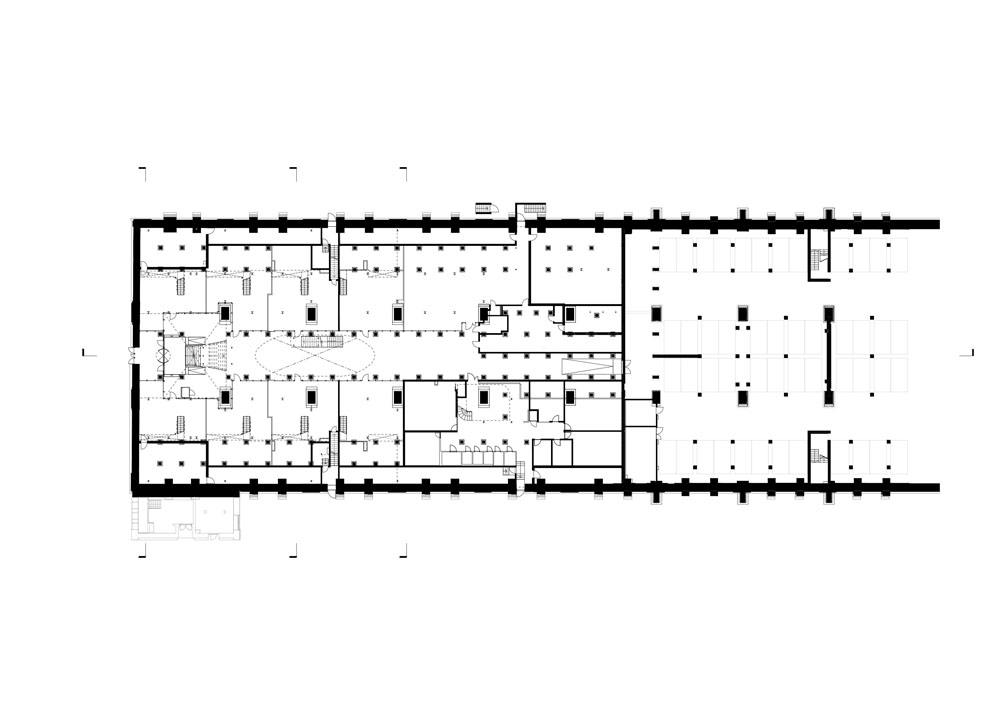
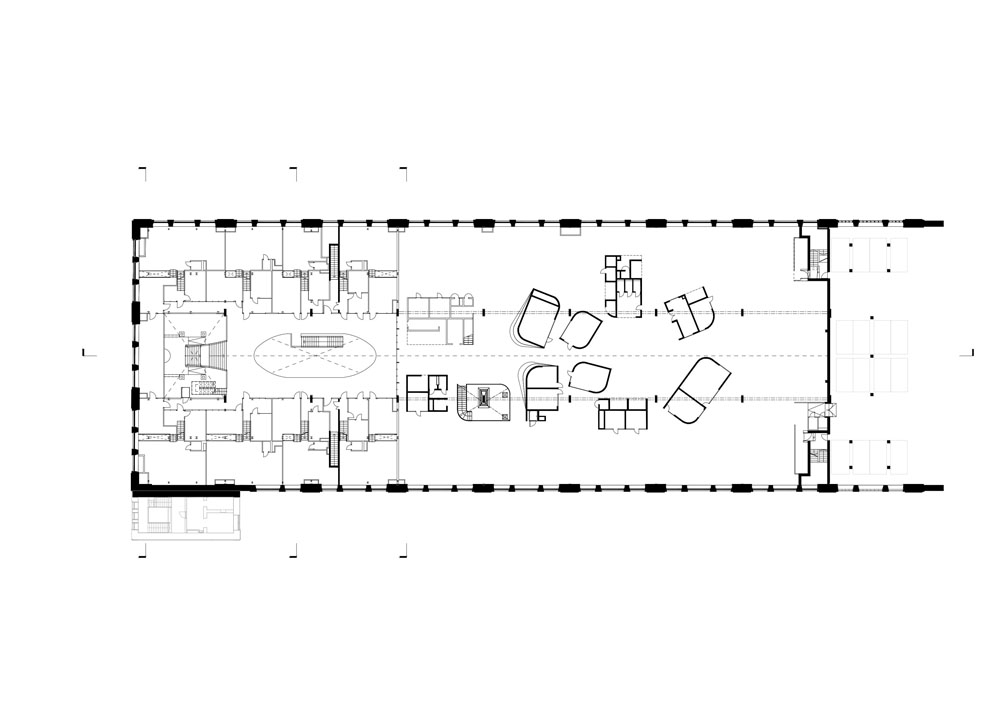
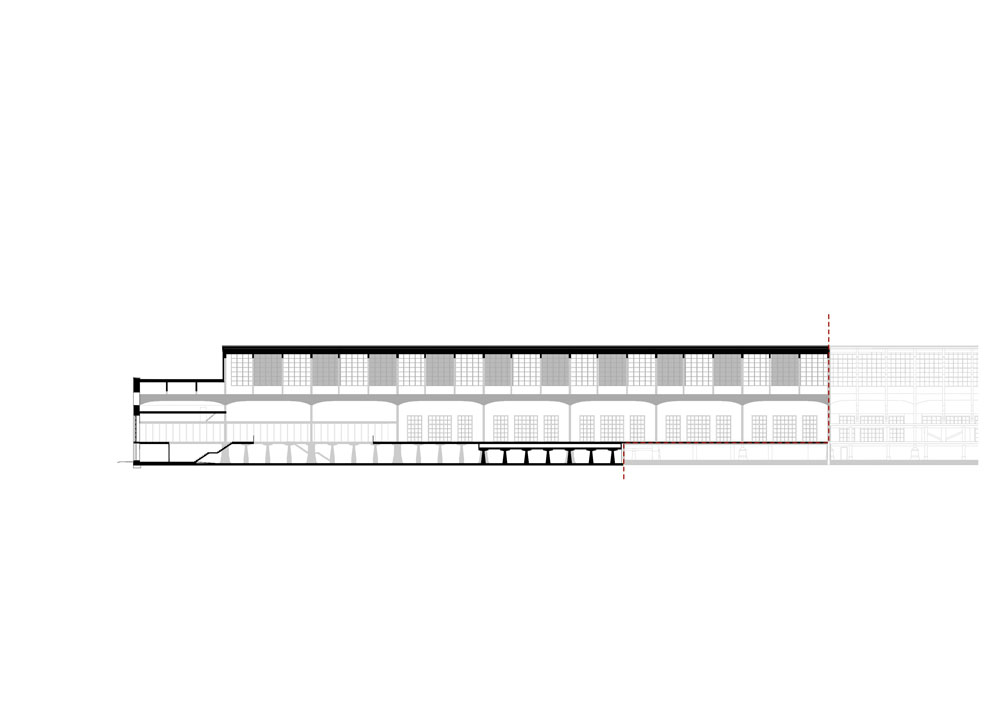
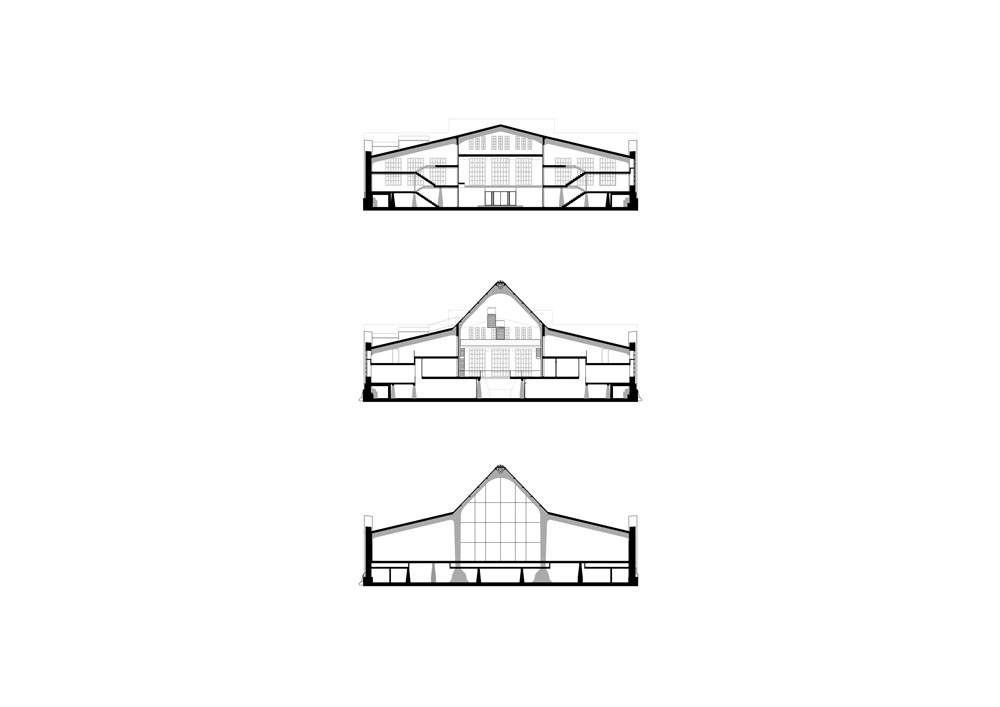
The former machinery hall of 1912 for the A.M. Luther's Furniture Factory has been renovated and converted into a contemporary working space. The character of the industrial building was preserved and emphasized by spatial articulation.
Collaborators
Interiors: Kadri Tamme (Kadri Tamme Sisearhitektuur); Structural engineering: Maari Idnurm (Ekspertiis ja projekt), Merith Auksmann; Acoustical: Linda Madalik; Mechanical: Peter Haab (SWECO Projekt AS), Mihhail Kirejev, Irina Makarova, Viktor Kovalenko; Electrical: Argo Stallmeister (ITK Inseneribüroo OÜ), Taisto Tammearu, Lauri Vaaks; Project management: Hardy Ivask (Nordecon AS), Meelis Nõmme
Program
Office
-
Labels
Office
Site area
4147 m²
-
Client
Lutheri Ärimaja
Total gross floor
6520 m²
Completion
2017
The original machinery hall is a part of A.M. Luther's Furniture Factory which existed between 1877–1940, which was know for bent-plywood furniture trademarked with Luterma. The machinery hall was completed in 1912, whose architects were Nikolai Vassiljev and Aleksei Bubyr from Saint Petersburg. The quarter kept producing furniture and plywood throughout the Soviet period but ceased its production in 2004 due to relocation to outside of the city. Although all the buildings in the quarter became listed by the National Heritage Board of Estonia in 1997 it was left empty for more than 10 years until this project aiming to convert into an office building. The building was in a very poor state, unsafe even – the walls sinking, the concrete carbonated, the reinforcement rusted, water flowing everywhere. We weren't sure how much could be preserved. The heritage conservation regulations required that we exhibit the open space of the central nave with a glass roof lantern. It was with its mystic and even sacred views – with the light coming from above, it was more like a Lutheran church than Luther’s factory. The task was to satisfy the heritage conservation regulations as well as the need and wish of contemporary working environment within the long and deep factory building. By bringing new use into the building we could extend the life of a fine example of the industrial architecture of the time.
Our process started with to understand what is the quality of the space and practical requirement of office space. For organizing of the space the tools were used: “plaza” the open space in the central nave, “plane” the singlestory open office, and “rowhouse” multilevel office space. The open central nave has become a plaza for people to meet and sit down for a rest. The main layout of office space include two typologies: a singlestory office space for the key tenant and threestory office space for smaller tenants. We limited a tools of intervention: differentiating newly inserted structure by material and color, and utilizing as much plywood as possible to commemorate the production of the past.
The machinery hall was constructed with reinforced concrete structure, which was innovative in Estonia and the Baltic region at the time. The concrete construction of approximately 17.5 m in height, large windows located in the lateral walls and a double layered - glass roof lantern covering the entire central nave of the building was a luxury not yet seen in the industrial buildings of the period. The exterior wall - facade was made of local limestone masonry. In the process we cleaned the existing concrete load-bearing structure. As our intervention we inserted new floor concrete slabs and supporting steel columns. They were treated to create contrast from the existing structure.