-

Agios Ioannis Chapel Herb Garden looking east - evening view (Area 1C)
-
Vertical Gardens and Support Structures (Area 1A2) looking southwest
-
Agios Ioannis Chapel Herb Garden looking west (Area 1C)
-
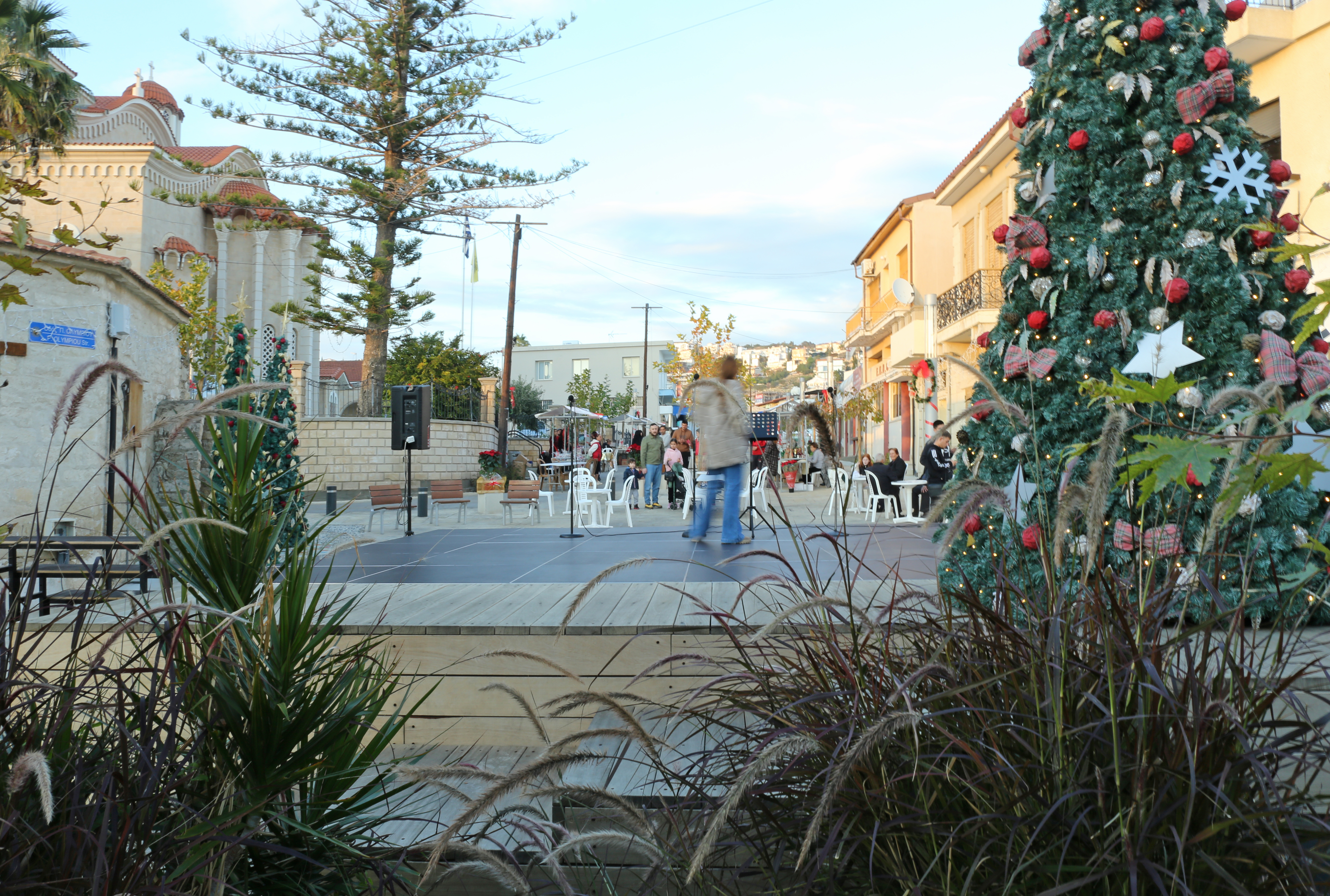
Main square (Area 1A) - fixed and mobile stage for Christmas events - looking north
-
Social Support and Open-Air Market Building (Area 1B) looking north
-
Stepped Garden & jasmin structure (Area 1A1) – looking south
-
Site plan_ A Network of Public Spaces
-
Scenarios of Public Space Activations
-
Materiality strategy - Transitioning from Shared Spaces to Pedestrian-only micro environments (1B)
-
Agios Ioannis Chapel Herb Garden (1C) Plan
-
Linear Square (1A) with Surrounding Supporting Areas & Everyday Stories of Inhabitants
-
Support Structures for gardens and squares for Areas (1A1), (1A2), (1B), (1C)
Redevelopment of the Public Spaces of Agia Phyla’s Historical Centre
AA & U For Architecture, Art and Urbanism, INB2IN Studio. Ayia Fyla, Cyprus
-
Name of work in English
Redevelopment of the Public Spaces of Agia Phyla’s Historical Centre
-
Name of work in original language
ΑΝΑΠΛΑΣΗ - ΔΙΑΜΟΡΦΩΣΗ ΙΣΤΟΡΙΚΟΥ ΚΕΝΤΡΟΥ ΑΓΙΑΣ ΦΥΛΑΣ
Prize year
EUmies Awards 2026
-
Work Location
Ayia Fyla, Cyprus
-
Studio
AA & U For Architecture, Art and Urbanism, INB2IN Studio
EUmies Awards 2026 Nominees




Collaborators
Program
Urban planning
-
Labels
Public Space · Heritage
Site area
6095 m²
-
Client
Limassol Municipality
Total gross floor
6095 m²
Cost
464 €/m²
The micro-environments are the Linear Square and its surroundings (1A), where pockets of the car streets are turned into vegetated pedestrian spaces, supported by a mobile stage and changing rooms and storage. The Social Support / Open-air Market Building (1B) is an “L”-shaped canopy that organizes the space with a stepped garden. The Chapel Garden (1C) replaces the parking space with trees and aromatic plants. Its sloping grounds connect the chapel with a network of shared streets and the rest of the squares. They offer an alternative public space to the traditional one, fenced by the church.
The project reclaims space for pedestrians and non-human community entities (plants, birds and cats) in a car-dominated city. An acupuncture strategy allows for the creation of a network of gardens and squares connected with shared streets. The following tactics were decisive. Firstly, to reduce the circulation area of privately owned cars and create pedestrian areas and shaded spaces for users, with trees and canopies. Secondly, provide infrastructure for outdoor public activities, including a small, fixed stage, a larger movable one, changing rooms, storage, a kitchen, and market stands. Thirdly, to redesign the threshold between public and private spaces by using ramps, stairs, planters and metal structures for climbing plants. Lastly, to enrich the collective memory of the public space with the community’s everyday stories. They are hidden on the street paving thanks to colourful geometric tiles that correspond to the Greek alphabet’s letters, inviting people to discover them.
The materiality and scale of the project’s structures and street paving are decisive in creating a new image of the public space network plus, in respecting the character of the traditional urban tissue. The structures redefine the edges of the gardens and squares. Two of them are supports for vertical gardens covering red and yellow tiled volumes with services. A wooden canopy redefines the south edge of the Church Garden, offering covered space and access for the chapel. The L-shaped metal canopy of the Social Support / Open-air Market sits on blue and green tiled volumes creating porous edges with the adjacent streets. The materiality of the paving changes according to the use of the ground. The main square’s floor consists of beige granite blocks making the space more formal whereas shared street and gardens follow a matrix of geometric floor patterns filled with washed-out concrete of various kinds of cobblestones, of lighter colour at the streets’ edges towards the gardens.