-

0.jpeg
-
1.jpeg
-
2.jpeg
-
3.jpeg
-
4.jpeg
-
5.jpeg
-
6.jpeg
-
7.jpeg
-
8.jpeg
(Re)designing the Platform. Inhabiting Memory
Filipe Cruz Almas. Setúbal, Portugal
-
Name of work in English
(Re)designing the Platform. Inhabiting Memory
-
Name of work in original language
(Re)desenhar a plataforma. Habitar a memória
Prize year
Young Talent 2025
-
Work Location
Setúbal, Portugal
-
Author/s
Filipe Cruz Almas
-
School
ISTA - School of Technology and Architecture - ISCTE - University Institute of Lisbon.
Lisboa, Portugal
Young Talent 2025 YT Nominees




(Re)designing the Platform. Inhabiting Memory
Critical view on the REVIVE program, the case of 7.ª Bateria de Costa do Outão.
Program
Food & Accommodation
-
Labels
Sleeping · Balneotherapy · Nature · Heritage
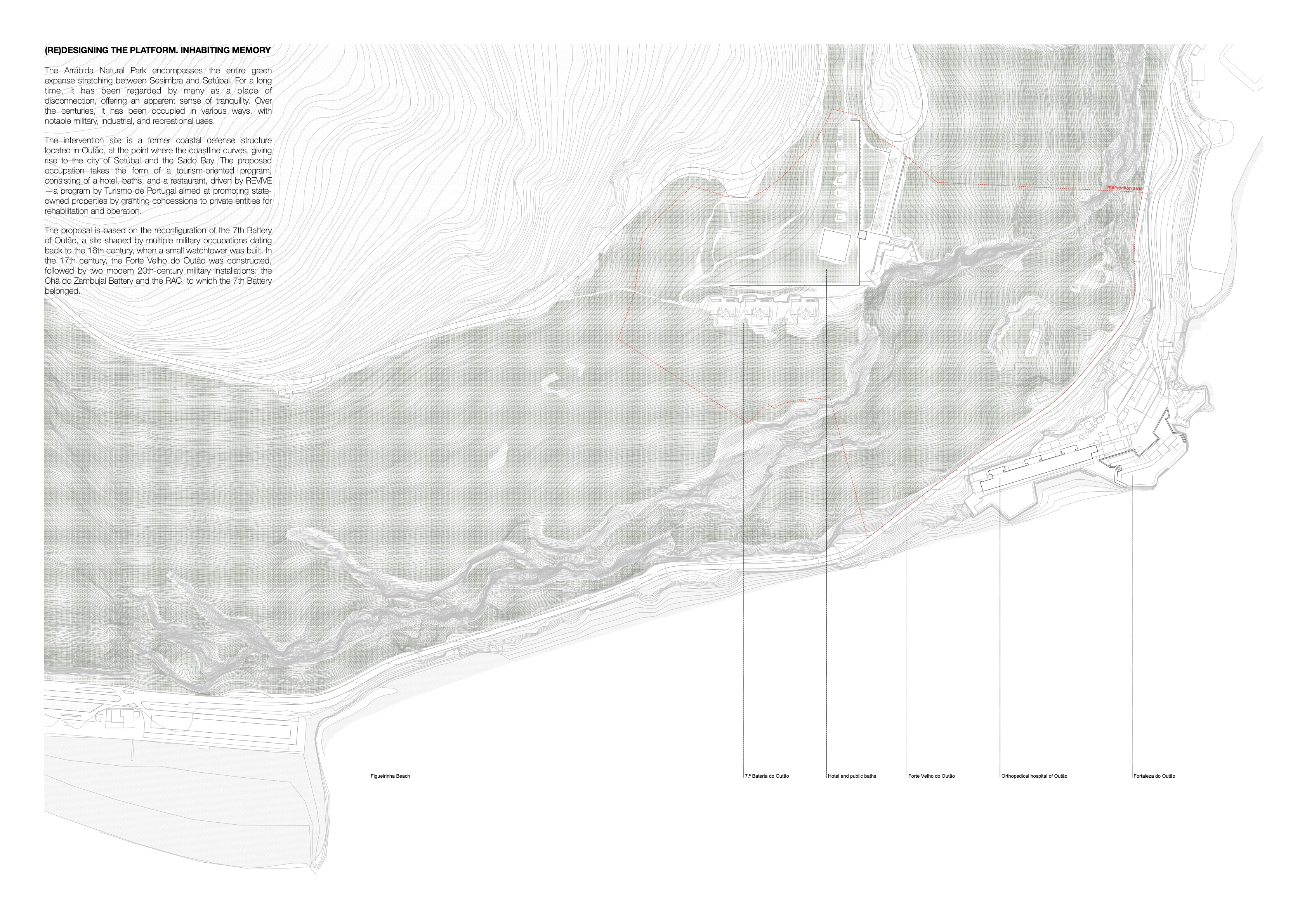
The proposal stems from a collective studio exercise to explore the REVIVE program's approach to historic portuguese architecture. Focused on the 7.ª Bateria do Outão in Serra da Arrábida, Setúbal, the project aims to rehabilitate the site, transforming it from a strategic defense post into a tourism hub. Following REVIVE guidelines, the plan includes a hotel, public baths, and a restaurant, promoting the adaptive reuse of concessioned heritage sites for tourism.
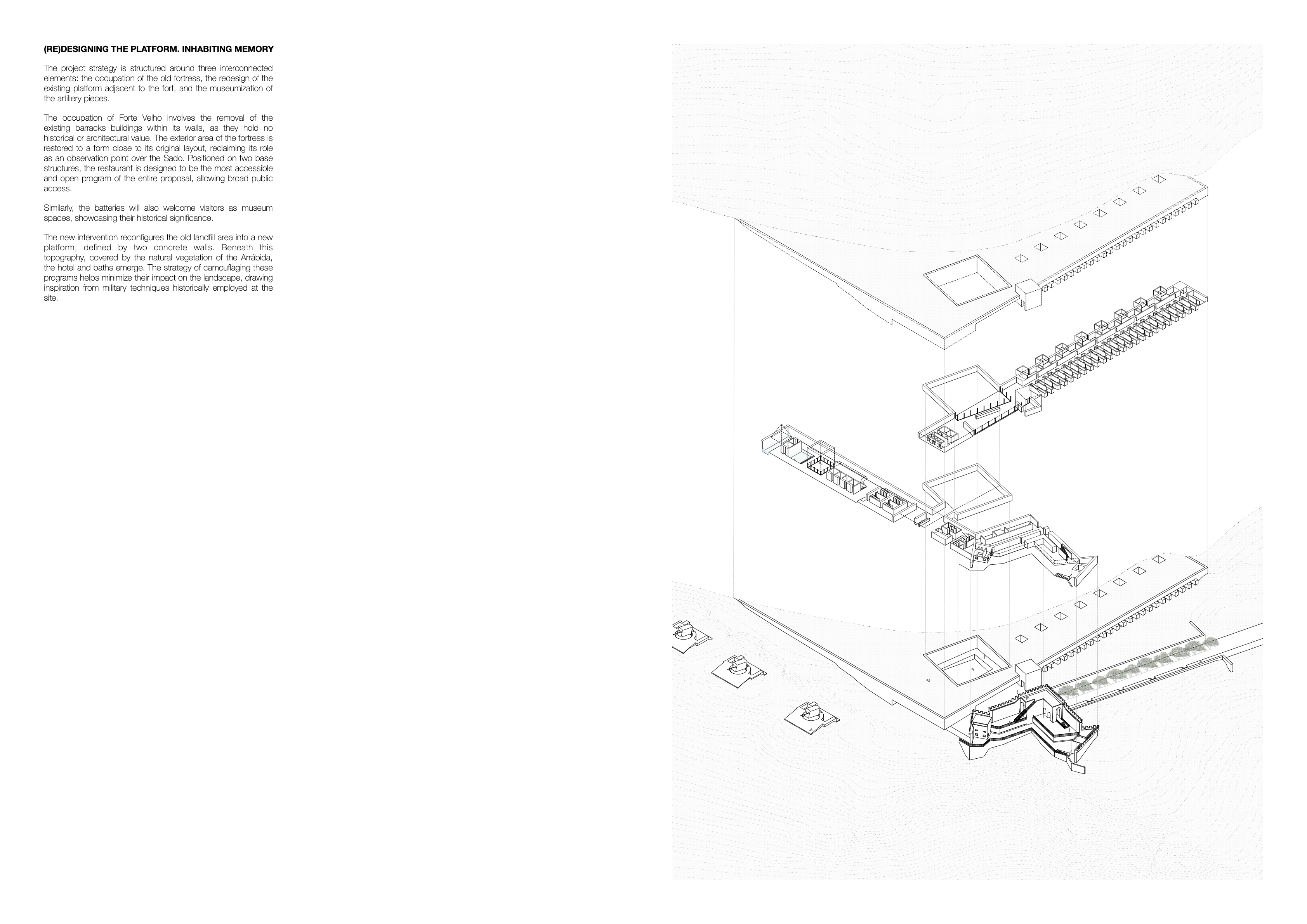
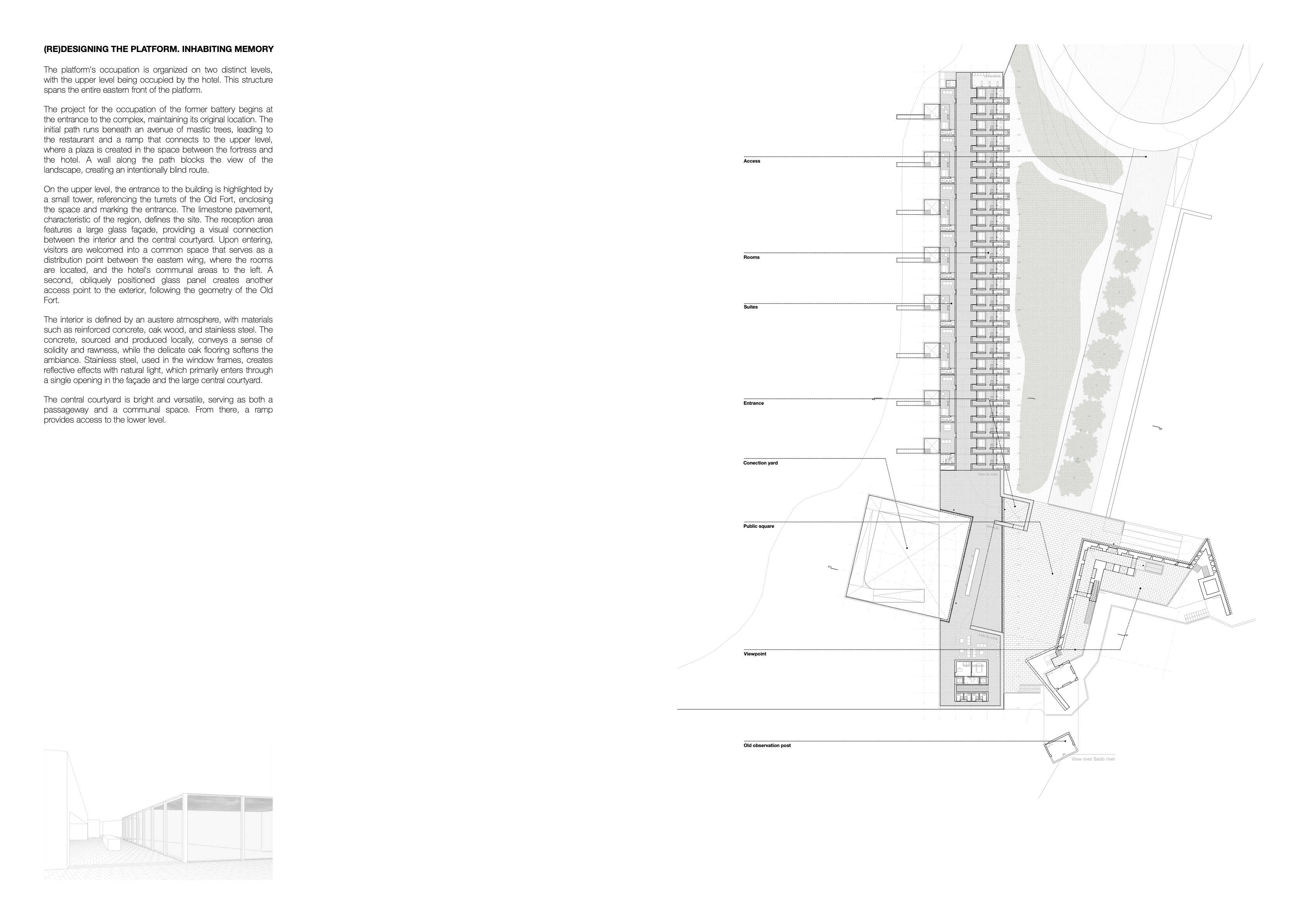
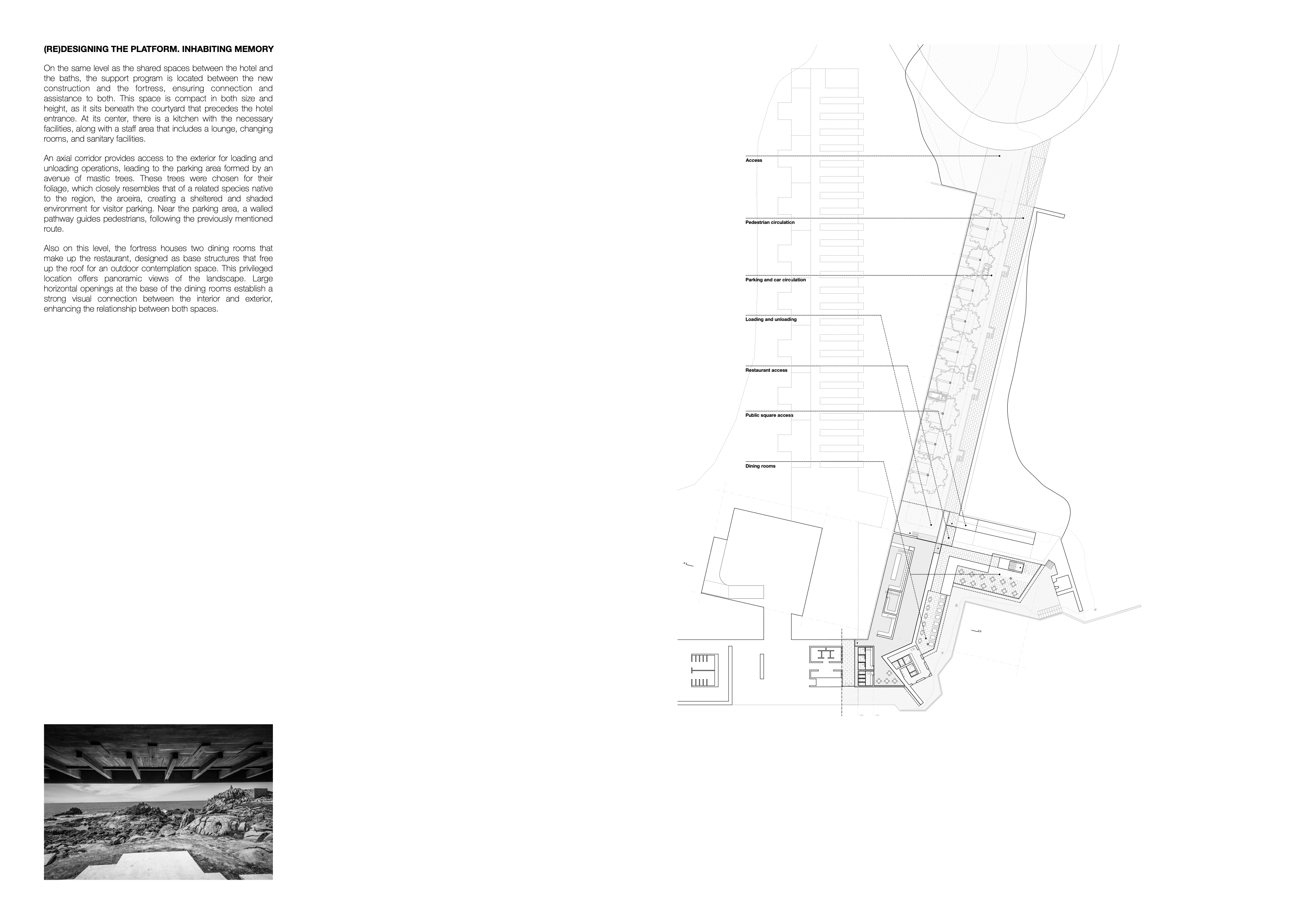
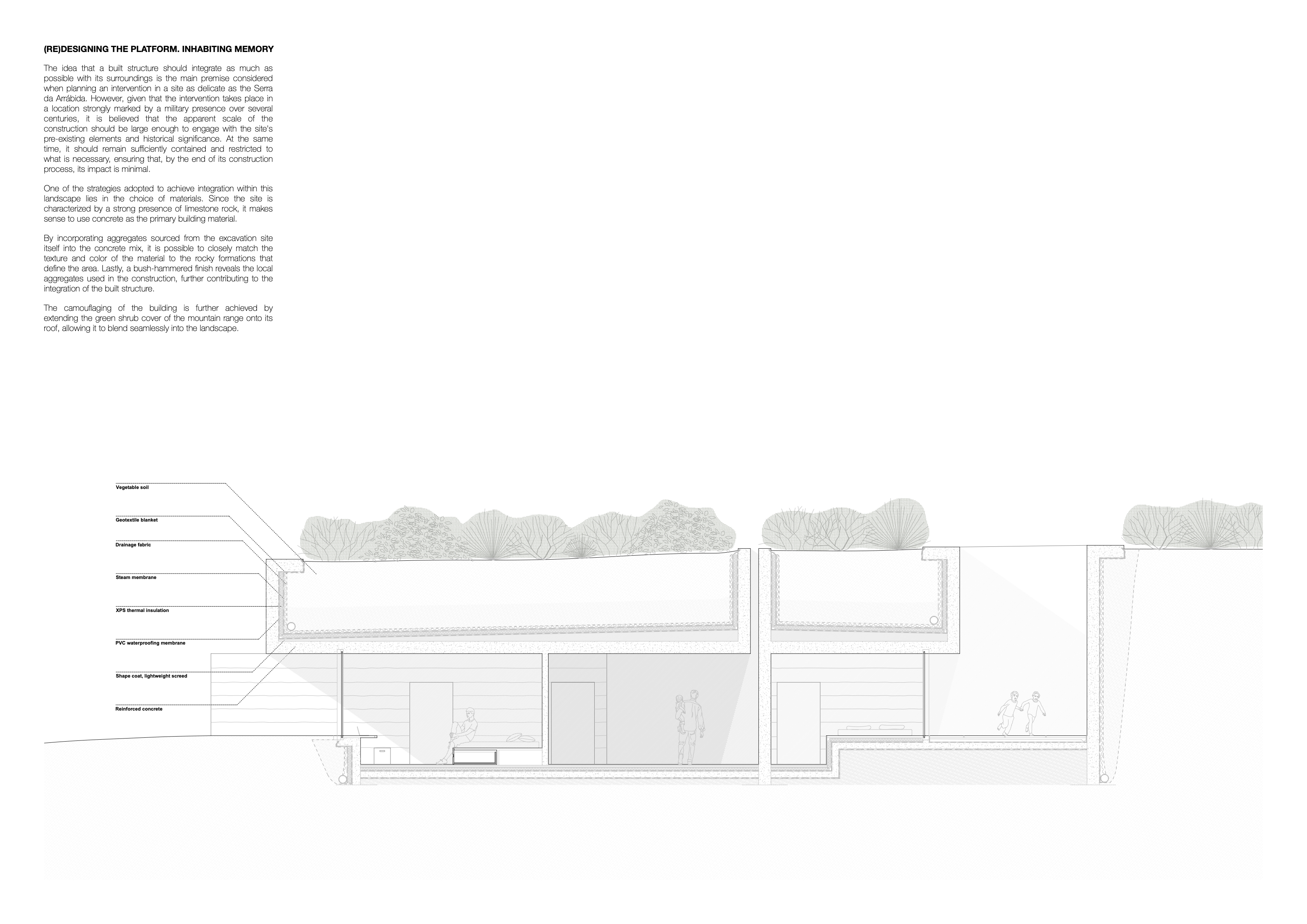
The project responds to the brief by developing three distinct moments of occupation. The first concerns the reinterpretation of the 17th-century fortress, redesigned to accommodate the new restaurant. This intervention allows the small fort to re-establish an open connection with the sea, a relationship that had been lost due to the more recent constructions in the area. Two platforms are created within the fort to house the restaurant’s dining rooms. The service areas are developed in the adjacent space, below ground level, remaining hidden from the users. The second moment of the proposal is the new building, designed as a single, bold gesture characterized by a strong presence while appearing as a force emerging from the ground, rising within the landscape. Its shape and design seek to respect the site, both through its materiality—reinforced concrete incorporating local aggregates, closely tied to the region due to its limestone formations and quarrying, used for construction purposes—and through its form, which allows for a fully green roof composed of the region’s native flora. Under this roof, the two main programs, the hotel and the baths, are distributed across two levels. These spaces are connected by a large courtyard, which not only serves as a transition between them but also introduces natural light into the building. The third and final moment involves the reuse of artillery pieces and their respective storage magazines, which are to be repurposed as museum spaces. This ensures that the site remains accessible to visitors interested in its history.