-

JKU Learning Center - Main view
-
JKU Learning Center - open space reading room
-
JKU LIT - main view
-
JKU LIT - open space with skylight
-
JKU Somnium - main deck
-
JKU Kepler Hall - view from the south
-
JKU Kepler Hall - upper deck - foyer
-
JKU axonometry
-
JKU site plan
-
JKU Learning Center - overview
-
JKU LIT overview
-
JKU Somnium TNF Tower overview
-
JKU Kepler Hall overview
-
-
JKU Panel
Redesign of the JKU Campus Linz
RIEPL RIEPL ARCHITEKTEN, DnD Landschaftsplanung (landscape planning). Linz, Austria
-
Name of work in English
Redesign of the JKU Campus Linz
-
Name of work in original language
Neu- und Umgestaltung des JKU Campus Linz
Prize year
EUmies Awards 2022
-
Work Location
Linz, Austria
-
Studio
RIEPL RIEPL ARCHITEKTEN, DnD Landschaftsplanung (landscape planning)
EUmies Awards 2022 Nominees




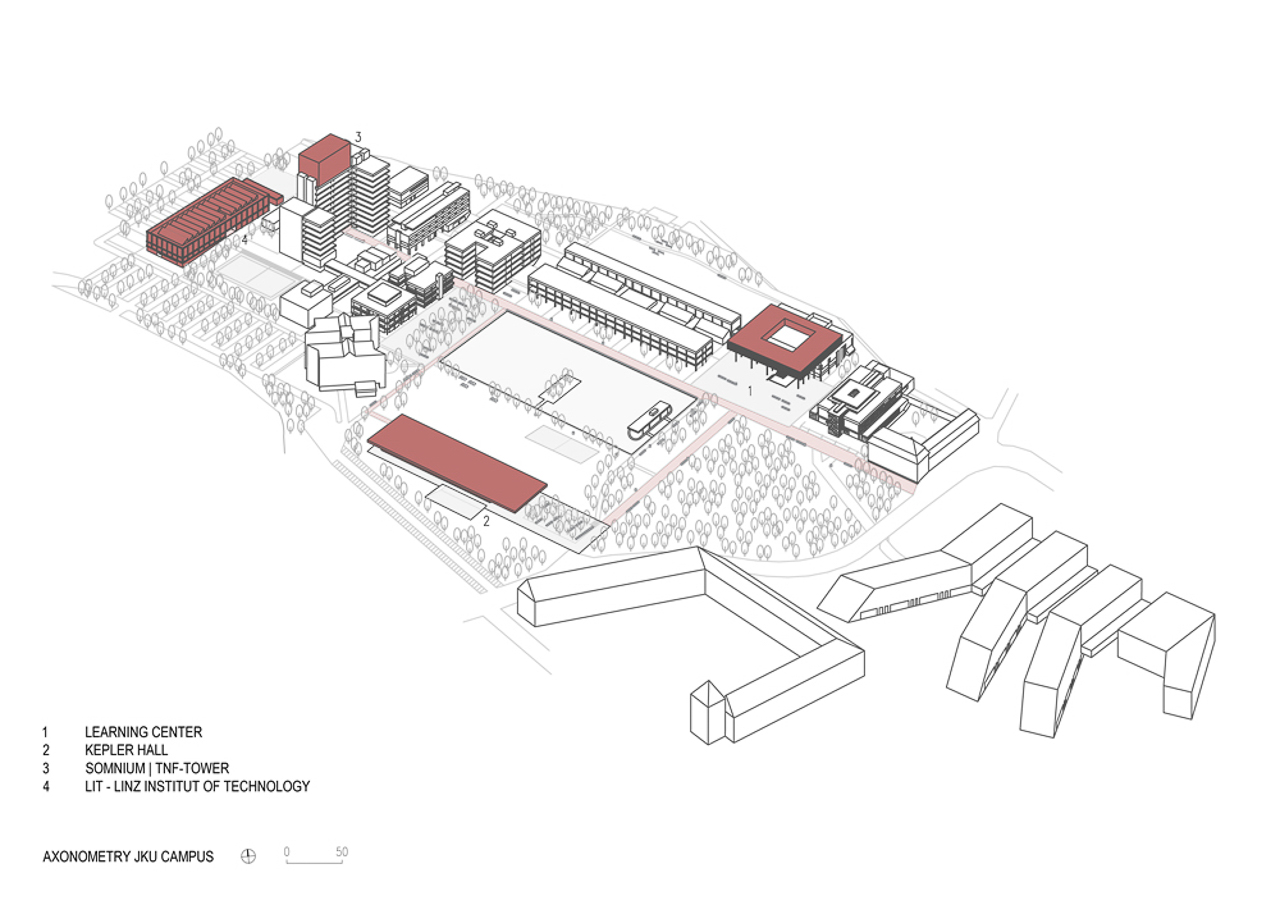


In a strive towards a European urbanity 4 elements are introduced, targeted interventions that promote all sorts of communication encouraging people and open society.The aim was not to achieve continuity and homogenisation, but to sharpen existing qualities instead, providing for an exciting stimulating tableau for a multifaceted everyday life
Collaborators
Structural engineering: BOLLINGER + GROHMANN, 1010 Wien; Coordination: L-BAU-ENGINEERING GMBH, 4020 Linz; Electrical: E-LITE GMBH, 4020 Linz; Building technology: E-LITE GMBH, 4020 Linz; Fire consulting: FIREX GRESSLEHNER GMBH, 4060 Leonding; Building physics: IBTS BAUPHYSIK, 4814 Neukirchen; Others: Hopi Sportplan, 6068 Mils (sports grounds); Architect: Staff members - RIEPL RIEPL ARCHITEKTEN (Nadin Augustiniok, Debby Haepers, Alexander Jaklitsch, Karin Kempinger, Marcus Kettl, Vanessa Konec, Hanna Moosbauer, Alexander Wesely, Cristina Lorente Cabello); Landscape architect: Staff members - DnD LANDSCHAFTSPLANUNG (Verena Holzgethan, Christian Richter, Sonja Schwingesbauer, Robert Wiener); Art: Art by following artists (Gilbert Bretterbauer - curtain - Kepler Hall / Anna Jermolaewa and Manfred Grübl - Planetenorchester on pathway - Learning Center-TNF Tower / Michael Lin - mural - Somnium / Raphaela Riepl - light art - Somnium / Eva Schlegel - mirror - Learning Center)
Program
Education
-
Labels
University
Site area
150000 m²
-
Client
BIG Bundesimmobiliengesellschaft m.b.H., Wien
Total gross floor
17830 m²
Completion
2019
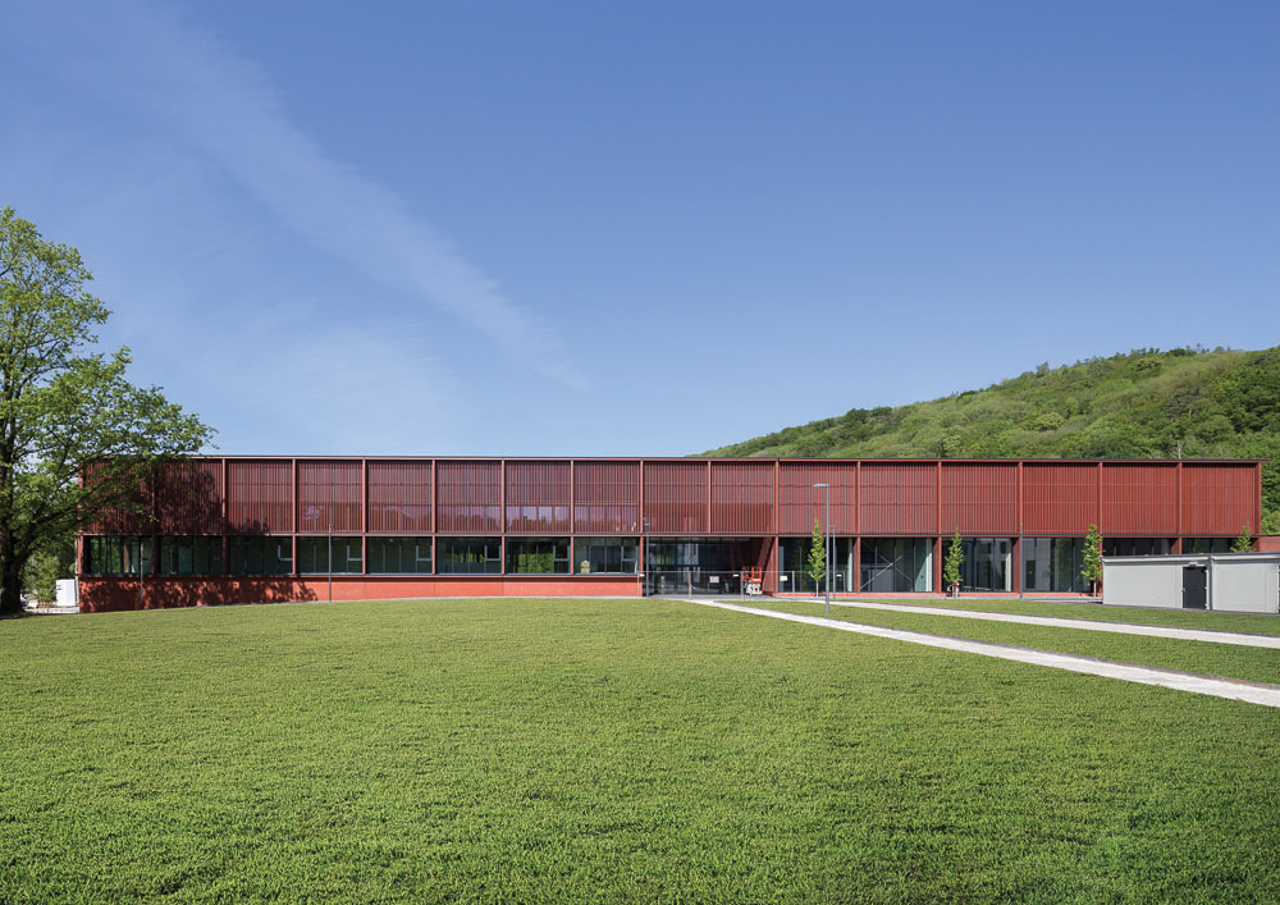
4 ELEMENTS, INTERVENTIONS TOWARDS A EUROPEAN URBANITY 1 KEPLER HALL – counterpart to the initial lecture hall building The transparent entrance and sports hall made of concrete, wood, glass and textiles forms an inviting counterpart to the existing lecture hall. 2 OPEN INNOVATION CENTER – model of a diverse day to day life A wooden structure on a concrete base forms a porous space, an open marketplace of ideas without spacial predetermination. 3 LEARNING CENTER – sky above a square nouveau Wide, winding stairs connect the square to the Learning Center. A diverse sequence of public spaces mediate between setting and interior. 4 SOMNIUM – Kepler's dream of a voyage to the moon Referring to Kepler's novel from 1608, the installation atop an existing tower invites to relax and dream, encountering people from the campus and beyond. The existing château park is completed, introducing informal offerings of recreation and sports.
The founding of the JKU in 1966 marks the dawn of the transformation of a monofunctional industrial town, especially burdened by its Nazi past, towards an open and diverse urban fabric. At the university, there was a perceivable lack of spatial complexity. This, combined with the peripheral site, was an important reason for the proverbial boredom being associated with the campus. Thus for us the essential question was how to stimulate urban liveliness. AS A STRATEGY FOUR ELEMENTS WERE INSERTED Pinpointed interventions acting as catalysts for a diverse and urban life following these principles: OPEN STRUCTURES and flowing transitions promote relaxed chance encounters of any kind TABLEAUS OF POSSIBILITIES and mixed functions stimulate the art of life DIVERSE AMBIGUITIES ... simple + complex, unfinished + clean, integrated + standing alone, bright + dark ... ... establish a field of tensions, which vitalizes the 1960ies campus FARRANGE CONSTELLATIONS extend human interaction beyond the university realm HOPE OF CHANGE ... improving the spatial conditions of the JKU campus... encouraging people and the open society
The Kepler Hall and LIT Open Innovation are entirely new structures built primarily out of timber and reinforced concrete. The flat roof of the single storey Kepler hall consists of primary and secondary glulam girders which are supported on precast concrete columns, allowing for free spans of 22m. The LIT Open Innovation Center utilises a timber-concrete composite construction as its main load bearing structure. The roof structure is divided into two systems: one of standard glulam beams, and another of glulam lattice girders with steel tension rods. The Learning Center is a single storey addition to the existing library, in which the existing reinforced concrete columns and core walls needed to be strengthened. This extension is a combined structural system of insitu and precast hollow concrete floor slabs with a lightweight steel construction to support the roof. The large projection of the new volume is supported on 14m high spun concrete columns. The Somnium is a lightweight steel construction which sits above the existing TNF Tower. The trellis structure is comprised of a space frame of steel profiles and tension rods while steel beams create the terrace.