-

Central courtyard with the pool
-
The grand stair between the courtyard and the roof
-
Grand stair and the views to the Lezha mountains
-
House and the garden
-
Living room
-
North view, looking at the see
-
Drin river delta with laguna Ishull-Lezha and Ishull-Shengjin
-
Site plan with the part of the village
-
Ground floor plan
-
Upper floor plan
-
A Section
-
B Section
-
Name of work in English
Red House
-
Name of work in original language
Shtëpia e kuqe
Prize year
EUmies Awards 2026
-
Work Location
Lezhë, Albania
-
Studio
Pacarizi Studio
EUmies Awards 2026 Nominees
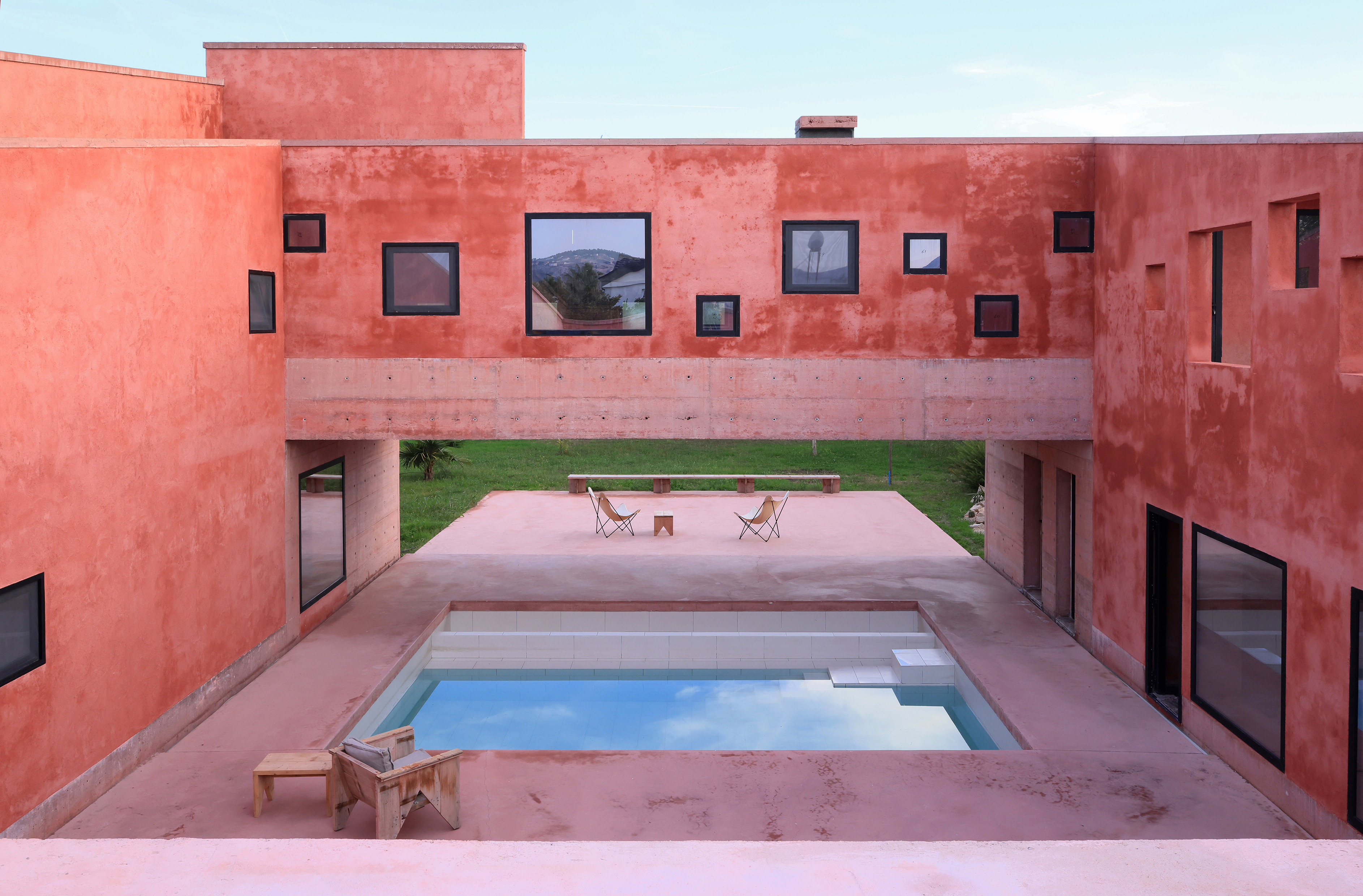
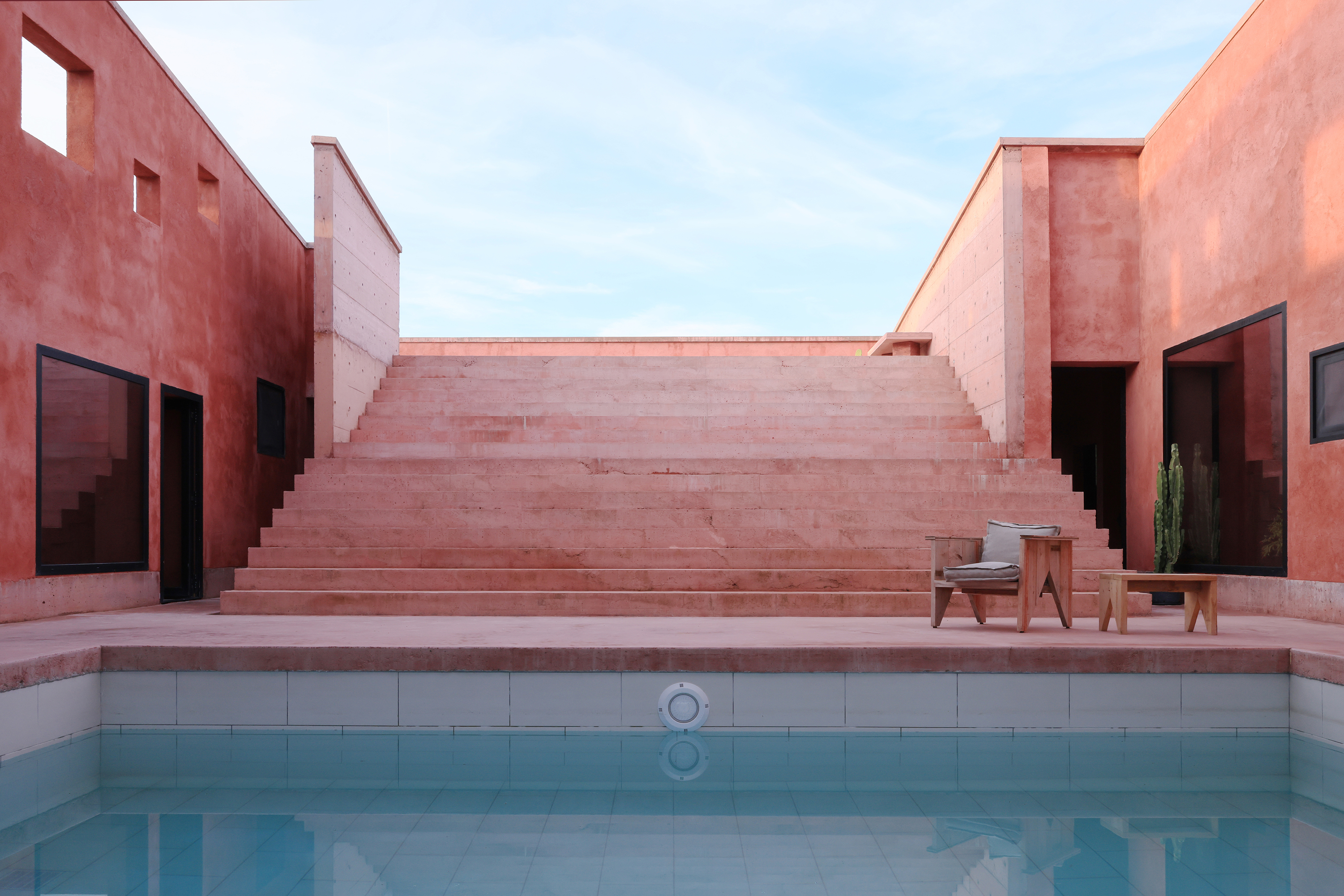
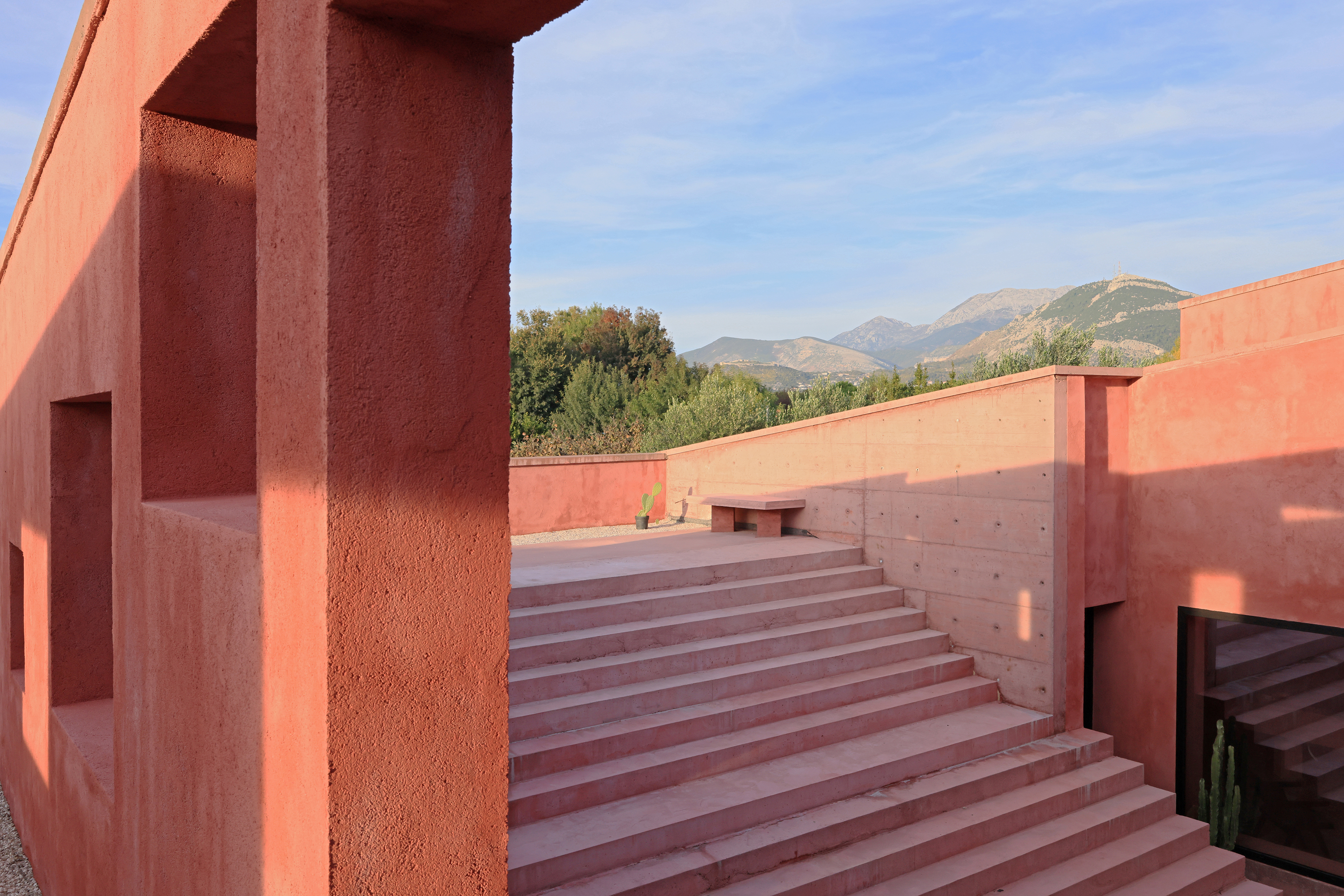
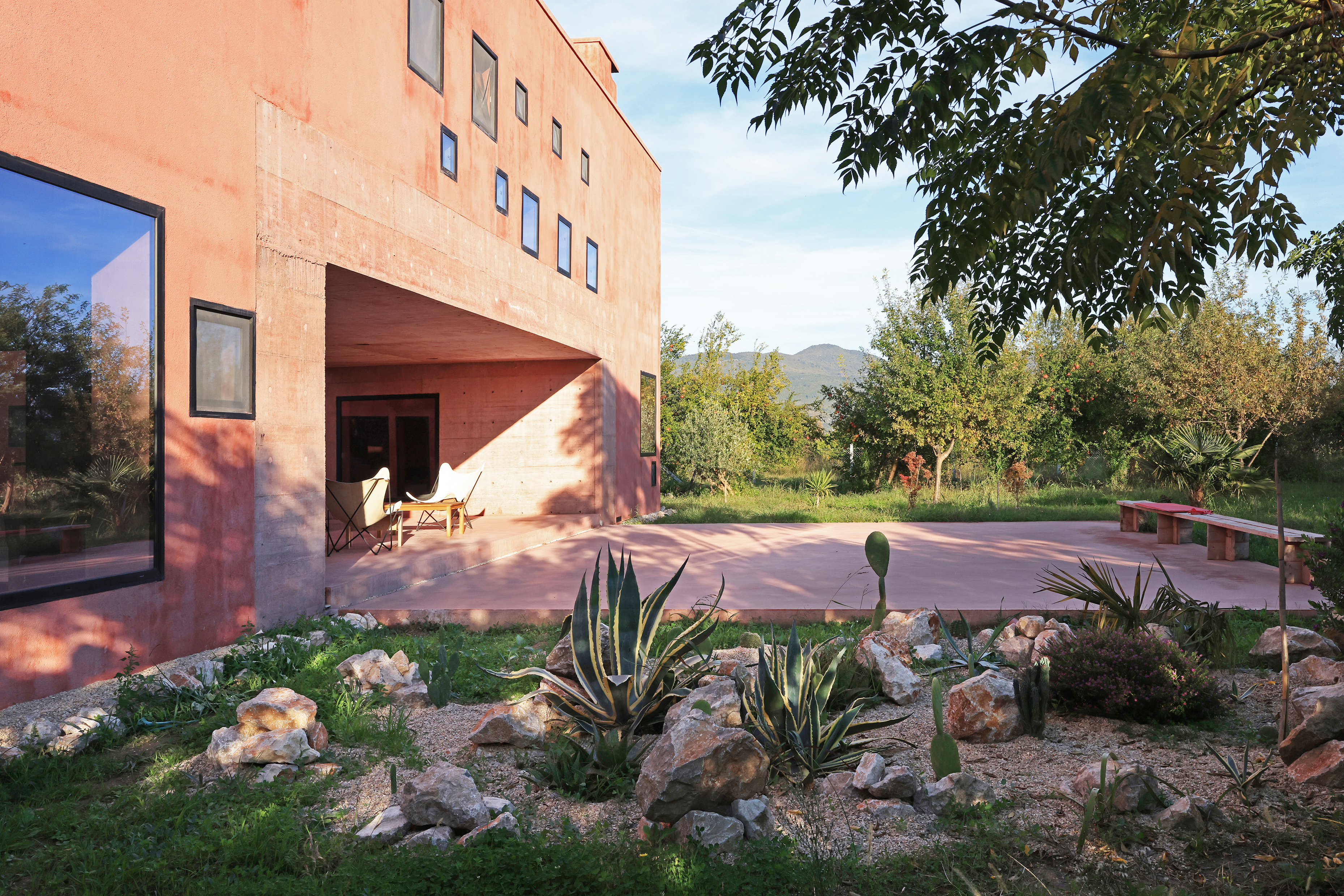
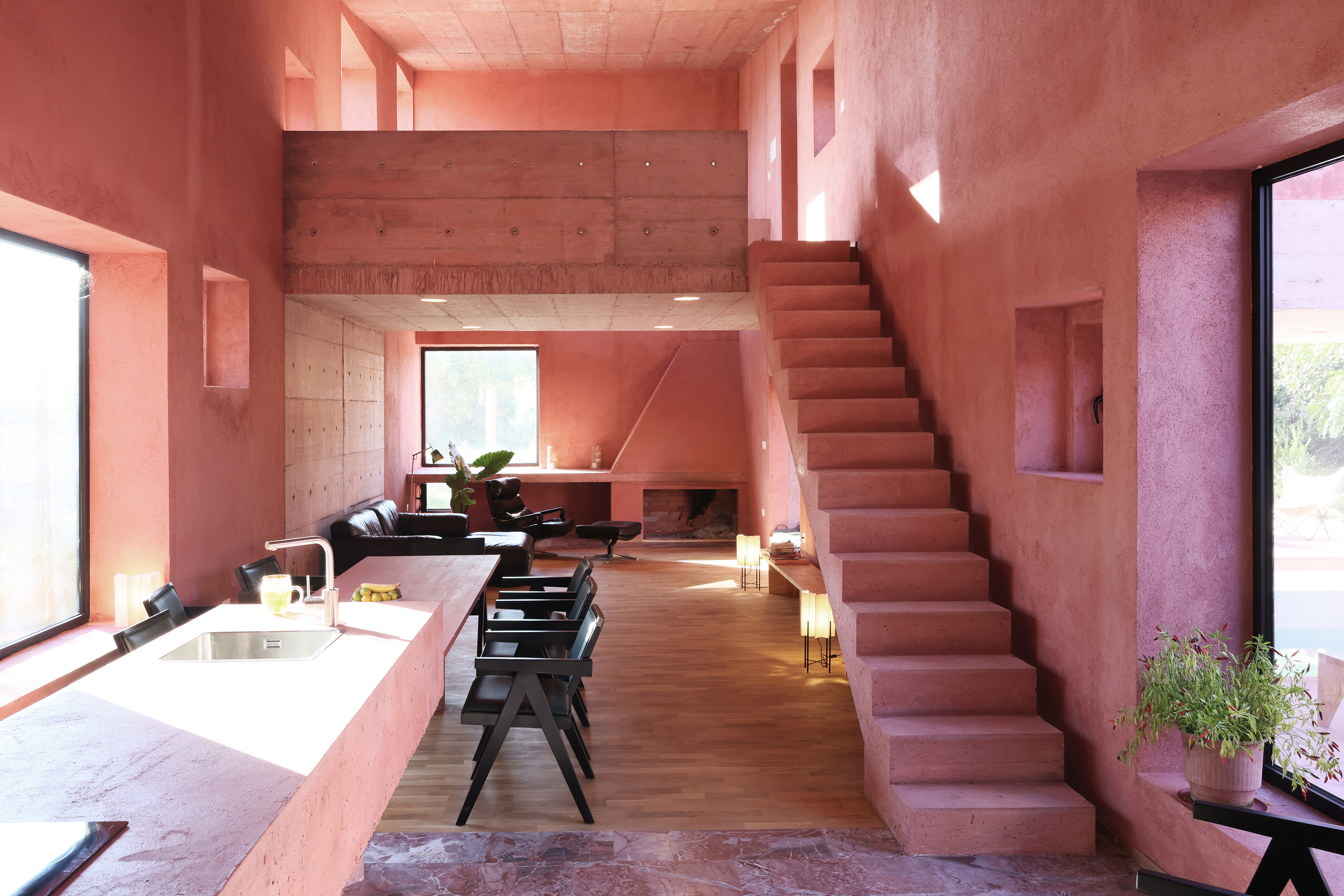


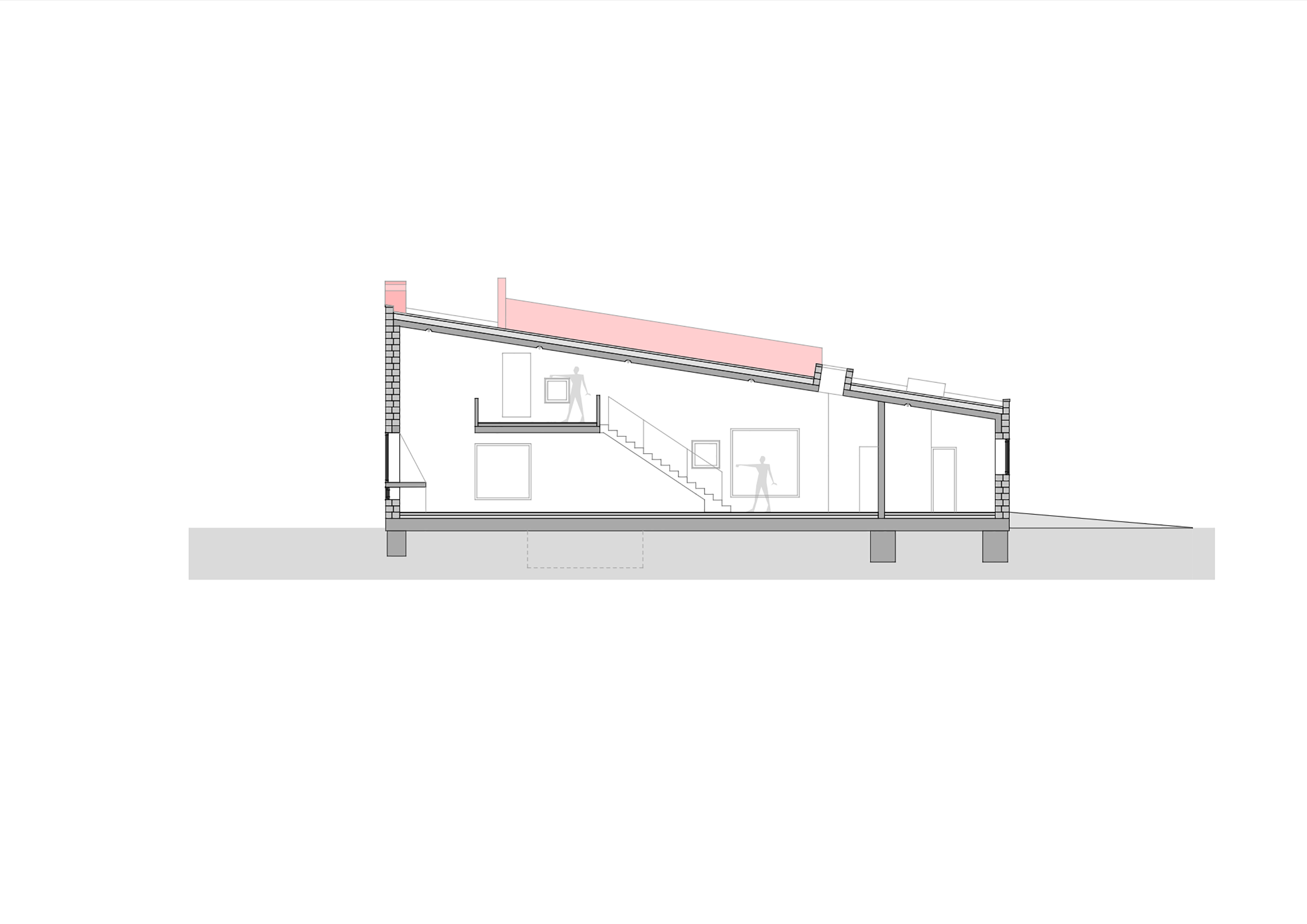
The house balances outside and inside living in the garden of a coastal village. The living volume and rooms are arranged around an open court with the pool at its center. The grand stair continues the courtyard space to the roof level, opening vistas toward nearby and distant landscapes.
Collaborators
Project management: Teri Deda - Freelance civil engineer; Consulting: Brixhita Deda - Freelance architect; Structure: Agron Elshani - Goni Ing
Program
Single house
-
Labels
Isolated · Family
Site area
2000 m²
-
Client
Gjokë & Gjelinë Deda
Total gross floor
350 m²
Cost
430 €/m²
Red house is a village, multigenerational home, for a composed and dispersed family. An open courtyard house was placed in the periphery of very large farming garden with olive, pomegranates and orage trees. This courtyard, being partly covered, acts as a real summer living space, connecting all the parts, inviting to enjoy the garden and the views. This theatrical space permits architecture that looks into itself. What you see through the window is a landscape, but also the architecture itself. This ability of architecture to be able to satisfy itself becomes the central theme of the project.
Single-family houses represent more than 50% of all buildings in Albania. Family life has changed. Existing models, a mixture of tradition and modernity, no longer respond to new challenges. An aging population, the emigration of younger generations, and increased transportation have blurred the distinction between permanent and holiday homes, between city and periphery. Red House seeks to respond to the redefinition of a single multigenerational home for a composed and dispersed family, through an architecture that understands and makes use of the climatic potential and conditions of the area. This low-cost, low-tech house offers an example of a local and circular building economy. Its architectural quality lies in its resilience to consumer society, offering a comfortable and healthy living environment. Architecture becomes an invitation to understand and enjoy the simplicity of village life and the gifts of nature, while quietly becoming a portrait of the people who live within it.
The basic structure is concrete, exterior walls are 46cm local hollow bricks. All thermal insulation was created using a mixture of straw, sand, lime with casein as a binder. The same mixture was used for all plastering. Cement was replaced with casein. We purchased casein from nearby farms and produced our own lime making a living combination that will last almost forever, meaning the house will never need to be repainted. Red iron oxide was mixed into the material and applied throughout. The floors are made of local pinkish marble and wood. The construction generated almost no waste. Large fixed windows frame the views and bring in light, while only small windows open for natural ventilation. Small local teams built the house, which was simplified as much as possible to increase usable space and reduce the cost of expensive amenities. Sustainability was achieved through simplicity—by building locally, using natural materials, and creating a house that the clients truly love.