-

Aerial view
-
The school yard
-
The arboretum
-
The bicycle shelter
-
School building interior
-
Sports hall
-
Site plan
-
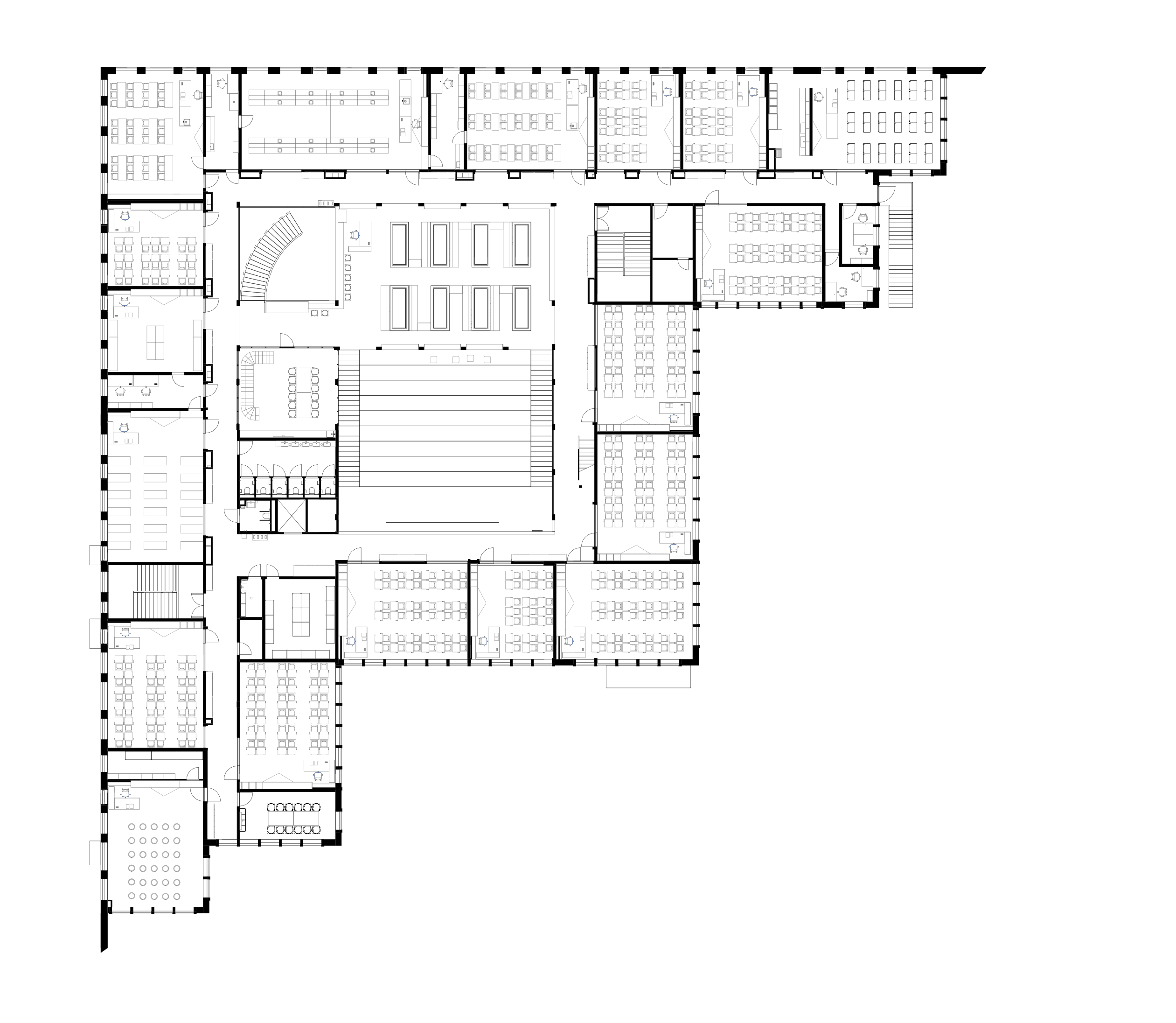
Rae State Secondary School / scheme
-
Rae State Secondary School / ground floor
-
Rae State Secondary School / first floor
-
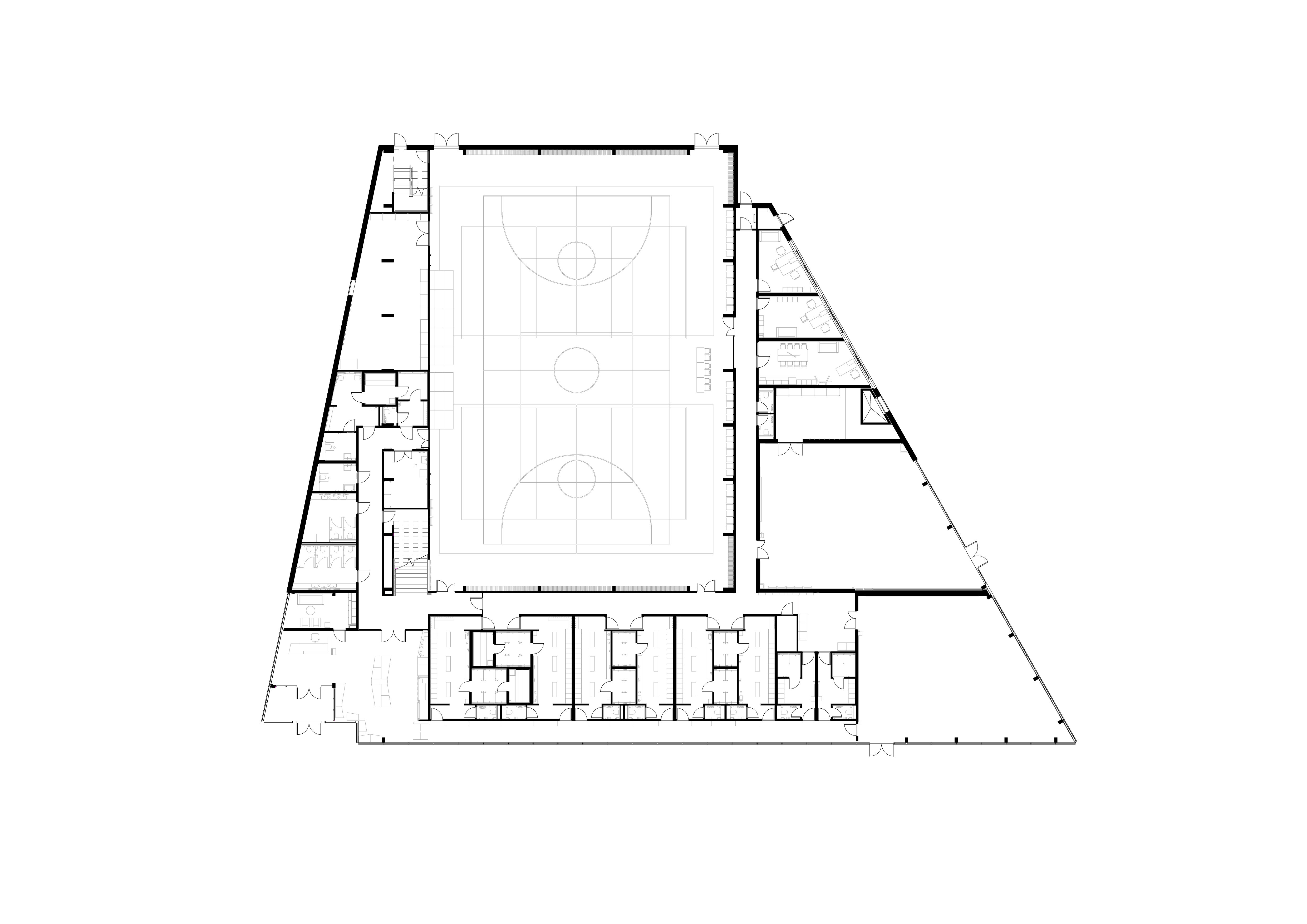
Tuule Sports Building / ground floor
Rae State Secondary School and Tuule Sports Building
KOKO architects. Jüri, Estonia
-
Name of work in English
Rae State Secondary School and Tuule Sports Building
-
Name of work in original language
Rae Riigigümnaasium ja Tuule spordihoone
Prize year
EUmies Awards 2026
-
Work Location
Jüri, Estonia
-
Studio
KOKO architects
EUmies Awards 2026 Nominees


In the Republic of Estonia, it has always been understood that good education is the key to the survival of a small nation. For years, the state has been reorganising the school network through the state gymnasium programme. The aim is to raise the quality of education and improve the quality of life in smaller communities.
Collaborators
Project management: Jaan Aru - HOCO; 3D generalist: Ragnar Jaaniste - KOKO architects; Structure: Tom Arula - PCC Projekt; Graphic Design: Aulis Puri - Motor; Construction management: Merko Ehitus Eesti; Construction management: Ehitusfirma Rand ja Tuulberg
Program
Education
-
Labels
School
Site area
30000 m²
-
Client
Riigi Kinnisvara AS
Total gross floor
7400 m²
Cost
3100 €/m²
The school and sports hall are located near Tallinn, in Rae Parish. The layout of the school takes into account the cardinal directions and the surrounding environment. The building opens to the south and connects to the school courtyard, which includes a flag square, a covered bicycle parking area, and landscaped rest zones. The courtyard is enclosed by a concrete noise barrier. The sports hall lies to the north of the school, with a sunny playground area between the two buildings. The gymnasium accommodates 540 students, and the sports hall and outdoor areas are used by both students and local residents. Both buildings are constructed using cross-laminated and glued laminated timber.
Architecturally, the project formed a single complex with two clients, two contractors, and two budgets. The aim was to keep the process as unified as possible and to ensure all parties remained at the same table, while taking into account the specific typologies and the clients’ capacities. For the school building, a major challenge was to reconcile the structural possibilities of timber with the spatial requirements of the brief. Key considerations included the spans of rooms of varying sizes, the cantilevered south-facing roof, and the overall issues of timber acoustics and fire safety. Another challenge was to create an environment where the building’s load-bearing timber structures are honestly exposed and form part of the interior design. This required careful planning of the technical systems and protection of the timber from weather during construction. To minimize visual clutter, all technical systems are concealed. The ventilation system is located on the third floor beneath the roof, eliminating the need for visible horizontal ducts throughout the building. The concept and challenges of the sports hall were similar.
The above-ground structures of the buildings are made from locally sourced timber, a traditional construction material in Estonia. In recent years, the share of timber construction has been growing, and it can be said that the schools built under the state gymnasium programme have been pioneers in this field. Both architects and builders have gained valuable experience from these projects. The interior design concept was based on creating an inspiring learning environment using natural materials. The choice of materials focused mainly on locally sourced, low-impact options, with particular attention given to future reuse. Durability and ease of maintenance were also key considerations. For example, in the case of the limestone floors, the interior architects conducted a study on the performance of similar floors in Estonian public buildings, and the results confirmed the suitability of this material. The buildings have been designed to be energy-efficient.