-

Main elevation
-
Communal area with newly added trap door and stair
-
The stables on the ground floor, converted into the children's bedrooms.
-
The downstairs bathroom opened up to double as a central sensual passage.
-
The narrow, previously exterior space under the upper veranda
-
The new sun room with kitchenette under the veranda
-
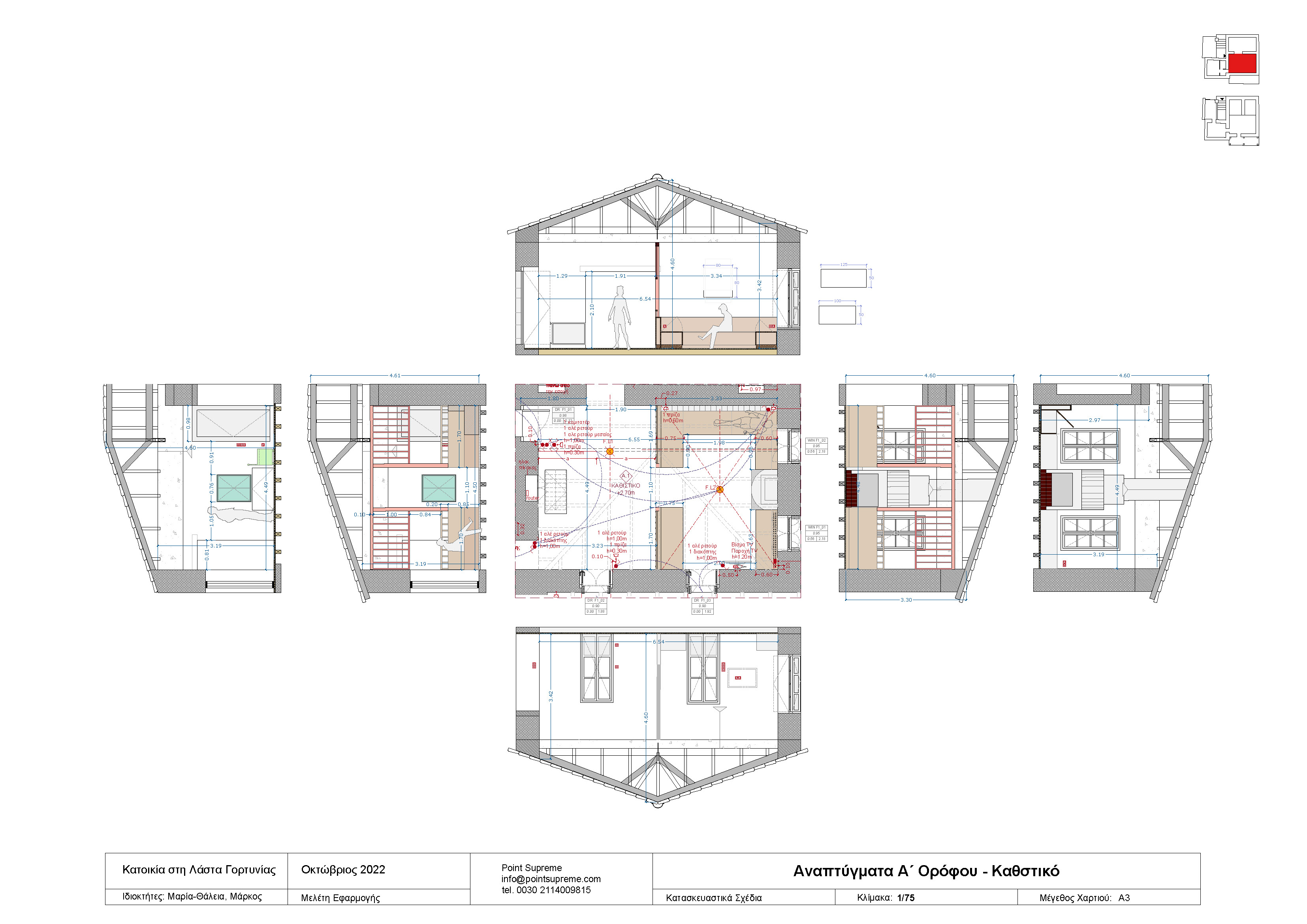
Drawing, All Facades
-
Drawing, ground floor before and after
-
Drawing, upper floor before and after
-
Drawing, upper level living room
-
Drawing, lower level sun room (under veranda
-
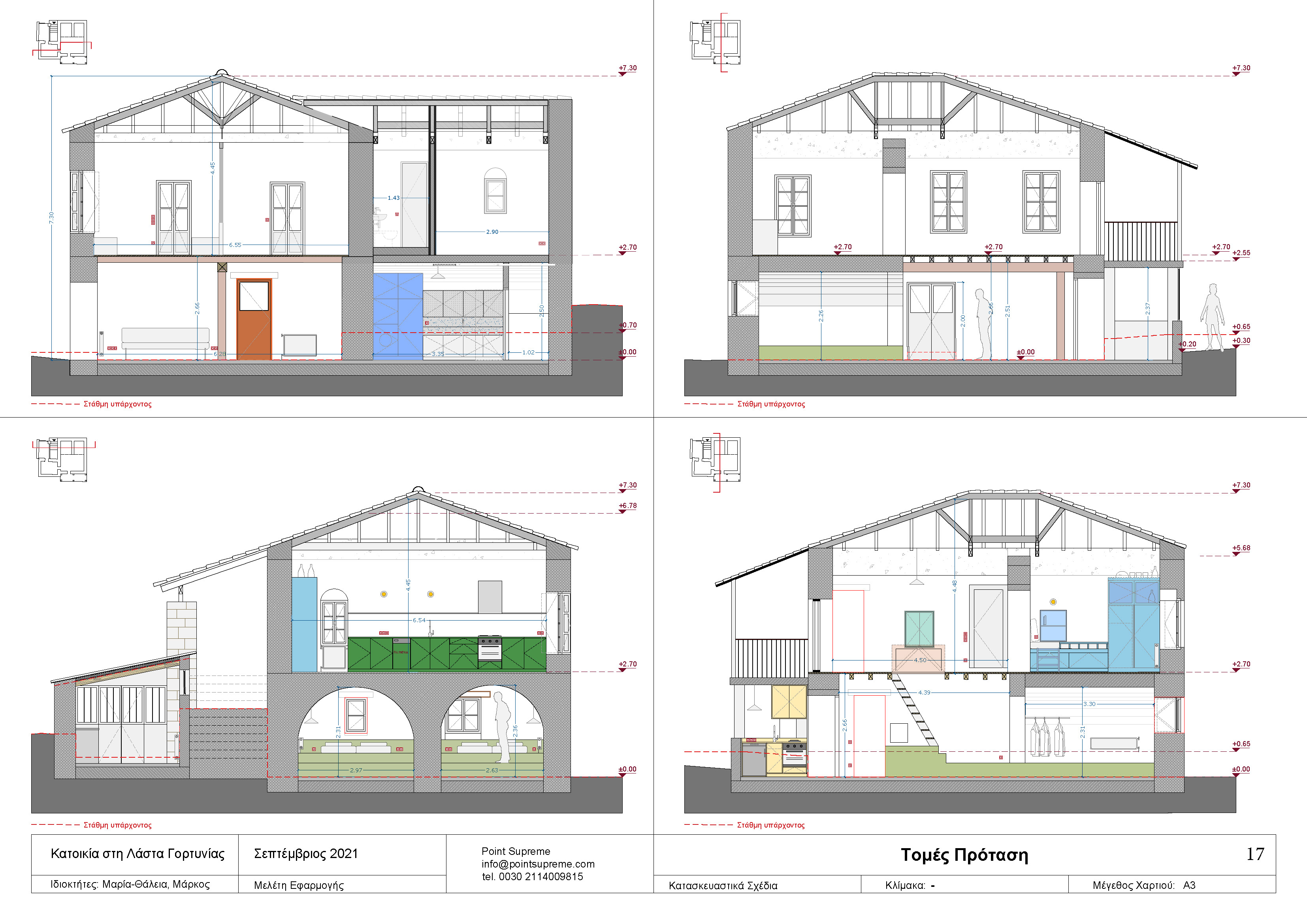
Drawing, sections
Peloponnese House
Point Supreme. Dimitsana, Greece
-
Name of work in English
Peloponnese House
-
Name of work in original language
Κατοικία στην Πελοπόννησο
Prize year
EUmies Awards 2026
-
Work Location
Dimitsana, Greece
-
Studio
Point Supreme
EUmies Awards 2026 Nominees



A traditional rural structure with stables in its original ground floor was turned into a home. The renovation both reveals elemental features of the original edifice and adds new elements of traditional function in contemporary form, radically promoting relations between its various spaces.
Program
Single house
-
Labels
Isolated · Family
Site area
2286 m²
Total gross floor
236 m²
Cost
680 €/m²
The house, on the mountains of central Peloponnese, hosts a family of four. Previously the stone structure hosted stables on the ground floor, with a storage room attached to the main volume and a house above. All spaces were connected exclusively from the outside, and there was no relation between the elevated house and the ground, since the outside space was being used by the animals. The careful play of original characteristics and new constructions allows the vernacular house to accommodate contemporary, flexible ways of living.
The common areas and parents bedroom were placed on the upper level. The lower level, a stable, was turned into the children’s area, with stone vaults revealed and preserved. To resolve the disconnected levels with contemporary family life, new functional elements, rooms and furniture were positioned creating fluid circulation throughout the house. A trap door and stair connects internally the two previously independent levels.The bathroom on the lower level was opened up to double as a central sensual passage. The storage room was turned into a functional workshop directly connected to the rest of the house. The narrow, previously exterior space under the upper veranda was converted into an enclosed sun-room, densely programmed with functions that support outdoor living and use of the outdoor space; kitchenette, daybed and a small study area. The corrugated aluminum roof - typical of storage structures – was also rebuilt, with the use of stones atop it to hold it in place.
Within the communal area on the upper level, a traditional wooden interior facade (‘ontas’) was constructed to designate the living room with fireplace and create facing built-in seating. In the kitchen, a day bed (‘krevata’) was built – a typical feature of Greek traditional houses – adding to the rooms communal character. Hidden textures and materials that had been covered for years were revealed; their presence and patina was preserved and where required, stabilized. The exact and unusual colors of the original windows and doors (mustard, pistachio and ceramic red) were kept, respecting the authentic and spontaneous choices of the original builders. The careful play of new construction and original characteristics allows the vernacular house to accommodate new contemporary, flexible ways of living while re-rooting it in the local traditions. The opened up and newly connected spaces of the volume allow cross ventilation and the natural climatization of the house through the year.