-

St. Stephen Walbrook Church with west facade of Rothschild Bank
-
Church from St Swithin s Lane
-
Rothschild Bank facade from St Swithin s Lane
-
Rothschild Bank interior
-
Entrance to reading and archive room
-
Reception area
-
Axonometric- typical floor
-
Axonometric - ground floor
New Court Rothschild Bank
Allies and Morrison, Office for Metropolitan Architecture. London, United Kingdom
-
Name of work in English
New Court Rothschild Bank
-
Name of work in original language
New Court Rothschild Bank
Prize year
EUmies Awards 2013
-
Work Location
London, United Kingdom
-
Studio
Allies and Morrison, Office for Metropolitan Architecture
EUmies Awards 2013 Shortlisted


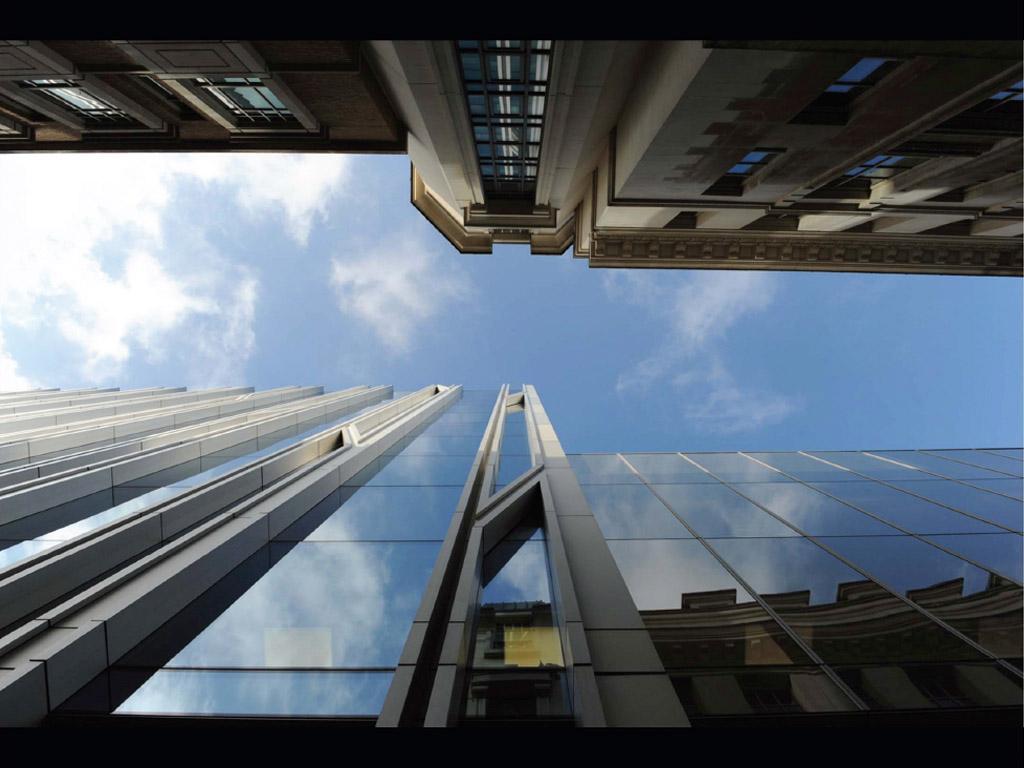


Rothschild elected to redevelop New Court, a site nestled in the City of London's Bank conservation area, which they had occupied since 1809, close to Christopher Wren's Church of St. Stephen Walbrook.
Collaborators
Architect: Pringle Brandon; Project management: Stanhope; Engineering: Arup; Consulting: Davis Langdon; Construction manager: Lend Lease; Consulting: DP9; Lighting: GIA Equation; Accessibility: David Bonnett Associates; Others: MOLAS; Landscape architect: Inside Outside, Charles Funke Associates; Façades: Front; Acoustical: DHV/Arup; Others: Mark Johnson Consultants, PTS, Tricon Food Services; Security: QCIC; Others: Core Group, WZN Consulting; Graphic design: Irma Boom; Others: Knight Frank Newmark, Peter Stewart Consultancy
Program
Office
-
Labels
Corporative Building
Completion
2011
St. Stephen had been hidden from view by previous New Court developments. The new building, spread over 21,000 m2, reinstates the 18th-century visual connection between St. Swithin's Lane and the church. To benefit the public realm the building mass is lifted to create a glass lobby and a covered forecourt opening a visual passage to the church and its churchyard, creating transparency in the otherwise constrained opacity of the medieval streetscape. New Court is comprised of a simple extrusion transformed through a series of volumetric permutations into a hybrid of cube and annexes: a 'cube' of open office space and appendices of shared spaces and private work areas. The central cube of the building consists of ten efficient and flexible open-plan office floors, which facilitate views over St. Stephen and the surrounding City. This cube is surrounded by four adjoining volumes & annexes & with support facilities to the Bank's operations such as meeting rooms, vertical circulation, reception areas, and a staff cafe and gym. The fourth annexe, a Sky Pavilion, sits at the top of this central cube. The Sky Pavilion is an open space largely free of vertical elements. This affords a clear view of Wren's most famous London Church, St. Paul's Cathedral, and the rest of the City, and provides an appropriately unique space for high level functions.
At street level, the entire cube is lifted to create generous pedestrian access to the tall glass lobby and a covered forecourt that opens a visual passage to St. Stephen Walbrook and its churchyard & creating a surprising moment of transparency in the otherwise constrained opacity of the medieval streetscape. Reconnected, the two establish a continuity that radically transforms St. Swithin's Lane and the setting of the church.
-