-

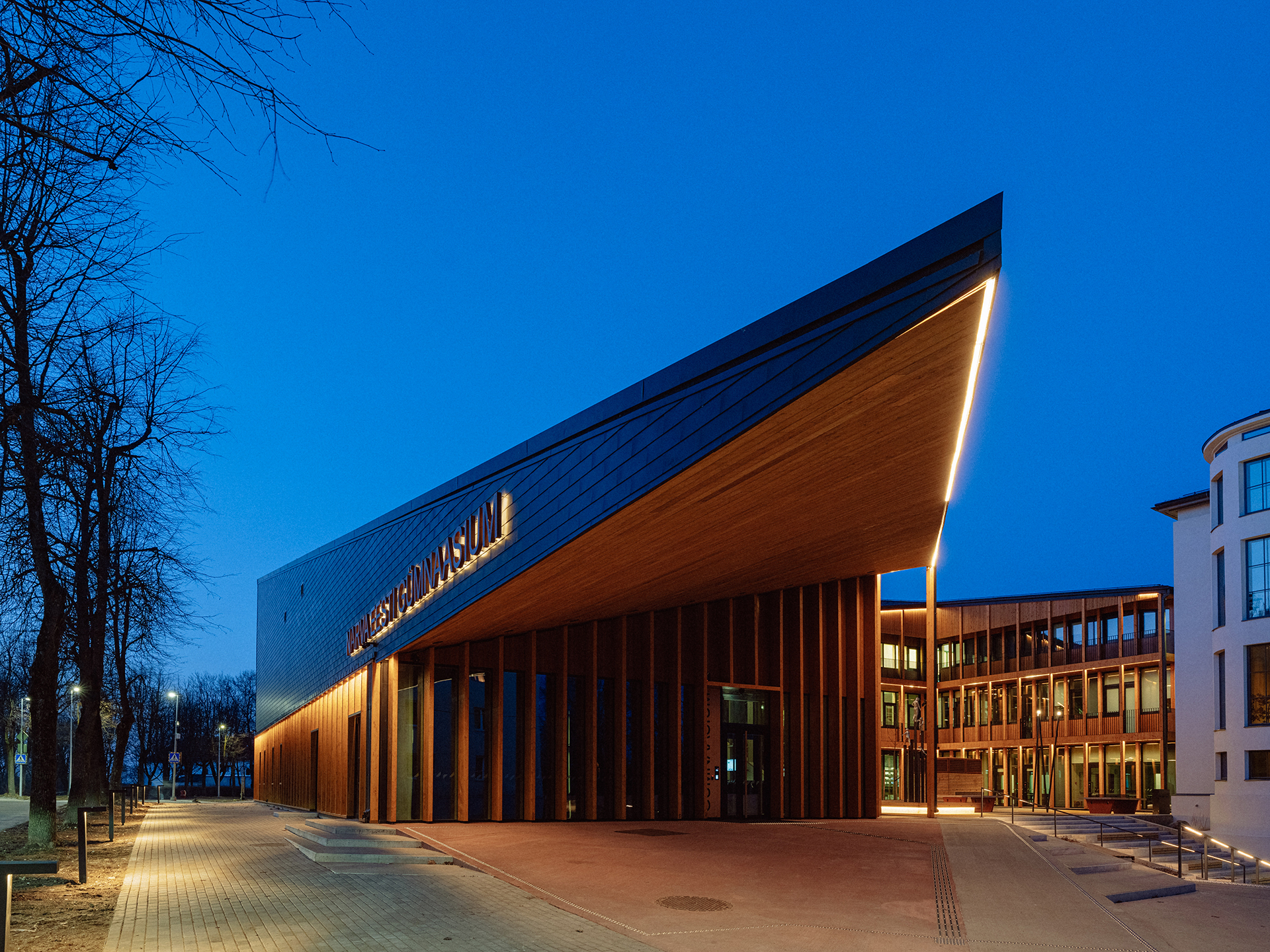
View from the corner of Kraavi and Vestervalli Streets towards the entrance of Gymnasium
-
View towards the courtyard and terraces of Narva Estonian School
-
View towards the reconstructed Narva Estonian Primary School from beneath the Gymnasium cantilever
-
View from Vestervalli Street towards the kindergarten entrance
-
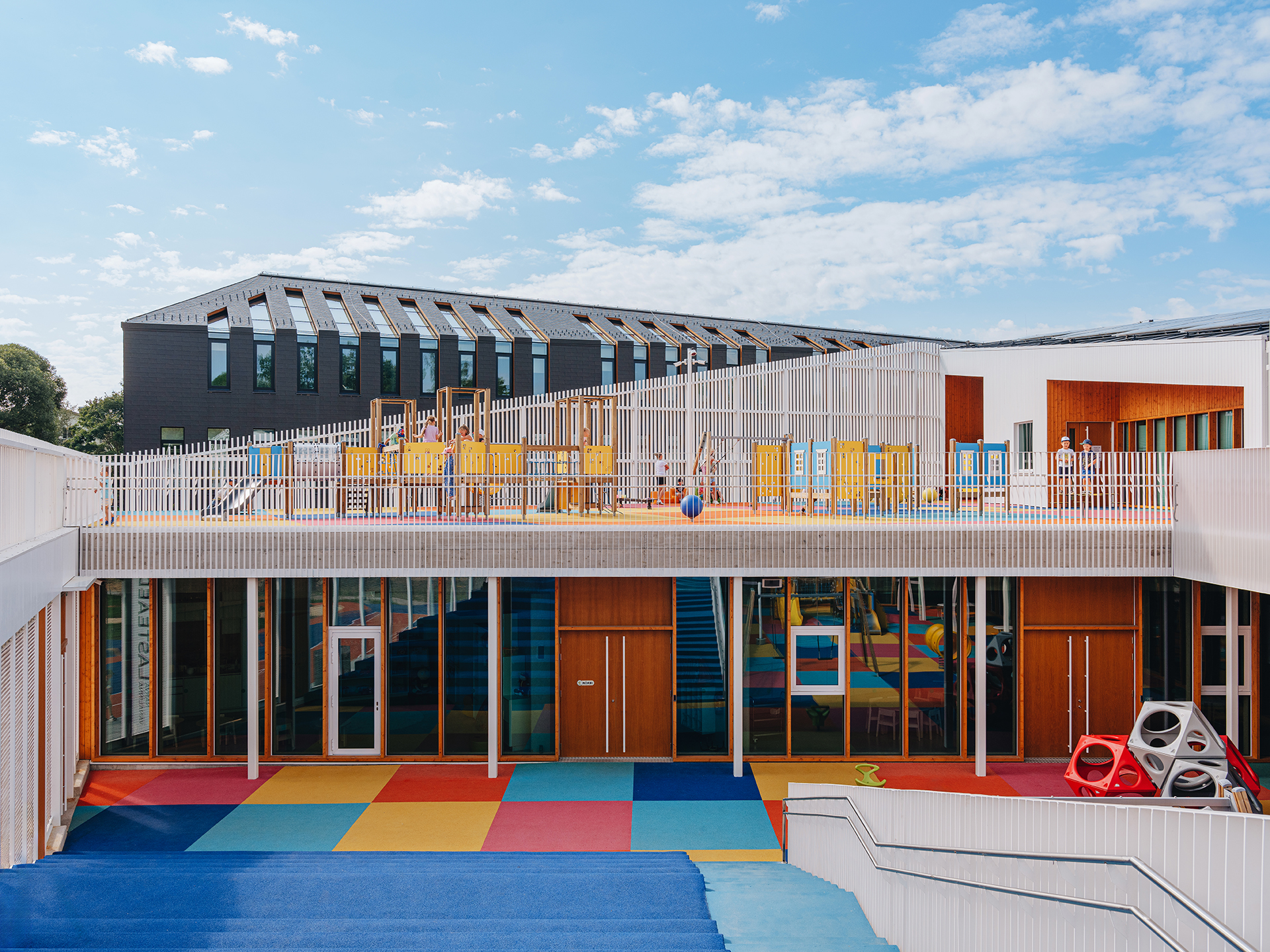
View from the kindergarten’s second-floor terrace playground, with Narva Estonian School in the back
-
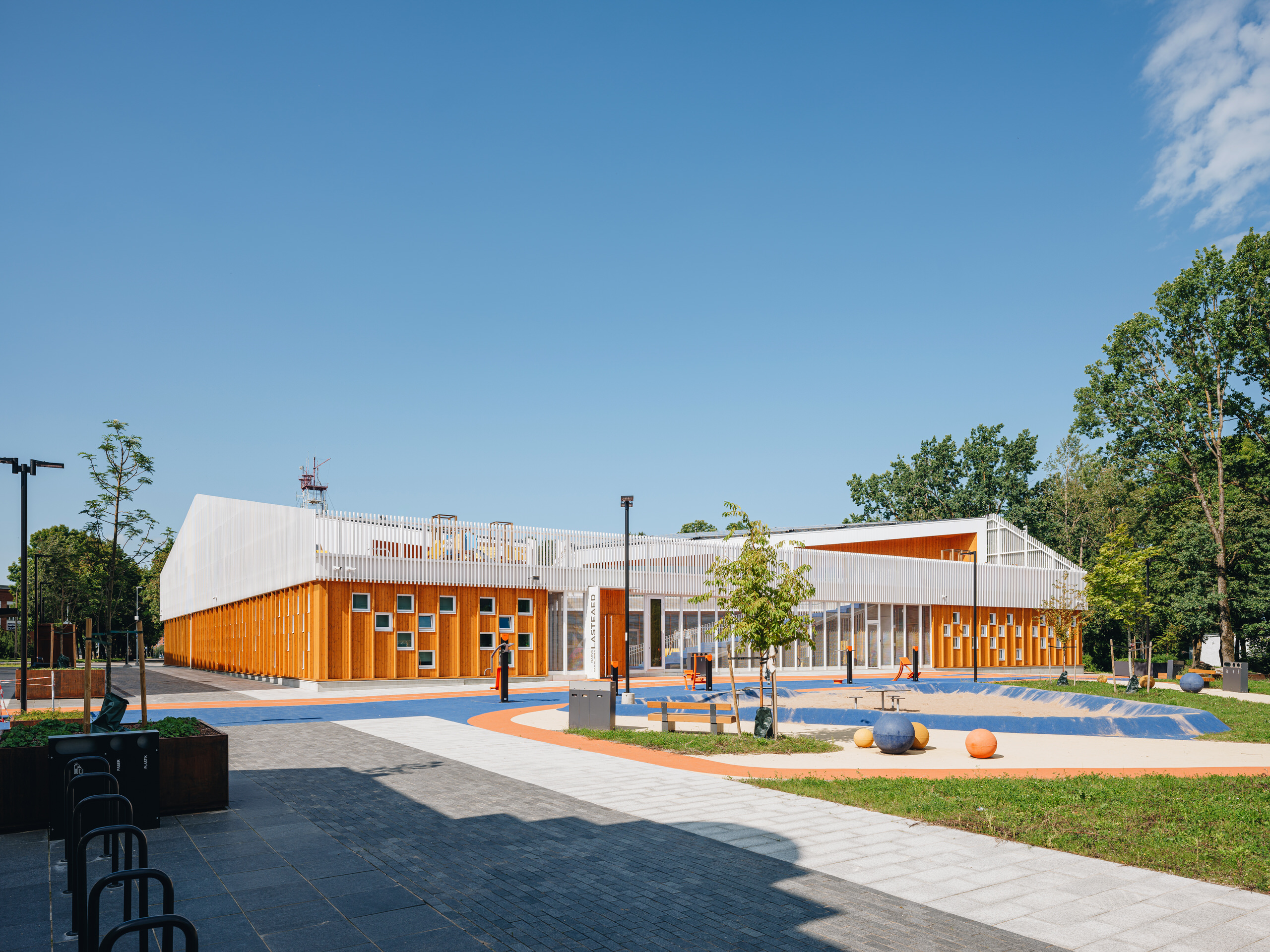
View from the Hariduse Street towards the View of the kindergarten courtyard and park
-
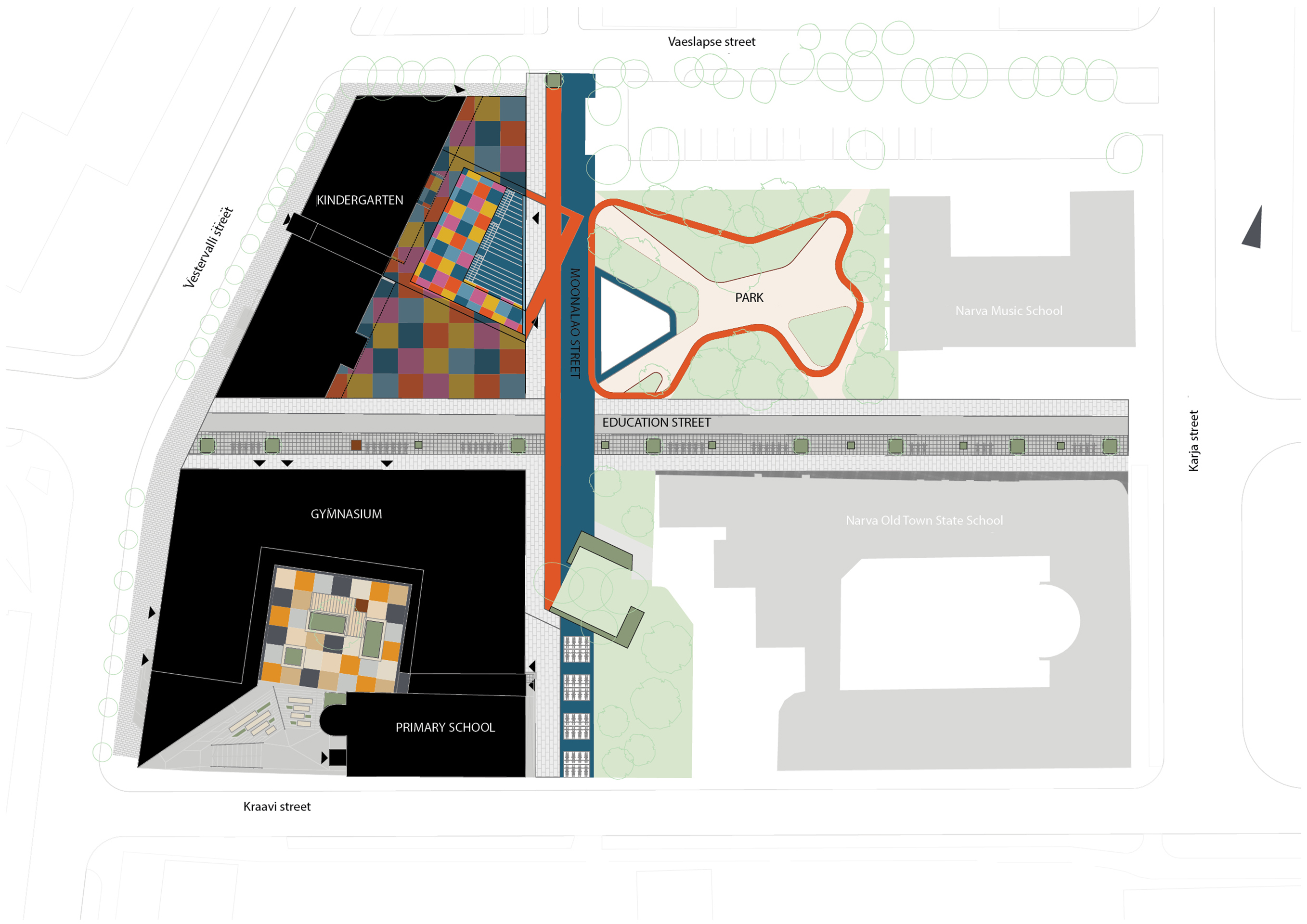
Site plan
-
Axonometric view of the building
-
Ground floor plan
-
1-st floor plan
-
School and kindergarten elevations
-
School and kindergarten sections
Narva Estonian School and the Old Town Kindergarten
3+1 architects. Narva, Estonia
-
Name of work in English
Narva Estonian School and the Old Town Kindergarten
-
Name of work in original language
Narva Eesti Gümnaasium, Narva Eesti Põhikool ja Narva Vanalinna Lasteaed
Prize year
EUmies Awards 2026
-
Work Location
Narva, Estonia
-
Studio
3+1 architects
EUmies Awards 2026 Nominees




The project restores Narva’s 17th-century street grid, lost after WWII March bombing and Soviet free-plan rebuilding on the ruins. It reconnects the historic city by combining renovated and new buildings, creating light-filled courtyards and a sustainable, human-centered educational environment.
Collaborators
Project management: Jaan Aru - HOCO OÜ; Collaborator (office): Pääsu Kaldamäe - BIMest OÜ; Collaborator (office): Ahti Grünberg - T43 interiorarchitects; Collaborator (office): Mariliis Sõber - T43 interiorarchitects; Collaborator (office): Tõnis Kalve - T43 interiorarchitects; Collaborator (office): Kadi Berens - T43 interiorarchitects; Collaborator (office): Mari Põld - T43 interiorarchitects; Collaborator (office): Maria Stokkeby - T43 interiorarchitects; Structure: Martti Salm - Arro & Agasild Inseneribüroo OÜ; Structure: Meeri Nurk - Arro & Agasild Inseneribüroo OÜ; Structure: Anni Helm - Arro & Agasild Inseneribüroo OÜ; Structure: Argo Maripuu - Arro & Agasild Inseneribüroo OÜ; Structure: Karl Orumets - Arro & Agasild Inseneribüroo OÜ; Landscape: Marge Kõrgekuhi - Lootusprojekt OÜ; Landscape: Kersti Lootus - Lootusprojekt OÜ; Landscape: Siim Lootus - Lootusprojekt OÜ; Landscape: Kiur Lootus - Lootusprojekt OÜ; Landscape: Kadri Uusen - Lootusprojekt OÜ; Building physics: Lauri Špitsmeister; Building physics: Timo Jakobson; Building physics: Martin Sults; Fire Safety and Accessibility: Martin Seetur - Rovalis OÜ; Acoustics: Gerda Kaasik - Akukon Eesti OÜ; Building physics: Evelin Anto - Sirkel & Mall OÜ; Building physics: Marti Mäevere - eD Insenerid OÜ; Construction management: Artjom Morozov - Nordlin Ehitus OÜ; Construction management: Olari Vuks - Ehitustrust OÜ
Program
Education
-
Labels
School · Kindergarten
Site area
10000 m²
-
Client
Republic of Estonia Ministry of Education and Research
Total gross floor
8500 m²
The project unites a state gymnasium, primary school, and kindergarten into a cohesive educational complex that encourages movement and community. As Narva’s only historically 100% Estonian-language school and kindergarten, it holds strong cultural and symbolic importance. The design restores public space by reviving lost streets and creating new pedestrian routes that reconnect the city. The white wooden kindergarten and dark titanium-zinc-clad school form a balanced duo, while views toward the Town Hall tower link daily learning with Narva’s layered identity.
One of the main concerns of both the city and the client was the openness of the new school building. In Narva—a city often perceived as unsafe by Estonian standards—the absence of fences felt risky. The school’s inner courtyard connects directly to a city street, allowing people to move freely through terraces leading up to the third-floor classroom windows. Our strategy was to use architecture to build trust and revitalise urban life, creating a shared civic space where openness encourages care instead of vandalism. Over time, the courtyard has become an active venue for public events, and initial fears have subsided. Another challenge was converting Hariduse and Moonalao Streets into pedestrian routes in a car-oriented city—an idea that has since been accepted. For the kindergarten, part of the adjacent park was transformed into a playground—initially met with safety concerns, but now warmly embraced by the community.
Construction required great precision, as the buildings were designed to the limits of efficiency set by the northern climate, leaving little room for error. Following Estonia’s State Real Estate BIM standard, the project team had a detailed model of the building before construction began. Durability and longevity guided material and structural choices. As much of Estonia’s building stock suffers from poor Soviet-era quality, renovation can be more costly and inefficient than building new. The aim was to preserve one of the few historic structures in Narva’s Old Town, but it stood on timber beams instead of stone, with uninsulated, fragile brick walls. Located on a limestone plateau, the excavated rock was crushed, certified, and reused on site. The new volume meets nearly zero-energy standards with passive shading and high U-value windows, doors, walls, roofs, and floors. Facades of titanium zinc and local wood ensure durability, low maintenance, and timeless material quality.