-

Main Key image 1.jpg
-
Key images 2.jpg
-
Key images 3.jpg
-
Key images 6.jpg
-
Key images 5.jpg
-
Key images 4.jpg
-
Key images 7.jpg
-
Key image 8.jpg
Multiple Blocks, Multiple Lives
Andreea Buzuloi. London, United Kingdom
-
Name of work in English
Multiple Blocks, Multiple Lives
-
Name of work in original language
Everyday day life in the modernist block
Prize year
Young Talent 2025
-
Work Location
London, United Kingdom
-
Author/s
Andreea Buzuloi
-
School
Birmingham School of Architecture - Birmingham City University.
Birmingham, United Kingdom
Young Talent 2025 YT Open Nominees




Multiple Blocks, Multiple Lives
Everyday day life in the modernist block
Program
Collective housing
-
Labels
Tower · Social
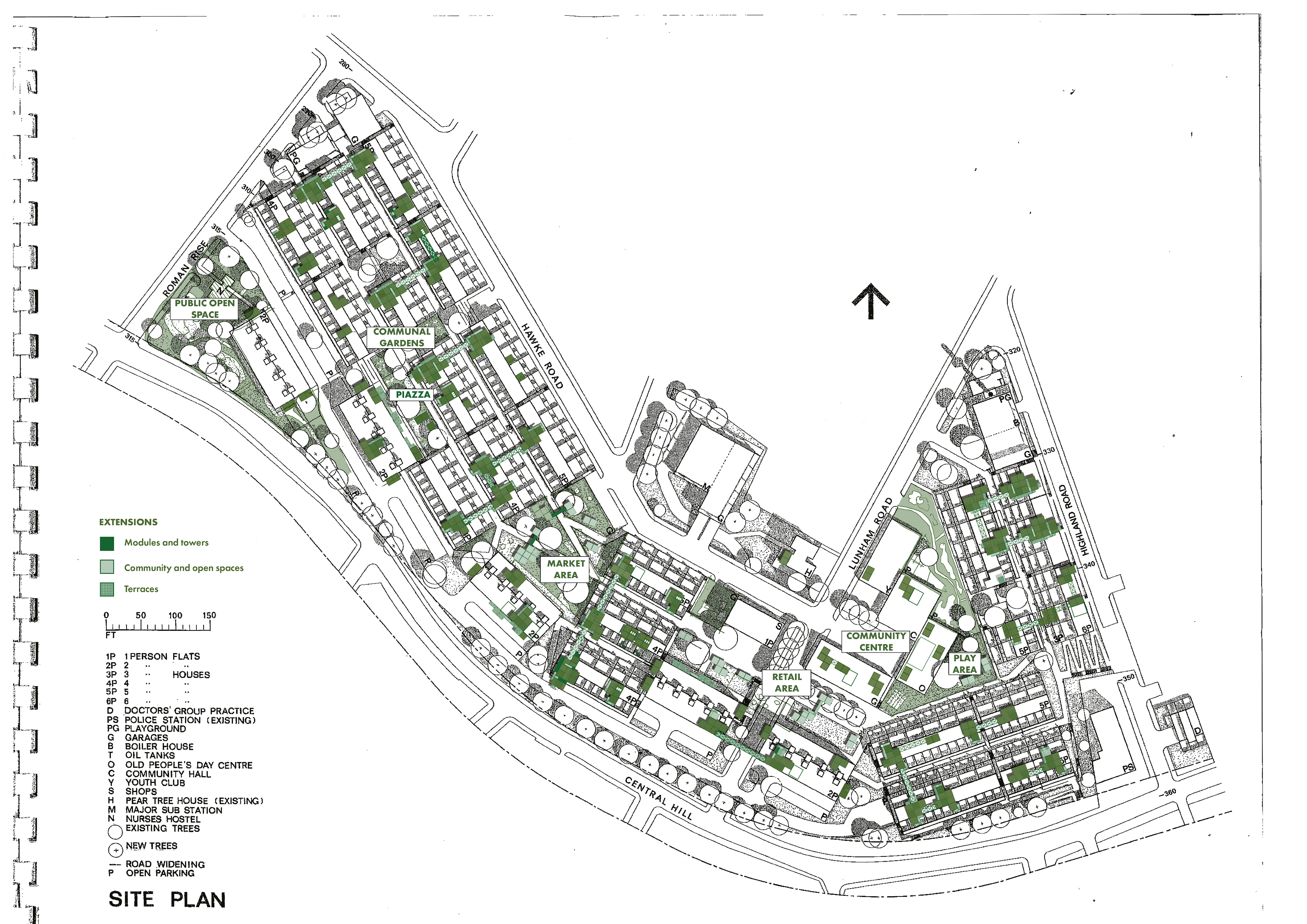
As the 20th century represented an ambition to respond to the existing housing crisis, Central Hill Estate offers the opportunity to research the social and architectural ideologies that came with this period before being lost. The intervention will explore and critique the modernist blocks in the context of the hyper-gentrification of London, the high cost of living, the environment and the social inequalities. With Rosemary Stjernstedt’s vision of creating a bold brutalist intervention driven by a sense of community, the proposal will raise awareness of the loss of modernist authenticity.
Central Hill is a social housing estate in London, built between 1966-74. It was designed by Rosemary Stjernstedt, providing over 450 homes with gardens, play areas, large terraces, and open green spaces. The modernist estate was designed to focus on the needs of residents and the community. For the past ten years, the council has been planning on demolishing the estate as part of the regeneration plan, proposing a new private residential development. Currently, the residents are fighting to save their homes against eviction and forced regeneration. The project aims to propose a more sustainable alternative to the demolition of the estate while addressing the needs of the existing community. The design will create the next typology of inhabitation, on the time-line of living by proposing a framework for spatial organisation strategies that challenge the modernist domestic spaces. The design will be located within the existing grid of the estate, embracing Rosemary’s legacy along with the current domestic needs. The intervention will be defined by the concept of collective modular living, following the trends of co-habitation and micro-living. The framework proposes typical modules that will connect and expand into living towers. Through the modularity and adaptability of the structures, the scheme will provide a flexible environment where modules can be removed and repurposed around the site, creating temporary or permanent homes, social spaces or shared facilities. While the existing homes are refurbished, the new modules come along to create a patchwork of domesticity. Introducing the complex nature of a living cooperative, the newly created structures can respond to the spatial requirements of each individual while maintaining the existing strong community.