-

4 model centers for people with Down syndrome
-
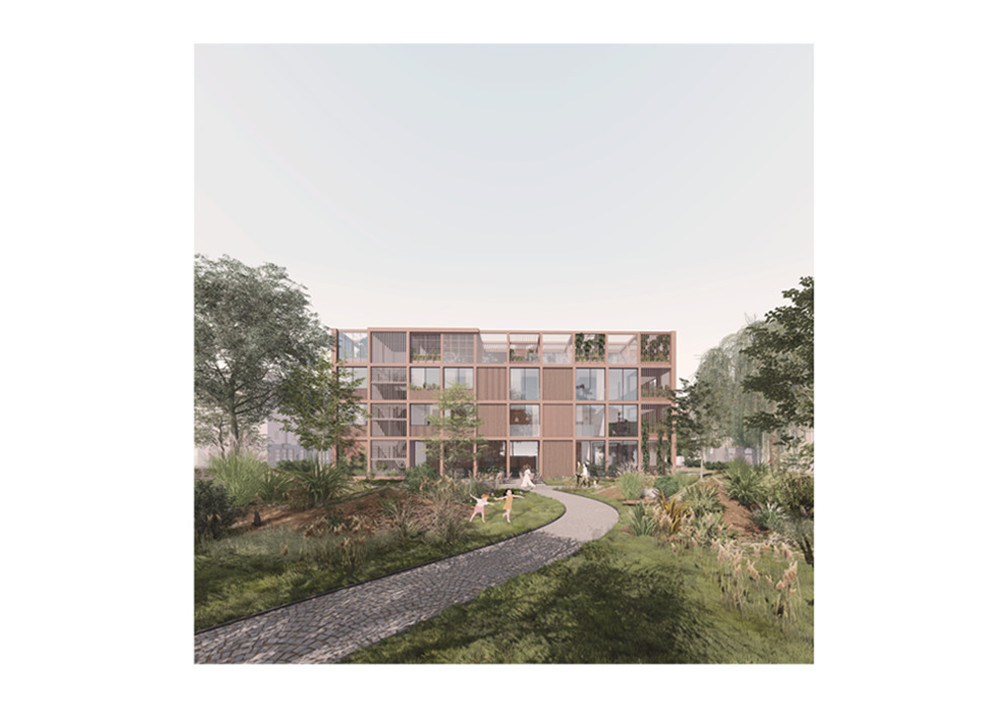
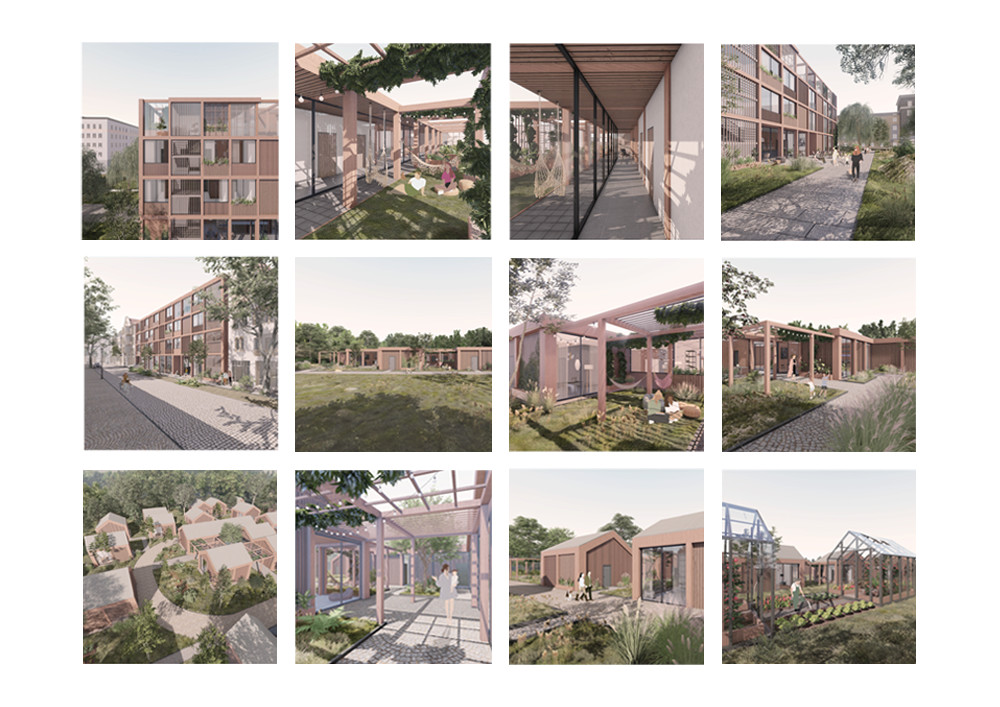
Visualization of the Punctuator center
-
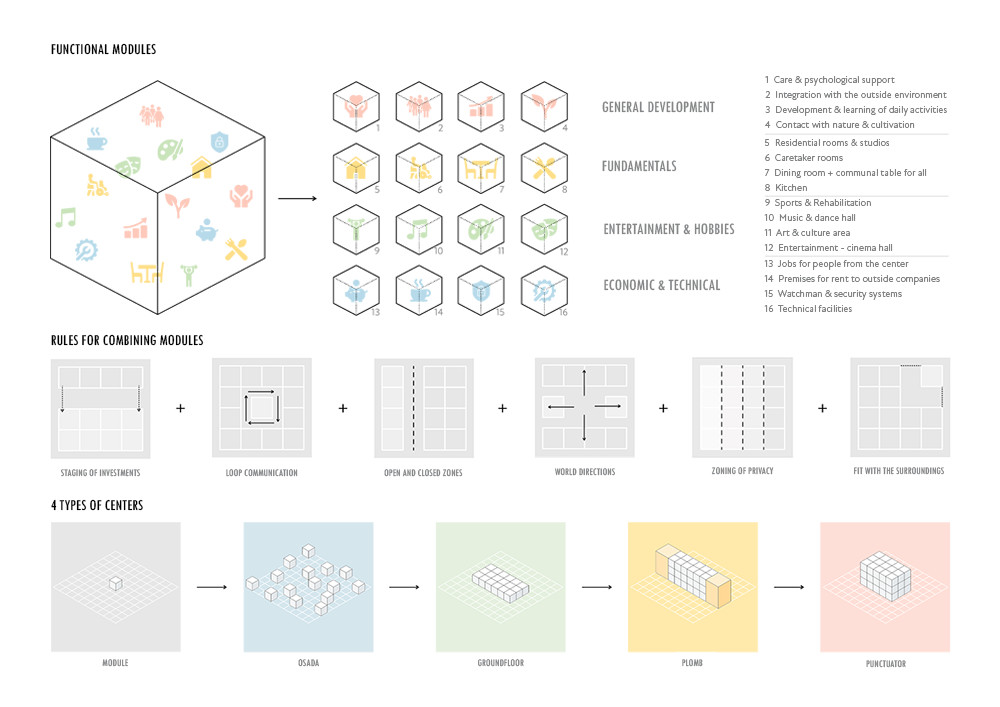
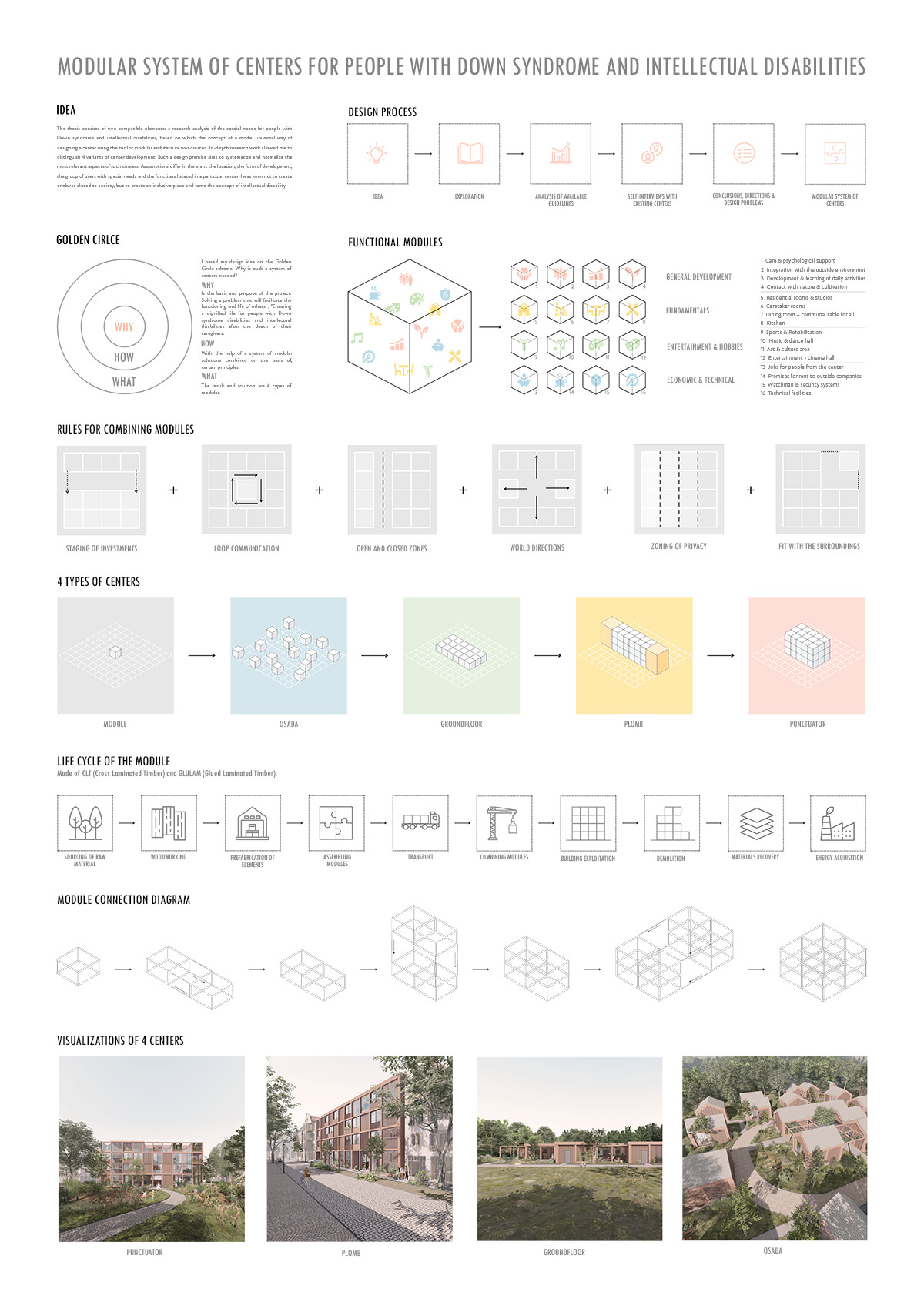
Functions and rules for combining modules
-
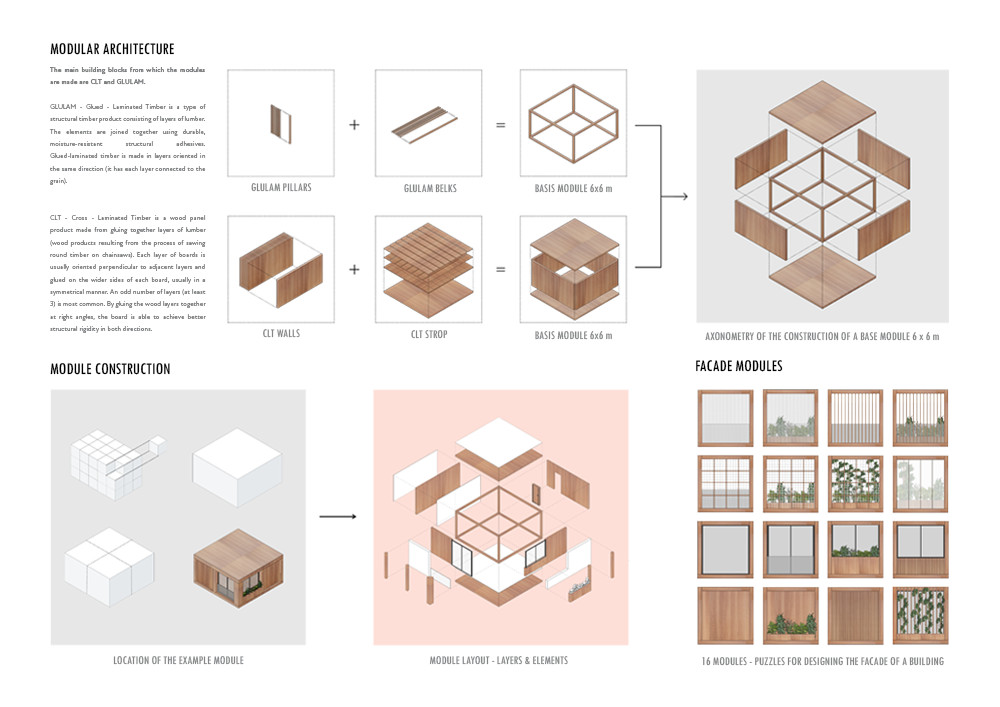
Modular architecture - CLT & GLULAM material
-
Characteristic features & staging of investments
-
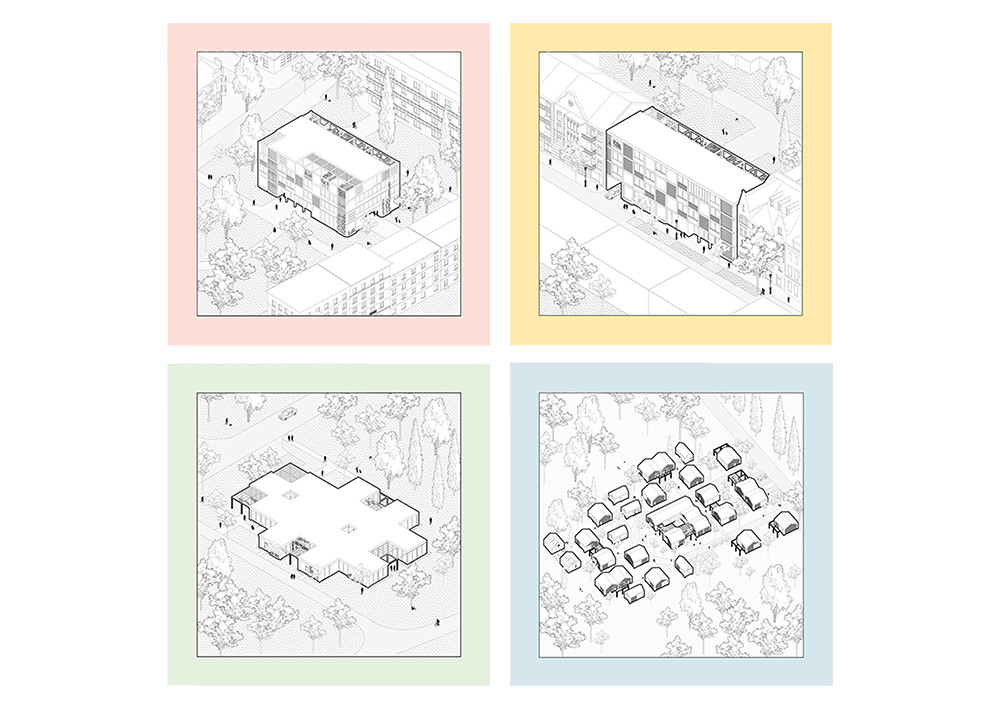
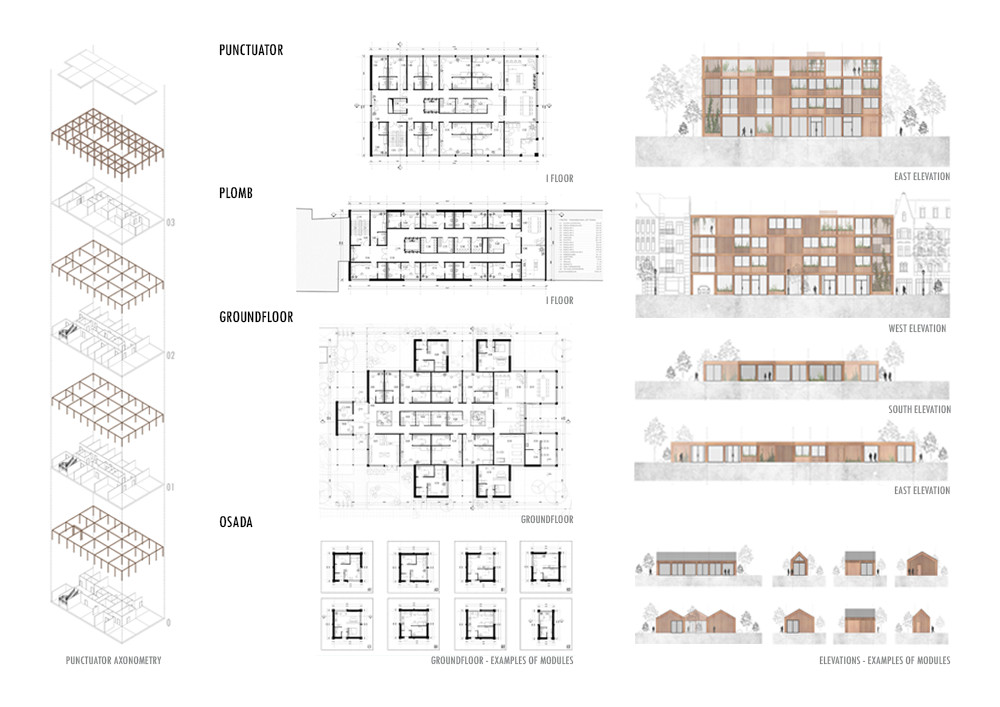
Axonometry & sample plans and elevations 4 centers
-
Visualizations of 4 centers
-
Panel
-
Modular system of centers for people with Down syndrome and intellectual disabilities
Magdalena Czopka. Gdansk, Poland
-
Name of work in English
Modular system of centers for people with Down syndrome and intellectual disabilities
-
Name of work in original language
What fate awaits sick people after the death of their caregivers? Who will provide them with an adequate livelihood?
Prize year
Young Talent 2023
-
Work Location
Gdansk, Poland
-
Author/s
Magdalena Czopka
-
School
Faculty of Architecture - Gdańsk University of Technology.
Gdansk, Poland
Young Talent 2023 YT Nominees

Modular system of centers for people with Down syndrome and intellectual disabilities
What fate awaits sick people after the death of their caregivers? Who will provide them with an adequate livelihood?
Program
Social welfare
-
Labels
Community
The subject of the thesis consists of two compatible elements: a research analysis of spatial needs for people with Down syndrome and intellectual disabilities, on the basis of which the concept of a model universal way of designing a center using the tool of modular architecture is created.
What fate awaits sick people after the death of their caregivers? Who will provide them with an adequate livelihood? This is not about the bare minimum of existence, but care at a sufficiently high level, taking care of multifaceted development. The theme of disability has long been present in architectural and urban design, but centers of this type still do not have a standardized design system, their number is insufficient, and the quality of public facilities has much to be desired. They are most often built on the initiative of parents or foundations, the budget is insufficient, and there are far more willing residents than available places. Few disabilities are as fraught with myths as Down syndrome. In order to expand my knowledge on the subject, I mainly decided to use the scientific method of diagnostic survey. The basis for the design guidelines were 7 interviews with existing institutions supporting people with intellectual disabilities. The solution to many of the problems that I was able to isolate after the interviews was to create a system for designing such centers, which allows minimizing the money and time investment of their implementation, resulting in an increase in the number of facilities. I created the system using a tool such as modular architecture, combining individual functions like building blocks assembling into a whole. But how to check if a system works in reality, and how to prove its plasticity and flexibility? So I identified 4 types of centers to translate the design idea into architecture. The basic principle. I realize that the subject is very complex on many levels, but the goal of my work is to show the possibilities that architecture has, which can also be a tool to help others.