-

MET Tirana Night View from the square
-
Top View
-
View of the Caved architecture
-
MET Tirana View from the City
-
MET Tirana in the Urban Landscape
-
MET Tirana Facade Details
-
Design sketch
-
Site Plan
-
Urban context polarities
-
Enviromental Strategies
MET Tirana Building
Mario Cucinella Architects. Tiranë, Albania
-
Name of work in English
MET Tirana Building
-
Name of work in original language
MET Tirana
Prize year
EUmies Awards 2026
-
Work Location
Tiranë, Albania
-
Studio
Mario Cucinella Architects
EUmies Awards 2026 Nominees


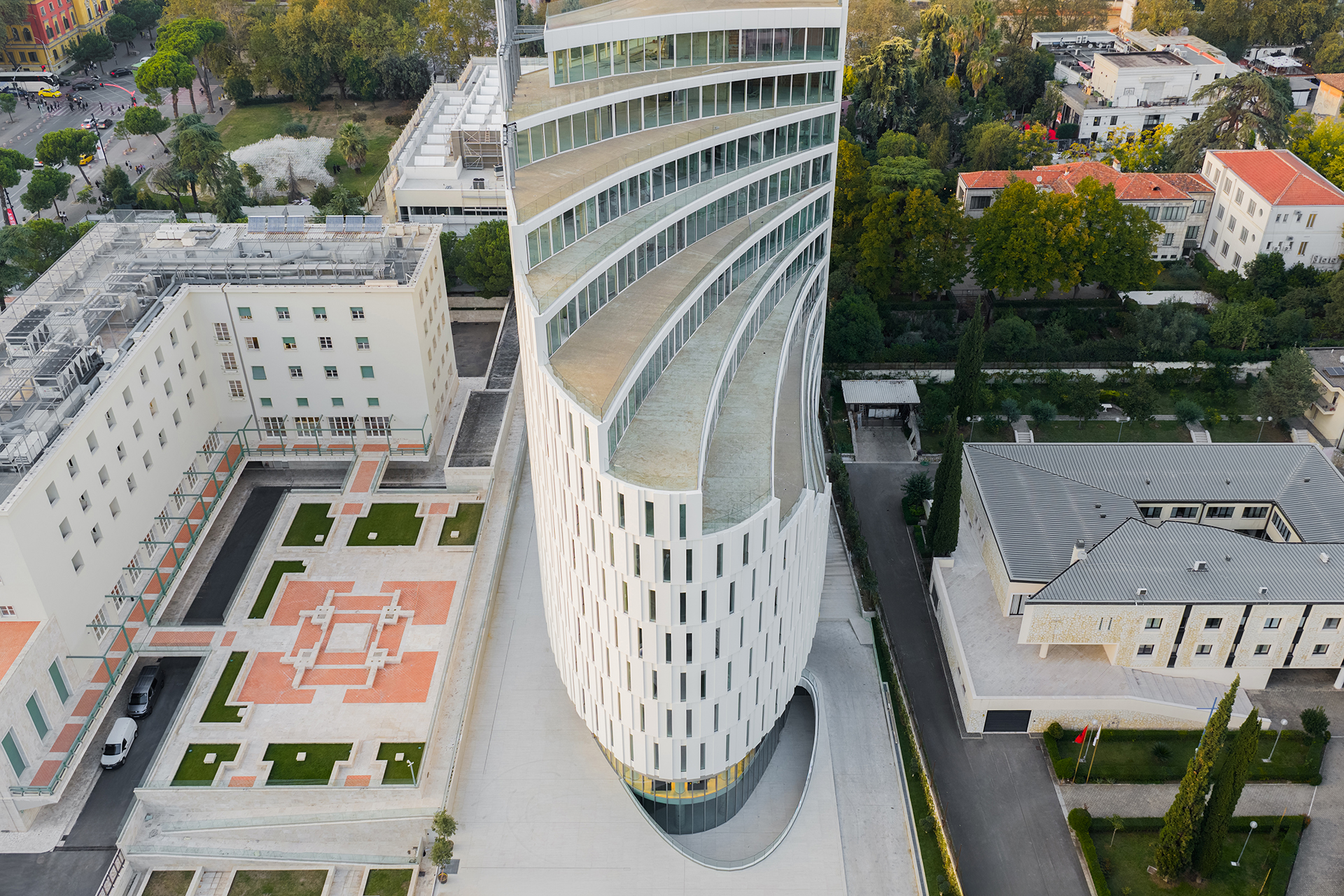




The MET Tirana Building is a new residential and office complex along Boulevardi Zhan D’ark, near the Pyramid of Tirana. Conceived as a carved architecture, it stands as an expressive and monumental landmark integrating nature, light, and urban regeneration into the city’s core.
Collaborators
Collaborator (office): Michele Olivieri - Mario Cucinella Architects; Collaborator (office): Tommaso Bettini - Mario Cucinella Architects; Collaborator (office): Elena Giugni - Mario Cucinella Architects; Collaborator (office): Eurind Caka - Mario Cucinella Architects; Collaborator (office): Paolo Greco - Mario Cucinella Architects; Collaborator (office): Marco Dell'Agli - Mario Cucinella Architects; Collaborator (office): Angelo Ungarelli - Mario Cucinella Architects; Collaborator (office): Michele Roveri - Mario Cucinella Architects; Collaborator (office): Kseniya Shkroban - Mario Cucinella Architects; Collaborator (office): Laura Lamendola - Mario Cucinella Architects; Collaborator (office): Francesco Visco - Mario Cucinella Architects; Collaborator (office): Giovanni Sanna - Mario Cucinella Architects; Collaborator (office): Alberto Menozzi - Mario Cucinella Architects; Collaborator (office): Marta Bordi - Mario Cucinella Architects; Collaborator (office): Francesca Fochi - Mario Cucinella Architects; Collaborator (office): Marta Torsello - Mario Cucinella Architects; Collaborator (office): Luca Vernocchi - Mario Cucinella Architects; Collaborator (office): Lucrezia Rendace - Mario Cucinella Architects; Collaborator (office): Alessia Monacelli - Mario Cucinella Architects; Collaborator (office): Andrea Rossi - Mario Cucinella Architects; Collaborator (office): Elena Biason - Mario Cucinella Architects; Landscape: LAND Milano; Structure: Erjon Petriti; Building physics: ArchiMED, FISHTA electric; Photo: Leonit Ibrahimi
Program
Mixed use - Commercial & Offices
-
Labels
Compact · Collective housing · Office
Site area
3800 m²
-
Client
MET Invest
Total gross floor
17000 m²
Located in one of Tirana’s most central areas, the MET Building combines residential and office functions within an elliptical volume shaped by urban constraints. Its sculpted terraces, alternating glass and opaque façades, and extensive greenery (currently under construction) create a light, elegant presence. The project redefines its surroundings through an interplay of transparency, materiality, and public space, reconnecting the urban fabric along Boulevardi Zhan D’ark with the city center. The MET Tirana is an extraordinarily expressive building, characterised by a certain degree of monumentality, as required by the changing context.
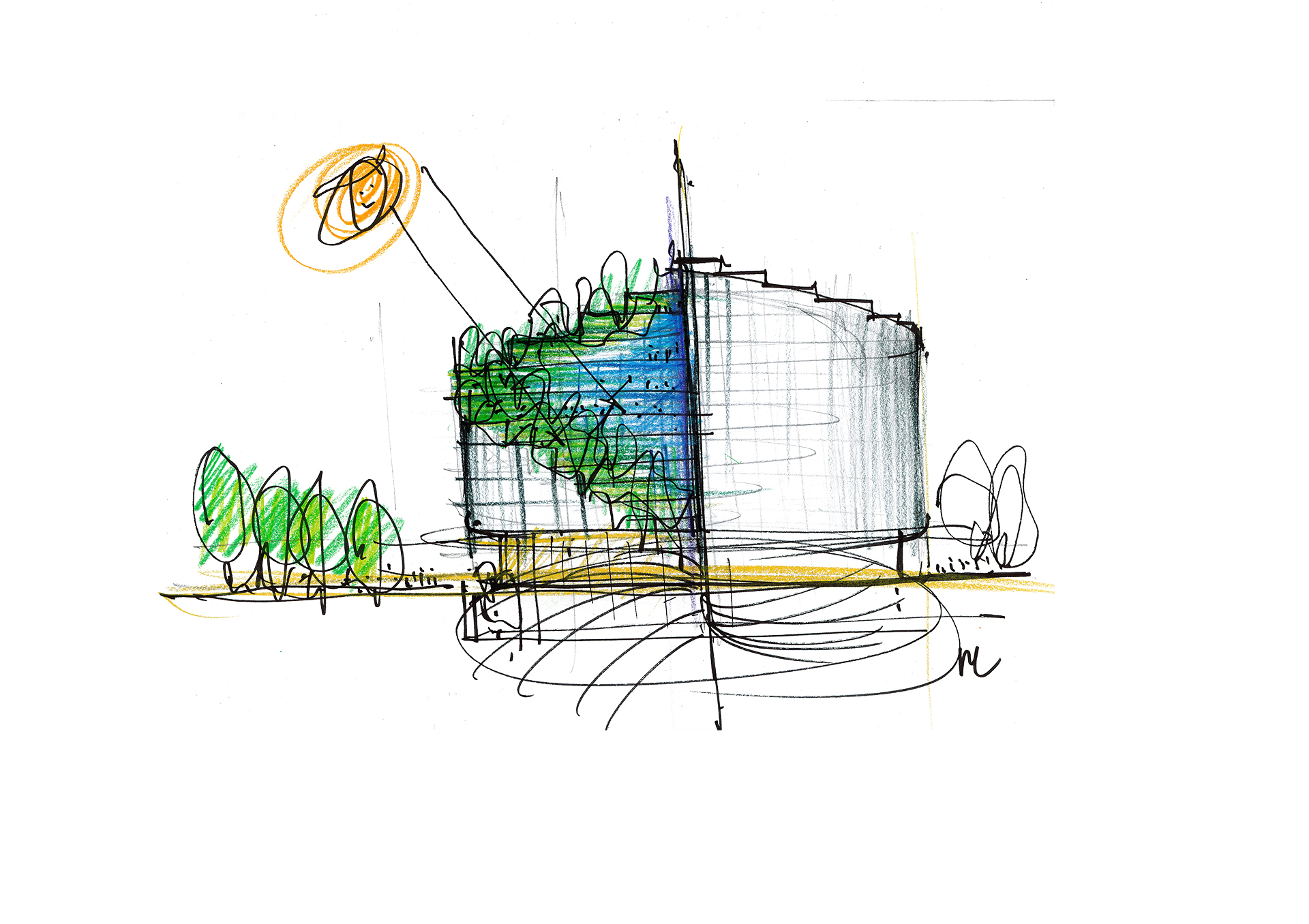
The project transforms strict urban regulations into design potential. Rather than resisting limits, the architects carved the volume to generate spiraling terraces that dissolve the mass and introduce permeability and greenery. This “excavated” architecture provides generous outdoor spaces, daylight, and ventilation while echoing Tirana’s landscape and the visual rhythm of Berat’s “city of a thousand windows.” The green terraces (now under construction) will host adaptive vegetation and create a living interface between architecture and nature. Public spaces enhance pedestrian flow between major city axes, while residential and office floors ensure comfort through passive strategies, natural light, and cross-ventilation. The building’s monumental yet dynamic form expresses Tirana’s urban evolution, establishing a dialogue between density, openness, and bioclimatic design.
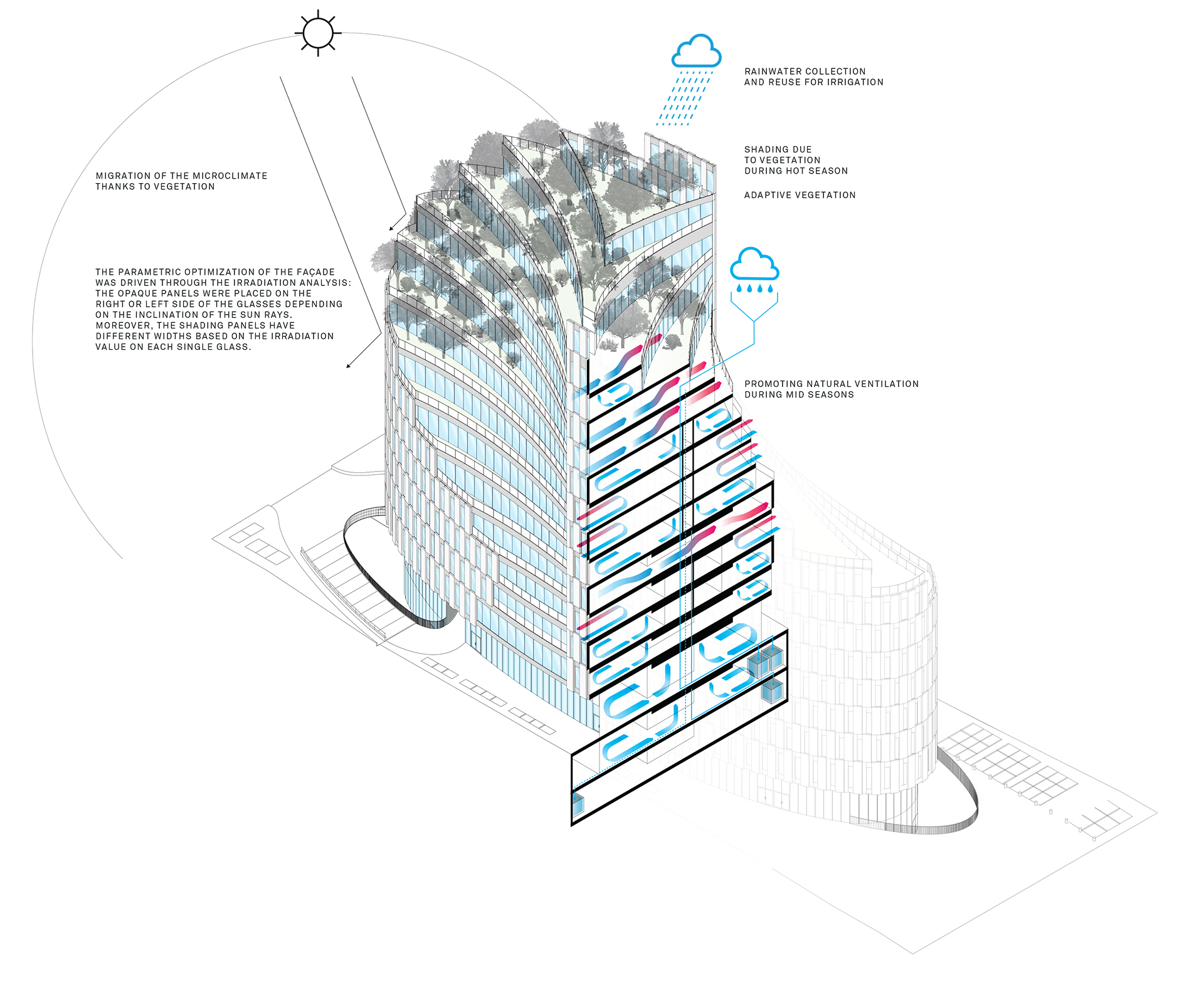
The MET Building employs a mixed reinforced concrete structure combined with a parametric façade system optimizing solar control. Glazed surfaces vary in density according to orientation, reducing annual solar gain by about 30%. Deciduous planting integrated into the terraces (currently being implemented ) will provide natural shading in summer and passive heating in winter. Rainwater is collected and reused for irrigation. Interiors follow a “passive zone” logic, maximizing daylight and cross-ventilation for both offices and residences, cutting energy demand by up to 50% compared to conventional buildings. The rooftop and terraces host adaptable green systems in progress, forming continuous vertical vegetation. Sustainable materials, efficient mechanical systems, and easy maintenance ensure long-term environmental and economic performance.