-

Project Visualization
-
Conceptual Illustration
-
Architectural Cognitive Behavioral Therapy Model
-
Site Studies
-
Elevations
-
Snapshot through Connecting Playground
-
Floorplan Governing Principles
-
Project Summary Panel
-
Mental Wellness Park, Nasr City
Maram Zeitoun. Cairo, Egypt
-
Name of work in English
Mental Wellness Park, Nasr City
-
Name of work in original language
From Literature to Architecture: The House of the Spirits
Prize year
Young Talent 2023
-
Work Location
Cairo, Egypt
-
Author/s
Maram Zeitoun
-
School
School of Sciences and Engineering - The American University in Cairo.
Cairo, Egypt
Young Talent 2023 YT Open Nominees

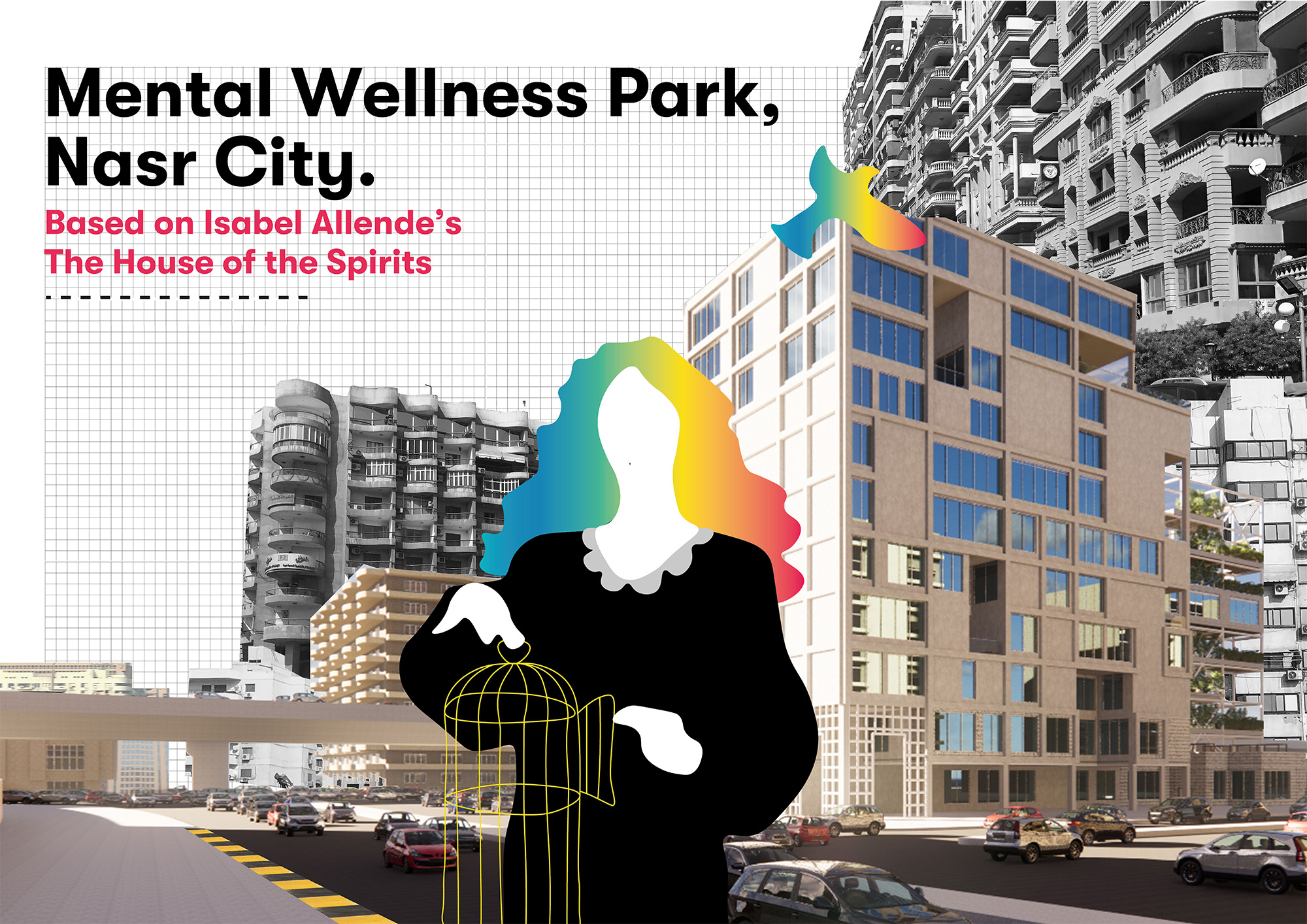


Mental Wellness Park, Nasr City
From Literature to Architecture: The House of the Spirits
Program
Mixed use - Cultural & Social
-
Labels
Compact · Architecture · Health Centre · Specialized Centre · Community
Inspired by Isabel Allende’s “The House of the Spirits,” this project applies cognitive behavioral therapy architecturally, using magical realism as a language to create a mental wellness oasis within an urban Egyptian context. It includes therapy and productivity components, connected via an indoor playground, and an outdoor public platform.
This project draws inspiration from Isabel Allende’s novel, The House of the Spirits, and uses the literary trope of magical realism to inform the architectural language of a mental wellness space. The aim is to counter the stigma surrounding mental health in Egypt by creating a visible and accessible space for therapy and vocational training. The project is located in Nasr City, a densely populated area with a large number of potential clients. The building is designed to be an oasis of mental wellness in the midst of a congested urban environment and comprises two main components: a therapy component and a productivity component. The therapy component consists of zones for counseling therapy and mindfulness therapy, connected by a green staggered atrium that opens up into an indoor garden. The productivity component consists of classes and workshops for vocational training, with attached retail outlets that open up to the public zone. The building envelope is overlaid by a public park and features green platforms that reinforce the idea of an oasis within the city. The architectural language of the building is informed by the principles of cognitive behavioral therapy (CBT) and is designed to address the negative thought patterns associated with different mental disorders. For example, mood disorders are addressed through varying levels of environmental and social exposure, while personality disorders are addressed through spaces that encourage social interaction. Psychotic disorders are addressed through spaces that allow for reduced stimulation and temporary isolation, and anxiety disorders are addressed through transparency and uninterrupted visibility. Overall, this project aims to create a space that is visible, accessible, and normalizes the process of seeking mental health treatment. By drawing on the principles of CBT and using an architectural language informed by magical realism, the building provides a safe and supportive environment for individuals to address their mental health needs.