-

Landside Elevation
-
Airside Entrance
-
Airside Elevation
-
Staircase
-
Departures Passage
-
Limestone Detail
-
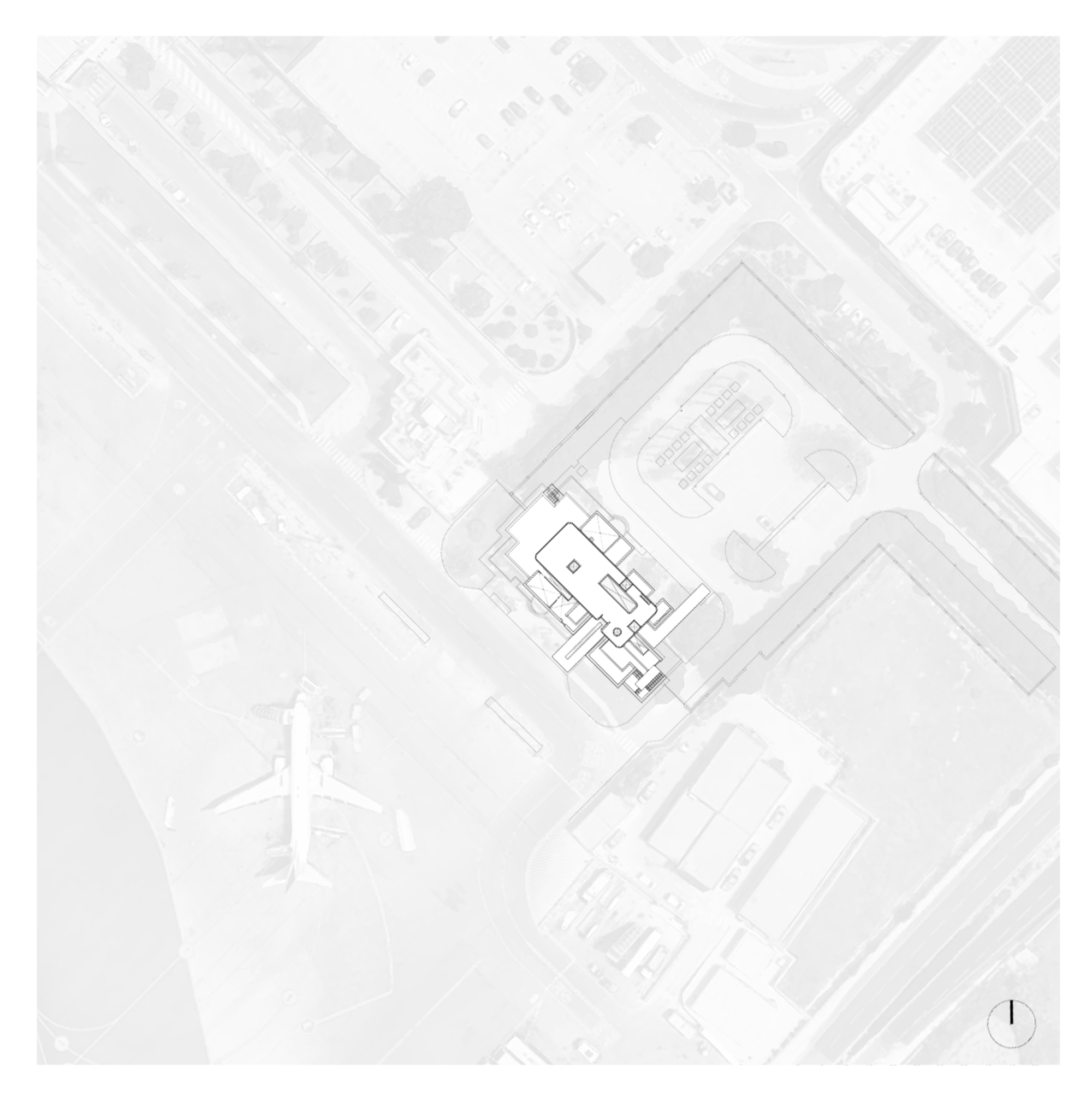
Site Plan
-
Ground Floor Schematic Plan
-
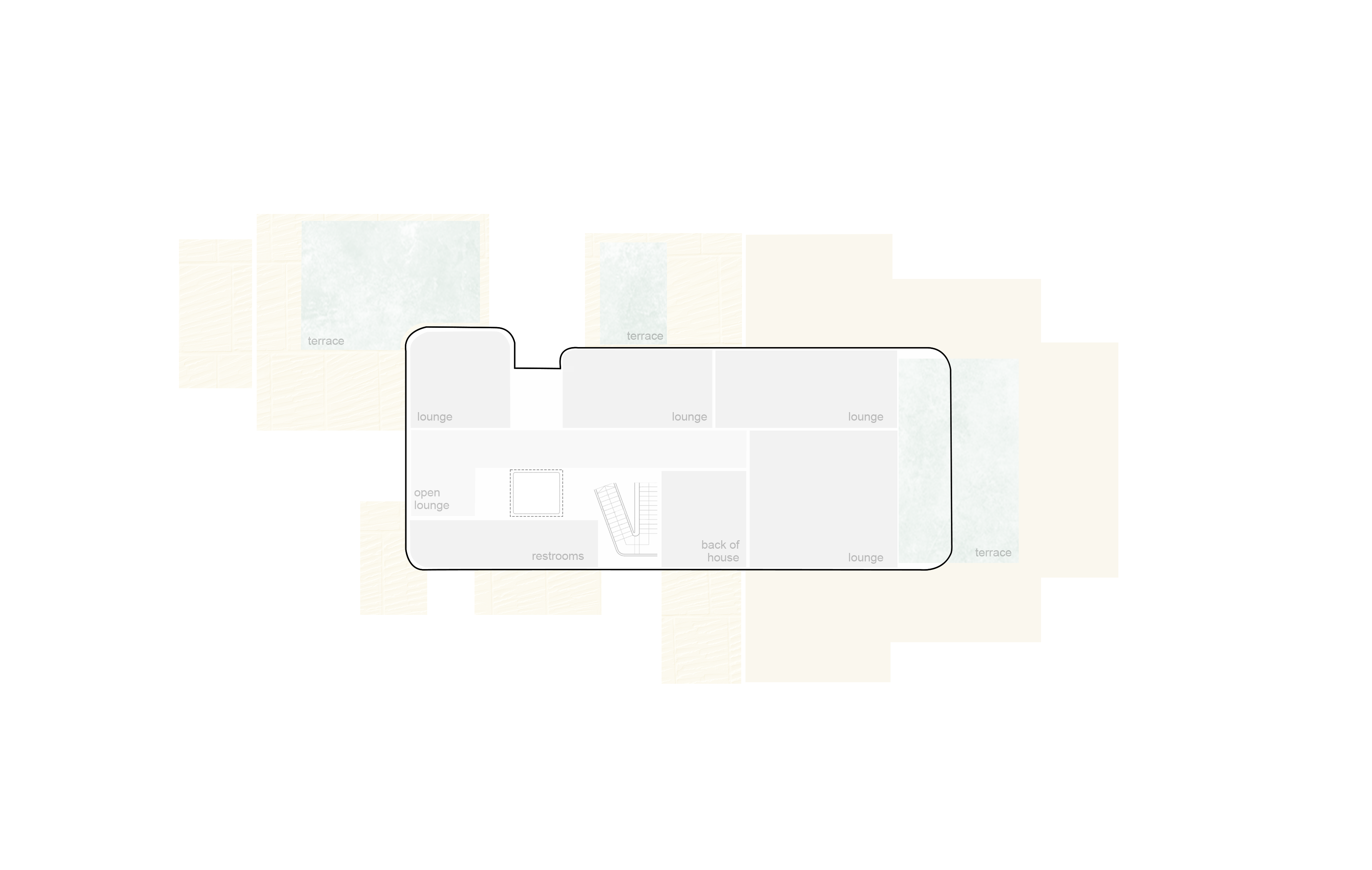
First Floor Schematic Plan
-
Elevations
-
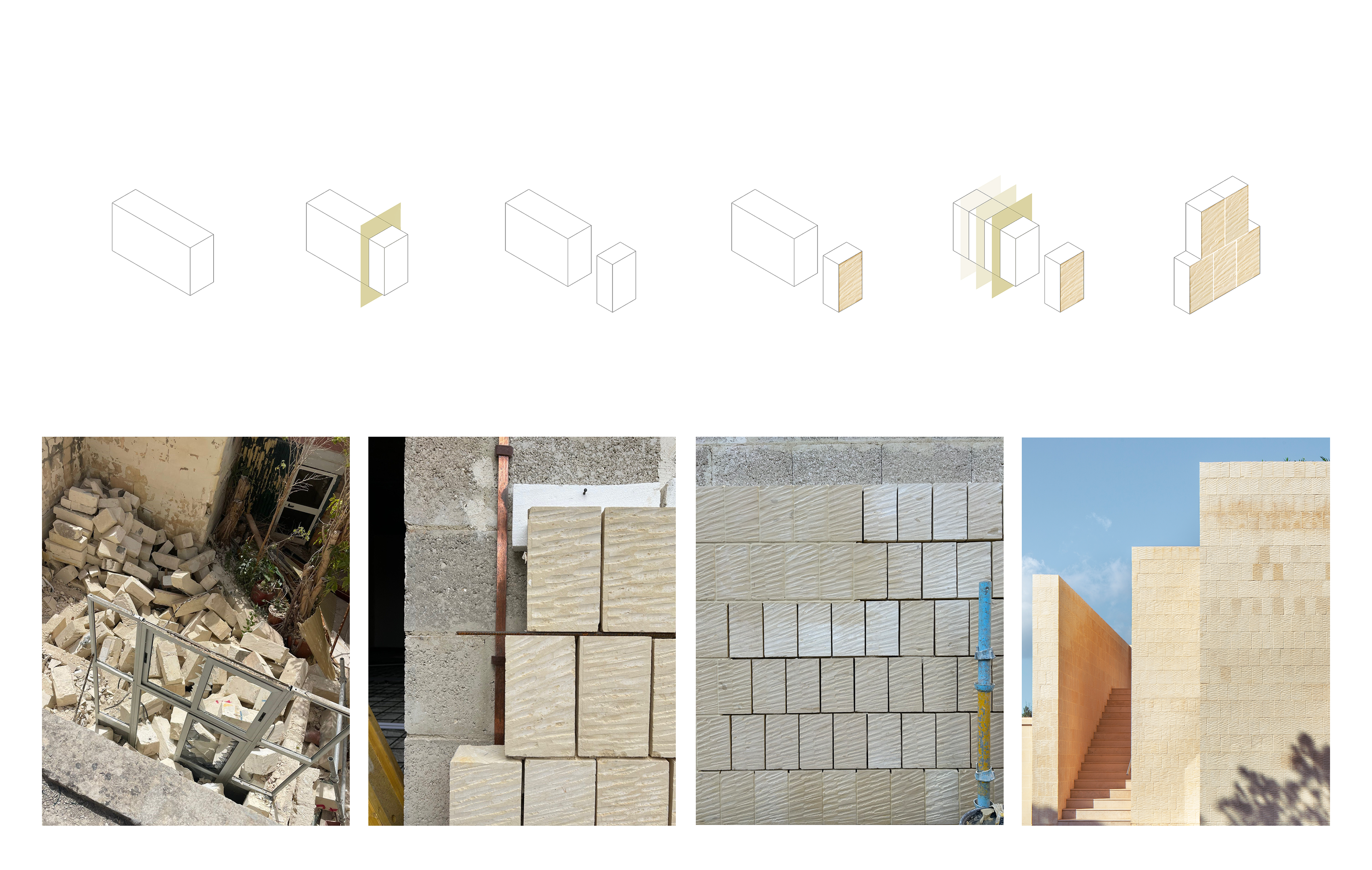
Salvaged Limestone Process
Malta International Airport VIP Terminal
Valentino Architects. Luqa, Malta
-
Name of work in English
Malta International Airport VIP Terminal
-
Name of work in original language
VIP Terminal, Ajruport Internazzjonali ta' Malta
Prize year
EUmies Awards 2026
-
Work Location
Luqa, Malta
-
Studio
Valentino Architects
EUmies Awards 2026 Nominees
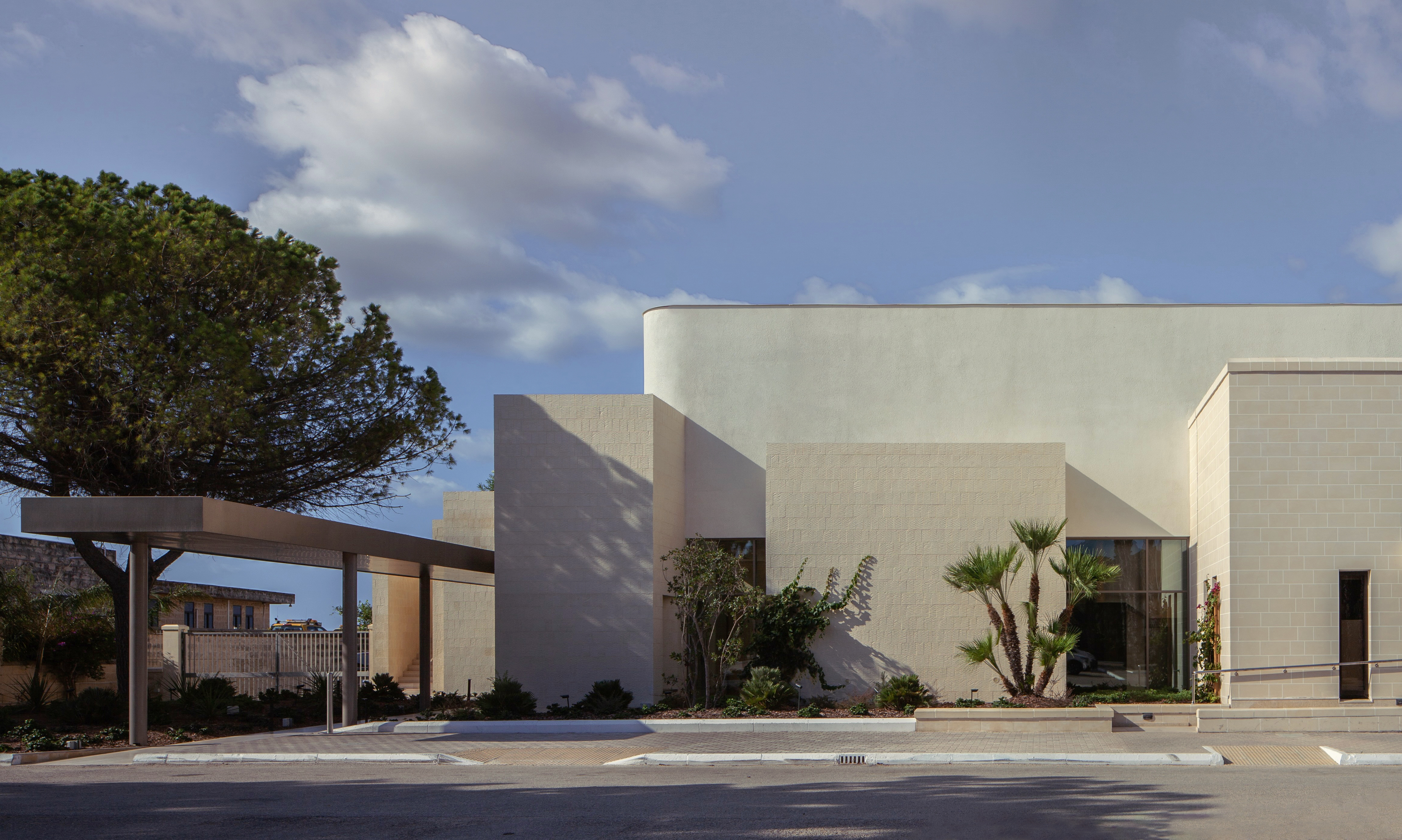




The VIP Terminal at Malta International Airport demonstrates renewal through reuse, repurposing salvaged stone from its predecessor. Hand-chiselled limestone, rough plaster and daylight anchor the building in Malta’s elemental identity, rejecting generic luxury to offer an architecture rooted in place.
Collaborators
Structure: iAS; Installations: MTS Consulting Ltd
Program
Infrastructure
-
Labels
Airport
Site area
1800 m²
-
Client
Malta International Airport
Total gross floor
1000 m²
Cost
4000 €/m²
Metres from the runway, the new VIP Terminal at Malta International Airport is conceived as a composed, efficient alternative to the main terminal. With dedicated access, concierge service, lounges, conference rooms, and terraces, it aims to deliver a discreet, personal journey. Limestone from the former terminal was salvaged, reworked, and hand-finished, merging sustainability with cultural continuity. Elemental materials - stone, plaster, and daylight - create calm, honest spaces that seek to express the island’s identity while complementing the retained east wing.
The previous VIP terminal operated as a detached building with two wings: the east for Commercially Important Persons (CIP) and the west for Ministerial and Diplomatic use. The project addressed two challenges: expansion due to rising CIP demand and maintaining operational and formalistic continuity with the retained west wing. The strategy combined efficiency with a strong sense of place, where partial deconstruction of the old terminal allowed its limestone to be salvaged, reworked, and transformed into a defining feature of the newly built wing. This reduced waste, avoided quarrying, and gave cultural resonance to the design. The arrival sequence was shaped through proportions, materials, and light, avoiding clichés while offering travellers an immediate connection to Malta. By privileging authenticity over imported luxury, the architecture aims to strengthen the airport’s position as a gateway to the island.
The structure combines recycled limestone masonry skin at ground level with a lighter plastered volume above, creating a durable yet refined form. Each salvaged stone block was sliced, hand-chiselled, and reused, demonstrating a sustainable model for material recovery. Thick stone walls provide thermal mass, while natural daylight floods the internal spaces reducing energy demand. A rooftop solar array supplies a significant portion of the terminal’s energy, lowering operational costs and environmental impact. Maintenance is simplified by the robust, low-finish materials: stone, plaster, and timber - that age gracefully and require minimal upkeep. This pragmatic yet expressive construction strategy looks to balance sustainability, cultural heritage, and long-term resilience, ensuring the terminal remains a functional and symbolic landmark for decades.