-

The building’s façade was stripped back and re-rendered in lime, using broken tiles as aggregate
-
Internal rammed earth walls, made from earth and limestone waste from a local quarry
-
Rice straw is used for thermal and acoustic roof and wall insulation
-
Material were sourced and processed within 70 km from the site
-
A lightweight timber structure, treated with an indigo oil mix from the region, creates a gallery
-
mezzanine level above offers study spaces and laboratories
-
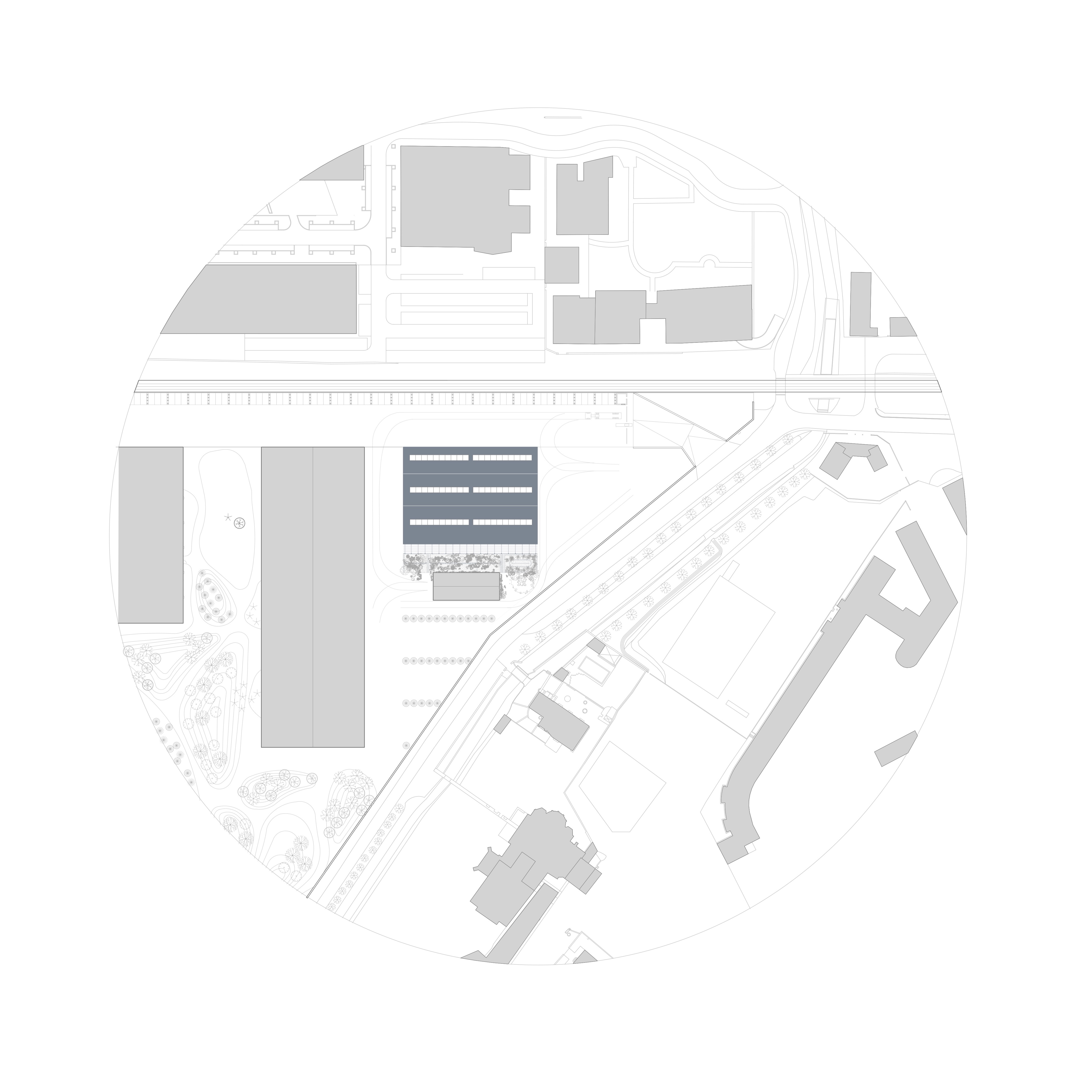
Site Plan
-
Section
-
Ground Floor Plan
-
Bioregional resource map
Lot 8, LUMA Arles - Renovation of Le Magasin Électrique
ASSEMBLE, Atelier Luma, BC architects & studies. Arles, France
-
Name of work in English
Lot 8, LUMA Arles - Renovation of Le Magasin Électrique
-
Name of work in original language
Lot 8, LUMA Arles (rénovation du le Magasin Électrique)
Prize year
EUmies Awards 2026
-
Work Location
Arles, France
-
Studio
ASSEMBLE, Atelier Luma, BC architects & studies
EUmies Awards 2026 Architecture finalists
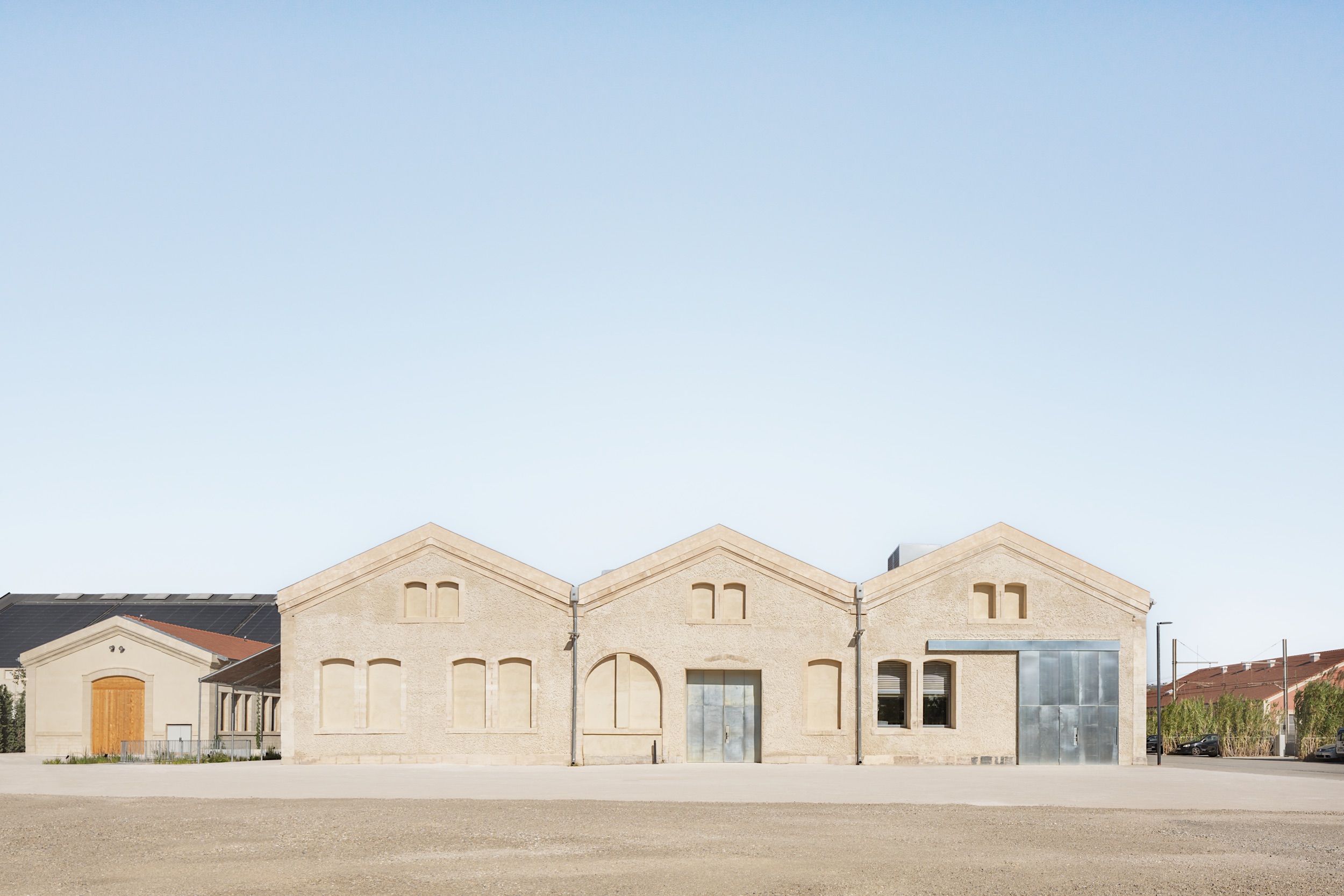




In 2019 the Luma Foundation commissioned Assemble and BC Architects to transform a 19th-Century train depot in Arles into Atelier LUMA, a design lab exemplifying bioregional design, using Camargue resources, regenerative materials and local knowledge for a sustainable, socially engaged architecture.
Collaborators
Collaborator (office): ODA (Local Architect); Environmental: SYNEFF Consult (Bioclimatic Concept); Structure: Betrec; Environmental: Betrec; Contractor: Atelier Kara; Contractor: La pierre au carréex; Contractor: Leemniscaat; Contractor: Menuiserie Correze; Contractor: Tanzi; Contractor: CVI; Contractor: Guintoli; Contractor: Novacier; Contractor: Calvo; Contractor: Fernandez & fils; Contractor: CKAT; Contractor: Le village; Contractor: Tonello; Contractor: Association Paille Porteuse Nebraska; Interior Elements: Atelier Blam; Interior Elements: Lukas Wegwerth; Interior Elements: Association Le Village; Interior Elements: Etablissement Brissaud; Interior Elements: Plâtre Vieujot; Interior Elements: Atech; Interior Elements: CSTB; Interior Elements: CTTM; Interior Elements: Ets Carré; Construction Site Company: Tanzi; Construction Site Company: Guintoli NGE; Construction Site Company: Atelier Kara; Construction Site Company: SCOP La Pierre au Carré; Construction Site Company: Brique Technique Concept; Construction Site Company: Rachid Mizrahi; Construction Site Company: NOVACIER; Construction Site Company: Menuiserie Corrèze; Construction Site Company: CKAT Aménagement; Construction Site Company: CVI; Construction Site Company: CLP; Construction Site Company: CALVO; Construction Site Company: SNEF; Construction Site Company: SARL Fernandez & Fils; Construction Site Company: Het Leemniscaat; Construction Site Company: Briseno; Construction Site Company: Tonello; Construction Site Company: Citynox; Construction Site Company: Apte; Construction Site Company: Associati; Building Labelling: Envirobat BDM; Building Labelling: Scop DOMENE; Building Labelling: Estenea; Building Labelling: Adret; Building Labelling: TERAO; Garden: Chris Posma SYNEFF Consult; Garden: COLDEP; Garden: TPF-I; Garden: Marie Marquet; Garden: Florent Valentin; Garden: Dominique Cardon; Garden: Véronique Mure; Garden: Genre; Garden: Agence PAYSAGE
Program
Industrial
-
Labels
Research
Site area
2700 m²
-
Client
The Luma Foundation
Total gross floor
2900 m²
The 19th Century train depot was converted into a research facility using materials from the Camargue such as sunflower, rice husk, algae and salt. The building is organised as a street, square, and a working yard, housing laboratories, workshops and a flexible event space. The construction retained and upgraded the stone walls and steel structure; and employed regional and bio-sourced materials including indigo-treated timber, earthen walls, and salt-cast fittings, developed with local subcontractors to integrate research, production, and educational engagement within the regional context.
The project addressed the challenges of converting a derelict 19th-century train depot into a design and research laboratory, maintaining regional material sourcing amid COVID-19 disruptions, and integrating local industries, bi-products, and craft practices while meeting performance standards for insulation, acoustics, and durability. Strategies included applying Atelier LUMA’s research on local industries and waste streams, engaging regional stakeholders, and conducting on-site residencies to test materials and methods including sunflower insulation, rice-husk acoustic panels, quarry dust, and salt finishes, evaluated for technical performance. The structural design was adapted to work with available sizes of timber, bio-based materials, stone dust, agricultural bi-products and waste cores were repurposed to align with local production systems, grounded in a long-term presence in the community and shaped by direct engagement with stakeholders.
The project builds on Atelier LUMA’s research into agricultural materials of the Camargue, sunflower stems and marrow, rice husks, algae and salt; sourced within a 70 km radius as part of a bioregional approach. Rice-straw bales insulate existing stone walls; sunflower stem and marrow provide acoustic insulation, sprayed with local clay or pressed into panels. Stone dust and waste cores from nearby quarries were reused in rammed earth, plasters and furnishings; timber was sealed with an indigo oil mix; broken roof tiles recast into terrazzo and lime render. Most of the existing stone and steel fabric was retained, with new timber and earthen insertions enabling multi-storey occupation while preserving openings. Over fifteen local contractors contributed, and two years of public and school workshops connected regional crafts to design education. The project promotes regenerative construction, decentralised supply chains and ongoing maintenance through local knowledge.