-

Main lobby. The wide wooden stairs in the middle form a gathering place in the heart of the building
-
View showing the campus by the lake. Lastu forms a central hub for the campus.
-
Lastu Education Building
-
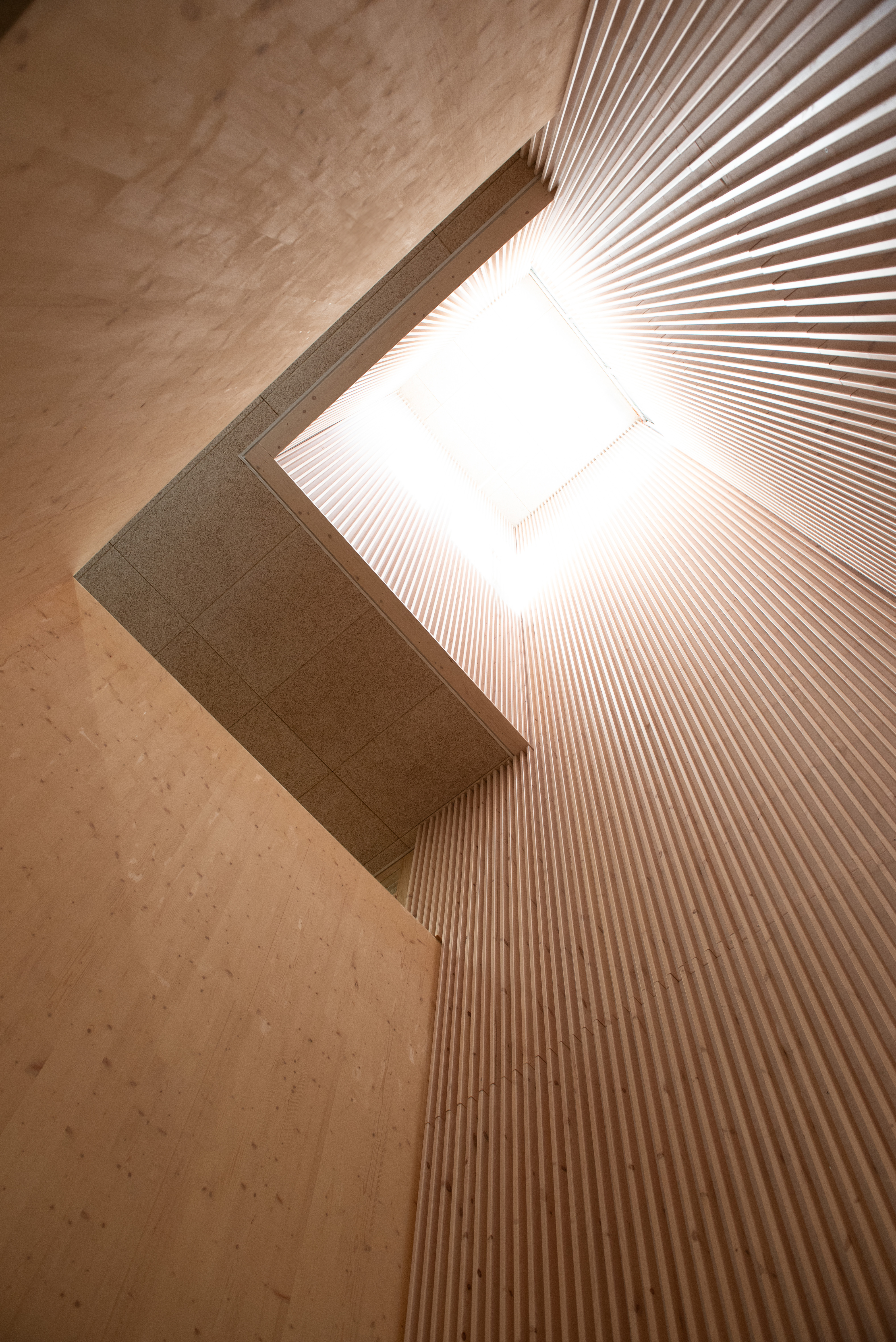
Skylights bring light into the core of the building forming cozy nooks under them for hanging out.
-
The class rooms can be opened up or divided into smaller spaces by easily movable walls.
-
The main space opens out to the surrounding forest landscape.
-
Lastu, site plan
-
Lastu, Floor plan 1st floor
-
Lastu, Floor plan 2nd floor
-
Lastu, section AA
-
Lastu, section BB
-
Lastu, axonometric drawing, highlighting sustainability
Lastu Education Building
OOPEAA Office for Peripheral Architecture. Järvenpää, Finland
-
Name of work in English
Lastu Education Building
-
Name of work in original language
Oppilaitosrakennus Lastu
Prize year
EUmies Awards 2026
-
Work Location
Järvenpää, Finland
-
Studio
OOPEAA Office for Peripheral Architecture
EUmies Awards 2026 Nominees
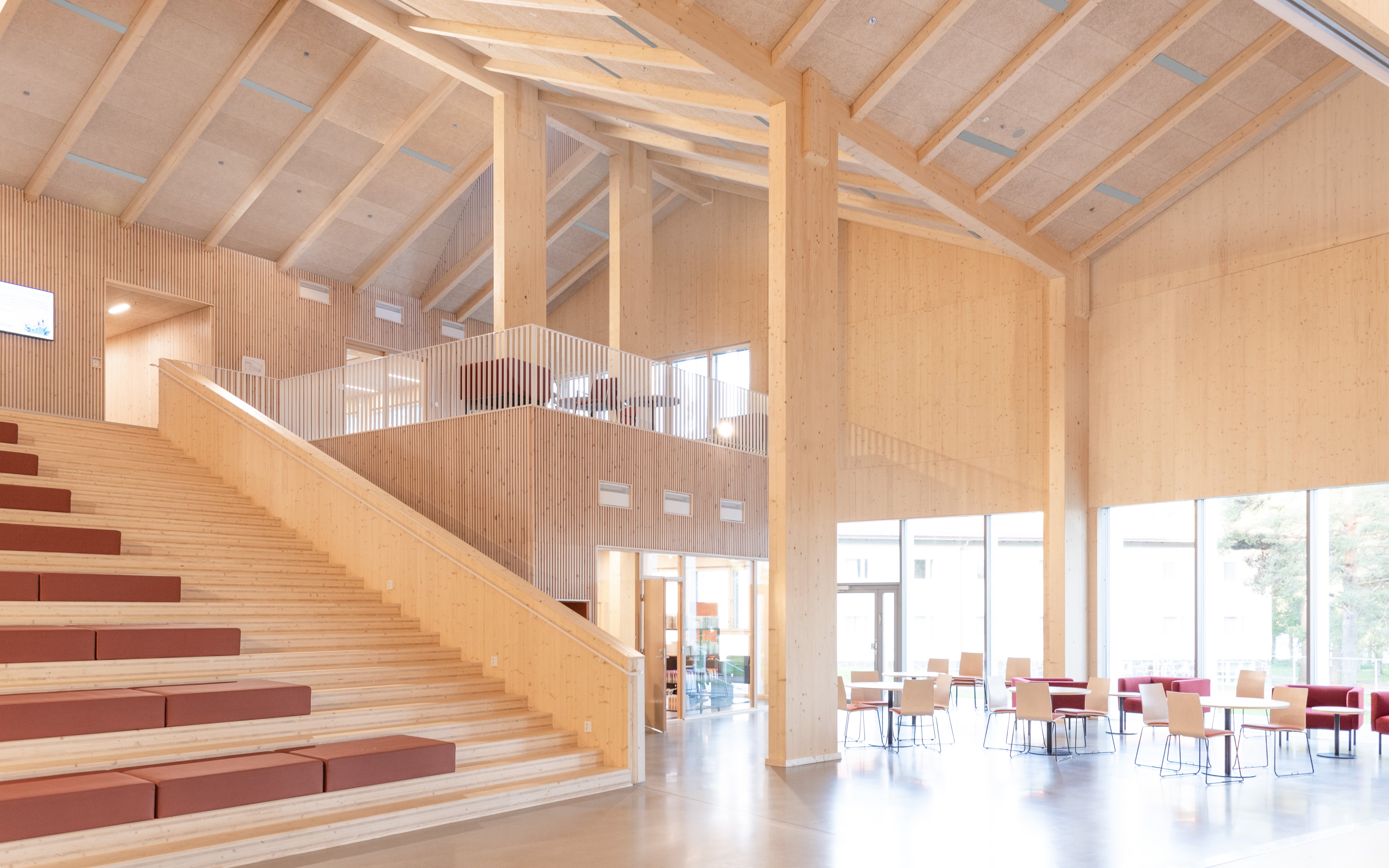




Lastu is a multifunctional education building with a massive timber structure on a forested campus by a lake. Complementing the existing buildings it forms a central hub for the college. Its flexibly adjustable spaces support contemporary teaching methods and provide services also for the community.
Collaborators
Construction management: Arkta Rakennuskultti Oy; Structure: Sweco Finland; Landscape: VSU Maisema-arkkitehdit
Program
Education
-
Labels
Professional School
Site area
22500 m²
-
Client
Kirkkopalvelut ry
Total gross floor
3002 m²
Cost
3900 €/m²
Inspired by the natural beauty of the site with a strong presence of pine trees, Lastu is an ecological building that resonates with the nature around it. Working harmoniously with the scale of the surrounding buildings, it brings a new layer of architecture to update the college campus originally formed in the 1940s. In addition to teaching spaces, Lastu contains a large multipurpose hall, seminar spaces, and a gym that serve the local community. The classrooms facilitate both on location and remote learning. There is also a series of well-equipped classrooms for the arts and technical work.
The goal was to make a place for the students and the local community where people can feel good. From the first steps of sketching, the design process was informed by an ongoing dialogue with the future users. Giving a feeling of warmth, wood creates a cozy and relaxed ambience with a good environment for learning. Reflecting the rich variety of activities, the relatively large volume is organized into several smaller blocks that together form one entity with a strong identity. A series of roof lanterns brings light into the core of the space and gives the building a sculptural character. A multipurpose hall with a high ceiling forms the heart of the building. It can be easily converted into a fully equipped performance stage with state-of-the art technology or divided into three smaller spaces with a simple system of heavy curtains. The teaching spaces are arranged around a wide wooden stair that functions as a gathering point and can also be used as seating for events.
Wood is the main building material. It helps the building to adapt to the seasonally varying climate. Absorbing changes in humidity, wood generates a pleasant indoor climate and thanks to its low thermal conductivity, it was possible to build external walls with wood without extra insulation. The roof is insulated with wood pulp. Monomateriality enables the reuse of materials and easier maintenance. Geothermal energy with a heat recovery system is used. Using CLT elements as the load bearing structure allowed for flexibility in the spatial organization and to keep the construction period short, minimize disturbance to the terrain, and preserve as many trees as possible. Providing natural shading and wind protection, the trees create a balanced microclimate and reduce the heat load. The wood paneling in the façade protects the wooden structure and helps distribute incoming sunlight. The northern light conditions were carefully considered in the orientation of the different functions.