-

General view of the well, a protective hedge, and the shade structure
-
View of the construction site
-
View of the construction site
-
View of the construction site
-
Water drawing at the end of the construction site
-
The repaired well
-
Site plan
-
Site plan & situation map
-
Selection of wells
-
Plan and elevation of the existing conditions / 1:200
-
Plan and elevation of the project / 1:200
-
Construction details
Land of Wells
Collective Bled el Abar. Kébili Governorate, Tunisia
-
Name of work in English
Land of Wells
-
Name of work in original language
بلاد الآبار
-
Work Location
Kébili Governorate, Tunisia
-
Studio
Collective Bled el Abar
Nominees
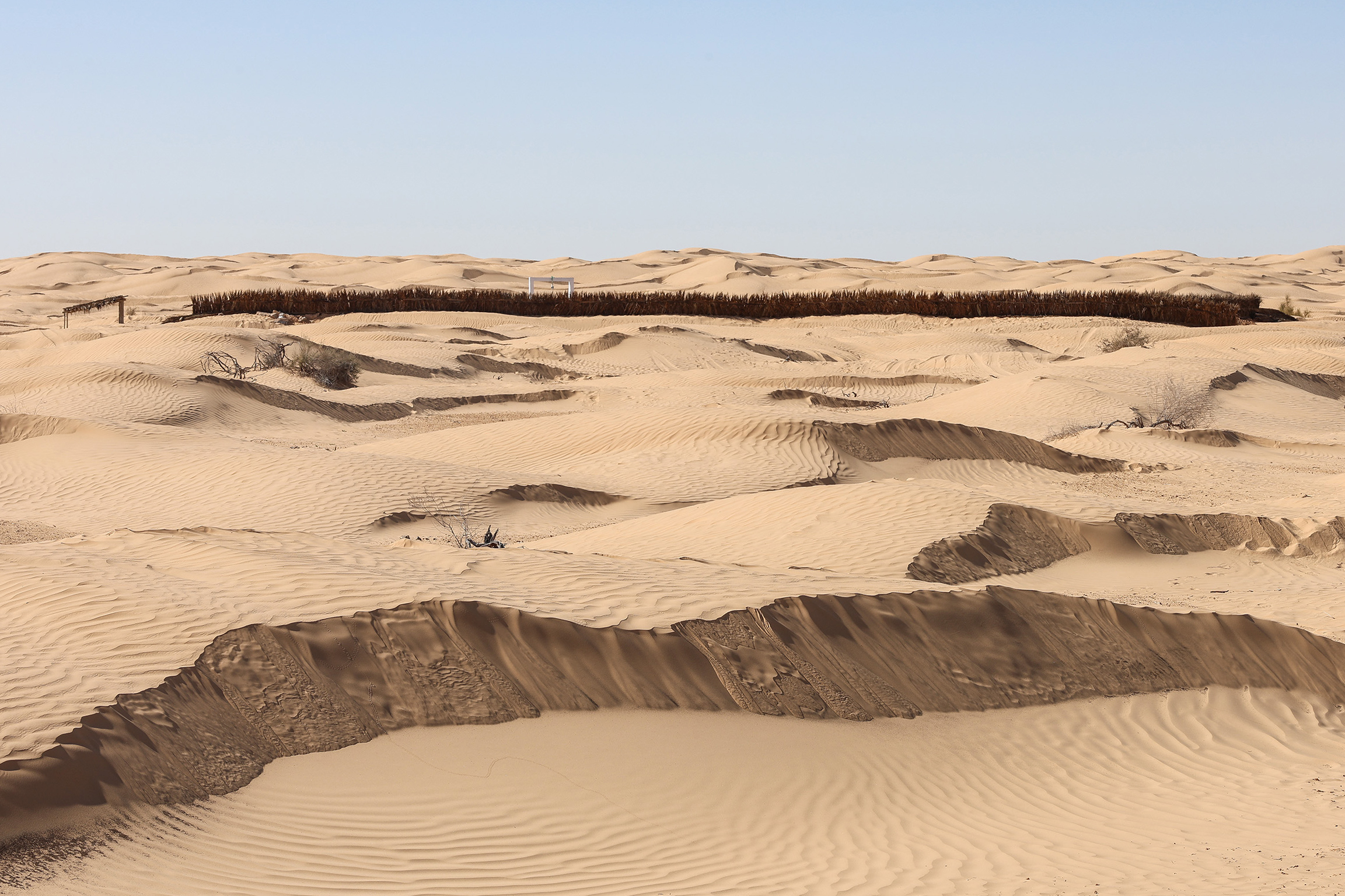

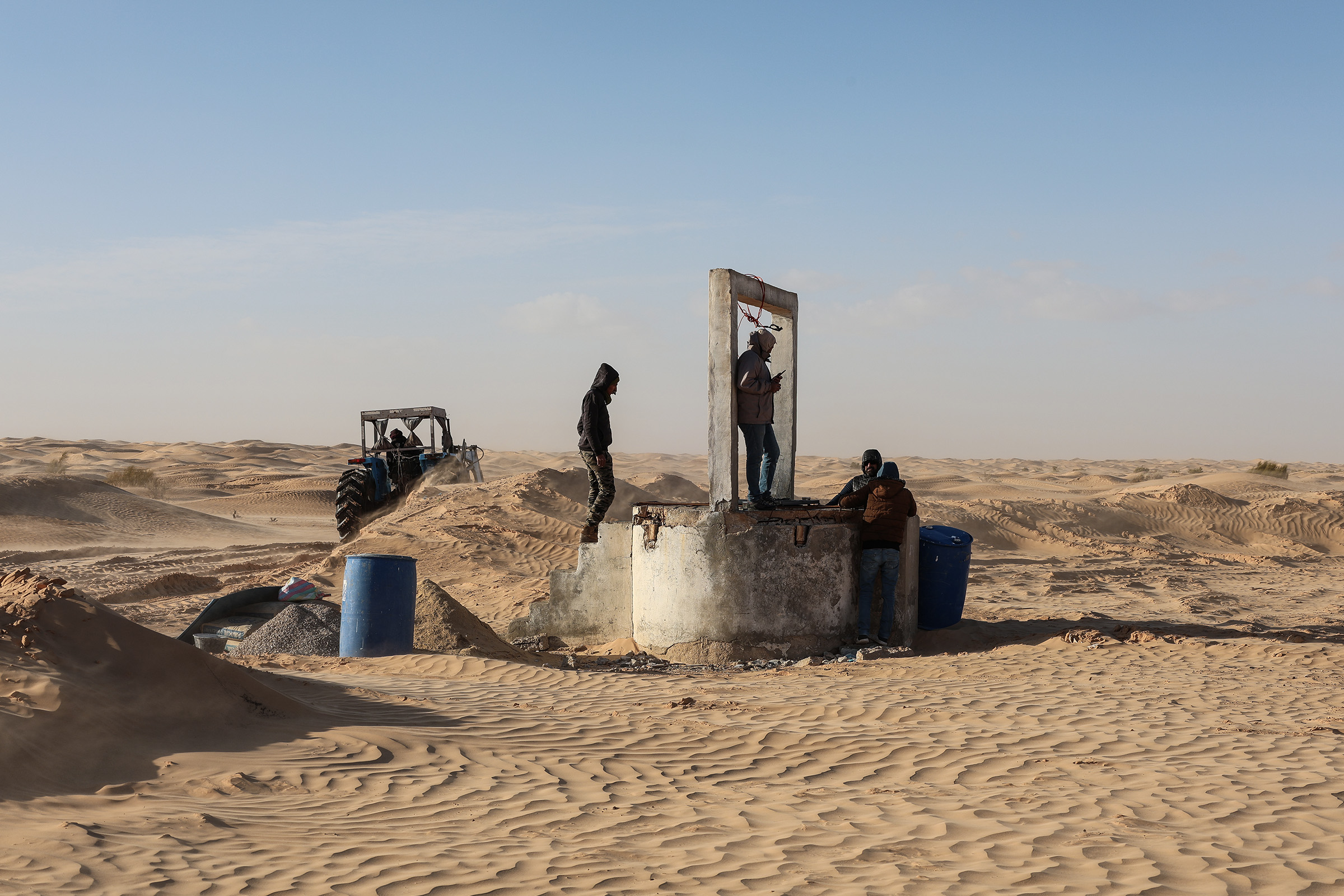
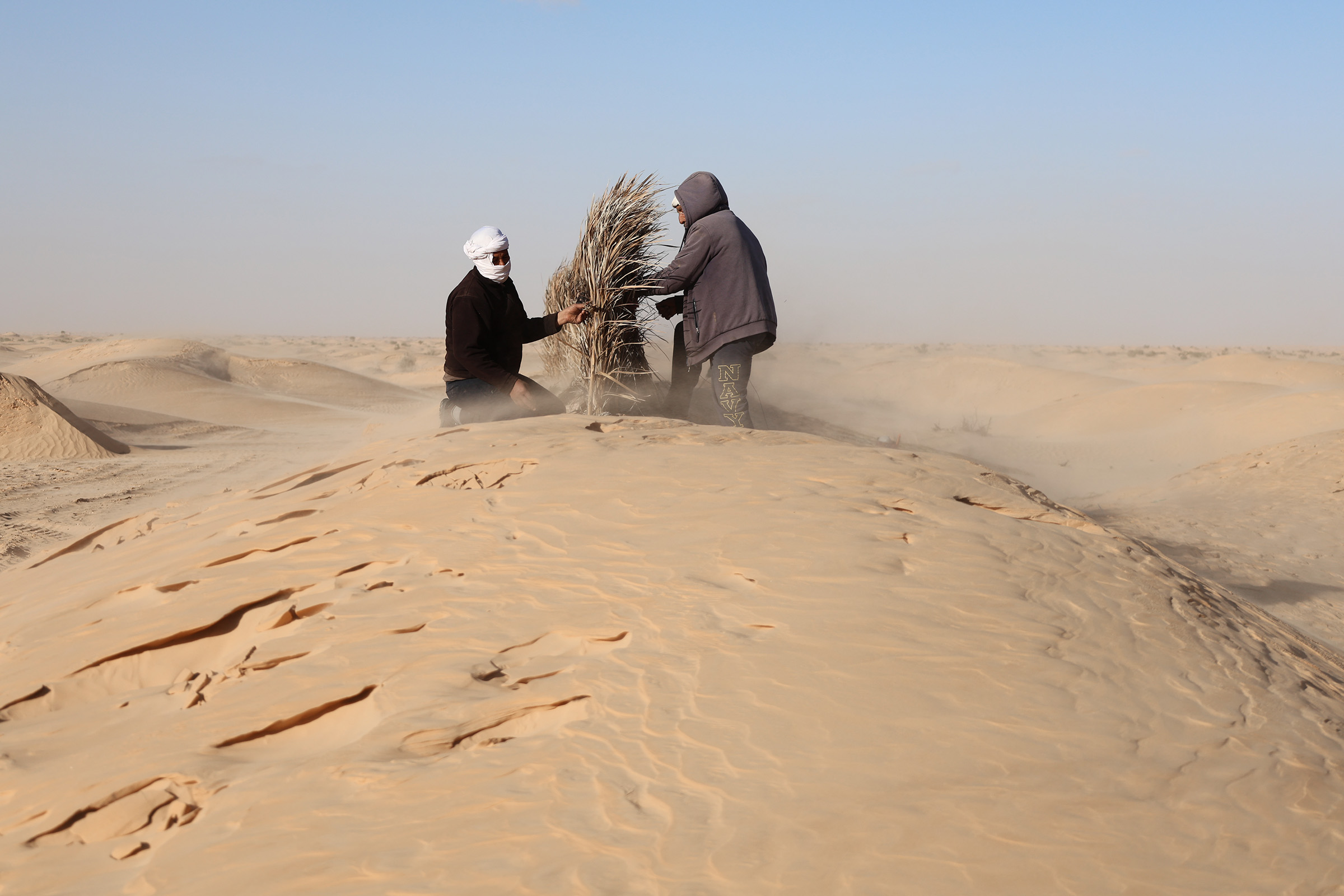


Rehabilitating the Bir Ettin well is a key step in the Bled el Abar ('Land of the Wells' in Arabic) project. The initiative focuses on restoring water points in the Tunisian Sahara with local communities, using existing resources. Its goal is to safeguard life—both human and non-human—in the desert.
Collaborators
Collaborator (office): Marie-Christine Beris
Program
Landscape
-
Labels
Regeneration · Structure
Site area
7000 m²
-
Client
The Sabria community
Total gross floor
10 m²
Cost
650 €/m²
The modest well, built using traditional masonry, is located in the dunes of the Grand Erg Oriental, over 30 kilometers from the nearest inhabited village, along routes used for millennia by North African pastoral nomads. Before it was silted up and collapsed, it was still used as a watering point for camels, goats, and sheep, and as a refuge for the shepherds who guide them through the desert. The project involves removing the sand, cleaning and restoring the well and its trough, protecting it from sand-laden winds with hedges made of date palm fronds, and building a shelter using palm wood.
It took nearly a year to choose which well to restore. We had to ensure it would be used by the region’s nomads and shepherds, and that it could be maintained affordably. After several meetings and visits, Bir Ettin was chosen — a decision made by them and with them. In late 2024, we visited the site for the first time and conducted a detailed survey. The site itself dictated the project: restore the well and its trough, protect it from sand with palm frond hedges, and build a small shaded shelter. Preparations followed: logistics planning, material estimation, recruitment of skilled artisans, and cost control. Work was scheduled for early 2025, to be completed before the return of high winds and heat. The restoration took four days and twelve people: two transporters, two coordinators, two masons, two carpenters, one digger operator, one water well specialist, and two architects. As soon as water filled the trough, herds, migratory birds, and insects came to drink.
A cylinder rises from the sand, partly silted up. The slab covering the shaft has collapsed, and the access hatch, bucket, and rope are missing. A simple staircase provides access, and a U-shaped concrete portico supports the pulley. A receptacle connected to a vertical pipe guides water into a buried cylindrical tube leading to the trough, nearly covered in sand. Though the well has deteriorated, the groundwater at about 18 meters remains abundant, clean, and low in salinity. The zero-waste construction unfolded as follows: the first two days were spent removing sand, cleaning the well, and building two protective hedges of date palm fronds oriented in the landscape to shield it from sand-laden winds. The third day was for pouring the new slab. The final day involved drying, building the shelter, and installing the new access hatch, pulley, rope, and bucket. Before leaving, we poured water and engraved the well’s name and date on the slab, as is customary for all desert wells.