-

Kunstsilo
-
Kunstsilo facing the sea front promenade with preserved crane
-
Silo hall gallery towards main staircase and foyers
-
Ceiling of the silo hall
-
Ceiling of the silo hall
-
Exhibition halls
-
Situation plan
-
Ground floor w. Surroundings
-
1st. Floor
-
Longitudinal Section
-
Cross section
-
Field of urban activity- Exploded Axonometric
-
Name of work in English
Kunstsilo
Prize year
EUmies Awards 2026
-
Work Location
Kristiansand, Norway
-
Studio
Mestres Wåge, Mendoza Partida, BAX studio
EUmies Awards 2026 Nominees

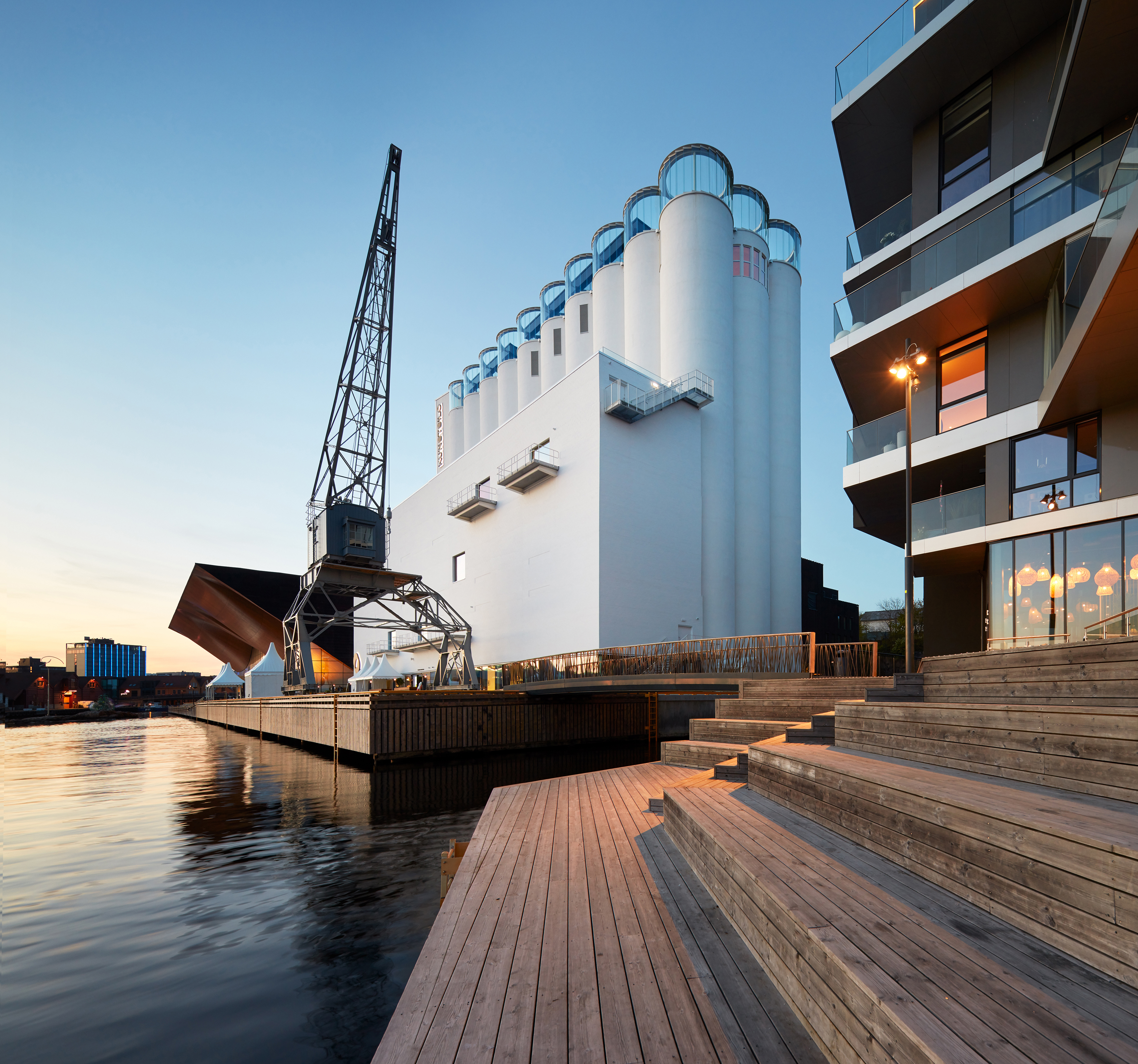


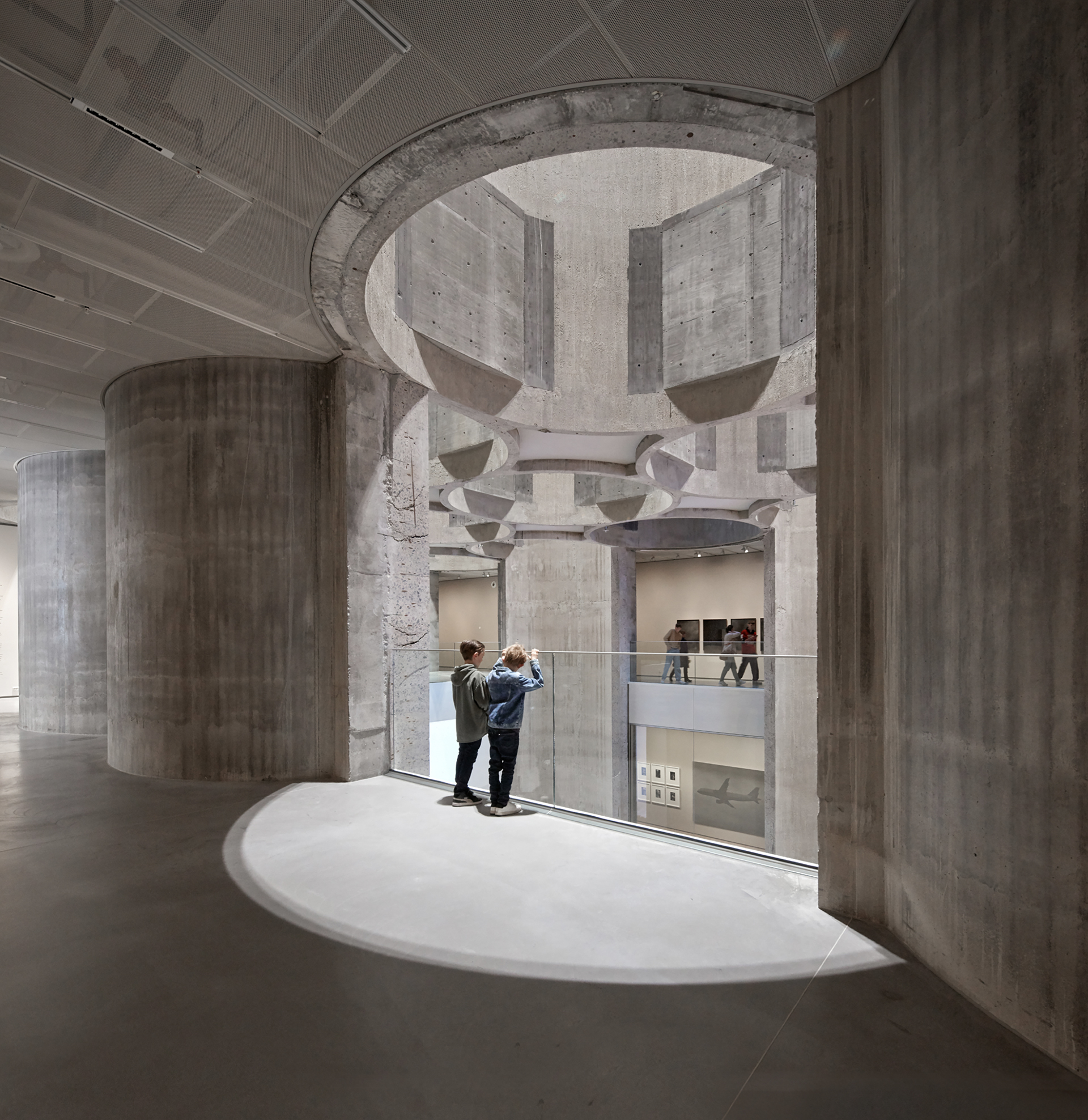


Kunstsilo adapts Kristiansand’s 1935 grain silo by Korsmo and Aasland into a contemporary art museum. Precise interior cutouts of the cylinders reveal the vertical, basilica-like “Silohall”—free and open to all—forming a public living room that unites heritage, art, and civic life.
Collaborators
Collaborator (office): Ona Marija Auskelyte - Mestres Wåge; Collaborator (office): Erlend Aalmo Strønstad - Mestres Wåge; Collaborator (office): Ana Irisarri - BAX Studio; Collaborator (office): Alejandro Álvarez - Mendoza Partida; Collaborator (office): Marc Busquets - Mestres Wåge; Collaborator (office): Oscar Espinosa - Mendoza Partida; Collaborator (office): Fredrikke Frølich - Mestres Wåge; Collaborator (office): Martin Hauge - Mestres Wåge; Collaborator (office): Olga Bombac - Mendoza Partida; Collaborator (office): Carlos Para - BAX Studio; Collaborator (office): German Bosch - Mendoza Partida; Collaborator (office): Damian Plouganou - Mendoza Partida; Collaborator (office): Marc Sanchez - Mendoza Partida; Collaborator (office): Juan Mier - Mestres Wåge; Structure: Degree of freedom AS; Structure: Rambøll; Structure: Other Structures; Landscape: Henning Larsen Architects; Installations: BJ miljø; Interior Architect: Scenario; Lighting: Henning Larsen
Program
Culture
-
Labels
Heritage · Art Gallery
Site area
5000 m²
-
Client
Kunstsilo
Total gross floor
10300 m²
Cost
5895 €/m²
Located beside the Kilden Opera House, Kunstsilo is part of a transformation of a former industrial area into a cultural hub integrating a museum, Music School, Opera and theatre. The protected 1935 silo forms the museum’s sculptural core, anchored by the Silohall. The visitor experience is organized in, beside, over, through and under the silos. Industrially inspired extensions frame two public plazas, harmonising with the silo’s geometry and material language to mediate between its functionalist origins and new civic purpose. Strategically placed openings create contact to exterior.
Born from the 2016 international competition, Kunstsilo addresses the challenge of transforming a protected industrial monument into a living cultural landmark. The design maintains the silo’s monumental integrity while opening its core to create Silosalen—a vertical public hall revealing the structure’s inner geometry. Perforated walls, skylit cylinders and dual entrances enhance light, connectivity and permeability. Silosalen and ground floor can be accessed for free and becomes an indoor plaza for Kristiansand. The spatial sequence unfolds vertically—from an active foyer to galleries, terraces and a transparent rooftop event space overlooking the sea. Through the measured interplay of existing and new raw concrete and refined new elements, the project bridges Kristiansand’s industrial past with its contemporary cultural identity, transforming preservation into civic regeneration.
The original reinforced-concrete silos from 1935 and 1939 were preserved and strengthened with a 20–25 cm outer concrete shell cast using sliding formwork. A post-tensioned bidirectional beam system is woven into the cylinders 20,1 metres above ground level stabilised the structure before the central, lower part of cylinders were cut to form Silosalen. Exposed concrete surfaces retain grain wear, saw cuts, and formwork traces as tactile records of the building’s history. The new structural elements, cylinder cuts, and beams remain visible, creating a dialogue with the original fabric and narrating the transformation from grain silo to art museum. Additional volumes and the reconstructed seafront warehouse reinterpret the industrial typology and materiality, while horizontal and vertical glazing introduces daylight and urban connection. The silo has an active visual and tactile presence, offering a contrast to the calm, precise expression of the new architectural elements.