-

Mycoremdiation_Phytoremediation map_Cover image.jpg
-
01_Current Status.jpg
-
02_Investigation into the quality status of Kalamas.jpg
-
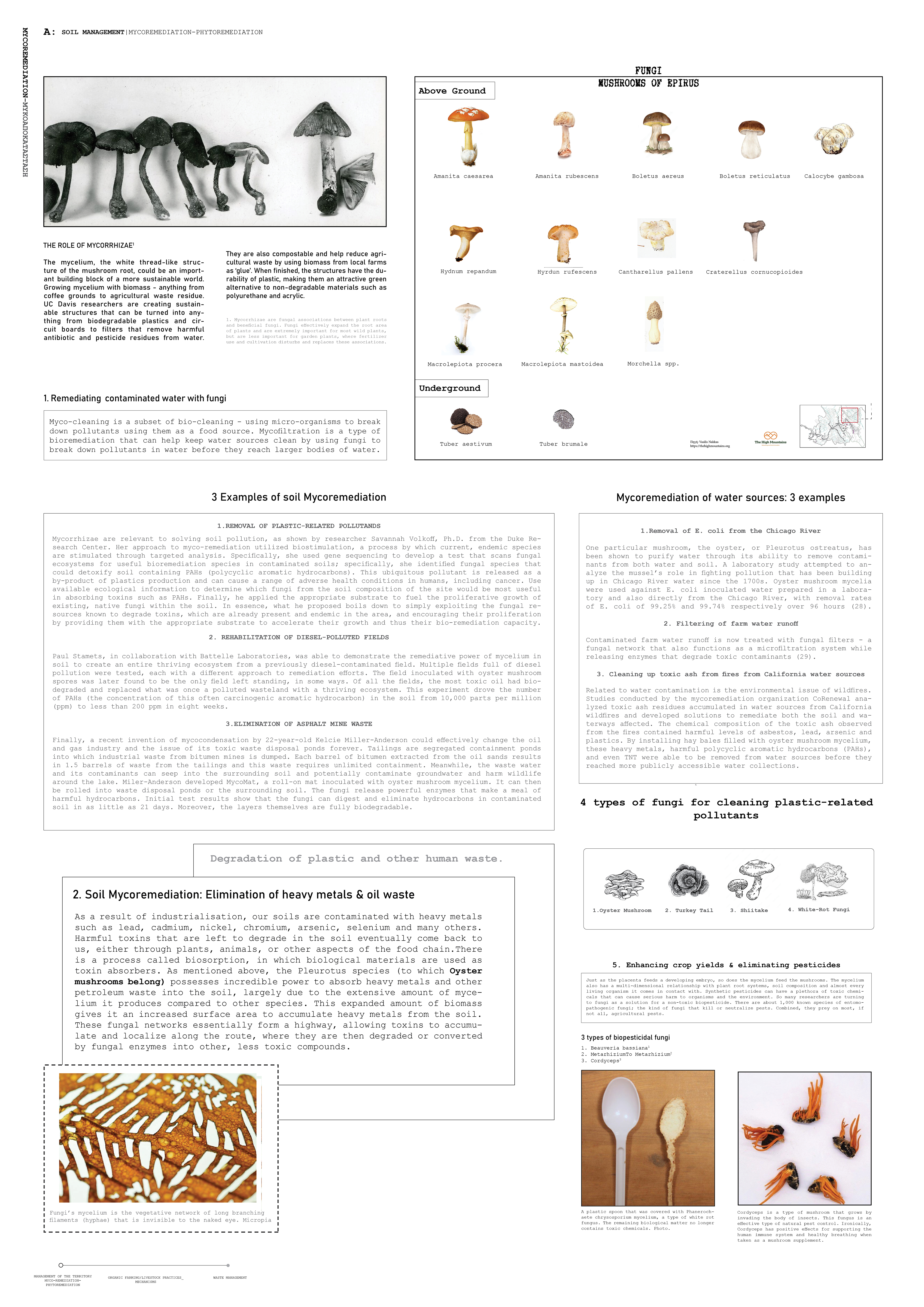
03_Soil Management_Mycoremediation_Phytoremediation.jpg
-
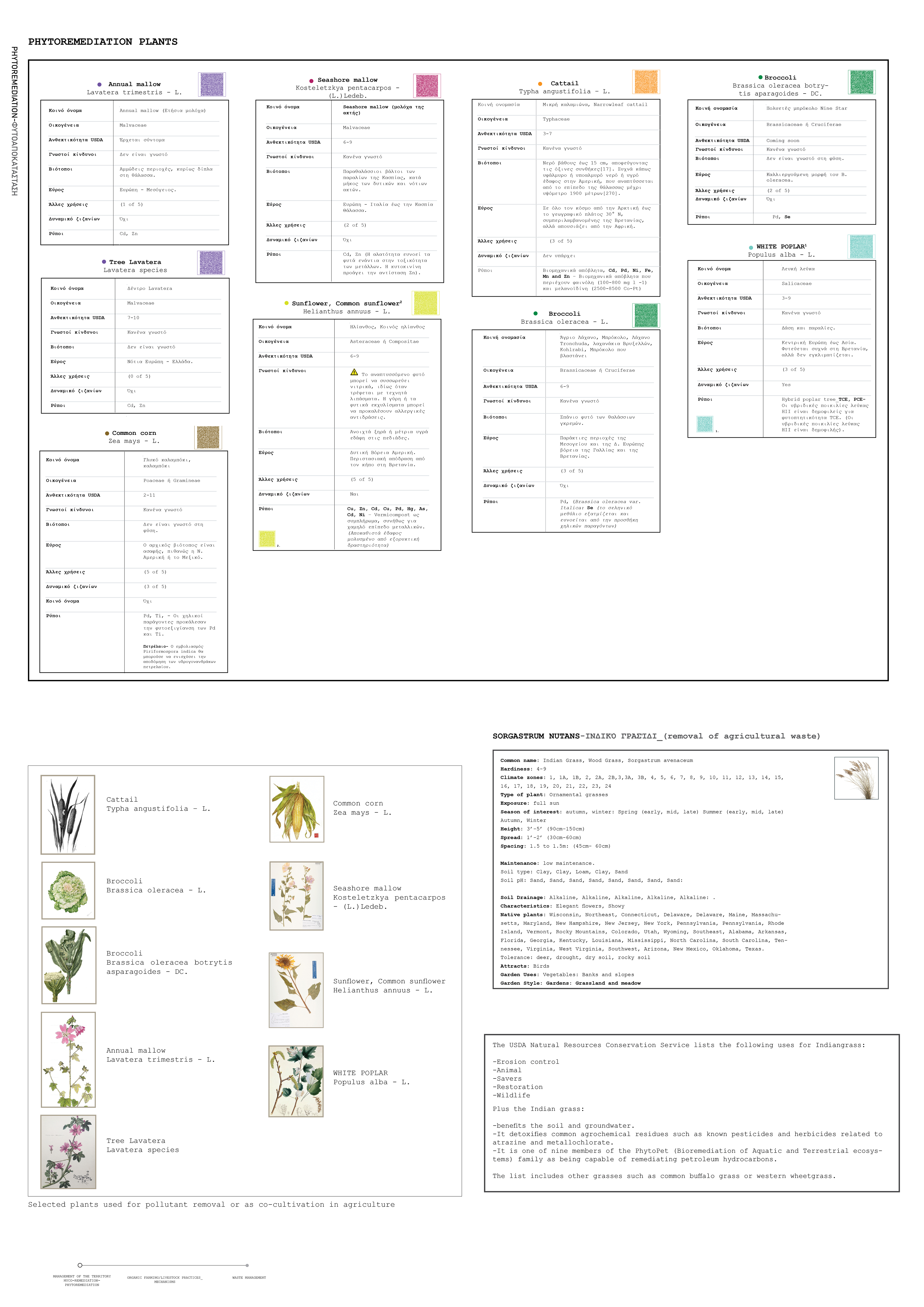
04_Phytoremediation.jpg
-
05_Mycoremediation.jpg
-
06_Wattles_Mycoremediation.jpg
-
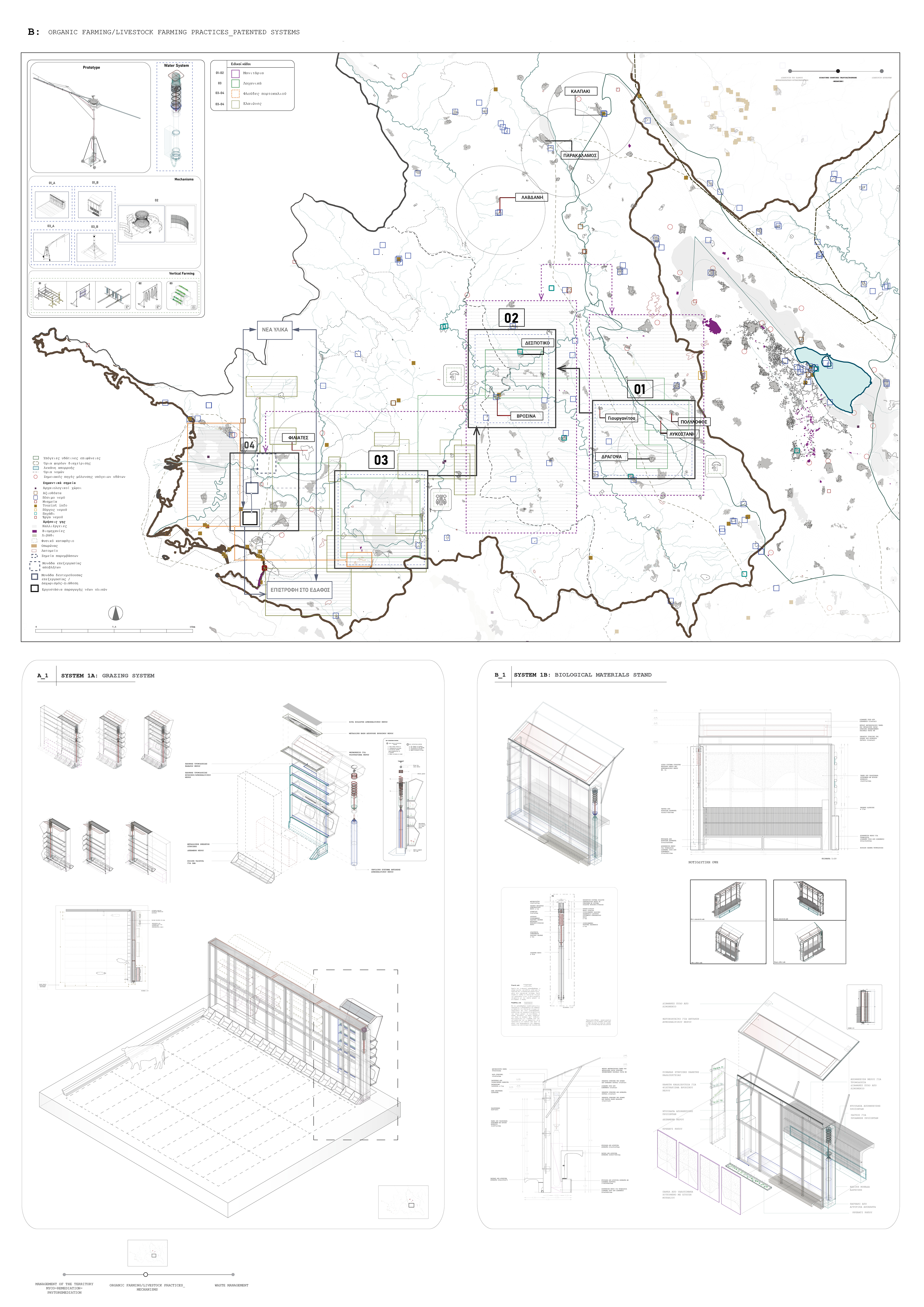
07_Organic Farming_Livestock Farming Practices_Patented systems.jpg
-
08_Organic Farming_Livestock Farming Practices_Patented systems.jpg
-
09_Waste Management_New materials.jpg
-
10_Vertical Farming.jpg
-
dinA2.jpg
Kalamas: Management and exploitation of natural resources and cultural heritage
Katerina Kyriazopoulou. Ioannina, Greece
-
Name of work in English
Kalamas: Management and exploitation of natural resources and cultural heritage
-
Name of work in original language
Management and exploitation of natural resources and cultural heritage
Prize year
Young Talent 2025
-
Work Location
Ioannina, Greece
-
Author/s
Katerina Kyriazopoulou
-
School
Department of Architecture - University of Ioannina.
Ioannina, Greece
Young Talent 2025 YT Nominees





Kalamas: Management and exploitation of natural resources and cultural heritage
Management and exploitation of natural resources and cultural heritage
Program
Landscape
-
Labels
Regeneration
The river Kalamas in recent years has been further degraded by diffuse and point pressures from various sources of pollution. The aim of this research is to create an environmental design that focuses on the different sources of pollution, proposing another way of management and practice that will be sustainable and self-regulating. The research focuses spatially on three main areas proposing more sustainable solutions to practices and activities that burden the ecosystem. The three different points act as a system as they feed each other through a common point that connects them – water.
Thyamis or Kalamas is Epirus's largest (in length) river and the seventh largest in Greece. However, in the last decades, it has been an example of the degradation of the natural environment due to indiscriminate human activity (agricultural and livestock activity, urban and industrial wastewater, lack of management plan, and coordination of the competent bodies). The research concentrates spatially on three main points (Grammenochoria, Vrosina, Neraida) proposing a more sustainable approach regarding the practices and activities that pollute the ecosystem. The three sites work as a system as they feed off each other through a common point that connects them - water. The study is strategically divided into three stages of management and exploitation of natural resources and cultural reserve. First, is the remediation of the soil and the aquatic ecosystem through phytoremediation (Seed propagation mechanism prototype) and mycoremediation (Wattles). Second, is the design of mechanisms that respond to different types of contamination at each site (Grammenochoria-01 Grazing system/02 Organic materials kiosk, Vrosina-Water supply station and Neraida-01 Irrigation system/02 Fertilizer system). All mechanisms are designed based on published patents. Water, which is the element that all the systems have in common, connects all mechanisms through different methods of harvesting it (atmosphere/humidity/rain), producing new hybrid systems according to conditions and needs. And third, is waste management in all focus areas. Finally, in an effort to reduce land spreading for agricultural purposes, vertical farming is proposed.