-

rendering-from above
-
central square at night
-
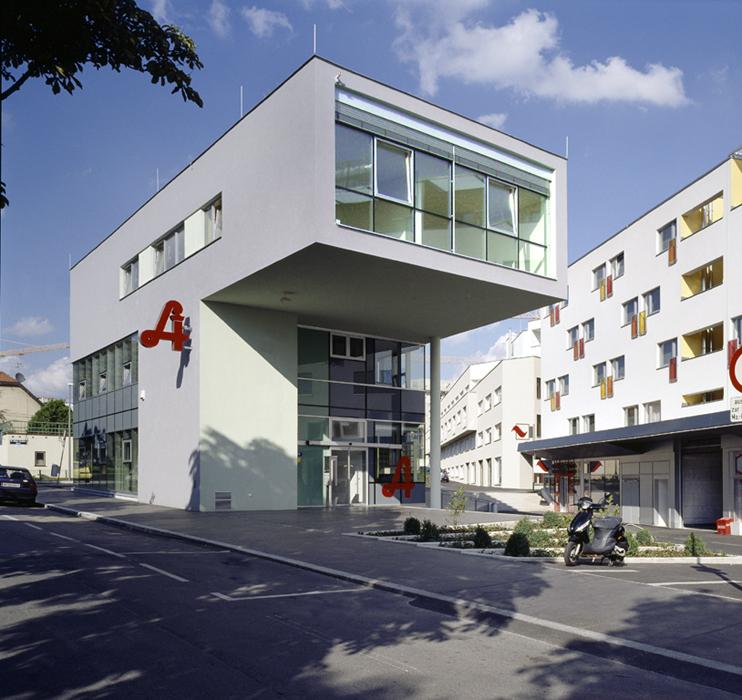
lot d from south
-
lot d23
-
lot C
-
entrance kabelwerk from south
-
Zoning plan
-
site plan
Kabelwerk Urban Planning and Housing
Mascha & Seethaler, Wurnig-Kljajic Architekten, Werkstatt Wien, Spiegelfeld, Holnsteiner + Co Ges.m.b.H. & Co. KG, Schwalm-Theiss und Gressenbauer, VALENTINY hvp architects, pool Architektur ZT GmbH. Vienna, Austria
-
Name of work in English
Kabelwerk Urban Planning and Housing
-
Name of work in original language
Kabelwerk, ein Stück Stadt
Prize year
EUmies Awards 2009
-
Work Location
Vienna, Austria
-
Studio
Mascha & Seethaler, Wurnig-Kljajic Architekten, Werkstatt Wien, Spiegelfeld, Holnsteiner + Co Ges.m.b.H. & Co. KG, Schwalm-Theiss und Gressenbauer, VALENTINY hvp architects, pool Architektur ZT GmbH
EUmies Awards 2009 Nominees




Collaborators
Landscape architect: anna Detzlhofer, Heike Langenbach; Lighting: andreas Zoufal; Urban design: Tom Sieverts; Others: Herbert Buchner, Volkmar Pamer
Program
Urban planning
Completion
2008
Kabelwerk, project description Aim: In contrast to the standard kind of housing estates, the Kabelwerk team set out to create a dense, vital and urban piece for the city of Vienna Situation: Replacing the closed-down cable factory, Kabelwerk works as the new motor for its neighbourhoods. It knits together its heterogeneous surroundings, both physically and structurally, as well as in the realm of use and function. Strategies: Phase 1: building on the award-winning project by Dyn@thmosphere (Rainer Pirker and 'the next enterprise') new instruments for urban regulations are implemented: 'the plinth', 'bonus volume', 'build-on lines' etc. 'The plinth' prescribes a pedestal, to be filled with all functions (desirable public uses, communicating with the neighbouring public space), except housing. 'The bonus volume' is additional mass that the planner can exploit for enhanced qualities, socially and spatially, such as enlarged social areas, hallways, greater ceiling heights etc. 'Build-on lines' surround and form the public spaces. Wrap-around architecture. In a cooperative planning process (including residents, the municipal administration, planners, developers) these new instruments and new urban structures are developed to define the zoning plan. A network of differentiated public spaces forms the spine of the Kabelwerk zoning plan. During the planning phase the existing historic brick buildings, which will be preserved, serve as locations for temporary cultural uses. 50,000 visitors enjoy a variety of programmes. Phase 2: the public spaces plus the individual buildings that form them are developed by transforming the zoning plan and its rules into material designs. No building is developed just on its lot. A game is started that involves many interacting players. Special attention is paid to the definition and flow of space, both open and enclosed. Analysis: Intense public participation, high densities, extensive use of prefab, and removal of demolition material by rail guarantee large-scale sustainability. Low energy technology, green roofs and flexibility within the structure guarantee sustainability within the individual buildings. The temporary cultural use (which, due to its success, is being continued), together with the public cooperative planning process attracted clients that form a core of self-reliant and active residents. Of the new urban instruments, it was the 'plinth' and the 'bonus volume' that produced the most surprising results. The 'plinth' resulted in vast semi-public halls (for bicycles, social activities etc.) and in gardens and children s playgrounds, elevated and with an overview of the surroundings. The 'bonus volume' produced most generous hallways, greater ceiling heights and (among other features) the laundry with the best view in the world, we bet! Statistics: Site: 63.000 m² Park: 17.000 m² Gross area: 96.409 m² Housing net area: 69.799 m² Other net areas: 9.747 m² Including: local shops and services, pharmacy, hotel, seminar centre, cultural centre, boarding house, kindergarten, pharmacy, several medical practices, café, bakery, Density (gross area/site): 1,53 Construction start: Sept. 2004 Construction end: May 2008