-

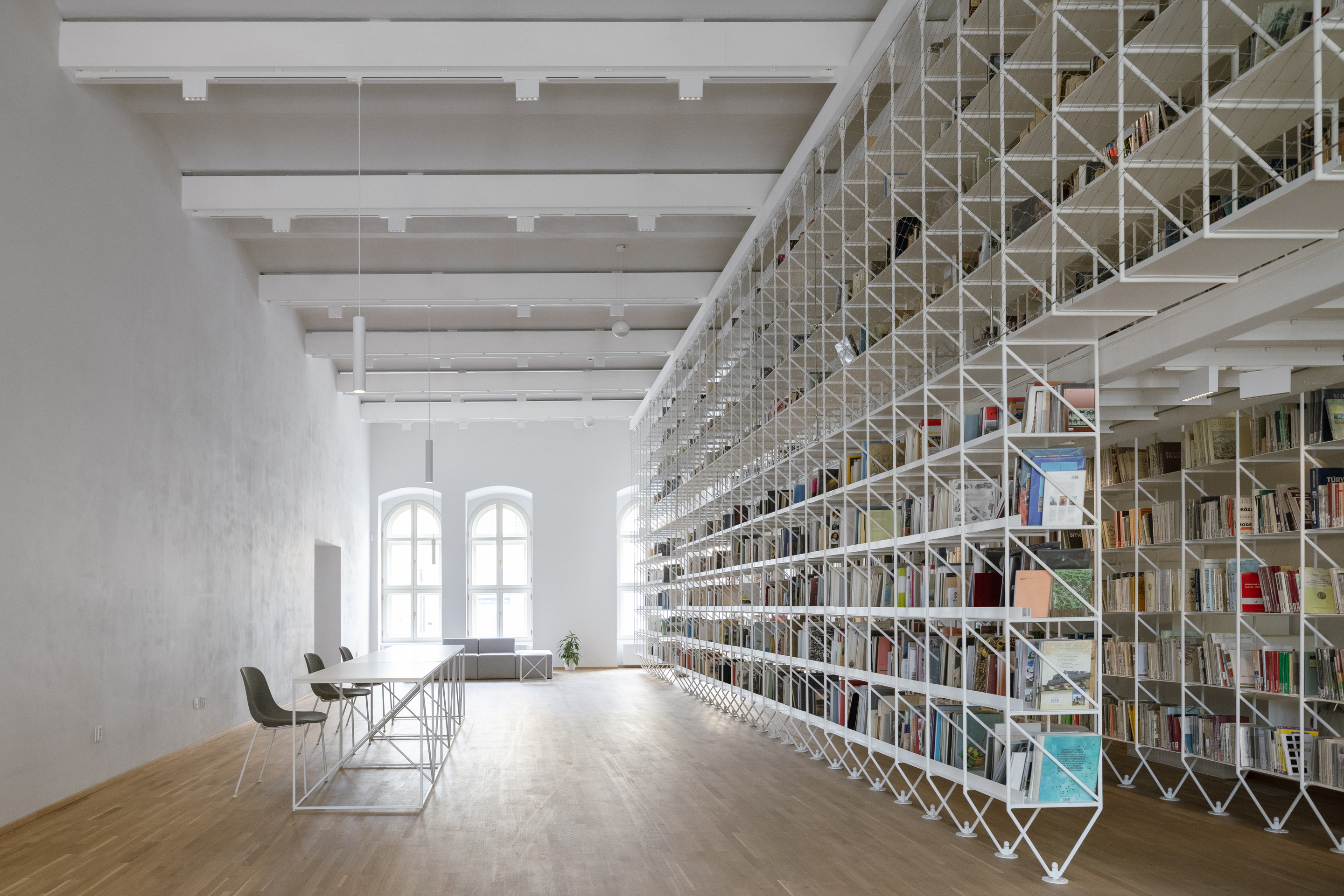
On the ground floor, we installed two pairs of double-height shelves suspended from steel beams alon
-
The ground floor supports diverse user activities, fostering community life
-
This structural strategy allows use of slender steel rods, turning heavy shelving into a light, curt
-
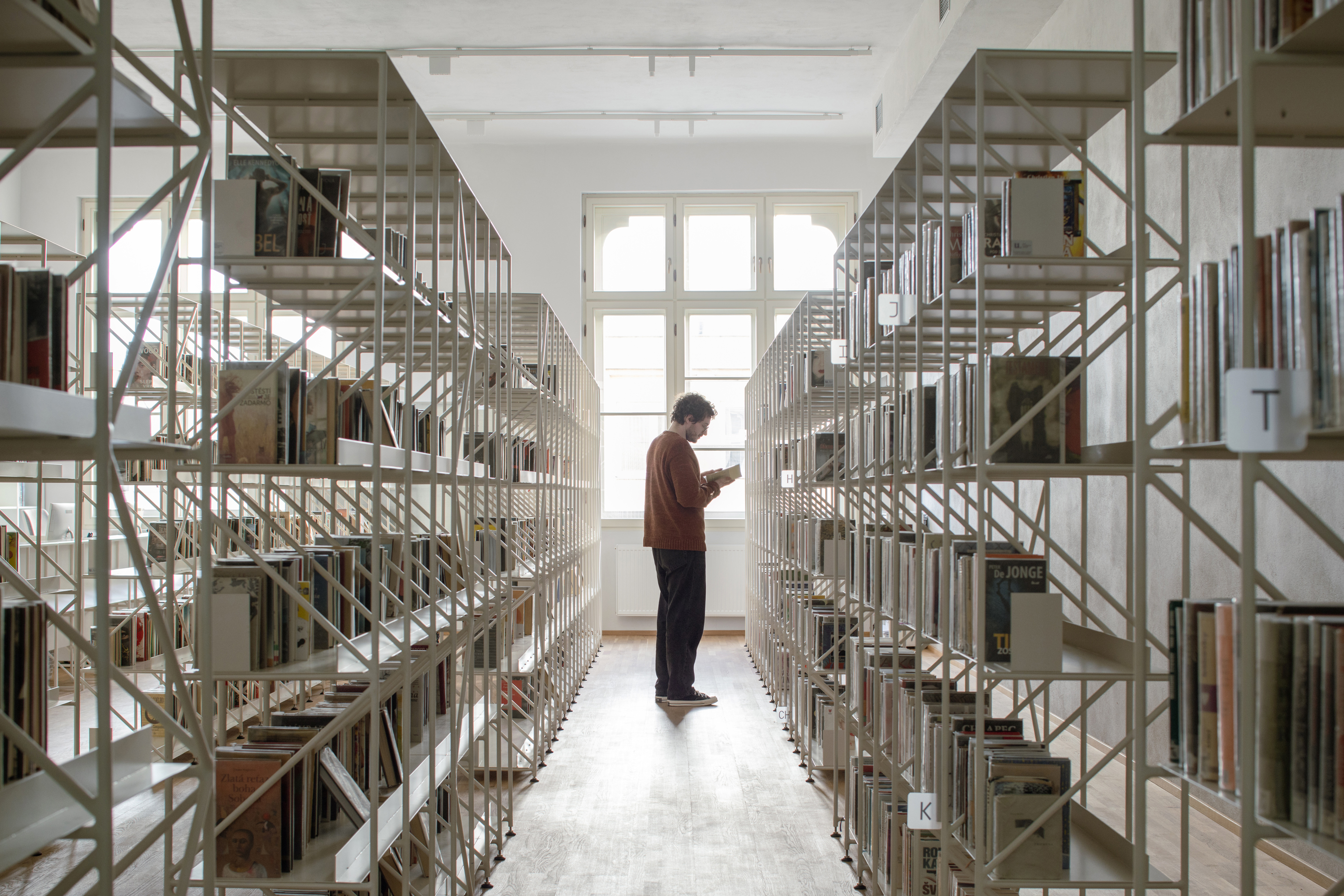
On the first floor, three long rows of shelving are used
-
the top floor is filled with smaller shelf clusters
-
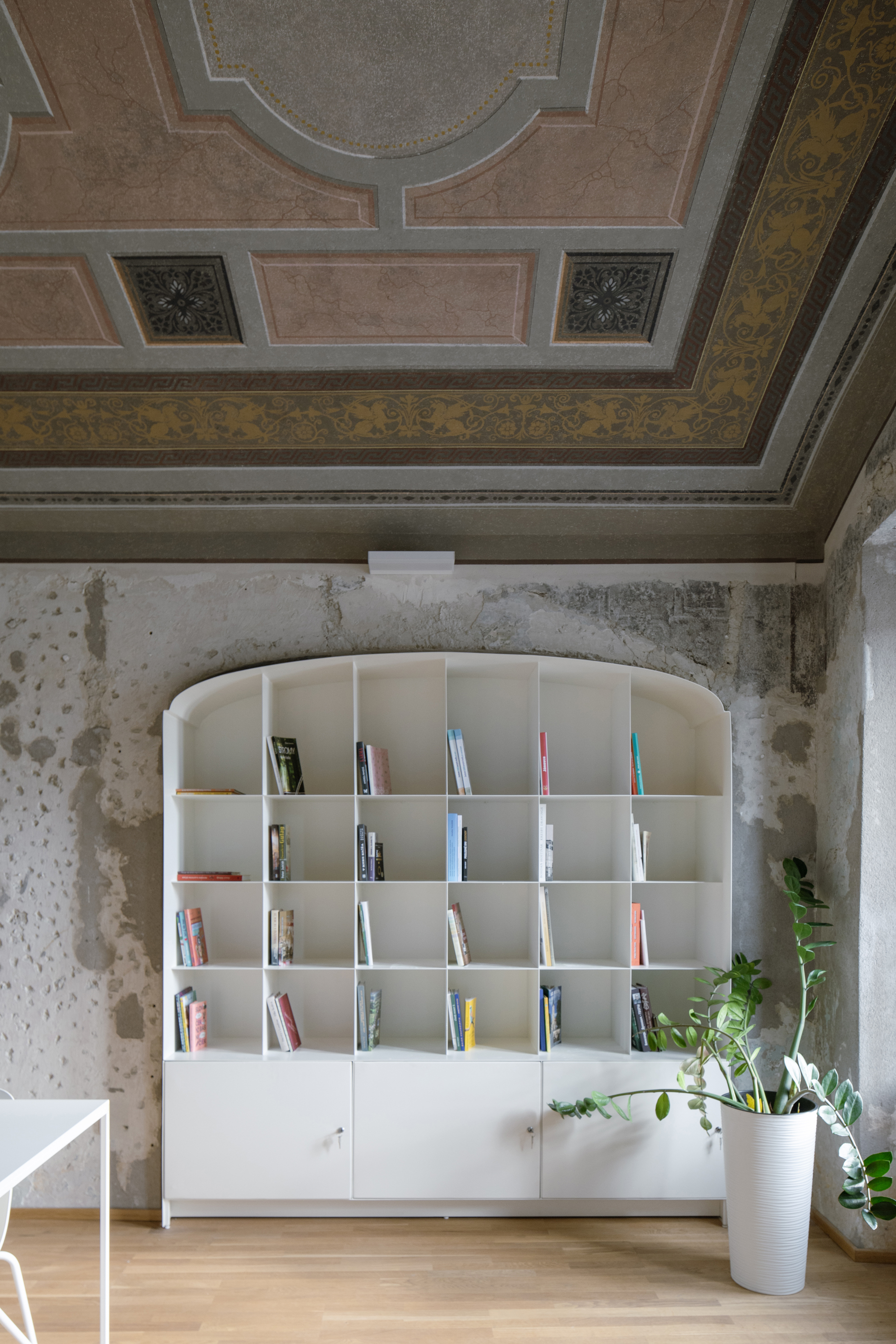
The building's construction evolution is visible through its historic layers
-
gradient densification of the space
-
construction scheme
-
ground floor plan
-
first floor plan
-
attic floor plan
-
perspective section
Interior of the P. O. Hviezdoslav Regional Library
DOXA, bistan architekti. Presov, Slovakia
-
Name of work in English
Interior of the P. O. Hviezdoslav Regional Library
-
Name of work in original language
Interiér Krajskej knižnice P. O. Hviezdoslava v Prešove
Prize year
EUmies Awards 2026
-
Work Location
Presov, Slovakia
-
Studio
DOXA, bistan architekti
EUmies Awards 2026 Nominees





The project by Doxa and bistan architekti revitalizes three adjoining listed historic townhouses, the intervention focuses on preserving the spatial integrity of the original structures while introducing a new shelving system that organizes the library through spatial rhythm and light.
Collaborators
static engineer: Ivan Tatala - BPT - PROJEKT; graphic design: Tomáš Eisner; client representative and project coordinator: Iveta Hurná - Krajská knižnica P. O. Hviezdoslava v Prešove; collaboration on competition proposal: Vincent Ung; collaboration on competition proposal: Martina Hončárová; collaboration on competition proposal: Ján Hlodák
Program
Education
-
Labels
Library
Site area
983 m²
-
Client
Krajská knižnica P. O. Hviezdoslava v Prešove
Total gross floor
1200 m²
Cost
1000 €/m²
The palace-like scale of the main halls was one of the key features in the design process and we wanted to preserve this spatial experience. We proposed a gradient densification of the space with shelving, from bottom to top. On the ground floor two pairs of double-height shelves are suspended from steel beams along the perimeter walls. This strategy allows the transformation of heavy shelves into a lightweight, curtain-like frame-work. On the second and third floor long rows of shelves in different scale are used. The changing relationship between shelves and space helps visitors orient themselves within the library.
Daylight reveals the palatial form of the halls, the genius loci. Three interconnected historic townhouses integrate into a single institution. Departments: non-fiction, fiction, children’s literature. The library’s vibrant community life, demands for multifunctionality and inclusivity. Tens of thousands of book titles—each with its own color, format, and content. The structural limits of the original building serving as a design parameter. Represent the regional library through space, update it through structure. Democratization: access to information, collective intelligence. Define monumentality: dominance of the vertical? (A)symmetry? Preserve the atmosphere of the halls, allow light to penetrate through steel. On the first floor, suspend the shelves to lighten the floor load, reduce beam sections. Create subtlety, narrate a new layer, speak of the era through construction. Interact with different user types; work with varying shelf heights. In the attic, expose technology, spark children's imagination. Create a natural ornament by arranging book spines side by side. White as the background for text, white as the background for books. Three floors, three layers of progression: Ground - First - Second Floor. A gradual lowering of shelving—forms of spatial orientation. A gradual occupation of the floor plan. A gradual fading of multifunctionality.
We propose a gradient densification of the shelving from the bottom upwards. In the main halls on the ground floor, we place two double-height shelves along the perimeter walls (suspended from reinforcing steel beams, which also help transfer the load of the shelves on the upper floor). This structural concept allowed us to build the shelves using slender steel rods—the suspension principle relies on the material’s high tensile strength. In this way, the shelves carrying the heavy weight of books take on the character of an ephemeral curtain-like structure. On the upper floor, there are three rows of long shelves. In the attic, the space is filled with smaller shelving assemblies. The relationship between space and shelves changes, and the structure helps with orientation—the visitor becomes aware of which part of the library they are in. The development of construction technology over time is reflected in the readable presentation of the building’s historical layers, culminating in the contemporary solution that explores the possibilities of working with steel. This illustrates the “thinning” of structures throughout history—from massive masonry walls, through the cast-iron galleries of a later period, to the proposed steel elements.