-

Aerial view of the building
-
View from the patio toward the pool and common rooms.
-
View from the circulation corridors that lead to the rooms toward the bay of Villefranche
-
View of the institute's pool
-
Facade of the institute of Ocean Sciences
-
Site Plan
-
3rd Floor
-
4th Floor
-
Section_1000
-
Section_350
-
Axonometry
-
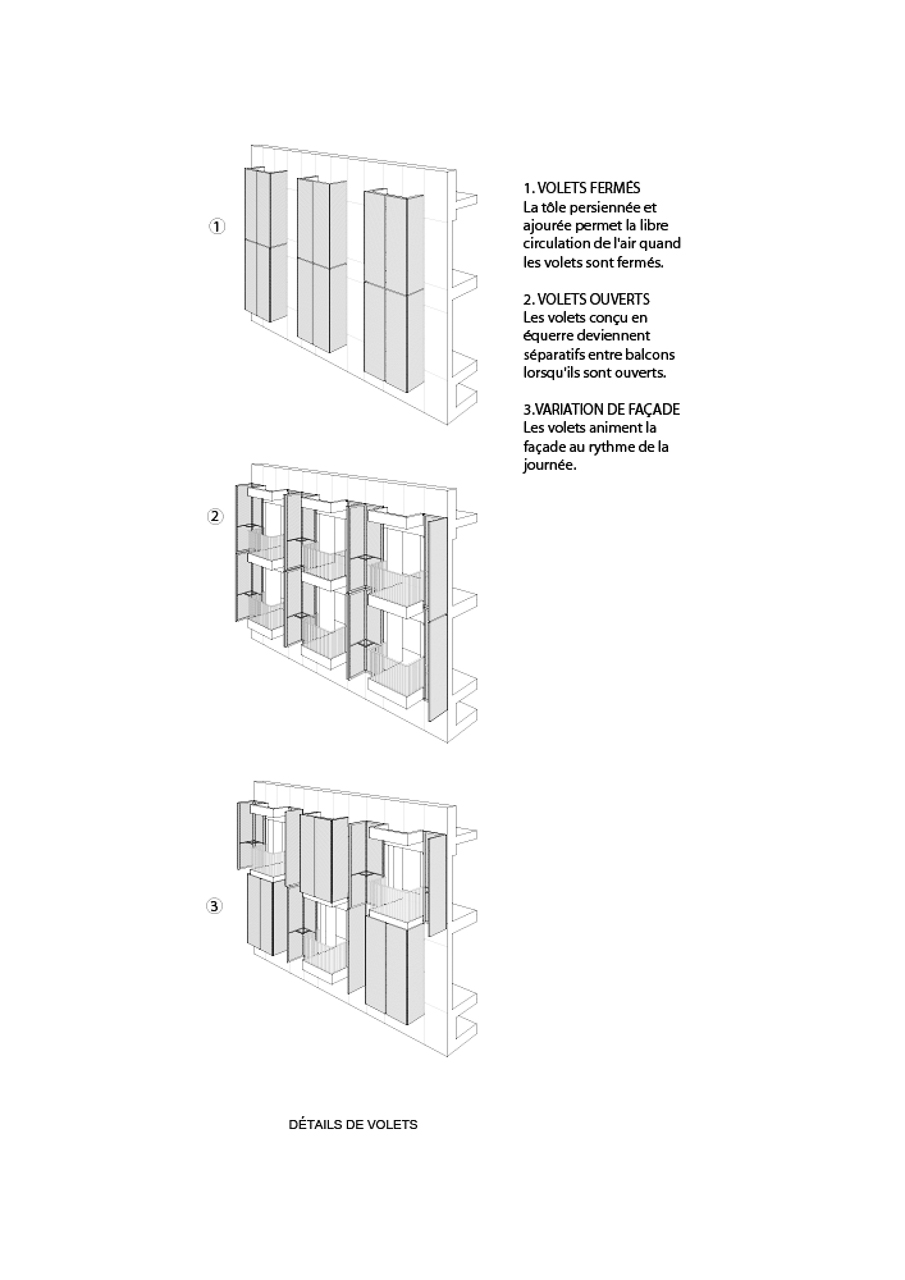
Shutters' Axonometry
-
Axonometry
-
-
A2 Pannel
Institute of Ocean Sciences
CAB ARCHITECTES (CALORI AZIMI BOTINEAU). Villefranche sur Mer, France
-
Name of work in English
Institute of Ocean Sciences
-
Name of work in original language
Institut de la Mer
Prize year
EUmies Awards 2022
-
Work Location
Villefranche sur Mer, France
-
Studio
CAB ARCHITECTES (CALORI AZIMI BOTINEAU)
EUmies Awards 2022 Nominees


The Institute of Marine Sciences is dedicated to research in oceanology. This small campus welcomes researchers to study the preservation of the sea. Two themes were at the heart of our reflexion: hospitality and context; specifically the Mediterranean environment. Situated on the coast, the project houses a program of accommodation and workspaces.
Collaborators
Structural engineering: Turra; Electrical: ENERSCOP; Building advising: BMF; Environmental: BIOTOP
Program
Education
-
Labels
Research · University
Site area
3288 m²
-
Client
Sorbonne Université
Total gross floor
2400 m²
Completion
2018
Cost
2100 €/m²
Nestled at the foot of a cliff, the building uses the constraints of the site to define an infrastructural architecture. The topography generates a cloister, deconstructed by the slope. The building is composed of two L volumes. One forms a base containing the common areas. The other inverted, houses the rooms. This superposition creates a new spatiality, the patio. The suspended volume spans a pool and opens up the patio to the seascape. Set amongst villas and military barracks, the design both rejects and accepts the ambiguous ‘territoire.’ Built of concrete from nearby quarries it references the cliffs that overlook it. Metal shutters double as screens on the balconies and recall the windows of the rope-works and armoury, local buildings of architectural heritage. The association of concrete masses and metal shutters create a dialogue between archaism and contemporaneity.
The archetypal cloister responds to a desire for interiority by the researchers and generates a habitable infrastructural project. The building is both introverted, dedicated to research and extroverted, encouraging exchange and projecting out. The landlocked site makes access complex yet also creates its specificity. A ramp leads up to the labs, a car park and above the common rooms facing the patio. These common rooms are linked by corridors, naturally lit by skylights. Folding glass doors allow the rooms to be fully opened to the patio; reminiscent of the functionality of the dockside boat sheds. The simple, uncluttered language of the building responds to the nature of the activities that take place within it. Indeed, daily diving outings require functional, resistant and solidly designed spaces. No oversophistication is evident and this posture; theoretical and pragmatic, secured the support of the client. Adaption to the slope weighed heavily on the price but the build participates in buttressing the land above. On this site designated inhospitable, architect and client have united to create a project that fosters reflection, exchange and conviviality.
The superposition of volumes create an opening and allow sea air to enter the patio over the shaded pool underneath which cools the air and naturally ventilates the building. This fresh air propagates into the common rooms and is extracted by roof ventilation. Shade, the patio and pool, sea breezes, and the mineral properties of concrete were for us the conditions of a resolutely situated Mediterranean architecture. The choice of material is linked to the site. Concrete; archaic material of expression, remains contemporary by its technical innovative capacities. In this project, it brings silence, abstraction and the sought after dramaturgy to the project. In this region, concrete is a local resource. It is a country of masons and the quarries are close. The artisanal nature of casting in-situ means the work-site is lively, preserving the surprise of results that cannot always be predicted. In dialogue with the smooth mineralty of the walls, the pivoting shutters are like steel armour that protects the bedrooms from the imposing seascape. The ensemble creates an enduring building, suitable to welcome young researchers to a study programme on the Mediterranean.