-

Exploring the inclusive playground
-
Summer afternoon in the community plaza
-
Observation platform
-
The Pavilion
-
The Tower & parked fishing boats
-
Aerial view of the waterfront
-
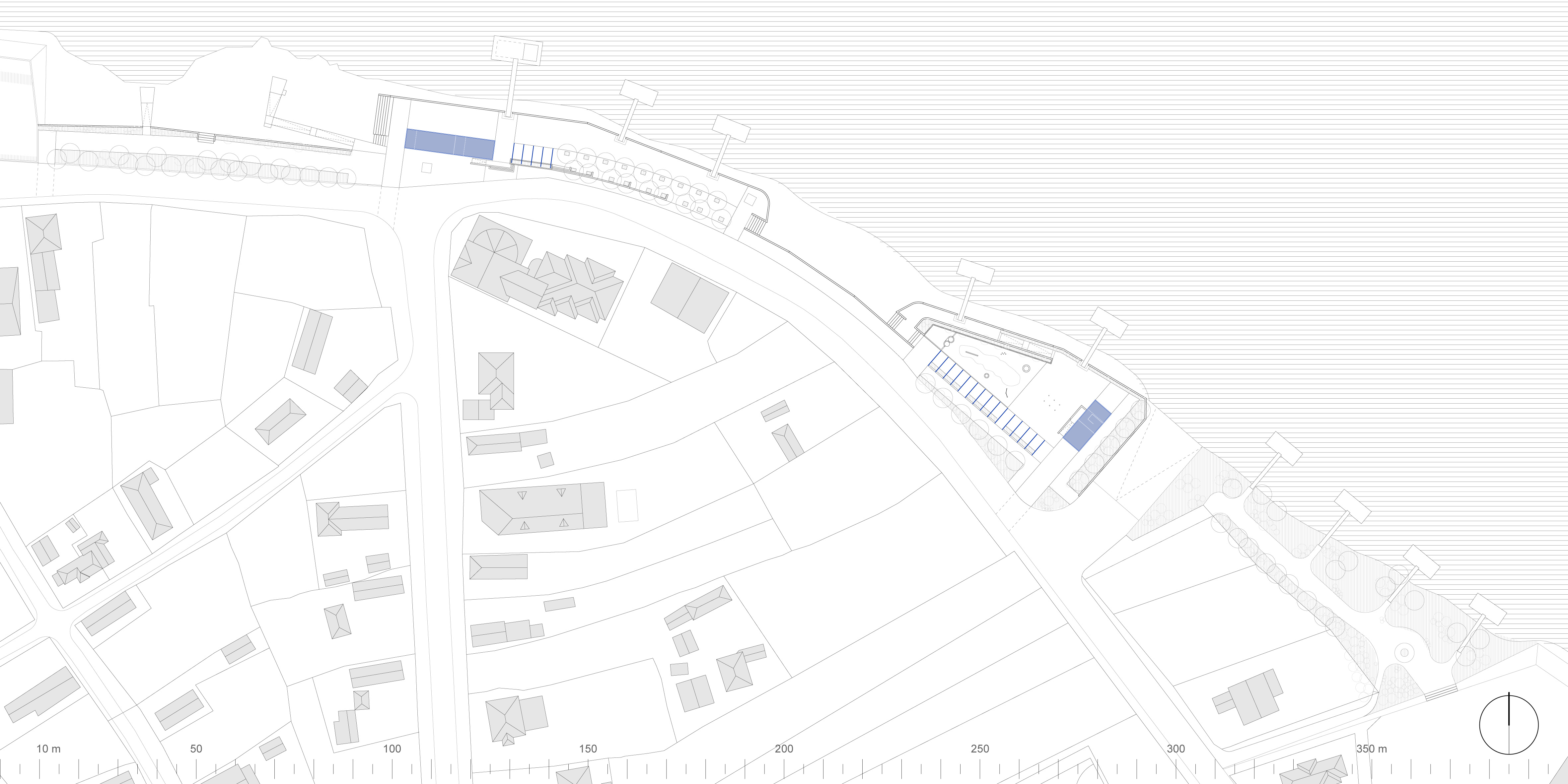
The Waterfront (situational plan)
-
The Waterfront (general plan)
-
The Pavilion (plans, sections, facade)
-
The Pavilion (facades)
-
The Tower (plans, sections)
-
The Tower (facades)
Inclusive Public Space - Waterfront on the Danube
Wolfhouse Productions, Iris Popescu Architecture, Ana-Monica Săbău BIA. Mahmudia, Romania
-
Name of work in English
Inclusive Public Space - Waterfront on the Danube
-
Name of work in original language
Spațiu public incluziv. Faleză pe malul Dunării
Prize year
EUmies Awards 2026
-
Work Location
Mahmudia, Romania
-
Studio
Wolfhouse Productions, Iris Popescu Architecture, Ana-Monica Săbău BIA
EUmies Awards 2026 Nominees




A derelict riverbank in Mahmudia, Romania, is transformed into an inclusive gateway to the Danube Delta. Through a participatory and multidisciplinary approach, the new waterfront becomes a tourist attraction and also a community-building infrastructure for diverse ways of experiencing public space.
Collaborators
Inclusive Design & Wayfinding: Iris Popescu - AMAIS; Inclusive Design & Wayfinding: Mihaela Șerban - AMAIS; Graphic Design: Alexandru Buta; Landscape: Ioana Marin - Studio Fluid; Landscape: Ana Constantinescu; Hydrotechnical Engineering: Cristian Vuță - Hydroproiect Invest; Hydrotechnical Engineering: Alexandru Balcu - Hydroproiect Invest; Structure: Cristian Taban - Confect Taban; Structure: Alexandru Vasile; Structure: Celestin Vitner; Installations: Laviniu Nacu - Instaltek; Installations: Silviu Popescu - Instaltek; Installations: Marius Bordei - Instaltek; Installations: Marius Briciu - Instaltek; Installations: George Ene - Instaltek; Lighting: Alexandru Popescu - Demco; Construction management: Alexandru Stroie - Complex Delta
Program
Urban planning
-
Labels
Public Space · Waterfront
Site area
9000 m²
-
Client
Mahmudia Town Hall
Total gross floor
6150 m²
Cost
600 €/m²
Mahmudia, a small community on the southern edge of the Danube Delta, transformed its derelict riverbank into an inclusive public promenade. Structured into three zones - Mineral Park, Communal Waterfront, and Public Garden - the design integrates flood protection within a welcoming landscape. Using local stone, wood, and painted metal, it enhances natural features while promoting freedom of use for all ages and abilities. Co-created with locals, tourists, and NGOs, the project fosters community pride, ecological awareness, and a balance between tourism and local life..
Initially, the Local Council of Mahmudia, wanted an intervention that would boost tourism in the area. Our participatory design process transformed the project into an inclusive and resilient public equipment for community-building. The challenges revolved around turning the existing improvised waterfront into a safe, inlclusive public space while dealing with severe budgetary constraints and local bias regarding a participatory design approach. Our strategy focused on inclusive design and empathy-based collaboration, engaging public administration, citizens, fishermen, local businesses and tourists, people with diverse social backgrounds, in co-designing and testing sessions. The project redefines “thriving” at the edge of the Delta - balancing ecology, economy, and culture - by creating a community building infrastructure, while also increasing tourism. The result is a topography of experiences and contexts for interaction, emphasizing non-hierarchical and flexible use.
The design enhances the site’s natural qualities while promoting freedom of use through diverse forms of interaction -resting, playing, observing or simply being. The rocky riverbank is emphasized made accessible via ramps and viewpoints, with the terrain itself informing the design logic. The material palette includes local stone and wood, complementing the steel and concrete structures. Wayfinding becomes “playfinding,” transforming circulation into a sensory and social experience. The site acts as a continuous playscape, where plaza and playground merge, dissolving boundaries between locals and visitors. The Pavilion and Observation Tower serve as hybrid structures hosting events, tourist information, and accessible restrooms. A resiliet, biophilic approach drives the design solution that is based on drought-tolerant vegetation, durable materials and community-based maintenance ensure long-term ecological and social endurance.