-

Imagine Montessori School
-
Imagine Montessori School
-
Imagine Montessori School
-
Imagine Montessori School
-
Imagine Montessori School
-
Imagine Montessori School
-
Location
-
Ground Floor Plan
-
Elevations
-
Secctions
-
Details
-
Volumetric Model
Imagine Montessori School
Arturo Sanz, Carmel Gradolí y Fran López. ARQUITECTES. Paterna, Spain
-
Name of work in English
Imagine Montessori School
-
Name of work in original language
Colegio Imagine Montessori School
Prize year
EUmies Awards 2026
-
Work Location
Paterna, Spain
-
Studio
Arturo Sanz, Carmel Gradolí y Fran López. ARQUITECTES
EUmies Awards 2026 Nominees
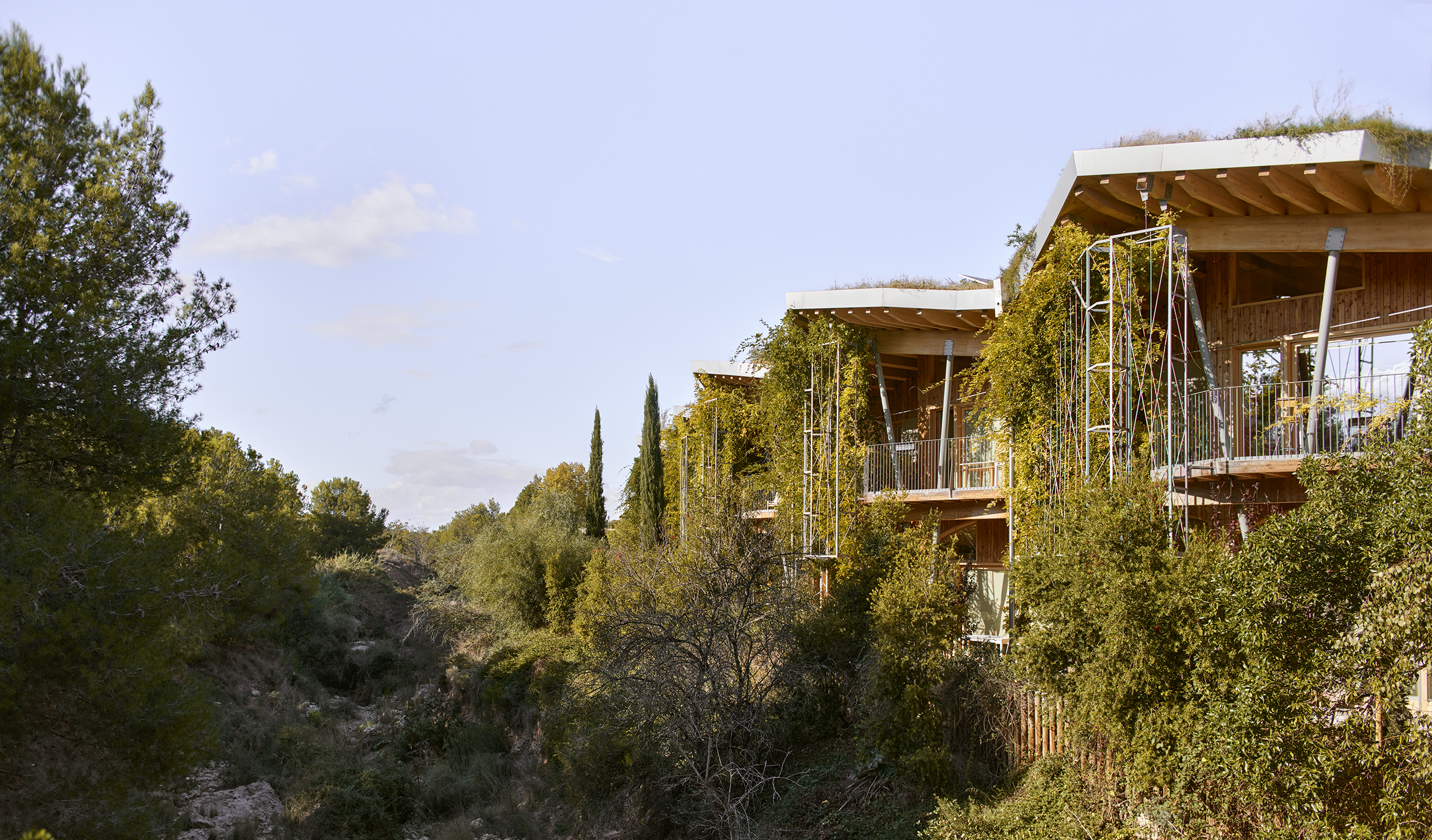


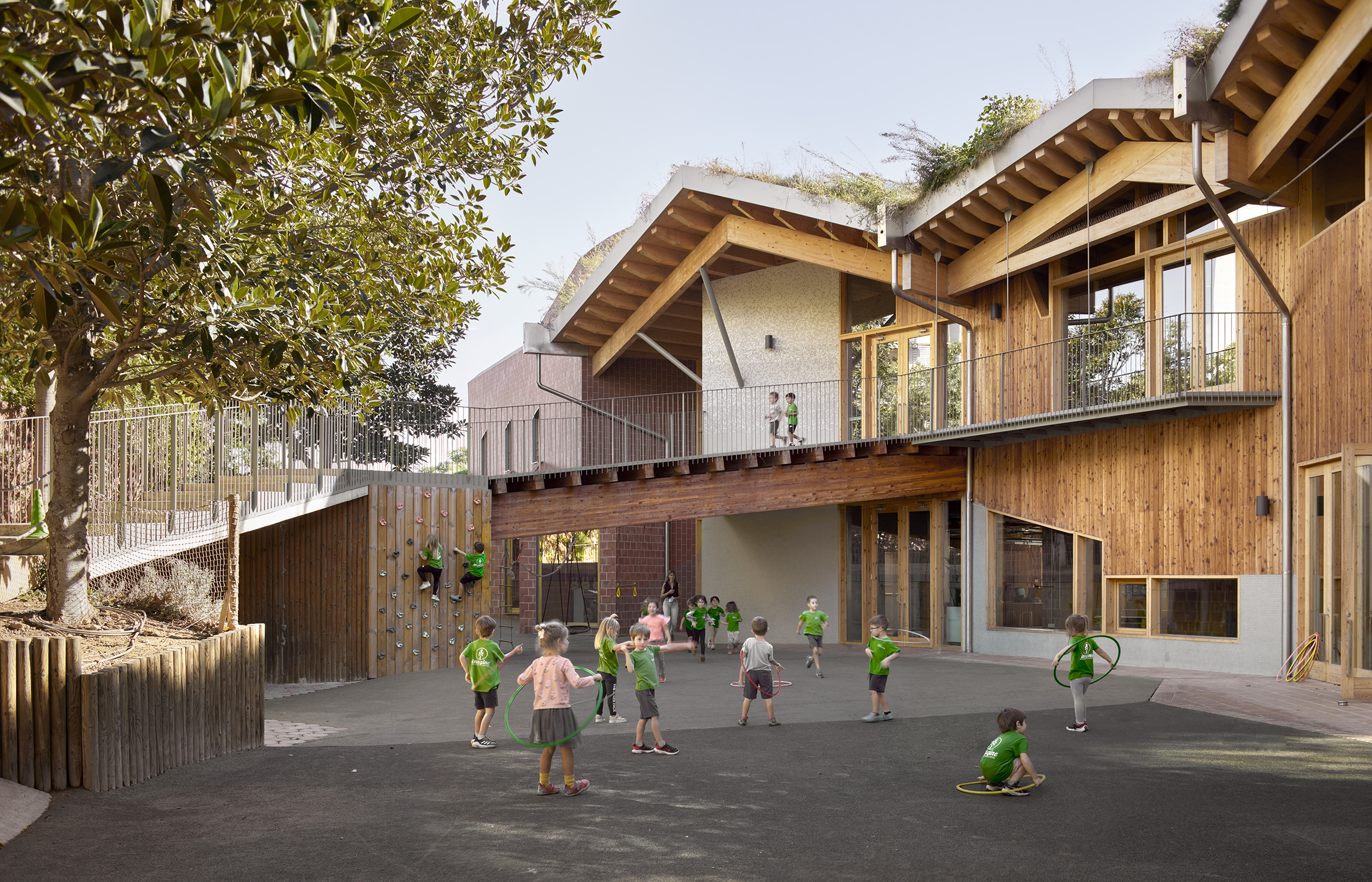


“When children come into contact with nature, they reveal their strenght” Maria Montessori
Using the existing ravine and pine grove, the school blends with nature. Its materiality and spaciality are didactic, offering a sustainable response to a complex program. The result is a delight for users.
Collaborators
Collaborator (office): Jose Luis Vilar; Collaborator (office): María Navarro; Collaborator (office): Daniel López Castellanos; Construction management: Francisco Vallet - AIG; Structure: Adolfo Alonso; Structure: Lucas Muñoz - ALBURA ESTUDIO; Installations: Artur García - ZERO CONSULTING; Installations: Raúl Peñarroja - GME; Environmental: Alfons Ventura; Acoustics: Pau Gaja - SILENS ACÚSTICA; Landscape: Gustavo Marina - GM PAISAJISTAS; Lighting: Juan Manuel Lozano - COSMOSTIL; Project management: grupo VALSECO
Program
Education
-
Labels
School · Kindergarten
Site area
4630 m²
-
Client
Zubi Real State S.L.
Total gross floor
2929 m²
Cost
1530 €/m²
Sincere materials and forms. Brick provides thermal inertia. Wood insulates and protects. Glass loves light. The school opens to Nature—earth, water, air, sun, life—respecting its environment. It saves water and uses natural air and light reducing its footprint. The pine grove and ravine are valued gifts. A good place. This architecture celebrates these wonders uniting inside and outside. Pleasant areas for play and learning. Clear, explainable construction. Beauty in spaces for staying, meeting and study weave a didactic experience. A school where the building is the first teaching material.
A complex program with diverse users and a demanding site due to topography, regulations, and urban context. These are the challenges. A private client committed to sustainability, architectural quality and inclusivity, who demanded the school express these values. The first step toward a positive outcome. The users are students of various ages, their families and teachers, contributing their experience to the participatory design. The second success element: ensuring their satisfaction and well-being. The third is leveraging site conditions as opportunities. Slopes create access hierarchies and distance the school from traffic. The ravine and pine grove, as biodiversity corridors, form an exciting access route designed to create a lasting memory: "my school is a wooden house I reach by walking through a forest and crossing a bridge." Offering the best views, the school opens to them, letting vegetation unify everything. Here, the building acts as a transition between city and nature.
The building's materiality addresses educational, sustainability, and economic objectives. The brick in the walls and vaults is locally sourced with a low carbon footprint. Through its mass, it provides thermal inertia and climate comfort. The wooden structure, enclosures and insulation reduces the environmental impact. The lack of finishes didactically reveals the school's materiality. Vegetation on façades and roofs serves as a construction material that integrates the building into its natural setting, enhances biodiversity, and provides seasonal sun protection. Passive measures (natural light and ventilation, solar protection, continuous thermal insulation, and thermal inertia) and active design measures (water reduction and recovery, heat recuperators, and photovoltaic panels) reduce energy consumption. These elements lower construction, maintenance, and operational costs, while building automation systems enables monitoring of the school's climate and energy performance.