-

Boulevard Façade
-
Boulevard Façade_zoom 1
-
Détail of façade
-
Patio façade
-
Rooftop
-
Terrace
-
Site plan
-
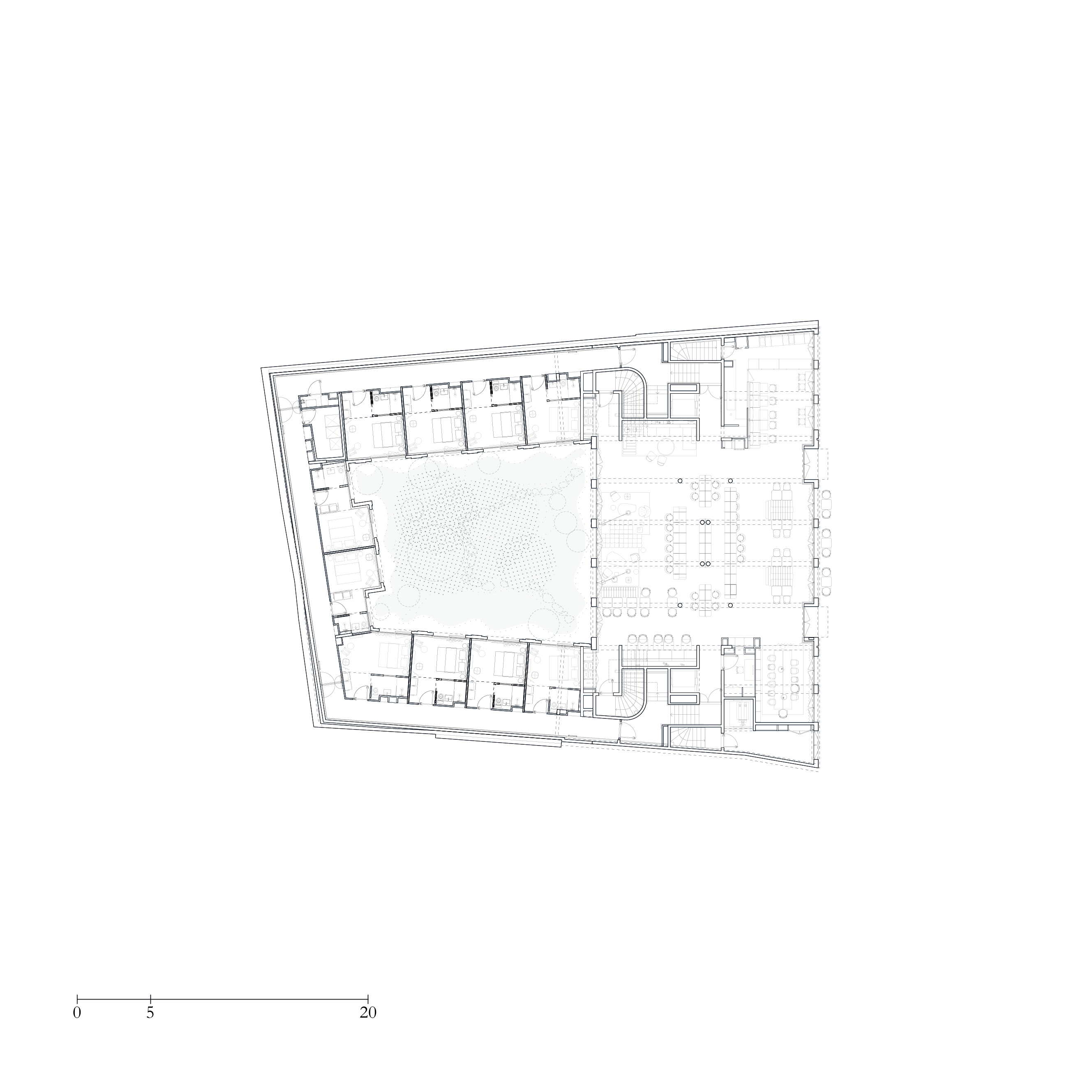
Ground floor
-
first floor
-
third floor
-
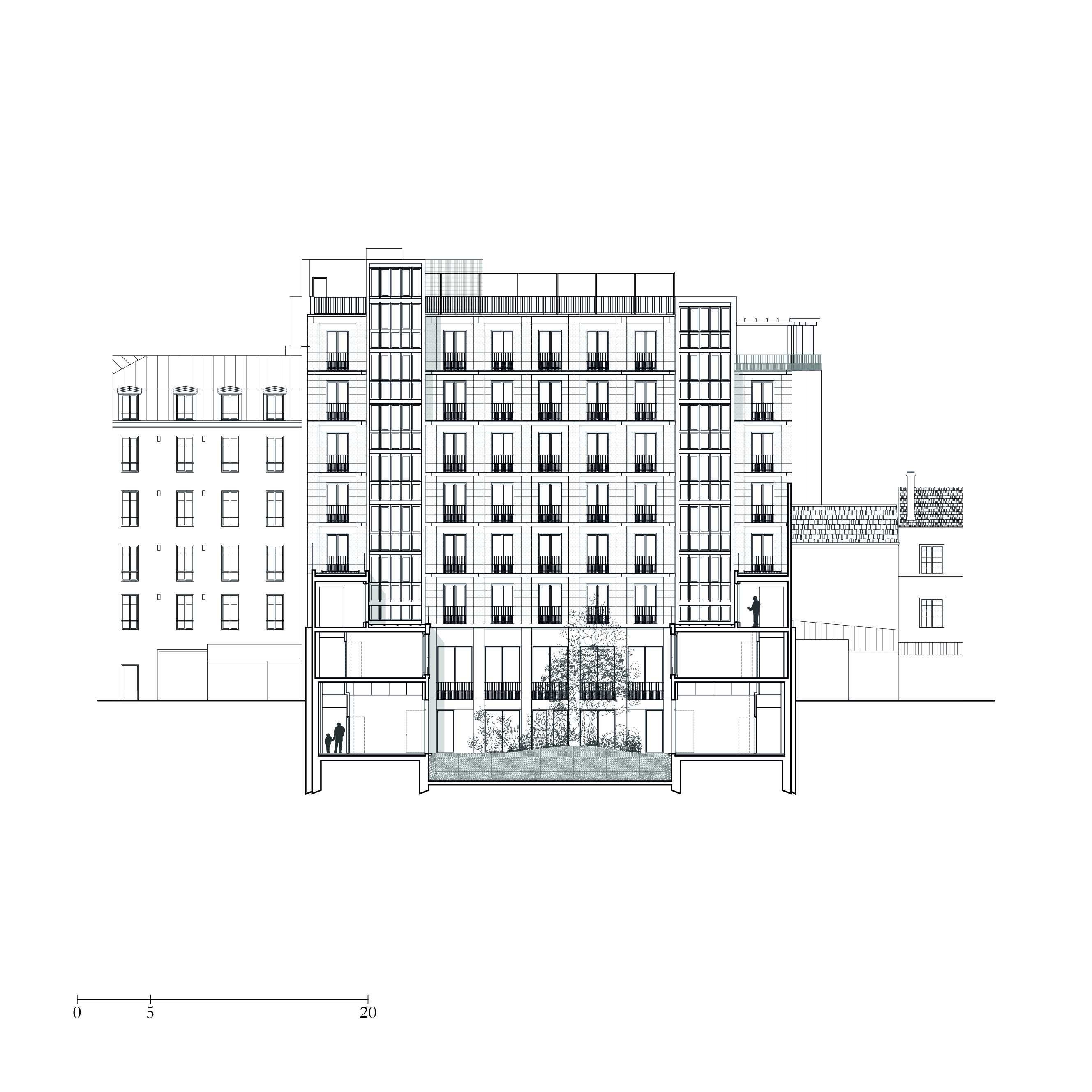
Cross section
-
longitudinal section
Hotel Tribe – Solid Stone Hotel Construction
NEUFVILLE-GAYET ARCHITECTURE, ciguë. Clichy, France
-
Name of work in English
Hotel Tribe – Solid Stone Hotel Construction
-
Name of work in original language
Hôtel Tribe - Construction d'un hotel en pierre massive
Prize year
EUmies Awards 2026
-
Work Location
Clichy, France
-
Studio
NEUFVILLE-GAYET ARCHITECTURE, ciguë
EUmies Awards 2026 Nominees

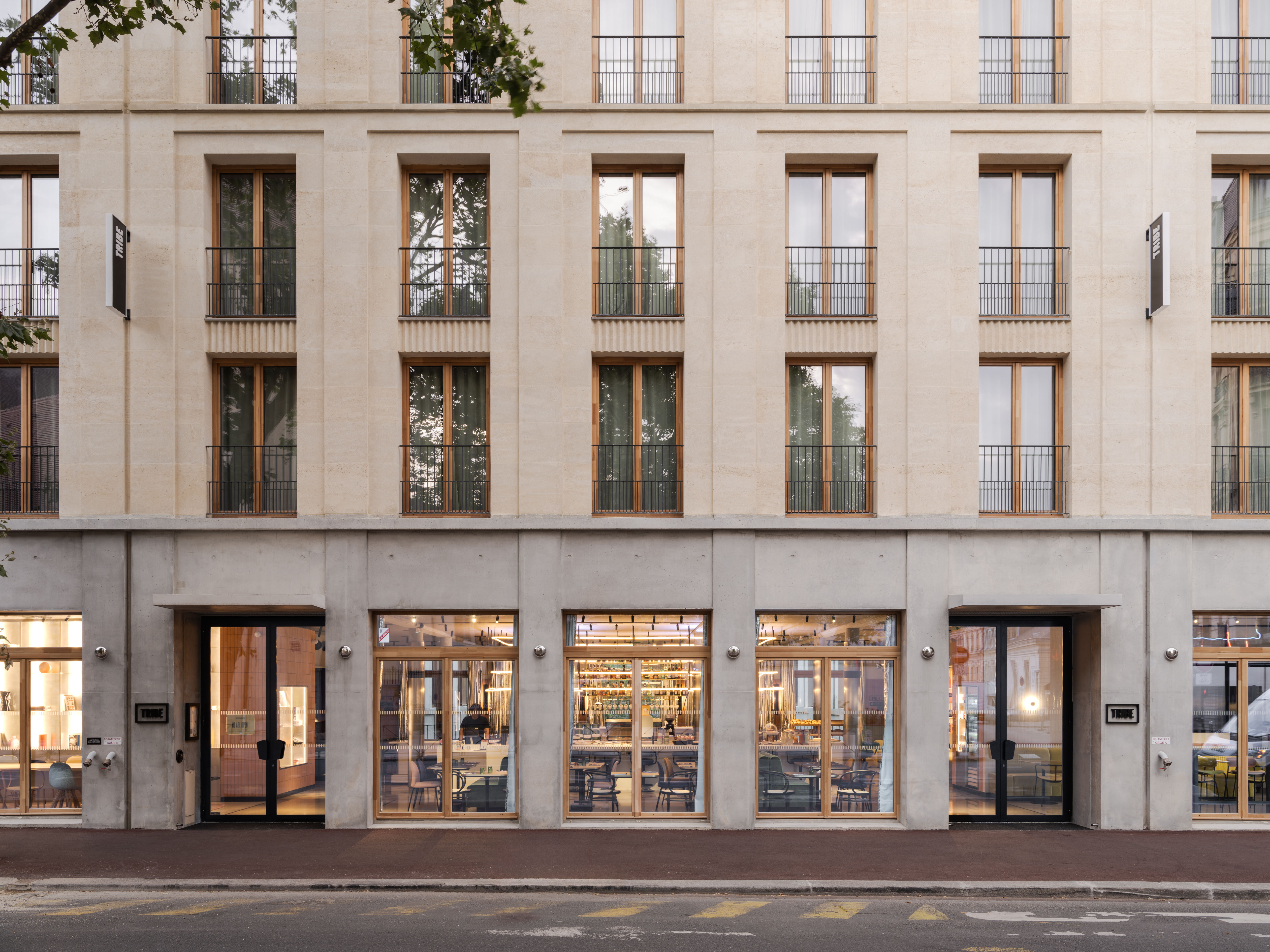
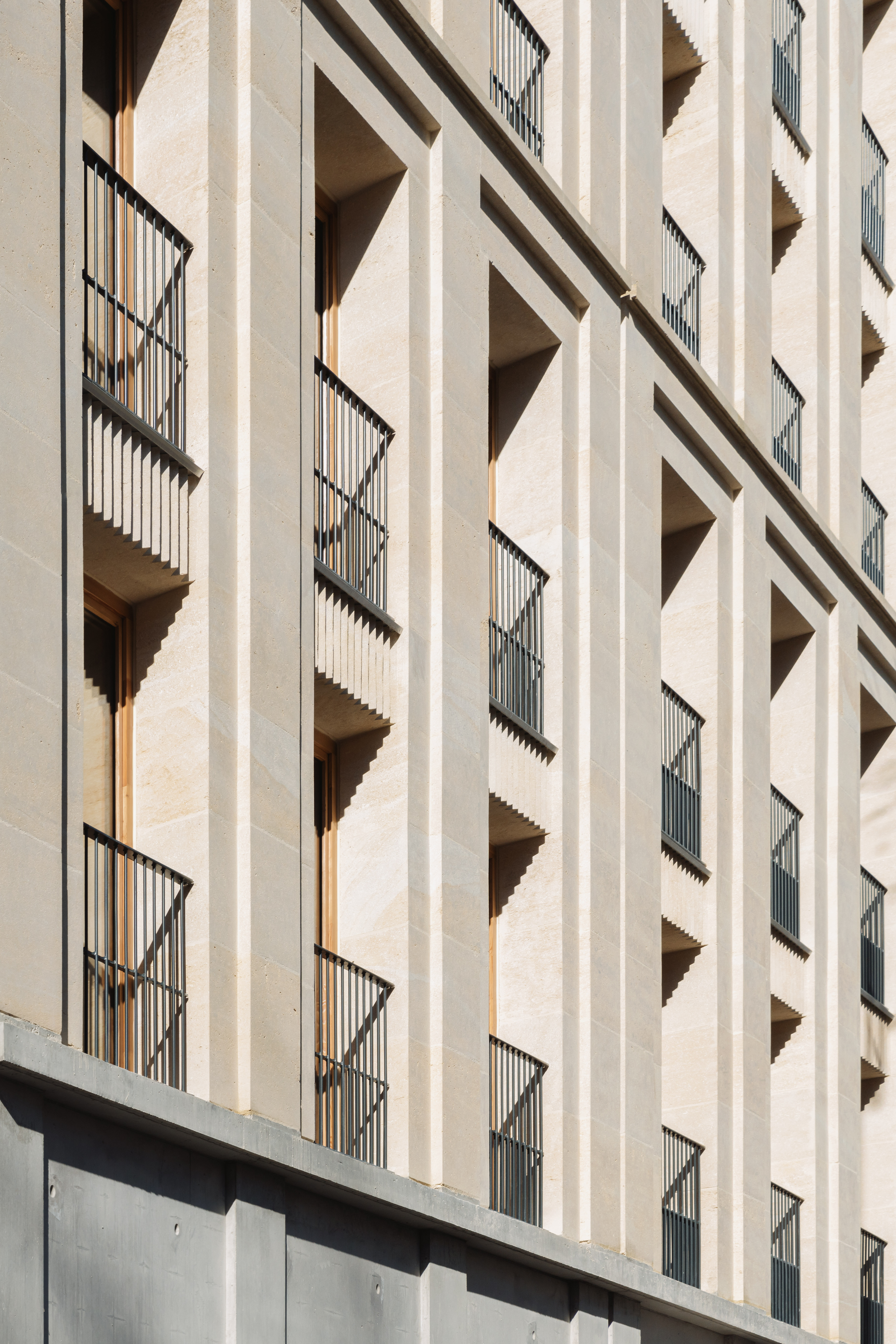
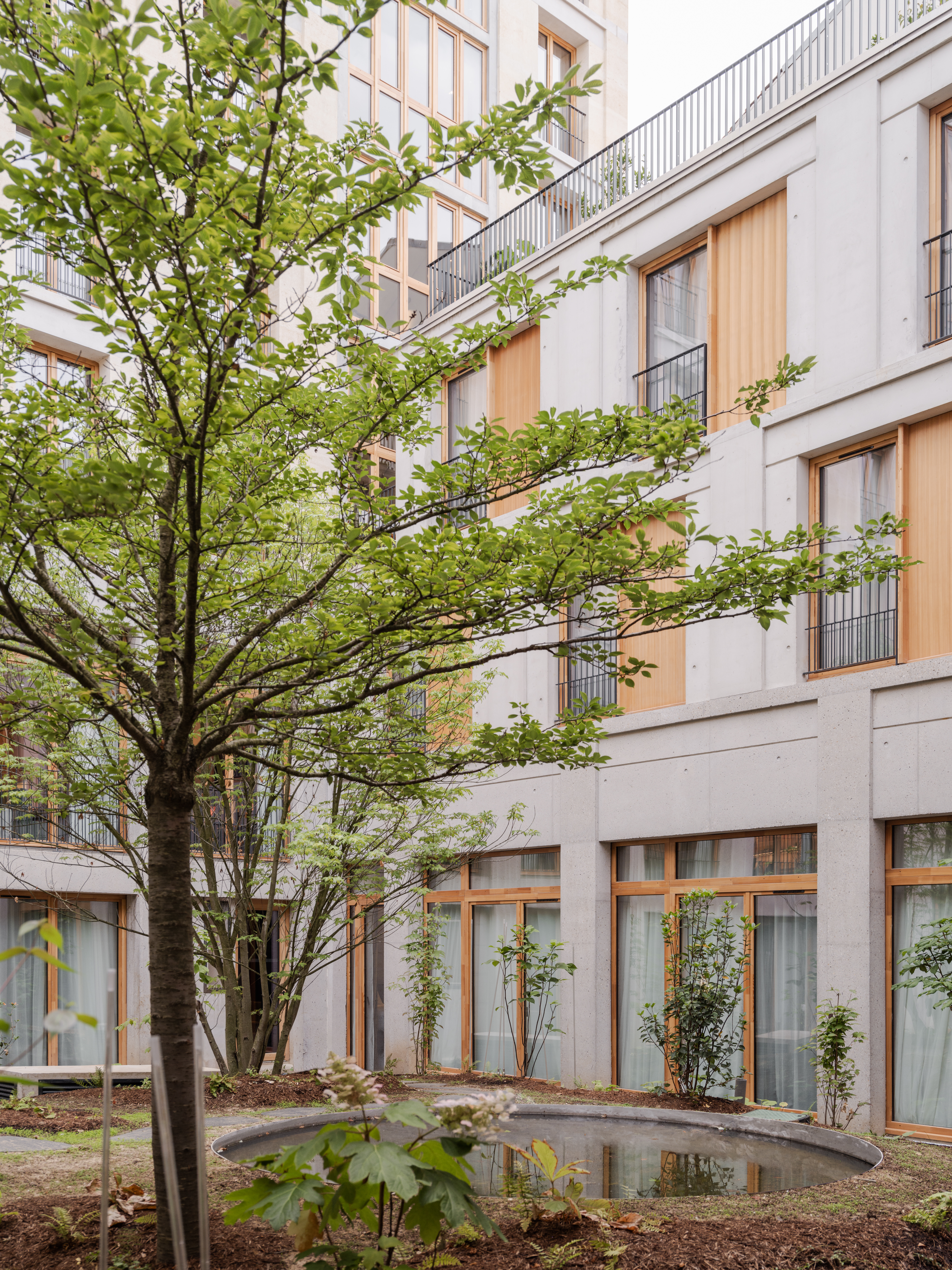
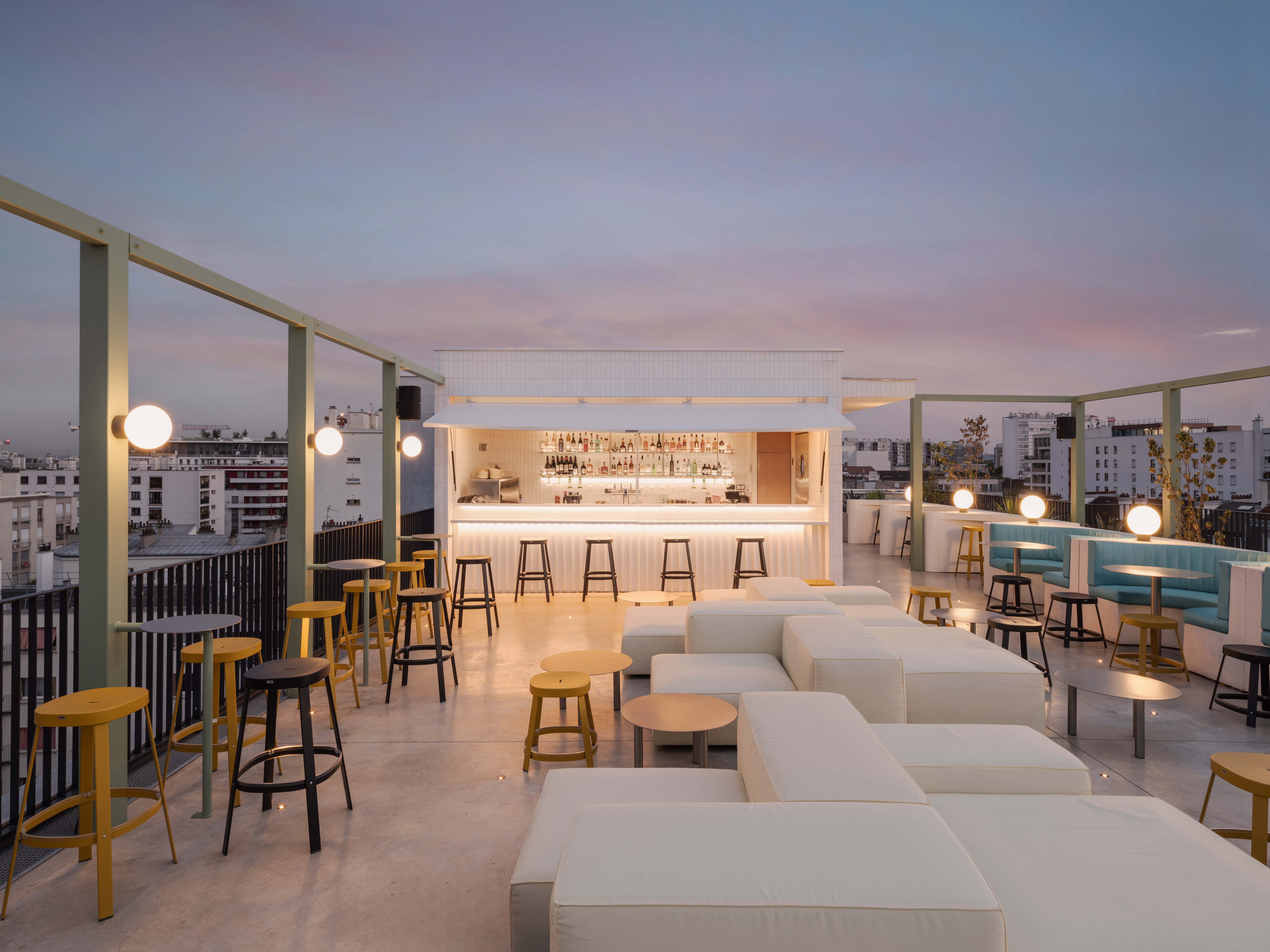





A 4-star hotel residence in central Clichy designed by Neufville-Gayet Architectes (architecture) and ciguë (interior design). The project combines structural sobriety, solid-stone façades and reversible design to create a sustainable, elegant and adaptable urban landmark.
Collaborators
Collaborator (office): Arthur BESNARD - Neufville-Gayet Architectes; Collaborator (office): Léonor CHABASON - Neufville-Gayet Architectes; Collaborator (office): Orianne MADINIER - Neufville-Gayet Architectes; Collaborator (office): Violette SOLEILHAC - Neufville-Gayet Architectes; Interior Architect: Sebastian ERAZO - ciguë; Landscape: Annelise BIDEAUD - NEBBIA Paysage & Territoire; Structure: David CHAMBOLLE - EVP Ingenierie; Installations: Cedric PUAUD - AREA; Acoustics: Axelle BOISSIÈRE - ALTIA; Cost Consultant: Agnès OMBREDANE - AXIO; Building physics: Fanny AMANN - AMANN Consultant; Lighting: Benoit BREGON - LIGHTMAKERS
Program
Food & Accommodation
-
Labels
Sleeping
Site area
981 m²
-
Client
GROUPE GALIA
Total gross floor
3661 m²
Located at 105 Boulevard Jean Jaurès in Clichy, the 3,400 m² hotel includes 120 rooms, a restaurant, shared spaces, a garden and rooftop terrace. The hotel consists of a compact main volume with a distinctive urban façade, and a lower rear volume unfolding in a U-shape around a quiet landscaped courtyard. On the Boulevard side, the site’s depth and open views invite a gesture of humility and openness, contributing to the improvement of the adjacent public realm. The main six-storey volume assumes a compact form that frees a 190 m² planted garden at the heart of the block.
Durability, resilience, constructive rigour and spatial quality guide the design of the Tribe Clichy hotel residence. Structural and constructive optimiation allows for the design of a fully reversible building. By separating a primary load-bearing structure from independent, easily removable interior elements, the design offers open, flexible floor plates on every level. At ground floor level, the spaces open generously onto the street, offering visual continuity towards the inner garden. This level is distinguished by the use of polished precast concrete in its natural mineral tone, harmonising with the warmth of the stone. Architectural features such as lintels are repeated across the façade, clearly expressing the project’s structural and constructive logic. The interior architecture, designed by ciguë, continues Neufville-Gayet’s vision of a frugal architecture. The atmospheres rely on considered choices of materials : velvet, ceramic, brass, exposed concrete, and natural stone.
The facade system is made of solid stone by assembling pre-cut modules that form lintels and trumeaux. The stone comes from the Beaulieu quarries in the south of France. Its intrinsic durability, which enables it to withstand damage, weathering and the test of time allows its ecological cost to be amortised over the long term. It also provides specific hygrometric and thermal properties that contribute to the building’s comfort and sustainability. The use of stone in the façade embodies a responsible architectural intention. As a local material with a low carbon footprint, stone requires no additional treatment to ensure its longevity and potential for reuse. While the hotel programme calls for constructive simplicity, the project pushes the design toward the concept of a fully reversible building. The separation between a primary load-bearing structure and independent, removable interior components allows for open-plan floor plates capable of future transformation and adaptability.